


Your Guide to Boat Washdown Pump Systems
Think of a boat washdown pump as your own personal, high-powered pressure washer, built specifically for the tough marine environment. It pulls water from the sea or your onboard freshwater tank, amps up the pressure, and gives you the power to blast away everything from corrosive salt and stubborn mud to fish guts and grime. It’s a serious upgrade from the old bucket-and-brush routine, saving you a ton of time and elbow grease.
What a Boat Washdown Pump Does for You
A washdown pump is your first line of defense in keeping your boat looking sharp and running well for the long haul. After a great day of fishing, the deck can quickly turn into a slick, messy hazard. A powerful jet of water clears it all away in seconds, making your boat safe and clean again.
But this is about more than just looks, it’s about protecting your investment. Saltwater is relentlessly corrosive. Letting it dry on your boat's surfaces is an open invitation for damage to your gelcoat, metal fittings, and gear. A quick, powerful rinse with a washdown pump stops that corrosion in its tracks.
Why You Can't Just Use a Bucket and Brush
A dedicated pump system tackles several key jobs that manual cleaning just can't handle. It’s not just for hosing down a dirty deck; it's a versatile tool that makes boat ownership easier.
Trying to decide if it's worth the upgrade? Let's break down the real-world impact.
Why Manual Cleaning Can't Compete
| Benefit | Impact on Your Boating Experience |
|---|---|
| Efficient Cleaning | High-pressure spray dislodges dried mud and fish guts a regular hose can't touch. |
| Improved Safety | Decks and cockpits stay free of slippery messes, preventing falls and ensuring stable footing. |
| Asset Protection | Regular rinsing stops salt corrosion, extending the life of your hardware, paint, and finishes. |
| Major Time Savings | A task that takes an hour of scrubbing can be done in minutes, giving you more time on the water. |
At the end of the day, a washdown pump moves from the "nice-to-have" list to the "must-have" list pretty quickly once you use one.
A boat washdown pump isn't a luxury; it's a fundamental maintenance tool. It transforms cleanup from a dreaded chore into a quick, satisfying task, allowing you more time to enjoy the water and less time scrubbing.
A Growing Trend in Marine Maintenance
You don't just have to take our word for it, the numbers show how valuable these systems have become. The global market for deck wash pumps has seen steady growth, which tells you that more and more boaters are prioritizing proper vessel care.
One analysis pegged the market value at over $500 million recently, with strong projections for future growth. It's clear these pumps are now seen as an essential piece of equipment.
Ultimately, a good pump simplifies one of the most important parts of owning a boat. When you pair it with the right cleaning techniques, it’s a game-changer for keeping your vessel in prime condition. For a complete look at boat care, check out our guide on the best way to clean your boat. Installing a washdown system is the perfect first step toward a smarter, more effective maintenance routine.
Understanding Pump Power: GPM and PSI
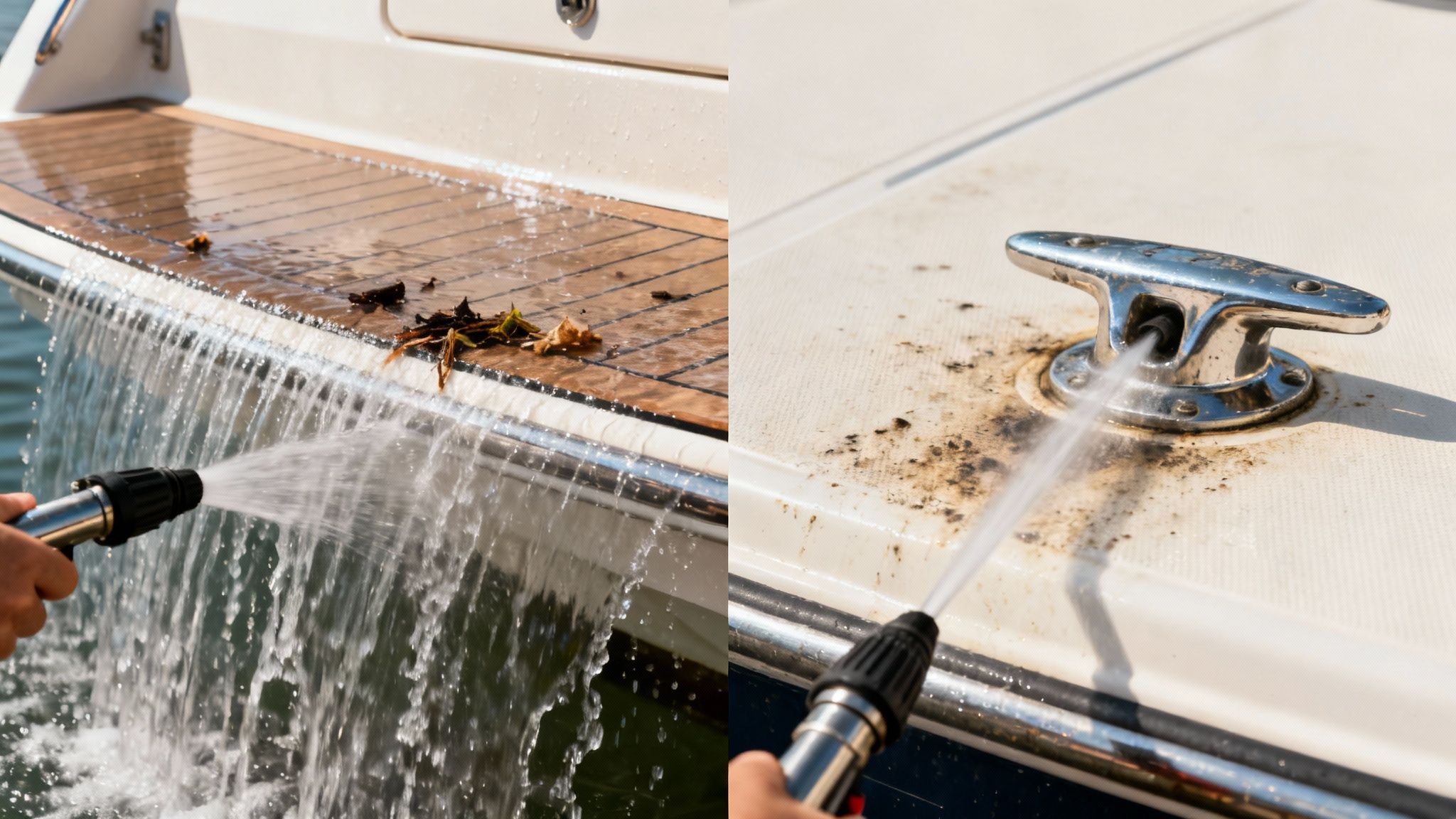
When you start shopping for a boat washdown pump, you’ll immediately see two specs pop up everywhere: GPM (Gallons Per Minute) and PSI (Pounds per Square Inch). These numbers aren't just technical filler; they’re the heart and soul of how your pump performs. Nailing this choice means understanding what these two ratings really mean for you out on the water.
Think of GPM and PSI as a two-person crew working together to clean your boat. Each has a critical job, and you need both of them to get the deck truly spotless.
GPM: The Volume Worker
GPM, or Gallons Per Minute, is all about the volume of water the pump can push. Picture a wide, steady stream from a garden hose, that's GPM at work. A higher GPM means more water flows out, letting you drench large areas quickly and wash away loose stuff like salt spray, sand, or fresh fish scales.
A pump with a solid GPM rating is your best friend for a quick, end-of-day rinse. It moves a ton of water to carry away all that surface-level grime without much effort. But volume by itself won't cut it for the tough messes. That’s where its partner, PSI, steps in.
PSI: The Force Multiplier
PSI, or Pounds per Square Inch, is the force behind that water. This is the blasting power you feel, like the focused jet from a pressure washer. A higher PSI delivers the muscle needed to strip away stubborn, caked-on gunk, think dried bird droppings, caked mud, or bait that the sun has baked onto your deck.
This spec is what gives you that deep-cleaning punch. While GPM handles the rinsing, PSI does the heavy-duty scrubbing, breaking the bond between grime and your boat’s surface so you don't have to.
A boat washdown pump’s effectiveness hinges on the balance between GPM and PSI. High GPM provides the broad rinsing action to clear away loose dirt, while high PSI delivers the concentrated force needed to blast away stubborn grime. The right pump for you will have a combination that matches your specific cleaning challenges.
Finding The Perfect Balance
The best boat washdown pump isn't always the one with the biggest numbers. It’s about finding the right balance for how you use your boat. If you’re running an offshore fishing boat that sees a lot of action, you’ll want a higher PSI to power through caked-on blood and guts.
On the other hand, a casual cruiser who mostly just needs to rinse off salt and sand might prefer a pump with a healthy GPM for fast, efficient coverage without the intense pressure. For most boaters looking for serious cleaning power, a pump that hits around 70 PSI is the sweet spot.
It can be useful to see how professionals approach this, and you can learn more about how to test water pressure in a general plumbing context to get a better feel for how these systems are evaluated.
Ultimately, you need the right tools to harness that power. Even the best pump is useless without a good nozzle. Pairing your system with an adjustable, high-quality boat hose nozzle gives you total command, letting you flick between a wide, gentle fan for rinsing and a powerful jet for obliterating the tough spots.
How to Choose the Right Washdown Pump
Picking the right boat washdown pump isn’t just about grabbing the most powerful one off the shelf. It’s about finding the perfect partner for your boat and how you spend your time on the water. A pump that’s a dream for a small bay boat will barely make a dent on a big sportfisher, and a commercial-grade beast is just overkill for a weekend cruiser.
This guide will walk you through the key things to think about, making sure you get the cleaning power you actually need without dropping cash on features you won't use.
Your whole decision really boils down to a few simple questions: What size is your boat? What are you usually cleaning off it? And where is the water coming from? The answers will point you straight to your ideal pump.
Matching Your Pump to Your Boating Style
First things first, get real about how you use your boat. Are you a hardcore angler who's constantly scrubbing fish scales and bait off the deck? Or are you more of a cruiser who just needs to rinse off some salt spray and sand after a day out? Your main activity is the biggest clue to what kind of power you need.
For the Dedicated Angler: If your deck looks like a crime scene after a good day of fishing, PSI is your best friend. You need that concentrated, high-pressure blast to peel away dried-on gunk. Look for a pump that can push out 70 PSI or more to make cleanup quick and painless.
For the Casual Cruiser: If your cleanups are more about getting rid of salt and sand, you can focus on GPM (gallons per minute). A pump in the 4-5 GPM range will give you plenty of water volume to rinse down large areas fast, without needing that intense pressure.

Saltwater vs. Freshwater Systems
This is a big one: will your pump be pulling water from the ocean or from your boat’s freshwater tank? Each setup has its own clear pros and cons.
A saltwater washdown system is what you’ll find on most boats, and for good reason. You get an endless supply of water, so you never have to think twice about running your freshwater tank dry during a massive cleanup. For anglers or anyone dealing with big messes far from the dock, this is a game-changer. The only catch is that you’re rinsing with salt, so a final freshwater rinse is a good idea to protect your metal fittings and gear from corrosion.
A freshwater washdown system is perfect for that final, spot-free rinse. It gets rid of all the salt residue, which is great for protecting your hardware, fishing gear, and any sensitive electronics. The big downside, of course, is your tank size. Using up your precious drinking water to wash the deck can empty your supply in a hurry, especially on longer trips.
For most boaters, the best approach is a hybrid one. Use a saltwater washdown pump for all the heavy-duty cleaning, then save your limited freshwater for a quick, final rinse on the important stuff. You get the best of both worlds.
Built to Last: Marine-Grade Materials and Safety
A boat is a tough place for any piece of equipment. It’s constantly dealing with moisture, salt, and vibrations. How long your boat washdown pump lasts comes down to the quality of its parts and its built-in safety features.
Here’s what to look for in a pump that’s built to survive at sea:
- Corrosion-Resistant Housing: The body of the pump needs to be made of materials that won’t rust away. Look for powder-coated or specially treated casings.
- Sealed Components: The motor and all the electrical connections have to be completely sealed. Water getting in is the number one killer of marine pumps.
- Ignition Protection: This is a must-have, especially on gas-powered boats. It guarantees the pump’s motor can’t create a spark that could ignite fuel fumes in the bilge.
- Thermal Overload Protection: This is a smart feature that automatically shuts the pump down if it starts to overheat, saving the motor from permanent damage and keeping things safe.
Investing in a well-made pump with these features means it’ll be a reliable workhorse for years. The global market for marine pumps was valued at a whopping $10.7 billion USD recently, and it’s only expected to grow. That tells you just how much demand there is for tough, high-quality gear that can handle the ocean.
Washdown Pump Sizing Guide by Boat Type
To make things even easier, we've put together a quick reference chart. Think of this as a starting point to help you narrow down the best GPM and PSI range for your specific boat and how you use it.
| Boat Type/Size | Primary Use | Recommended GPM | Recommended PSI |
|---|---|---|---|
| Small Center Console (18-22 ft) | Casual fishing, sand/salt rinse | 3.0 - 4.0 GPM | 50 - 60 PSI |
| Bay Boat / Skiff (20-25 ft) | Inshore fishing, bait cleanup | 4.0 - 5.0 GPM | 60 - 70 PSI |
| Walkaround / Cuddy (23-28 ft) | Family cruising, light fishing | 4.0 - 5.0 GPM | 55 - 65 PSI |
| Offshore Center Console (26-35 ft) | Serious offshore fishing, heavy grime | 5.0 - 6.0 GPM | 70+ PSI |
| Sportfisher / Convertible (35+ ft) | Tournament fishing, fish boxes, cockpit | 5.0 - 7.0 GPM | 70+ PSI |
| Cruiser / Yacht (30+ ft) | Anchor wash, general deck rinsing | 4.0 - 6.0 GPM | 60 - 70 PSI |
Remember, if you're a serious angler on a smaller boat, you might want to lean towards higher PSI. If you have a larger boat but mostly do light rinsing, a higher GPM might be more important. This chart helps you find that sweet spot.
The Complete Washdown System Checklist
A powerful boat washdown pump is the heart of your cleaning system, but it can't do the job alone. You can have the strongest pump on the market, but without the right supporting cast of components, it's not going to perform. Think of it like a high-performance engine; every single part, from the intake to the exhaust, has to work together perfectly.
This checklist will walk you through every piece of the puzzle. Getting it right from the start means you'll have a rock-solid system that stands up to the harsh marine environment for years to come.
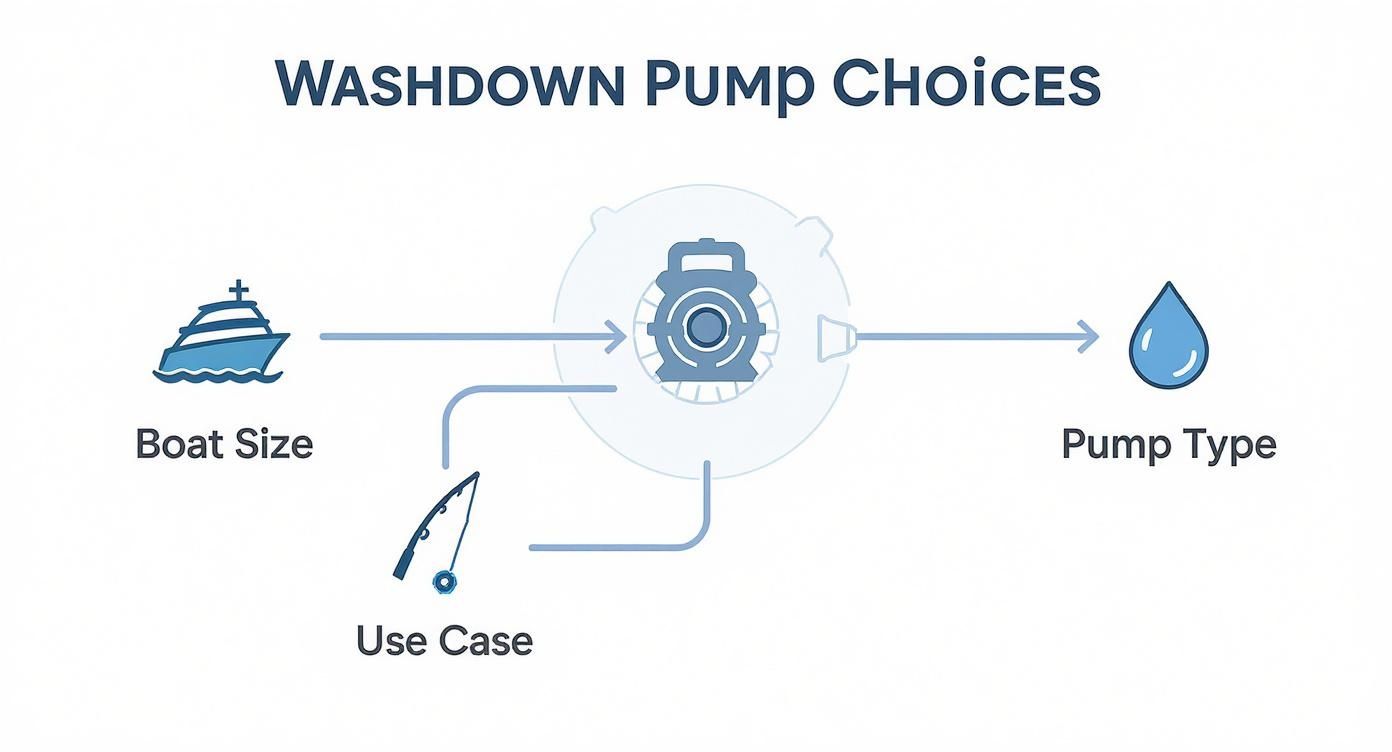
This diagram shows how your boat's size, how you'll use the pump, and the pump type you choose are all connected. They all influence the other parts you'll need for a balanced, effective system.
Essential Plumbing Components
The plumbing is the circulatory system for your washdown pump. It's what gets water in and out, and skimping here is a classic mistake. A cheap or poorly-chosen hose can choke even the most powerful pump, leading to terrible performance and premature failure.
Here’s what you absolutely need:
- Thru-Hull Fitting and Seacock: This is where the water gets into your boat. Don’t mess around here, always use a high-quality, marine-grade bronze or stainless steel fitting with a proper ball-valve seacock. It's a critical safety item.
- Intake Hose: You need a rigid, reinforced hose that won’t collapse under the pump’s suction. A collapsed intake line is one of the most common, and frustrating, causes of pump failure.
- Inline Strainer: This is completely non-negotiable. The strainer is your pump's bodyguard, catching seaweed, sand, and other gunk before it gets sucked in and destroys the pump's delicate internal parts. Get in the habit of checking and cleaning it regularly.
A high-quality inline strainer is the single most important accessory for protecting your pump investment. It's a small part that prevents catastrophic, debris-related damage to the pump's diaphragm and valves.
The Delivery System: Hose and Nozzle
Once the pump pressurizes the water, you need a solid way to deliver it where it's needed most. Your hose and nozzle are the business end of the operation, and their quality has a huge impact on your cleaning power.
A cheap, flimsy garden hose will constantly kink, cutting off water flow and driving you crazy. Even worse, it puts extra strain on your pump, shortening its lifespan. Investing in a durable, kink-resistant hose made for the marine environment is one of the smartest upgrades you can make.
The spray nozzle is your point of control. A good, adjustable nozzle lets you switch from a wide fan for a gentle rinse to a powerful jet stream for blasting away dried-on grime. That flexibility is what makes cleaning fast and efficient. For a perfect finish, a complete boat cleaning kit often has specialized tools that work great with a good washdown system.
Critical Electrical Components
Doing the electrical wiring right is all about safety and reliability. A poorly wired pump is a legitimate fire hazard, and it will almost certainly suffer from performance issues caused by voltage drop.
Your electrical checklist includes:
- Marine-Grade Wiring: Always use tinned copper wire. It needs to be the correct gauge for both the pump's amp draw and the length of the wire run to prevent corrosion and ensure the pump gets all the juice it needs.
- Fuse or Circuit Breaker: This is what protects the pump's motor from an electrical surge that could fry it. Always use the exact size recommended by the pump manufacturer, no bigger, no smaller.
- Waterproof Switch: You’ll need a marine-grade, waterproof switch to control the pump. Mount it at the helm or another spot that's convenient and easy to reach.
By taking the time to select each of these components carefully, you're not just buying parts. You're building a complete boat washdown pump system that's a reliable, powerful cleaning tool you can count on season after season.
Best Practices for Washdown Pump Installation
Getting the installation right is the difference between a boat washdown pump you can rely on and one that’s a constant source of frustration. While calling in a pro is never a bad idea, understanding the key steps yourself means you can tackle the job with confidence or just keep an intelligent eye on the work being done. The main goal here is to build a safe, efficient system that can stand up to the tough marine environment.
Your pump’s performance really begins with where you decide to put it. Think high, dry, and easy to get to. You want it mounted well above the bilge water to keep moisture from ruining it, but still somewhere you can reach for basic maintenance like cleaning out the strainer. Good ventilation is also a must to keep the motor cool when you’re really putting it to work.
Choosing the Right Location
Finding that perfect mounting spot is all about balancing a few key factors. Ideally, the pump should be as close as possible to both the thru-hull (its water source) and the battery. Shorter hose and wire runs mean less strain on the pump and prevent voltage drop, which can seriously sap its power.
- Dry and Ventilated: Moisture is the number one enemy of marine electronics. A dry spot with plenty of airflow will dramatically extend the life of your pump.
- Accessibility: Sooner or later, you'll need to check on the pump and clean its inline strainer. Don't bury it in a location that turns a simple task into a painful yoga session.
- Secure Mounting: Always mount the pump on a solid surface. Use its built-in rubber feet to soak up vibration, which not only makes it run quieter but also protects the pump from getting shaken to pieces by the boat's movement.
Electrical Safety and Connections
Wiring a boat washdown pump the wrong way isn't just a performance problem, it's a serious safety risk. The marine world is unforgiving, and every single electrical connection needs to be shielded from corrosion and installed to the highest possible standard. Always make safety your top priority; brushing up on general electrical safety practices is a smart move before you start.
CRITICAL TIP: Always use marine-grade, tinned copper wire. Make sure it's the correct gauge for your pump's amperage and the total length of the wire run. Using wire that's too thin will cause voltage drop, leading to a weak pump and a fried motor.
Your pump needs its own dedicated circuit breaker or fuse, sized exactly to the manufacturer's spec. Every connection should be sealed with waterproof, heat-shrink connectors to lock out moisture and stop corrosion before it can start.
Plumbing Essentials for Peak Performance
The plumbing side of the equation is just as critical as the electrical work. Any kinks, sharp bends, or air leaks in your lines will starve the pump, leaving you with disappointing pressure and flow. For the intake line, it’s crucial to use a rigid, reinforced hose that won’t collapse when the pump starts sucking water through it.
Make sure every single connection, from the thru-hull, to the pump, and out to the nozzle, is locked down with high-quality stainless steel hose clamps. Using two clamps at each connection is a pro move. The global pumps market, valued at a staggering $59.68 billion USD recently, shows just how much engineering goes into these systems. A proper installation ensures you actually get the performance you paid for.
A well-maintained boat washdown pump is a reliable workhorse, ready to blast away grime at a moment's notice. Truth is, a little proactive care is way easier than dealing with a busted pump mid-cleanup. A simple routine can prevent the most common headaches boaters face, and a few minutes of prevention each month ensures your pump delivers that powerful spray season after season.
The absolute hero of your pump’s longevity is its inline strainer. This small but mighty filter is the only thing standing between your pump's guts and all the gunk in the water. Get in the habit of checking and cleaning that strainer bowl at least once a month, more often if you’re boating in areas with a lot of seaweed or sand.
Routine Maintenance Checklist
Keeping your pump happy is pretty straightforward, and a quick inspection can catch small issues before they turn into big, expensive ones.
- Inspect Hoses Regularly: Give both the intake and outlet hoses a good look-over. You're searching for any cracks, kinks, or soft spots. A compromised hose can suck in air or leak water, which will kill your pump's pressure in a heartbeat.
- Check Electrical Connections: Saltwater and moisture are brutal on wiring. Keep an eye out for any corrosion, that telltale green or white crusty buildup, on terminals and connectors. A clean, tight connection means the pump gets all the juice it needs to run right.
- Clean and Protect: When you’re washing down the deck, give the pump's exterior a quick wipe with a damp cloth. A clean pump is a happy pump. Using a high-quality boat soap for your deck also means you aren't splashing harsh chemicals around that could damage the pump's housing or seals over time.
Quick Troubleshooting Guide
Even the best-kept gear can act up sometimes. Before you assume the worst, this quick guide can help you nail down and fix the most common problems without a trip to the mechanic.
Don't immediately assume a loss of pressure means your pump is dead. Over 80% of washdown pump issues are caused by simple, fixable problems like a clogged strainer, an air leak in the intake line, or a loose electrical connection.
| Problem | Common Cause | Solution |
|---|---|---|
| Pump Runs, No Water | Clogged strainer or intake line; a major air leak on the intake side. | Clear out the strainer and check the thru-hull for blockages. Go over the intake hose and tighten all the clamps until they're snug. |
| Pump Cycles On/Off | A small leak in the outlet hose or nozzle; internal pressure switch needs a tweak. | Check all outlet connections for drips. Some pumps have an adjustable pressure switch; check your manual to see how it's done. |
| Low Water Pressure | Kinked hose (intake or outlet); voltage drop from a bad connection. | Unkink any and all hoses. Clean and tighten every electrical connection from the battery right to the pump. |
| Pump Won't Turn On | Blown fuse or tripped breaker; loose or corroded wire. | First, check the fuse or breaker. Then, trace the wiring from the switch, looking for a solid, clean connection everywhere. |
Got Questions About Washdown Pumps? We’ve Got Answers.
Even after digging into all the details, you might have a few questions rattling around. That’s perfectly normal. We get a lot of the same queries from fellow boaters, so we've put together some quick, straightforward answers to the most common ones.
Can I Use a Washdown Pump for a Bilge Pump?
In a word: no. You should never, ever use a washdown pump as a bilge pump. They’re built for completely different jobs. Washdown pumps are designed to create high pressure for spraying, not to handle the mix of oil, fuel, and random gunk that ends up in your bilge.
While Better Boat offers reliable bilge pumps built for that specific task, trying to use a washdown pump in the bilge will chew up the pump's diaphragm and valves in no time. More importantly, it's a huge safety hazard you just don't want to risk.
Is It Necessary to Winterize a Washdown Pump?
Yes, absolutely. If you're anywhere that sees freezing temperatures, winterizing your washdown system is non-negotiable. Any water left in the pump, hoses, or fittings will freeze, expand, and can easily crack the pump housing or burst a line. That’s a headache and an expense you can easily avoid.
It’s a simple process, really:
- First, close the raw water seacock.
- Next, unscrew the cap on your inline strainer.
- Fill the strainer bowl up with a non-toxic pink RV antifreeze.
- Flip the pump on and run it until you see that pink antifreeze spraying out of the nozzle.
That’s it. This quick chore ensures your entire system is protected and ready to go next season.
How Long Should a Good Boat Washdown Pump Last?
This one really comes down to quality and care. A well-made, marine-grade pump that’s installed correctly and maintained properly, especially keeping that strainer clean, should give you 5 to 10 years of reliable service, maybe even more.
On the flip side, a cheaper, lower-quality pump might only make it through a season or two before it gives up the ghost. It's often one of those "you get what you pay for" situations.
At Better Boat, our goal is to make boat maintenance as simple as possible so you can spend your time where it counts: on the water. From tough cleaning jobs to routine upkeep, our complete lineup of marine-grade products is here to help.
See the difference quality products make by checking out our full collection at BetterBoat.com.


