


Best Boat Upholstery Cleaner: Top Picks & Tips
When you're looking for the best boat upholstery cleaner, you need something built for the tough marine environment. It has to handle mildew, salt, and constant UV exposure without wrecking the material.
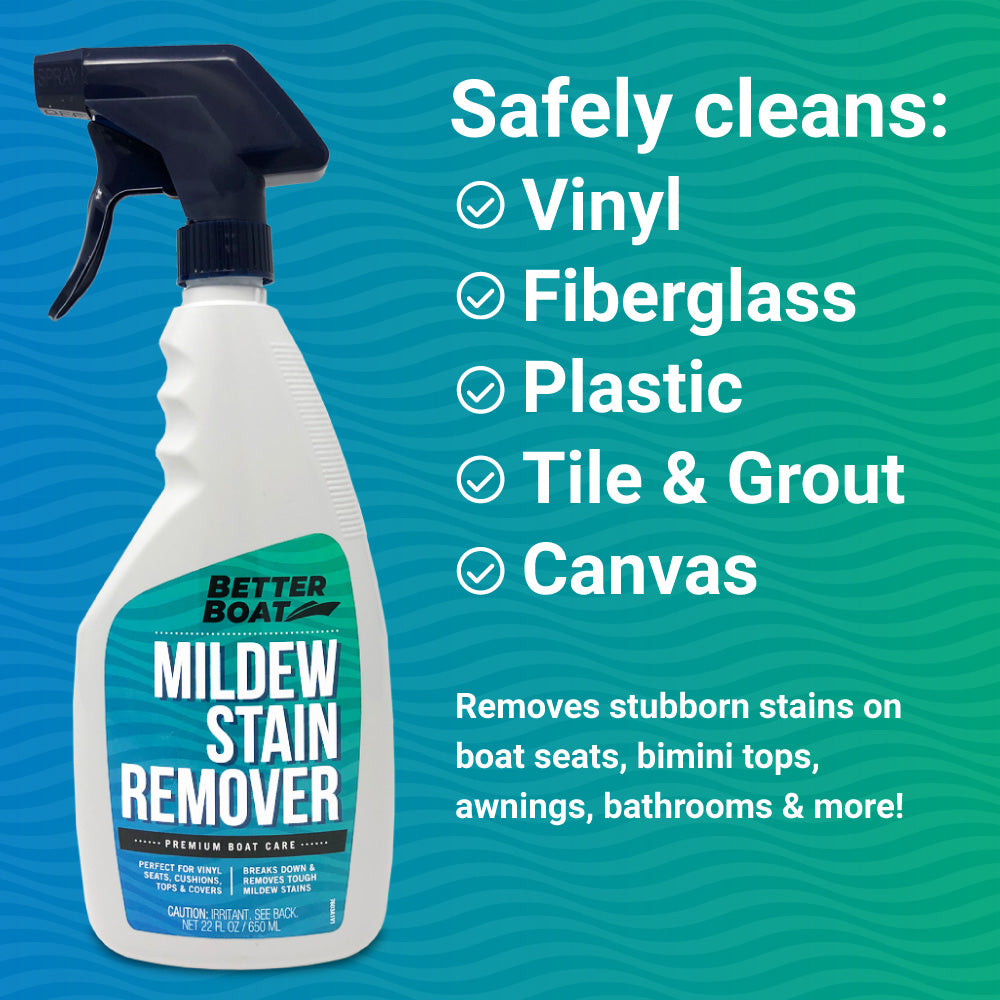
For a powerhouse solution that works on just about any boat upholstery you throw at it, Better Boat's Marine Mildew Stain Remover is our go-to. It cleans deep and knocks out the stubborn stains that only boaters understand.
Keeping your boat's upholstery looking sharp is about more than just appearances, it's about protecting your investment for the long haul.
Why Specialized Marine Cleaners Are Essential
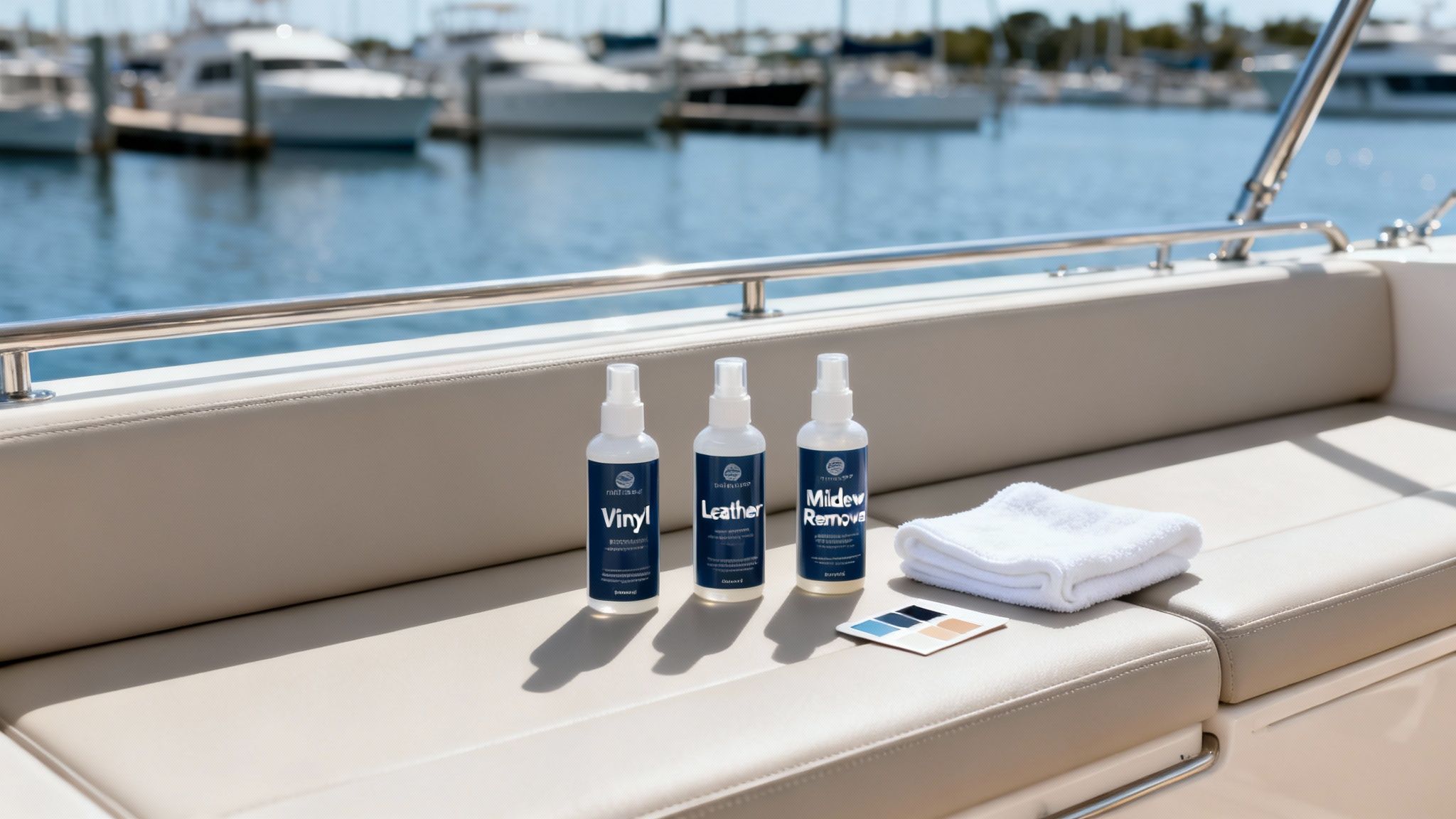
Your boat’s interior is in a constant battle with the elements in a way your living room couch could never imagine. We're talking relentless sun, corrosive saltwater spray, and the damp humidity that mildew just loves. Your average household cleaner simply isn't up for that fight. Using the wrong product can lead to faded cushions, cracked vinyl, and stitches that give up way too soon.
This is why a dedicated marine cleaner isn't just a good idea; it's a must-have. These formulas are specifically engineered to stand up to the harsh reality of life on the water.
What Makes Marine Cleaners Different
Unlike household sprays that often rely on harsh chemicals like bleach or ammonia, a quality boat upholstery cleaner is formulated to be tough on grime but gentle on marine-grade materials. Striking that balance is everything when it comes to preserving the look and life of your seats.
Marine cleaners are built with a purpose:
- Fighting Mildew and Mold: They have active agents that don't just bleach the surface stain you see; they kill the mildew spores at the root to stop them from coming back.
- UV Protection: Many are packed with ingredients that act like sunscreen for your upholstery, shielding it from the sun's damaging rays to prevent fading and brittleness.
- Salt Resistance: They're designed to break down and lift away those crusty salt deposits that can dry out and destroy upholstery over time.
Choosing the right cleaner means you're not just wiping away dirt, you're actively protecting your boat. For a deeper look at what to look for, you can learn more about how to choose the best cleaning products for your boat in our complete guide.
One of the biggest mistakes we see is people reaching for a familiar all-purpose cleaner from under the kitchen sink. It might seem harmless, but those products can strip the protective coatings right off marine vinyl and fabrics, leading to premature aging and a very expensive reupholstery job. Always stick with a product made for marine use.
Matching the Cleaner to the Material
Before you start spraying, the first thing you have to do is figure out what you're working with. Most boat upholstery is either vinyl, fabric, or leather, and each one needs its own game plan.
To make things simple, here's a quick chart to match your material with the right cleaner.
Matching Cleaners to Your Upholstery Material
Use this quick reference chart to match your boat's upholstery material with the right type of cleaner and key considerations for the best results.
| Upholstery Material | Recommended Cleaner Type | Key Challenge | Recommended Better Boat Product |
|---|---|---|---|
| Vinyl | pH-neutral vinyl cleaner with UV protectant | Mildew growth, sun damage, cracking | Vinyl Cleaner |
| Marine Fabric | Gentle fabric cleaner, enzyme-based for stains | Deep-set dirt, water spots, mildew | Mildew Stain Remover |
| Leather | Two-step cleaner and conditioner | Drying out, cracking, color fading | Leather Cleaner & Conditioner |
While some cleaning fundamentals apply everywhere, knowing the specifics of each material is key. For a broader perspective on upholstery care, an ultimate guide to cleaning any sofa offers some great insights that cross over from the home to the boat.
This guide will walk you through how to identify your boat's material and pick the perfect cleaning solution to bring it back to life, making sure your interior stays looking pristine for many seasons to come.
How to Identify Your Boat's Upholstery
Before you grab a cleaner, you’ve got to know what you’re working with. Using the wrong product on your boat's seats isn’t a minor mistake; it can lead to permanent damage like cracking, discoloration, or drying out the material. Most boat upholstery comes down to one of three types: marine-grade vinyl, fabric, or genuine leather.
Figuring out which one you have is usually pretty simple. A quick touch-and-look test is all it takes. This one small step is the difference between preserving your boat’s interior and accidentally ruining it.
The Feel Test for Marine Vinyl
Go ahead and touch your boat seats. Does the material feel smooth, with an almost plastic-like finish? Chances are, you’re dealing with marine-grade vinyl. It’s the most common material out there for a reason, it’s built tough and shrugs off water.
Press a finger into the cushion. Vinyl usually has a bit of give but feels solid and non-porous. If you splash a little water on it, the droplets will bead right up on the surface instead of soaking in. Look at the pattern; it’s typically uniform and consistent, often with a slight sheen.
Pro Tip: The seams and corners tell the real story. Since vinyl is manufactured, you won't find the natural grain patterns or tiny imperfections you'd see on leather. It’s all about consistency and function.
Examining Woven Marine Fabrics
If your upholstery feels less like a smooth seat and more like a heavy-duty outdoor cushion, you've probably got marine fabric. Materials like canvas and woven acrylics are common choices for their breathability and comfort on hot days.
Run your hand across the surface. You'll immediately feel a distinct woven texture. You can often see the individual threads forming a crosshatch pattern, which is a dead giveaway. Unlike vinyl, fabric is porous. A drop of water will soak in fairly quickly instead of beading up.
That absorbency is exactly why fabrics can be a magnet for dirt and mildew, making it crucial to use a cleaner that can get deep down between the fibers.
Spotting Genuine Leather Aboard
While it’s a bit of a luxury on a boat due to its high-maintenance nature, nothing beats the feel of genuine leather. The key to spotting it is to look for its natural character.
Real leather has a unique grain with subtle variations, pores, and sometimes even tiny scars, the authentic marks of a natural hide. It feels incredibly soft and more supple than vinyl.
When you press on it, it wrinkles in a way that looks organic, not manufactured. And, of course, it has that distinct, rich smell that synthetics just can't imitate. Using a harsh chemical here is a huge no-no, as it can strip the natural oils and leave you with a dry, cracked mess. Better Boat's Marine Leather Cleaner and Conditioner is a terific choice.
Getting this right is more important than ever. The global upholstery cleaner market hit USD 3.21 billion in 2024, which shows just how much people are investing in doing the job right. That growth is fueled by smarter, material-specific formulas designed to handle everything from UV damage on vinyl to moisture trapped in fabrics.
By knowing exactly what you’re cleaning, you can choose the right product and get the best results. You can explore more data on the diverse boat cleaner market and its different segments.
A Practical Guide to Deep Cleaning Marine Vinyl
Marine-grade vinyl is the workhorse of boat upholstery for good reason, it’s tough, water-resistant, and built to handle sun and spray. But even the best material needs a real deep clean to stay in prime condition. This isn't about a quick wipe-down; we're talking about a full restoration that lifts out grime, removes mildew stains, and guards against future damage.
Following the right process is key. It ensures you clean effectively without causing the cracking and fading that harsh chemicals or improper techniques can create. Let's walk through the steps to bring your vinyl back to life.
Prepare the Surface for a Deeper Clean
Before you even think about spraying a cleaner, you need to get rid of all the loose debris. Think of it like sweeping a floor before you mop, it just makes the actual cleaning so much more effective.
Grab a shop vac or a handheld vacuum with a soft brush attachment and go over every inch of your vinyl seats. You'll want to pay close attention to the seams, corners, and folds. This is where sand, salt crystals, and crumbs love to hide out. Getting them out now prevents you from grinding those abrasive particles into the vinyl's surface when you start scrubbing.
After vacuuming, a quick wipe with a damp microfiber cloth will pick up any lingering surface dust. Now you've got the perfect canvas to work on.
Applying the Right Marine Vinyl Cleaner
Alright, it's time for the main event. For a deep clean that’s going to tackle everything from ground-in dirt to those ugly mildew spots, a specialized product is non-negotiable. Our go-to is Better Boat's Marine Vinyl Cleaner. It's formulated to get down into the vinyl’s porous texture and lift mildew stains from deep in the material, not just bleach the surface stain.

Core product for this step
Boat Interior Vinyl Cleaner
Boat Interior Vinyl Cleaner is formulated to penetrate vinyl's porous texture and lift mildew stains from deep in the material. Apply it directly to the surface for the deep clean this section describes.
Spray the cleaner generously over a manageable section of upholstery, making sure you get even coverage. A common mistake is trying to tackle all the seats at once. Work in smaller areas instead; it stops the cleaner from drying out before you've had a chance to work it in. Let the solution sit for a few minutes to really break down the grime and start lifting it from the vinyl.
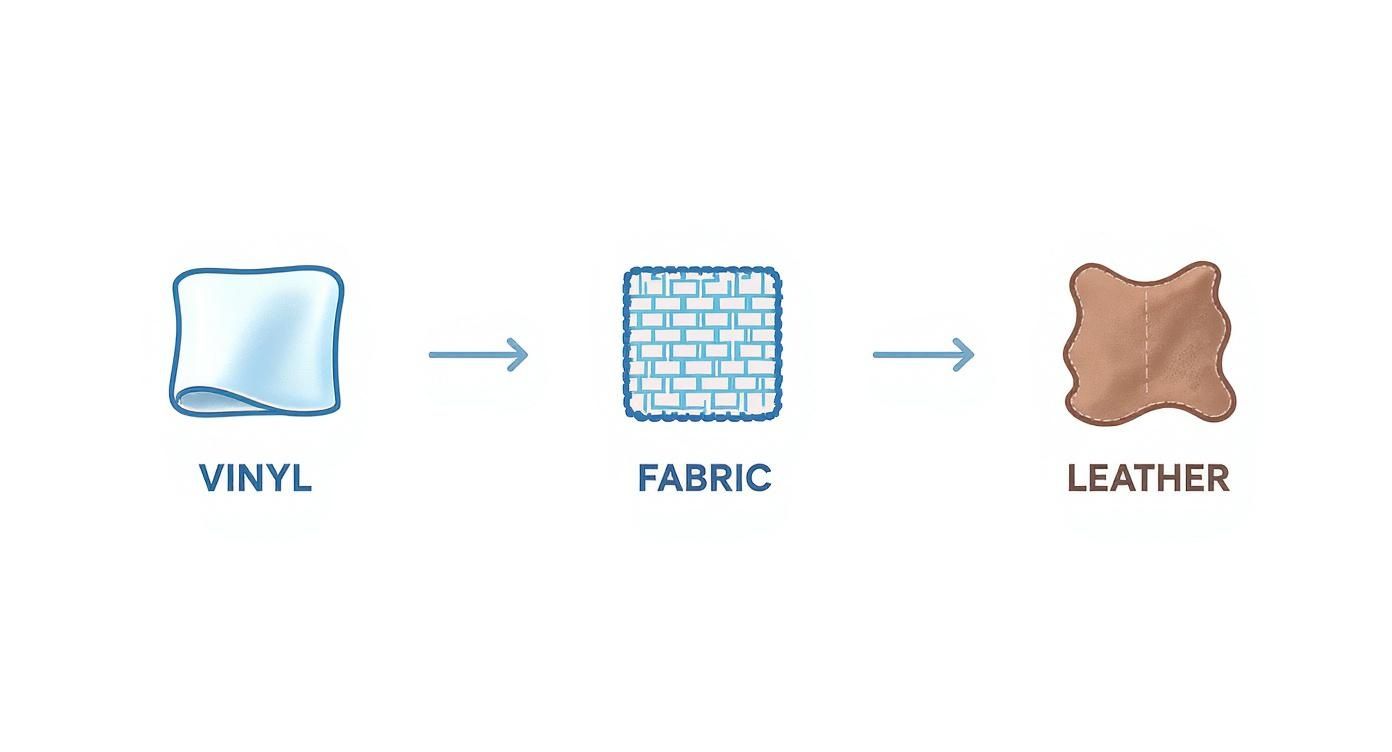
Knowing the difference between vinyl, fabric, and leather is the first step in picking the right cleaning method for your boat.
The Gentle Art of Agitation
With the cleaner doing its thing, the next move is to gently agitate the surface. This is a crucial point where many boat owners go wrong by grabbing a stiff, abrasive scrubber that can put permanent scratches in the vinyl.
Instead, reach for a soft-bristle brush or a dedicated upholstery brush. Work the cleaner into the vinyl using gentle, overlapping circular motions. This technique is perfect for lifting stubborn dirt out of the material's grain without stripping away its protective topcoat. You should see the grime lifting away into a nice lather.
Rinse Thoroughly and Dry Completely
Once you're done scrubbing, it's critical to rinse away every bit of the cleaner and the dirt it lifted. Use a clean, damp microfiber cloth to wipe the area down. Keep rinsing your cloth in a bucket of fresh water to avoid just spreading the grime back onto the seat.
After all the residue is gone, grab a separate dry towel and absorb as much moisture as you can. Getting your vinyl properly dry is one of the most important steps in preventing new mildew from taking hold. Let the seats air-dry completely before you close up the boat or throw a cover on.
A Word of Caution: Never, ever use household cleaners with bleach, ammonia, or abrasive powders. These harsh chemicals will break down the vinyl’s plasticizers, leading to yellowing, brittleness, and eventually, cracking. A magic eraser might seem like a quick fix, but it acts like super-fine sandpaper and can strip the finish right off your expensive seats.
Protect Your Newly Cleaned Upholstery
Cleaning is really only half the battle. Protection is what makes all your hard work last. Sun exposure is vinyl’s number one enemy, as UV rays are the main cause of fading and cracking over time.
Once your seats are clean and bone-dry, apply a high-quality UV protectant spray. Something like Better Boat's Vinyl Protectant creates a vital barrier against the sun's harsh rays. Just spray it on and wipe it in with a clean cloth. This final step not only protects but also leaves your vinyl with a rich, like-new finish, keeping it soft and supple for the season ahead.
This focus on proper maintenance is a growing trend. The global boat cleaner market was valued at about USD 4.8 billion in 2024 and is expected to hit USD 8.2 billion by 2033. This shows a real shift by boat owners toward specialized care products that extend a vessel's life.
Care and Cleaning for Fabric and Leather Upholstery
While marine vinyl is the undisputed champion of durability, a lot of us just prefer the comfort of fabric or the luxurious feel of leather. These premium materials really elevate a boat’s interior, but they demand a much more careful cleaning approach than their vinyl cousins.
Using the wrong stuff can spell disaster. Think water-logged fabric cushions that never seem to dry or leather that’s been permanently cracked by the sun. It’s all about their composition, woven fabrics are porous and trap moisture, making them prime real estate for mildew. Leather, on the other hand, is a natural material with oils that harsh chemicals can strip away, leaving it brittle. One-size-fits-all cleaners just won't cut it here.
Mastering Marine Fabric Care
Fabric boat seats are incredibly comfortable, especially on hot days, but their woven nature presents a unique challenge: moisture. Damp cushions are a breeding ground for mold and mildew, which will quickly turn a beautiful interior into a smelly, stained mess. The goal is to clean deeply without completely soaking the material.
Start by giving the fabric a thorough vacuuming to pull out any loose dirt, sand, or crumbs hiding in the weave. For a general clean-up, a gentle, pH-balanced fabric cleaner is your best bet. Mix it up according to the directions and apply it with a spray bottle, lightly misting the surface rather than drenching it.
Grab a soft-bristled upholstery brush and work the cleaner into the fabric with gentle, circular motions. This lifts the dirt without fraying the fibers. Then, blot the area with a clean, absorbent microfiber towel to pull up the grime and extra moisture. Keep at it until the towel comes away clean.
For stubborn spots or the first signs of mildew, you need something that can get in deep. Better Boat's Marine Mildew Stain Remover is safe for most marine fabrics when you follow the directions. Just be sure to test it on a hidden spot first to check for colorfastness before you go all-in.
The final, and most critical, step is drying. Let the cushions air dry completely, ideally in a sunny, breezy spot. Propping them up so air can circulate on all sides will speed things up and keep moisture from causing new problems.
Preserving the Richness of Leather Upholstery
Leather brings an unmatched level of class to a boat's cabin, but it’s also the most sensitive to the marine environment. Salt and sun are its natural enemies, working together to pull out moisture and cause irreversible cracking and fading. Cleaning leather is really a two-part process: gentle cleaning followed by intensive conditioning.
First off, never use all-purpose cleaners or vinyl cleaners on leather. They're way too harsh. Instead, reach for a dedicated, pH-neutral leather cleaner. Our Better Boat Leather Cleaner & Conditioner is formulated to gently lift dirt, body oils, and sunscreen residue without stripping the leather’s natural oils. Apply a small amount to a soft microfiber cloth, not directly onto the seat.
Wipe the leather in small sections using gentle, overlapping motions. You don't need to scrub hard; let the cleaner do the work. Immediately follow up with a second, clean, damp cloth to wipe away any residue, then a third dry cloth to absorb any leftover moisture. This methodical approach is key to a streak-free finish. You can find even more expert advice in our guide on how to clean your boat seats thoroughly and effectively.
After cleaning, conditioning is non-negotiable. A high-quality marine leather conditioner puts back the natural oils that the sun and salt took out. It restores that supple feel and creates a protective barrier against UV rays to prevent future damage. Work the conditioner into the leather with a fresh applicator pad until it’s fully absorbed, then buff it to a soft sheen. This restorative step is the secret to keeping your leather looking and feeling luxurious for years to come.
Removing Tough Stains Like Mildew and Mold
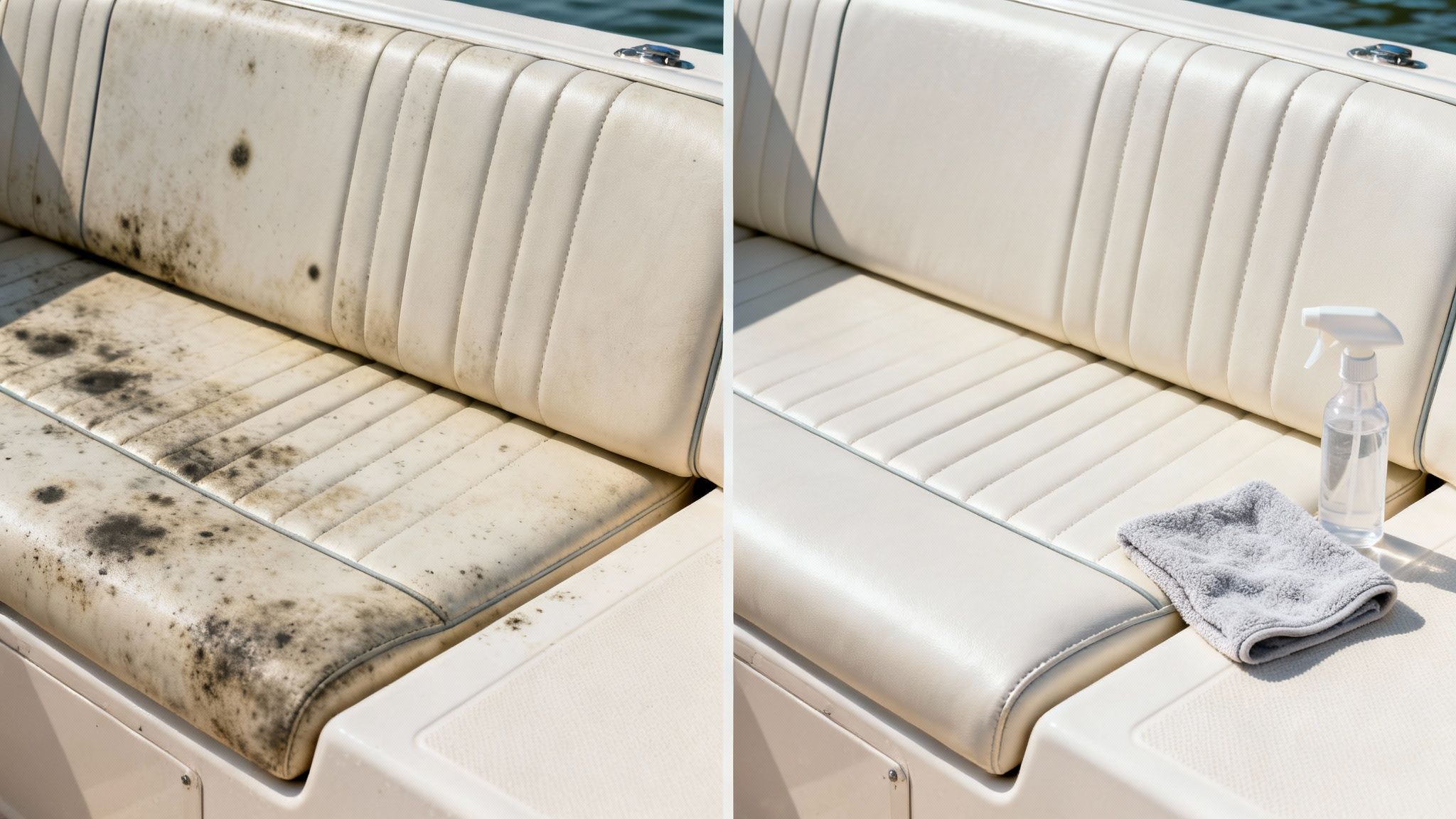
There are few things more frustrating to a boat owner than finding those ugly black spots of mildew creeping across pristine white vinyl seats. Mildew and mold are the persistent enemies of life on the water. They absolutely thrive in the exact conditions your boat lives in, dampness, humidity, and warmth, making your upholstery the perfect breeding ground.
But these fungi are much more than just a cosmetic issue. If you let them go, they can permanently stain your vinyl, eat away at the stitching, and create an unhealthy environment in your cabin or cockpit. Taking them on requires more than a simple wipe-down; you need a real strategy to kill the problem at its source.
Why Mildew Is So Stubborn
Those tiny black dots you see are just the tip of the iceberg. The real problem lies in the microscopic roots, called hyphae, that dig deep into the pores of your upholstery. A classic mistake is grabbing a bleach-based household cleaner, which often just whitens the surface stain without actually killing the fungus underneath.
This approach is a temporary fix, at best. The mildew spores survive, and since bleach can weaken vinyl and stitching over time, the problem often comes back with a vengeance. A dedicated marine-grade cleaner is your best bet to win this battle for good.
A Targeted Approach to Mildew Removal
For a truly effective clean, you need a cleaner that’s designed to get into the material and lift the staining completely. This is where a specialized product like Better Boat’s Marine Mildew Stain Remover makes all the difference. Its formula is engineered to get deep into the vinyl’s texture, lifting mildew stains from deep in the material so the surface looks clean again.
Here’s how to get the best results with it:
- Apply Generously: Spray the cleaner directly onto the affected areas. You want full coverage over all the visible mildew, so don’t be shy, let the solution soak in.
- Let It Work: Give the cleaner several minutes to sit. This dwell time is critical; it lets the active ingredients break down and lift the stains.
- Gentle Agitation: Grab a soft-bristle brush and gently work the cleaner into the upholstery. This helps lift those embedded stains without scuffing up the vinyl.
- Rinse and Dry: Wipe the area clean with a damp microfiber cloth, then follow up with a separate dry towel. Getting the seat completely dry is crucial to avoid creating a welcoming environment for new growth.
For a more detailed look, check out our complete guide on effective mildew removal for boat seats, which covers every step of the process.
Tackling Other Tough Marine Stains
Of course, mildew isn’t the only stain you'll be up against. From messy fishing trips to onboard get-togethers, other culprits like fish blood, grease, and sunscreen can leave their mark. The secret is to act fast before the stain can set in for good.
Fish blood, for instance, is a protein-based stain that can be a real pain. Blot the spot immediately with a cold, damp cloth (hot water will cook the protein and set the stain). Apply your cleaner, let it sit, and then gently scrub.
For grease or oil, you’ll need a cleaner that can break down those lipids. A versatile, high-quality boat upholstery cleaner should be able to handle these common messes without needing a whole arsenal of different products.
Prevention Is the Ultimate Strategy
The best way to deal with tough stains and mildew is to stop them before they even start. A proactive maintenance routine is your strongest line of defense.
Make sure you have good ventilation by opening hatches and using vents, especially when the boat is covered. Always let your cushions dry completely before throwing the cover on. And finally, a regular cleaning schedule, even a quick wipe-down after each trip, goes a surprisingly long way in keeping your upholstery looking brand new.
Setting Up a Long-Term Upholstery Maintenance Routine
That deep clean you just did? It’s a fantastic reset. But the real secret to keeping your boat’s upholstery looking brand new for years to come is all about creating a simple, consistent maintenance habit.
Being proactive is always less work than being reactive. A little regular care prevents grime from digging in, stops mildew before it ever gets a foothold, and protects your investment from the sun and salt. Think of it as a small weekly deposit into the long-term health of your boat. This doesn't have to be some huge, time-consuming chore. Actually, the best routines are the ones that are so easy you barely notice you're doing them.
Your Weekly and Monthly Care Checklist
A little bit of effort after each trip makes a world of difference. Once you’re tied up at the dock, just take five minutes to wipe down all your vinyl surfaces with a clean, damp microfiber cloth. This simple step gets rid of fresh salt spray, sunscreen oils, and daily grime before the sun has a chance to bake it all in.
For a more structured approach, here’s a simple schedule you can follow:
- Weekly: Do that quick wipe-down after every single outing. It's also crucial to make sure all the cushions are dry, especially if you caught some rain or heavy spray.
- Monthly: This is your chance for a protective refresh. Grab a dedicated UV shield like Better Boat’s Vinyl Protectant spray. Applying it creates a vital barrier against the sun's harsh rays, which are the main culprit behind fading and cracking.
Honestly, if you do just one thing regularly for your vinyl, make it a UV protectant application. It keeps the material soft and flexible, warding off the premature aging that leads to those painfully expensive reupholstery jobs down the road.
Seasonal Protection and Long-Term Storage
When the time comes to tuck your boat away for the off-season, a bit of extra prep work is non-negotiable. This is when you'll want to do one final, thorough cleaning before it goes under cover. The single most important thing is to make sure every last cushion and surface is bone-dry. This is your best defense against mildew taking over in the dark, damp environment under a boat cover.
Speaking of covers, for the ultimate defense during storage or just through a nasty patch of weather, nothing beats a high-quality one. Durable and breathable boat covers are designed to shield your whole boat from rain, snow, and damaging UV, but they also let air circulate.
That air circulation is key to preventing moisture buildup. It’s a straightforward investment that protects not just your upholstery but your entire boat, making sure she’s in prime condition for next season’s launch day.
Answering Your Top Boat Upholstery Cleaning Questions
Even with the best gear on deck, cleaning your boat's upholstery can bring up some questions. It's totally normal. Getting the right answers is the key to protecting your investment and making sure your hard work actually pays off. Let's tackle some of the most common questions we hear from boat owners just like you.
Sorting out the facts from fiction helps you skip the guesswork and get right to the good stuff, a clean, beautiful boat interior.
Can I Just Grab Some Household Cleaners, Like Bleach, for My Boat Seats?
I know it's tempting to reach for a familiar bottle from under the kitchen sink, but please don't. We strongly advise against it. Household chemicals, especially bleach, are incredibly harsh on marine-grade vinyl and its stitching. They’ll strip away protective coatings, causing the material to yellow, become brittle, and eventually crack under the sun.
You'll also want to stay away from abrasive tools like magic erasers. Think of them as a very fine-grit sandpaper. They might seem to work at first, but they're actually scrubbing off the protective topcoat of your upholstery, which just invites UV damage and premature aging.
Your best bet is always a dedicated marine cleaner. A product like Better Boat's Marine Mildew Stain Remover is a perfect example, it's formulated to be tough on mildew and grime but gentle enough for regular use on the materials actually found on your boat.
How Often Should I Really Be Deep Cleaning My Upholstery?
For the average boater, a serious deep clean twice a year is a solid routine. The first one should happen when you're de-winterizing and getting the boat ready for the season. The second should be part of your winterization checklist before you put it away for storage.
Now, if you're out on the water a lot, especially in harsh saltwater environments or under intense sun, throwing in a mid-season deep clean is a really smart move. A little consistent effort goes a long way.
Here’s a good rhythm to get into:
- After every trip: Do a quick wipe-down to get fresh salt, bird droppings, and grime off before they have a chance to set in.
- Monthly: Take a few minutes to apply a quality UV protectant. Our Better Boat Vinyl Protectant is great for this, as it shields your seats from sun damage and helps you go longer between those big deep-cleaning sessions.
What's the Best Way to Stop Mildew From Coming Back?
Winning the war against mildew is all about controlling two things: moisture and airflow. Mildew absolutely loves damp, dark, stagnant places, so your entire goal is to rob it of that perfect environment.
First things first, make sure your boat is always well-ventilated, particularly when it's covered. If your boat cover isn't the breathable type, make a point to open it up on dry, breezy days to let fresh air circulate. And this is crucial: always, always make sure your cushions and seats are 100% dry before you cover the boat for any length of time. Putting a cover over damp seats is like rolling out the welcome mat for mildew.
Using a quality cleaner that contains mildew inhibitors is also a fantastic line of defense to keep it from returning.
At Better Boat, we get it. Keeping your boat's upholstery in top shape shouldn't feel like a never-ending battle. With the right know-how and a simple routine, you can keep your seats looking like new for years. Check out our complete line of boat cleaning and care products designed to protect your pride and joy.


