


Your Essential Guide to Boat Teak Wood Care and Restoration
When you talk about high-end boat decks, one wood stands above all the rest: teak. For centuries, boat builders have relied on Tectona grandis, and for good reason. Its natural oils give it an incredible resistance to water, rot, and slips, a perfect storm of luxury, performance, and safety that's just tough to beat on the water.
This incredible resilience is why boat teak wood is still the gold standard in the marine world.
Why Teak Is the Ultimate Choice for Boat Decks
It's not just about the classic, golden look. This tropical hardwood has a durability that few other materials can even touch. The natural oils inside the wood act like a built-in preservative, pushing water away and stopping mold and mildew from ever getting a foothold. In the damp marine environment, that's a game-changer.
This natural protection means teak doesn't splinter or crack easily, even after years of getting baked by the sun and pounded by salt spray and foot traffic. Plus, its high silica content gives it a natural non-slip texture, providing sure footing even when the deck is slick with water, a critical safety feature on any vessel. For a deeper dive into what makes this wood so tough, it's worth understanding the properties of hardwoods for longevity.
Performance Meets Investment Value
The benefits of teak go beyond just how it performs on the water. The global teakwood market was valued at an eye-watering USD 47.83 billion in 2024, which tells you just how sought-after this wood is, especially for boat building.
It fetches a premium price because it's simply stronger. Teak has 50% higher tensile strength than many alternatives, a vital stat for a deck that's always under stress. And when it comes time to sell, a boat with well-maintained teak can command up to 20% higher resale values. Taking care of your teak isn't just a chore; it's a smart investment.
Choosing teak is an investment in your boat's safety, longevity, and financial worth. Its unique combination of natural water resistance, non-slip texture, and durability makes it the superior choice for marine decking.
While teak is an exceptional material, it's not the only option out there. To get a bigger picture of what's available for decking, you might want to check out the guide on the different types of boat flooring.
But if you have teak, protecting its value and beauty comes down to a consistent maintenance routine. Getting the basics right from the start will save you a lot of headaches down the road.
To make things simple, here's a quick breakdown of the essential teak care steps covered below.
Your Quick Guide to Teak Maintenance Essentials
| Maintenance Stage | Primary Goal | Recommended Better Boat Product |
|---|---|---|
| Cleaning | Remove surface dirt, grime, and graying without stripping the wood. | Teak Cleaner and Brightener |
| Sanding | Smooth rough patches and open the wood's grain for sealing. | N/A |
| Sealing/Oiling | Protect the wood and enhance its natural golden-honey color. | Teak Sealer Oil |
| Regular Care | Maintain the protective finish and prevent stains and mildew. | Boat Wash & Dry Maintenance Kit |
Think of this table as your cheat sheet. Now, let's get into the nitty-gritty of each step so you can keep your teak looking its absolute best.
How to Properly Assess Your Teak's Condition
Before you even think about grabbing a scrub brush or a sander, the most important thing you can do is figure out the real state of your teak. It's tempting to jump right into the hard work, but a little diagnosis up front saves a ton of effort later.
Not all tired-looking teak needs a full-blown restoration. Sometimes a simple wash is all it takes. It all starts with a good, honest look at what you're dealing with. Get up close and personal with different parts of your boat. The teak on a high-traffic swim platform is going to tell a very different story than a vertical handrail that sees a lot less abuse.
Reading the Color Cues
The easiest way to read your teak's health is by its color. It's a dead giveaway for how it's been holding up against the sun and sea.
Here's what you're looking for:
- Golden Honey: This is the look boat owners are after. It means the wood's natural oils are locked in and it's likely protected by a recent coat of oil or a quality sealant. This is healthy, happy teak.
- Silvery Gray: This is what happens when teak goes unprotected. The sun's UV rays bake the surface, turning it a distinguished gray. While some boaters love this patina and it doesn't hurt the wood's integrity, it leaves it completely open to stains and mildew.
- Dark and Grimy: If that silver has turned dark, almost black, and feels nasty to the touch, you've got problems. This is a sure sign that dirt, grime, and mold have dug into the wood grain. This teak is long overdue for a deep clean.
The Touch Test: Identifying Deeper Issues
Color is only half the story. You have to get your hands on the wood to check for problems you can't see. Run your hand over the surface (carefully, watch for splinters) and press down in a few spots, especially in areas that tend to stay wet.
You're feeling for two very different things: surface grit versus structural weakness. A rough, sandy texture usually just means surface dirt that a good scrubbing will handle. But if you press down and the wood feels spongy or soft, that's a major red flag for rot. Rot means water has gotten deep into the wood, causing the fibers to break down. This is a job for more than just a cleaner; that section might need to be repaired or even replaced.
A classic mistake is getting aggressive with a sander on gray teak without cleaning it first. You're just grinding all that surface dirt and mold deep into the wood grain, making your job ten times harder.
This beautiful wood is a huge part of what makes a boat special, and the market agrees. The global teak decking market is on track to explode from USD 912.5 million in 2025 to over USD 1.99 billion by 2035. For you, this means proper care isn't just about looks. It's an investment that can boost your boat's resale value by as much as 15%. You can dive deeper into these trends in the full teak decking industry report.
Once you've got a handle on your teak's color and feel, you can choose the right game plan. For light grime or a bit of gray, a gentle wash with a good boat soap might be all you need. But for that dark, stained, and mildewed wood, it's time to bring out the big guns with a dedicated Teak Cleaner and Brightener to really get the job done right.
A Practical Guide to Cleaning and Restoring Teak
Alright, you've taken a good, hard look at your teak and know what you're up against. Now it's time to roll up your sleeves and get to work. This is where the diagnosing stops and the doing starts, turning that tired, gray wood back into the beautiful, golden teak you love.
First things first, let's get your tools together. Rushing this part is a classic mistake that can lead to a lot of frustration, or worse, damaged teak. You don't need a giant toolbox, just the right gear for the job.
The Essential Toolkit for Teak Restoration
The most important tool you'll have is a good quality, soft-bristled deck brush. So many boat owners reach for a stiff brush, thinking tougher is better. That's a huge error. A stiff brush will chew right through the soft parts of the teak's grain, leaving you with ugly grooves that are a real pain to fix. A soft brush has all the power you need to lift out dirt without tearing up the wood. The Stainless Steel Scrub Set for Teak Decks with Handle is purpose-built for exactly this kind of work.
You'll also want to have these on hand:
- A few clean rags or microfiber cloths for applying cleaners and wiping things down.
- A bucket for your cleaning solution and rinse water.
- Protective gear, especially gloves and safety glasses. This is non-negotiable when you're working with chemical cleaners.
- A hose with a good spray nozzle for rinsing everything thoroughly.
With your kit ready, it's time to start cleaning. Remember, it's not just about the product you use. It's about the technique.
The Cleaning Process
Here's the single most important thing to remember when cleaning teak: scrub across the grain, not with it. When you scrub parallel to the grain, your brush digs into the softer wood between the hard grain lines, creating little valleys. Scrubbing perpendicular to the grain lifts the dirt from the surface without gouging the wood itself.

What you need for this step
Teak Cleaner and Brightener
A dedicated teak cleaner and brightener lifts surface grime, salt, and gray oxidation without stripping the wood's natural oils. Apply it before scrubbing across the grain to get the best results with the least effort.
This quick flowchart shows you how to assess the wood before you start.
Following this simple process of looking, feeling, and diagnosing helps you match your cleaning effort to the teak's actual condition right from the get-go.
If your teak is just a little dirty or starting to fade, a simple one-part cleaner will probably do the trick. But for wood that's gone dark and grimy or has that deep silver-gray patina, you'll need to bring in the big guns with a dedicated deep cleaner.
Pro Tip: Always work in small, manageable sections, maybe three to four square feet at a time. This keeps your cleaner from drying on the deck before you can scrub and rinse it off, which is a surefire way to get a blotchy, uneven finish.
For that seriously weathered teak, the Better Boat Teak Cleaner and Brightener is made specifically for the job. It cuts through years of dirt and oxidation to bring the fresh wood back to life. For the complete two-part system including the sealer, consider the Teak Cleaner Brightening and Sealer Set.
And what about those stubborn black or green spots? That's mildew that has set into the wood. Apply a targeted mildew stain remover directly to the spots and let it work before you start the main cleaning. If you want a deeper dive, the expert guide on using teak cleaner has all the details.
When and How to Sand Your Teak
Sanding can sound intimidating, but it's often the key to getting that truly professional, smooth finish. Sanding isn't for cleaning. It's for smoothing the wood and taking off that top, fuzzy layer of gray, oxidized fibers after you've cleaned it.
You should only sand your teak after it's been cleaned and is completely dry. If you sand dirty teak, you're just grinding that grime deeper into the grain.
The secret to a good sanding job is using the right sandpaper and the right technique.
- Start with 80-grit sandpaper if the wood feels rough or has some light dings. It's aggressive enough to remove the oxidized layer without taking off too much wood.
- Follow that up with 120-grit sandpaper. This will give you that perfectly smooth surface that's ready for an oil or sealant.
- Always sand with the grain. This is critical. Sanding across the grain will leave scratches that will stick out like a sore thumb once you apply a finish.
You can sand by hand with a sanding block, which gives you great control, or use an orbital sander for big areas like a deck. If you go with a power sander, just keep it moving so you don't create any dips or low spots. The goal is a uniform, silky feel.
Once you finish sanding, the last step is to vacuum up all the dust. What you'll see is clean, pristine teak that looks almost brand new, just waiting for a protective coat. For other outdoor wood projects, a general deck cleaning guide can also offer some great transferable skills for tackling stubborn stains.
Protecting Your Teak: The Oil vs. Sealant Decision
Choose the right protection
Teak Sealer
Whether you lean toward a penetrating oil or a surface-forming sealant, having the right product ready at this stage locks in all the work you just put into cleaning and sanding. The Teak Sealer Oil works as a standalone option, while the Teak Cleaner Brightening and Sealer Set covers the full cleaning-to-sealing process in one kit.

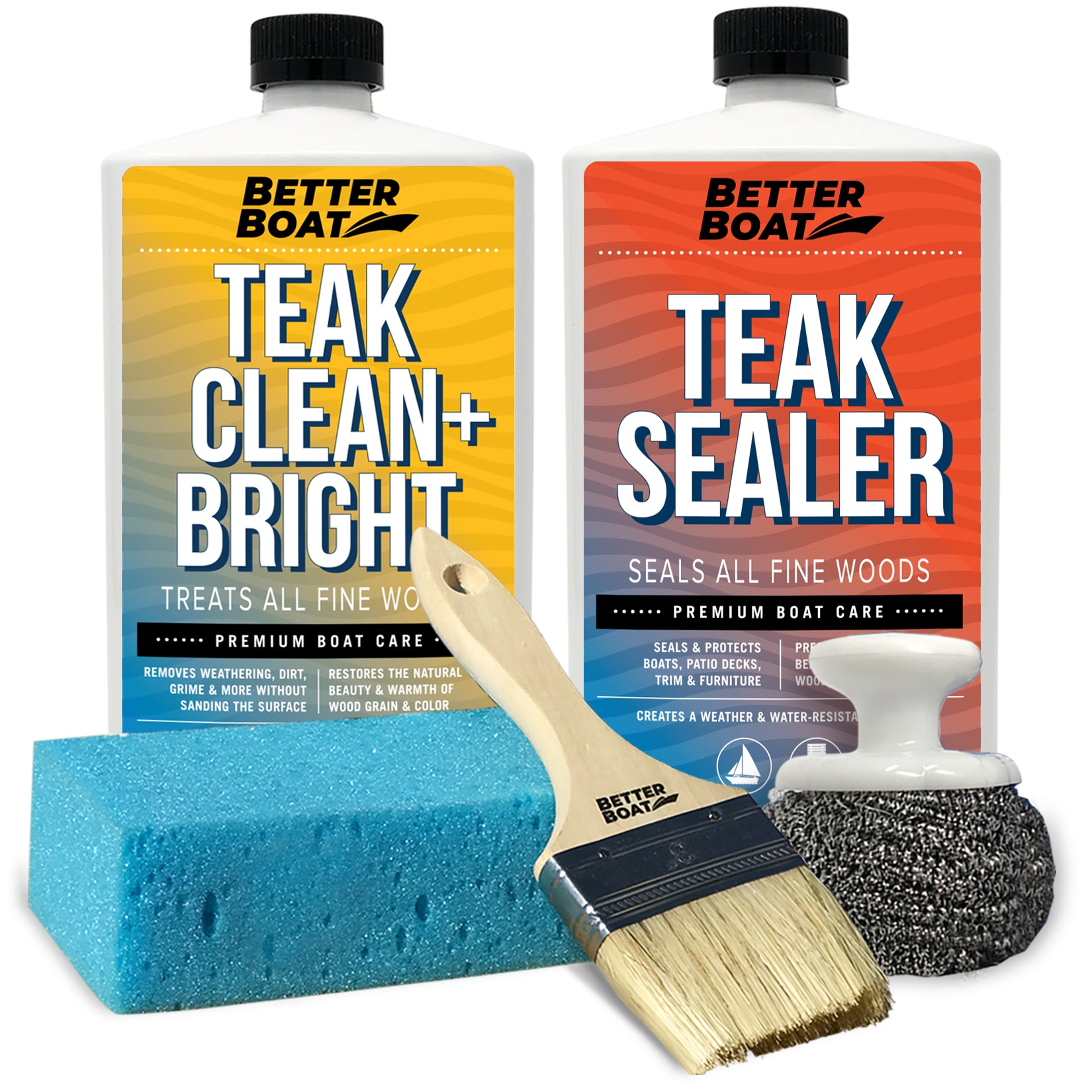
So you've put in the elbow grease. Your boat teak wood is cleaned, maybe even sanded, and it's looking absolutely pristine. This is the perfect time to protect it, but now you're facing the classic boater's dilemma: do you go with a traditional teak oil or a modern teak sealant?
Honestly, there's no single right answer here. This choice is less about right-and-wrong and more about what you want your teak to look like and how much time you're willing to spend maintaining it. It all comes down to your personal preference and boating lifestyle.

The Case for Traditional Teak Oil
Teak oil is the old-school, tried-and-true method for a reason. It soaks deep into the wood grain, replenishing the natural oils that sun, salt, and scrubbing have stripped away. The result is that rich, warm, amber glow that just screams "classic yacht."
If you love the process of caring for your boat and that traditional look is what you're after, oil is a great choice. Applying a product like the Better Boat Teak Sealer Oil is a pretty satisfying job. You just wipe it on with a clean cloth. It's like feeding the wood, and the way it brings out the color and grain is instantly rewarding.
But here's the catch: that beautiful finish demands commitment. Because oil works from within the wood instead of creating a hard shell on top, it doesn't offer much in the way of UV or stain protection. It also fades relatively quickly. You'll likely be out there reapplying it every two to four months to keep that dreaded gray from creeping back in.
For a complete breakdown, have a look at the guide explaining what teak oil for boats really does and its limitations.
The Modern Approach with Teak Sealants
On the flip side, you have teak sealants. These are a different animal altogether. Instead of soaking in, a sealant forms a protective barrier right on the surface of the wood. Think of it as a clear coat of armor for your teak.
This armor is incredibly effective at blocking UV rays and repelling water. It also stops ugly stains from things like spilled diesel, coffee, or fish blood from setting in.
The biggest win for sealants is longevity. A good quality sealant, like the Teak Sealer Oil, can easily last a full boating season, sometimes even longer. If you're the kind of boater who would rather be cruising than doing brightwork, a sealant will drastically reduce your maintenance time.
Sealants typically leave a more natural, matte finish that keeps your teak looking like it was just freshly sanded. The application can be a bit more finicky. You need a perfectly clean, dry surface for it to bond properly. But the payoff is durable, low-fuss protection.
The core difference is simple: Teak oil feeds the wood from the inside, while a sealant protects it from the outside. Your choice depends on whether you prioritize the traditional look and process of oiling or the long-lasting, low-maintenance protection of a sealant.
To make the choice even clearer, let's put them head-to-head.
Teak Oil vs. Teak Sealant: Which Is Right for Your Boat
This table breaks down the key differences to help you decide which finish best fits your needs.
| Feature | Teak Oil | Teak Sealant |
|---|---|---|
| Appearance | Delivers a rich, warm, classic amber tone that deepens the wood's color. | Provides a more natural, matte finish that preserves the look of freshly cleaned teak. |
| Durability | Lower durability. Typically lasts 2-4 months before needing reapplication. | Higher durability. A single application can last a full season or longer. |
| Application | Feeds the wood's interior. Applied easily with a rag or brush. | Forms a protective surface layer. Applied with a brush or special applicator to a clean surface. |
| Maintenance | Requires more frequent cleaning and re-oiling to maintain its appearance. | Requires less frequent reapplication, but stripping it for a new coat can be more work. |
| Best For | Traditionalists who enjoy the routine of boat care and prefer the classic, deep amber look. | Boaters seeking maximum protection against stains and UV rays with minimal annual upkeep. |
At the end of the day, both options will get the job done. The best decision is the one that aligns with how you use your boat and how much time you realistically want to spend keeping its beautiful teak looking sharp.
Building Your Seasonal Teak Maintenance Schedule
Keeping your boat's teak looking sharp isn't about one massive, back-breaking restoration project a year. It's all about building simple, consistent habits into your regular time on the water. A smart, year-round maintenance plan is way more effective, and a lot less work, than letting problems pile up.
Think about it this way: you wouldn't wait for your engine to make a funny noise before you check the oil. The same idea applies to your teak. By breaking down the essential tasks by season, you can easily stay ahead of the game and stop small issues from snowballing into major headaches. This approach makes teak care totally manageable, not something you dread.
Pre-Season Prep: The Spring Kick-Off
Before your boat even thinks about hitting the water for the season, this is your chance to lay the groundwork for great-looking teak all summer long. A solid pre-season inspection and prep session ensures your wood is not just beautiful but also shielded from the sun, salt, and foot traffic to come.
Your main mission here is a deep clean followed by a fresh protective coat. It's the most labor-intensive part of your annual schedule, but the payoff is huge.
- Deep Clean: Kick things off by giving all your teak a thorough wash. A dedicated product like the Teak Cleaner and Brightener is perfect for this, as it will lift out all the grime that settled in over winter and get rid of any graying oxidation.
- Minor Repairs: Take a close look for any dings, deep scratches, or rough spots you might have missed last season. A quick, light sanding with 120-grit sandpaper is usually all it takes to smooth these imperfections out.
- Apply Protection: Once the teak is completely clean and bone-dry, it's time to apply your finish. This step is non-negotiable. Whether you prefer the classic glow of a teak oil or a tough-as-nails sealant like the Teak Sealer Oil, this protective layer is what stands between your wood and the elements.
This initial effort is what gives you that head-turning, golden deck when you pull out of the slip for the first time. It's the most critical step in your entire seasonal plan.
In-Season Maintenance: Keeping It Fresh
With all the hard work out of the way, your focus during the prime boating months shifts to simple, routine upkeep. The name of the game is preventing dirt and salt from building up and tackling any spills before they have a chance to set in. These are quick, easy tasks.
The single best habit you can possibly develop is giving your teak a quick freshwater rinse with a hose after every single outing. This simple 3-minute task washes away abrasive salt crystals that act like sandpaper underfoot and dull your beautiful finish.
Throughout the summer, keep an eye out for little accidents. A dropped wrench, a spilled glass of wine, or bird droppings can all compromise your protective finish. Catching them early is everything. Spot-clean these messes right away with a soft cloth and a bit of gentle soap.
For your weekly or bi-weekly cleaning, a simple wash-down with a pH-neutral boat soap and a soft-bristled brush is all you need. It's strong enough to lift surface dirt but gentle enough that it won't strip away your oil or sealant. A consistent routine makes all the difference, as detailed in the comprehensive boat maintenance checklist.
Post-Season Shutdown: Winterizing Your Teak
As the boating season winds down, one final, thorough cleaning is crucial before you tuck your vessel away for the winter. This step is your best defense against mildew growth and grime setting in during the damp, cold months.
Give your teak one last good wash to get rid of all the salt and dirt from the season, then let it dry completely. The Boat Wash & Dry Maintenance Kit has everything needed to do this efficiently. For most boaters, applying another protective coat isn't necessary here, since the wood won't be exposed to the sun's harsh UV rays.
The most important part of winterizing your teak is simply protecting it from the elements. A high-quality, well-fitting boat cover is your best friend. It shields the wood from rain, snow, and even the surprisingly damaging effects of the winter sun, ensuring your teak is in great shape when you pull that cover off next spring.
Troubleshooting Common Boat Teak Wood Problems
Even with the most diligent maintenance routine, your boat teak wood is bound to throw you a curveball now and then. One day you'll notice a stubborn dark spot that won't wash away, a blotchy finish, or a mystery stain that seems to have appeared out of nowhere. It's frustrating, but most of these common teak problems are fixable with the right approach and a bit of patience.
Think of this as your go-to guide for those "what now?" moments. The most common issues and practical solutions are covered below to get your teak looking right again.
Taming Stubborn Mildew and Black Spots
You spend hours cleaning your teak, and just a week later, you see them: little black spots creeping back in. This is a classic sign of mildew that has settled deep into the wood grain. A simple surface wash often isn't enough to lift the staining from deep in the grain, so the spots reappear as soon as the conditions are right.
To really get rid of recurring mildew, you need to go on the offensive.
- First, give the affected area a normal cleaning to remove surface grime.
- Once it's clean, apply a dedicated mildew stain remover directly onto those black spots. Its formula is designed to lift mildew stains from deep in the wood grain, not just bleach the surface stain you see.
- Let it sit for a few minutes to really penetrate the wood grain. Then, give it a gentle scrub with a soft brush and rinse it all away thoroughly.
This targeted treatment is far more effective than just scrubbing harder. You're actually addressing the underlying biological growth, which is the only way to keep it from coming back so quickly.
It's easy to see why high-quality teak care is so important when you look at the numbers. The global teak wood market was valued at USD 51.31 billion in 2024 and is expected to more than double by 2033. Teak is the wood of choice in 40% of new luxury boat builds because of its natural resilience, but that investment can lose up to 30% of its value annually from simple neglect. Proper maintenance easily prevents that loss. You can dive deeper into these industry stats at Business Research Insights teak wood market report.
Fixing a Blotchy or Uneven Finish
There's nothing more disappointing than spending a weekend applying a fresh coat of sealant, only to have it dry with streaks and patches. This is an incredibly common headache, and it's almost always caused by one of two culprits: an improperly cleaned surface or applying the finish in direct, hot sunlight.
A splotchy finish is a sign that the sealant or oil couldn't absorb or adhere evenly. This usually means dirt, old finish, or moisture was still present on the surface, creating a barrier in some spots.
Unfortunately, the only real fix is to start over, but this time with a more methodical approach. You'll need to completely strip the failed finish using a good teak cleaner or a specialized stripper, making absolutely sure the surface is 100% bare and uniform. After cleaning, let it dry for at least 24 hours before you even think about reapplying the finish. And when you do, make sure you're in a shaded, cool spot.


