


How to Remove Mildew from Canvas Without Damaging It
Before you can tackle mildew on your boat’s canvas, you need to know what you’re up against. The process is straightforward: identify the growth, clean it with the right stuff, then rinse and dry it completely. The real trick is catching it early. That faint musty smell or slight discoloration is often the first clue to a much bigger problem lurking just out of sight.
Quick answer: removing mildew from canvas safely
For boat canvas, start dry: brush loose mildew outside, then use a canvas-safe mildew remover, rinse thoroughly, and dry the fabric completely before storage. Bleach-heavy household mixes can damage coatings, stitching, and color, so test first and use marine fabric products when the canvas is valuable.
Fast canvas mildew cleanup path
| Stage | Best next step | Better Boat path |
|---|---|---|
| Loose surface mildew | Dry-brush outdoors while wearing gloves, eye protection, and a mask. | Remove spores before wet cleaning. |
| Visible mildew stains | Apply a marine mildew remover, let it dwell, then agitate gently. | Mildew Stain Remover |
| Rinse and dry | Flush residue completely and dry seams, folds, and straps before folding. | Cleaner residue and damp folds invite mildew back. |
| Prevention during storage | Store canvas dry with airflow and humidity control. | Boat Dehumidifier Container |
Identifying Mildew on Your Canvas Early
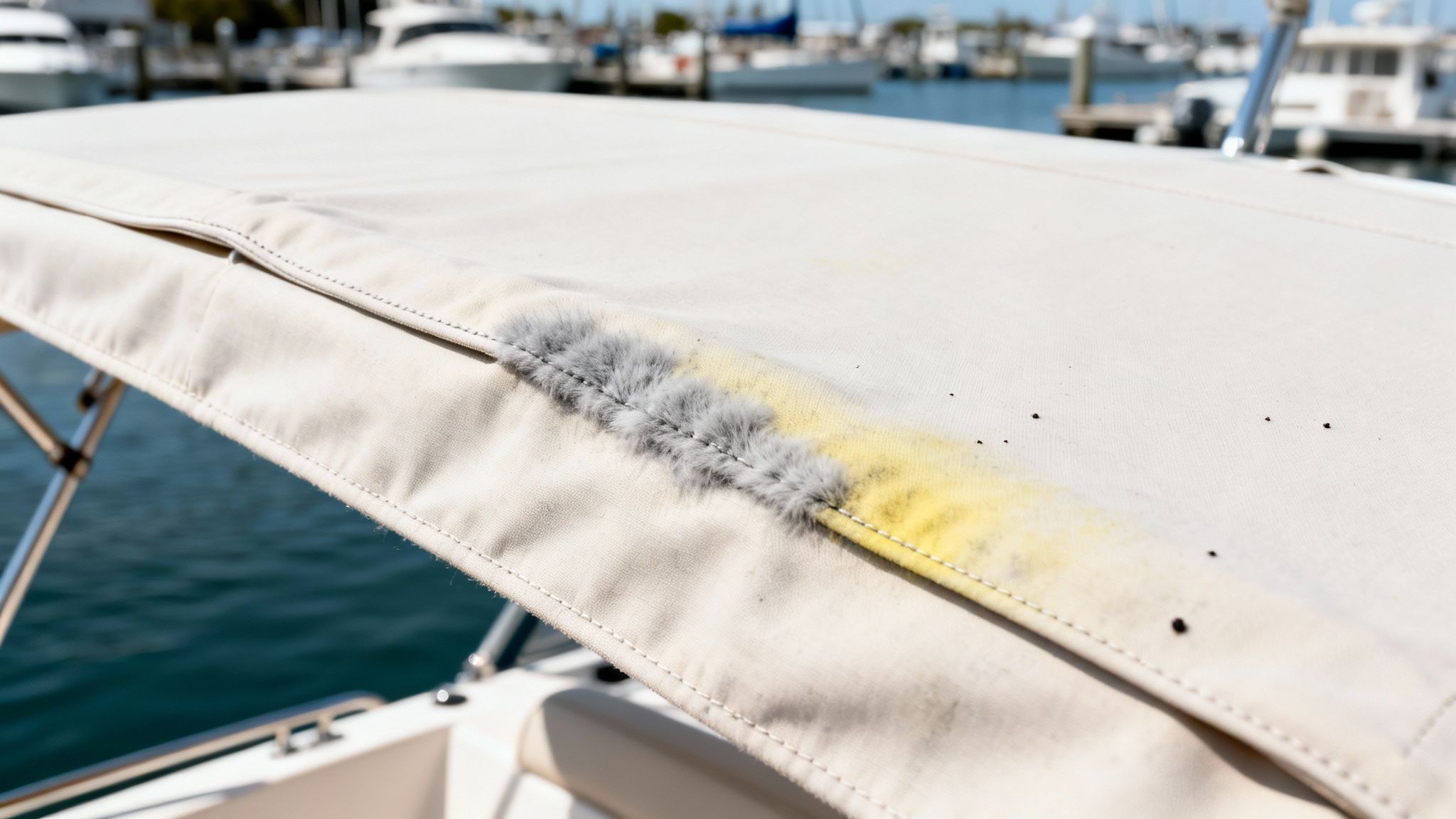
Knowing how to get mildew out of canvas starts with knowing what it looks like. It’s not always the obvious black spots most of us picture. Catching it in the early stages saves you a massive headache and prevents serious damage down the line.
Trust your nose. That’s often the first warning sign. If your boat cover, bimini, or tent carries a stubborn musty, damp smell, you’ve likely got mildew, even if you can’t see it. This odor comes from microbial volatile organic compounds (MVOCs) that fungi release as they grow and multiply.
Visually, early-stage mildew can be tricky. It often shows up as fuzzy or downy patches that are white, gray, or even a pale yellow. It’s easy to dismiss this as just a bit of dirt, but there are some tell-tale differences.
- Dirt and Grime: Usually looks flat and will just smear if you try to rub it.
- Mildew: Has a slightly raised, textured look and might leave a powdery residue on your fingers.
Common Hiding Spots for Mildew
Mildew loves anywhere dark, damp, and stuffy. It pops up wherever moisture gets trapped. You’ll often find it creeping along the seams and stitching of your bimini top, where water tends to pool and takes forever to dry. Another classic spot is inside the folds of a boat cover that was put away before it was bone-dry.
Mildew is a surface fungus that thrives in slightly acidic conditions. It's often confused with mold, but mold is the more sinister cousin, it penetrates deeper into fabrics and can cause real structural damage. Nipping mildew in the bud stops it from ever becoming a serious mold problem.
Why Mildew Loves Your Canvas
Understanding what makes mildew happy is the first step in keeping it away. It really only needs three things to set up shop on your boat’s canvas:
- Humidity: High humidity is basically a buffet for mildew spores, giving them all the airborne moisture they need to come alive.
- Poor Airflow: Stagnant, still air lets that moisture settle onto surfaces, rolling out the welcome mat for fungus.
- Trapped Moisture: Any water left behind from rain, dew, or just hasty storage is a direct invitation for mildew to move in.
By recognizing these early signs and the conditions that cause them, you can jump into action before a tiny spot becomes a major cleanup project. For a deeper dive, check out our guide on winning the impossible battle against boat mildew and keeping your vessel fresh.
Gathering Your Mildew Removal Toolkit
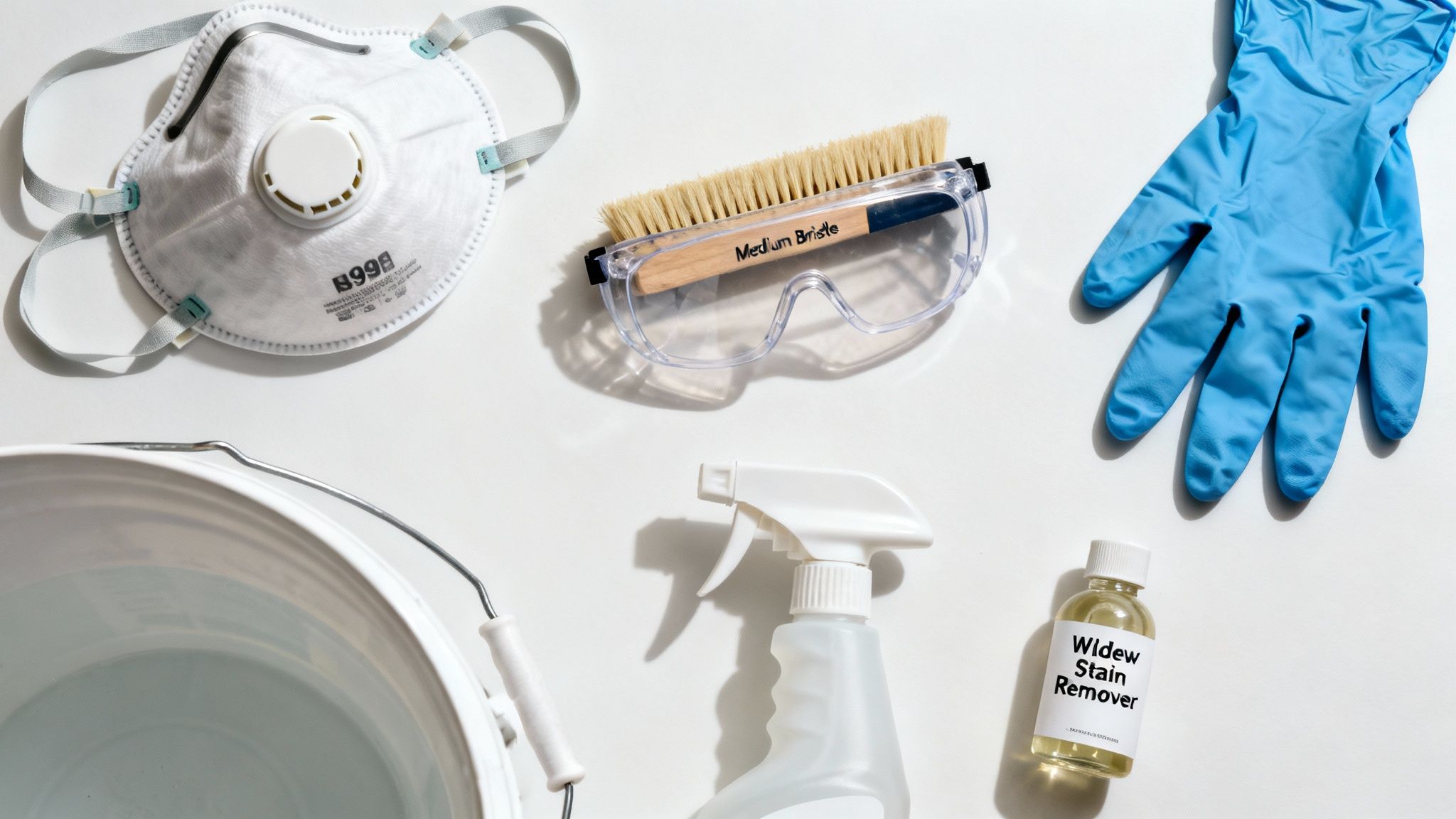
Before you can tackle that mildew, you need to assemble the right gear. Showing up to the fight unprepared will only make the job harder, longer, and frankly, a bit of a health risk. Having a dedicated toolkit ready to go means you can work efficiently and get the job done right the first time.
This isn't about grabbing every cleaning product under the sun; it's about having the right tools for this specific task. Think of this as your pre-cleaning battle plan.
Prioritize Your Personal Safety
Let's get one thing straight: working with mildew means dealing with airborne spores, and you do not want to be breathing that stuff in. Don't skip this part, your health is the top priority. Before you even think about touching the canvas, get your personal protective equipment (PPE) on.
- N95 Respirator Mask: This is absolutely non-negotiable. A simple dust mask isn't going to cut it. You need a proper N95 respirator to filter out those microscopic mildew spores.
- Safety Goggles: Protect your eyes from spores and any cleaning solution that might splash back. A good pair of wrap-around goggles gives you the best coverage.
- Protective Gloves: Waterproof gloves, like nitrile or rubber, are a must. They’ll keep the gunk and cleaning agents off your skin and prevent any irritation.
Select the Right Cleaning Tools
Once you’re geared up, it's time to gather the tools for the actual cleaning. The name of the game is being tough on mildew but gentle on your canvas. Using the wrong brush or tool can fray the fabric, compromise its integrity, or even pop a seam.
You’ll want some basic supplies, like a couple of empty spray bottles and at least one bucket for rinsing. The most important tool in your arsenal, however, is the brush. You're looking for bristles that are stiff enough to dislodge the mildew but soft enough that they won't shred your canvas fibers. A medium-bristle brush is the perfect sweet spot, giving you enough scrubbing power without causing damage.
If you’re curious about how techniques can vary, some guides on how to remove mildew from carpet show how different materials require different approaches.
A common mistake I see is people grabbing the stiffest, most heavy-duty scrub brush they can find. It seems logical for tough stains, but it can easily wear down the canvas surface and its protective coating, which will seriously shorten its lifespan. Always start with the gentlest tool that gets the job done.
Choose a Canvas-Safe Cleaner
Finally, you need your cleaner. Be careful here. Many household cleaners, especially anything with bleach, are way too harsh for marine-grade canvas. They can strip away the essential waterproof and UV-resistant coatings, leaving your expensive cover vulnerable to sun and water damage.
For canvas, that means reaching for a mildew stain remover made specifically for marine fabric rather than a repurposed household spray.

The cleaner built for this job
Mildew Stain Remover
A marine-formulated mildew remover works on stains without stripping waterproof or UV-resistant coatings. This is the type of product the section describes, purpose-made for canvas rather than adapted from household use.
Instead, reach for a product specifically made for the job. Our Mildew Stain Remover is engineered to lift mildew stains from deep in the fabric without harming the material or its finish. Its formula dissolves the stains you can see and lifts the staining set into the fibers you can't, a much smarter and safer way to clean your boat covers and biminis.
By getting the right safety gear, gentle tools, and a specialized cleaner, you're setting yourself up for a successful, damage-free cleaning. If you're looking to build out a complete maintenance arsenal, we've got more tips in our guide to creating the ultimate boat cleaning kit.

The Dry-Brush Method: Your Critical First Step
When you first see that tell-tale mildew on your boat cover or bimini, it's tempting to grab a wet sponge and start scrubbing immediately. I get it. You want it gone. But hold on, that’s one of the biggest mistakes you can make.
Going straight to water and a cleaner can smear live spores across the canvas. Worse, it pushes them deeper into the fabric's weave. You'll turn a small, manageable spot into a full-blown infestation that’s much harder to beat.
The real pro-tip, and the most effective way to start, is to work on a completely dry surface. This is what we call the dry-brush method, and it's a non-negotiable first step that will dramatically improve your results. You’ll physically knock off a massive amount of the loose, surface-level mildew before any liquid even touches the canvas.
Think of it this way: this initial pass makes the actual cleaning phase way more efficient. Instead of fighting through a thick layer of fuzzy growth, your cleaner can get straight to work on the stubborn, embedded stains left behind.
Why You Absolutely Must Start Dry
Imagine trying to clean a dusty floor by pouring a bucket of water on it first. You wouldn't do it, right? You'd just create a muddy mess. The exact same principle applies to mildew on canvas.
Dry mildew spores are light and just sitting on the surface. A simple, firm brushing is all it takes to dislodge them.
But the moment you add water, those spores reactivate and turn into a paste-like gunk. As you scrub, you’re basically grinding that mildew "mud" into the canvas fibers, making it a nightmare to remove completely. Starting dry means you're actually getting rid of the problem, not just spreading it around.
How to Dry-Brush the Right Way
Doing this correctly is all about containment. The goal is to remove the spores from the canvas without sending them flying everywhere or breathing them in.
Here’s the breakdown:
- Take It Outside: Never, ever do this in a garage, a shed, or on the boat if it's in a slip or covered storage. Find a well-ventilated spot outdoors on a day that isn't too windy.
- Stay Upwind: This is a simple but critical safety step. Position yourself so any little breeze blows the spores away from you, not into your face. And please, wear your N95 mask and goggles.
- Get the Right Tool: You need a brush with soft to medium bristles. Our Medium Bristle Brush is perfect for this, it’s got enough backbone to lift the mildew without being so stiff that it damages the canvas fibers.
- Brush Away: Use firm, controlled strokes and always brush away from your body in a downward motion. This directs all the crud you're removing toward the ground, not onto your clothes or into the air you're breathing.
You’ll be surprised how much comes off with just this dry technique. In fact, professional disaster response guidelines for handling moldy fabrics always prioritize dry removal first. Data shows that simple brushing can remove 80-90% of inactive mold residues without embedding them deeper. That's huge, especially since most canvas mildew problems start because the material was stored wet. You can read more on the expert guidelines for managing mold infestations yourself.
Seriously, spend ten minutes on a thorough dry-brushing, and you can easily cut your wet-scrubbing time by more than half. It’s the single most important prep step you can take.
Once you’ve brushed off all the visible, loose mildew, you're ready to move on. The canvas is now perfectly prepped for a targeted attack on whatever stains remain, setting you up for a successful cleaning.
Applying Your Cleaner for Maximum Impact
Now that you’ve brushed off the loose surface debris, it’s time to get down to business. This next stage is where we tackle the embedded stains and lift the discoloration for good. Your technique here matters just as much as the cleaner you choose, so don't rush it.
Our goal isn't just to scrub away the ugly spots you can see. We need to make sure the cleaning solution penetrates deep into the canvas fibers to neutralize every last trace of mildew. If you get this right, you won't have to do it again anytime soon.
The dry-brushing process you just finished is a simple but absolutely critical first step.
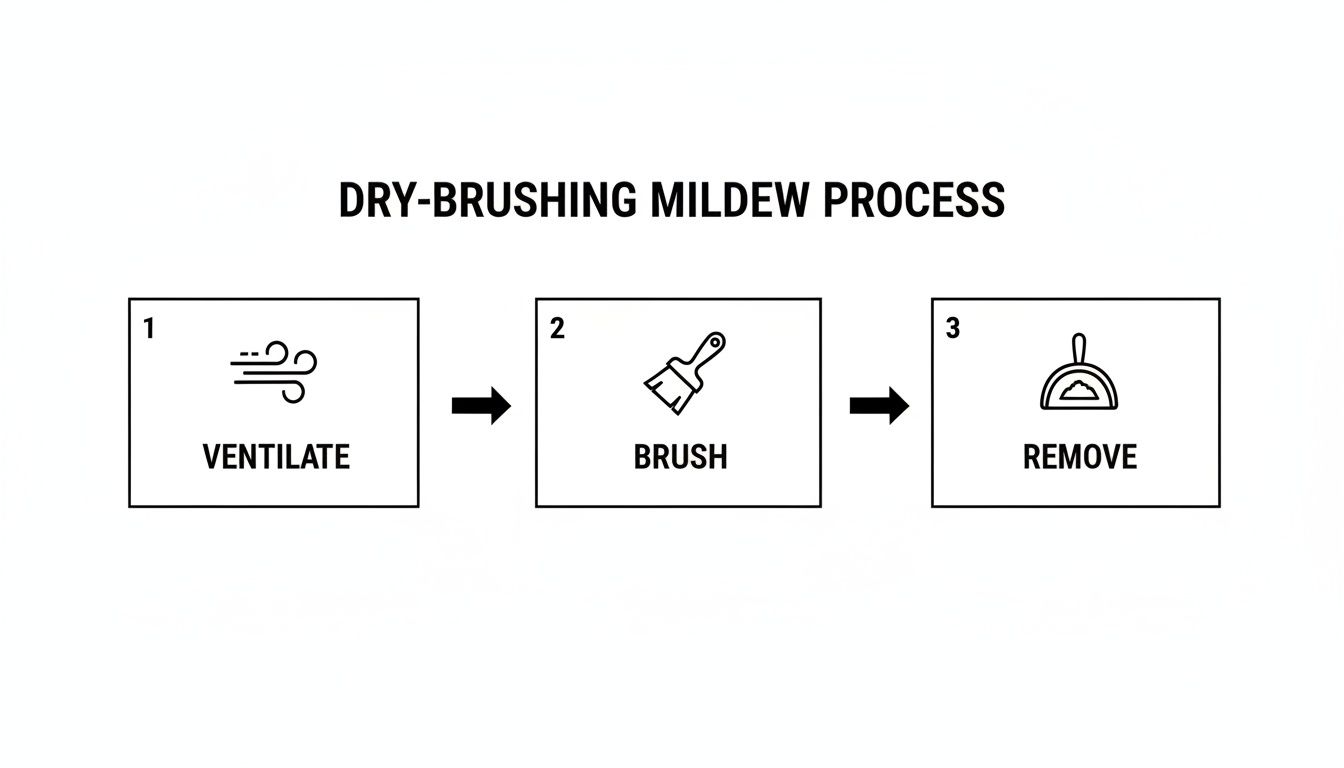
By physically removing the bulk of the surface spores, you've cleared the way for your cleaner to attack the deeply rooted stains where they live.
Choose Your Weapon: Picking the Right Cleaner
Not all canvas is created equal, and the cleaner you use should reflect that. Modern synthetic fabrics like Sunbrella are incredibly tough and can handle powerful, specialized formulas. On the other hand, natural fibers like cotton canvas need a gentler approach to avoid damage.
-
For Durable Synthetic Canvas: A dedicated product like our Better Boat Mildew Stain Remover is your best bet. It’s formulated specifically for the harsh marine environment, dissolving stains without compromising the fabric's water resistance or UV protection.
-
For Natural Cotton Canvas: While DIY solutions can work, our powerful formula is safe for most fabrics when used as directed. Always test on a small, hidden spot first to ensure compatibility. If you prefer a homemade solution, a simple mix of two tablespoons of borax and two tablespoons of baking soda in a quart of hot water can also do the trick.
Quick tip from the field: Don't fall into the "stronger is always better" trap. While our cleaner is tough on mildew, always follow the directions and test a small area first, especially on natural or colored canvas. Harsh chemicals can strip natural oils and weaken fibers, leading to rips and tears down the road. Always match your approach to the material.
Before you start spraying, it's smart to know the pros and cons of what you're working with.
Comparing Canvas Cleaning Solutions
| Cleaning Solution | Best For | Effectiveness | Safety Notes |
|---|---|---|---|
| Specialized Mildew Remover | Synthetic canvas (Sunbrella, acrylic) | High. Formulated to dissolve tough stains without harming protective coatings. | Generally safe for synthetics, but always test on a small, inconspicuous spot first. |
| Borax & Baking Soda (DIY) | Natural canvas (cotton, hemp) | Moderate. Lifts mildew stains gently without damaging fibers. | Safe for natural materials and environmentally friendly. May require more elbow grease. |
| Vinegar Solution (DIY) | Spot treating on most canvas types | Moderate. The acid in vinegar kills mildew spores effectively on smaller spots. | Can have a strong odor. Must be thoroughly rinsed to avoid attracting dirt. |
| Oxygen Bleach | Stubborn stains on white or colorfast synthetic canvas | High. Excellent for lifting deep-set stains. | Safer than chlorine bleach but can still cause fading. Never use on colored canvas without a spot test. |
Each of these solutions has its place. For most boaters dealing with modern canvas covers and biminis, a specialized cleaner like our Mildew Stain Remover offers the most reliable results with the least amount of risk.
Master the Application: Saturate, Wait, Agitate
Simply spraying and wiping isn't going to cut it. To really defeat stubborn mildew, you need to let the cleaner do its job. This means fully saturating the area and giving the solution time to work, what we call "dwell time."
For small, isolated spots, you can dab the cleaner on with a sponge or small brush. This targets the problem directly and saves you from wasting product.
If you're dealing with a larger patch of mildew, a spray bottle gives you the most even coverage. Give the whole area a light mist first, then go back and apply a heavier coat right on the stains. You want the canvas to be damp, not dripping wet.
Now, walk away. For our Mildew Stain Remover, let it sit for 5-10 minutes. With a homemade borax solution, you might need to give it up to 15 minutes. You’ll actually see the dark spots start to lighten, that's how you know it's working.
Once the dwell time is up, grab your soft-bristled brush again. Working in small, circular motions, gently agitate the area to lift the loosened stains from the fabric's weave. Now you're ready to rinse.
Rinsing, Drying, and Protecting Your Canvas
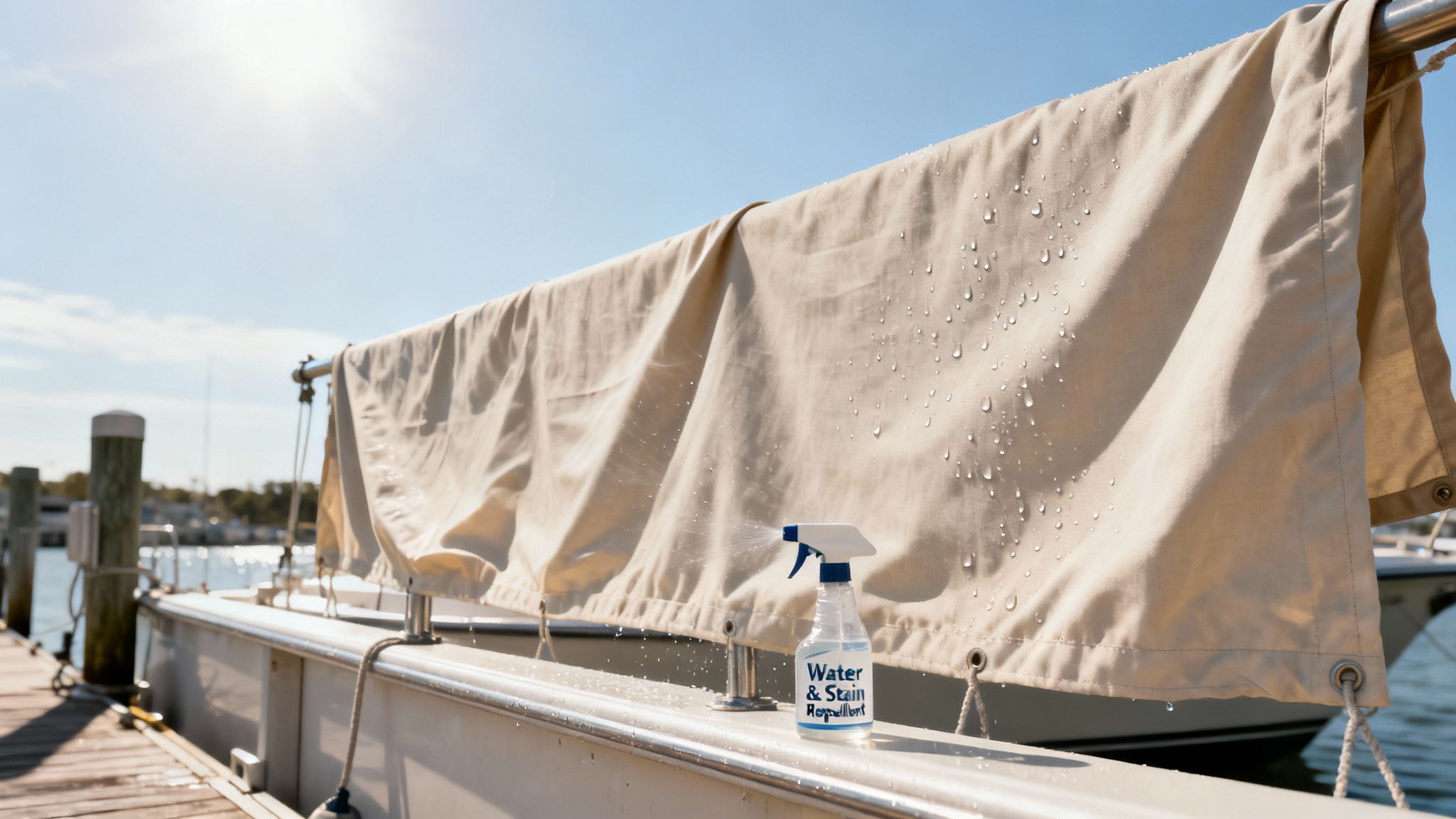
Getting those ugly mildew stains off your canvas feels like a major victory, but don't pack up your supplies just yet. The next moves you make, rinsing, drying, and protecting, are what will keep that mildew from staging a comeback tour.
Skipping this final act is like winning a battle but leaving the castle gates wide open for the enemy to waltz right back in.
Think of any leftover cleaner residue as a sticky magnet for dirt and fresh mildew spores. Even a little bit of soap left behind can slowly break down the canvas fibers and ruin its water resistance. A really, really good rinse is non-negotiable.
The Art of a Proper Rinse
Once the scrubbing is done, your goal is to flush away every last trace of the cleaner and all the grime you just loosened up. Grab a garden hose with a gentle spray nozzle, blasting it with a pressure washer can shred the fabric and stitches, so take it easy.
Work your way from top to bottom, letting gravity do the heavy lifting of pulling all that residue down and away. You'll want to make a few passes until the water running off the canvas is crystal clear. No suds, no bubbles, nothing. This step is far more important for the long-term health of your canvas than most people think.
A common mistake is giving the canvas a quick, superficial spray. If you run your hand over the fabric and it still feels even slightly slick or soapy, you’re not done rinsing. That leftover film is a gourmet meal for the next batch of mildew that comes along.
Why Bone-Dry Is the Only Dry
Now for the most important part of mildew prevention: making sure the canvas is 100% dry. I mean it. Even a hint of dampness is like rolling out the welcome mat for new mildew spores to move in and start the whole ugly cycle over again.
Your best bet is to let Mother Nature do the work. Hang your boat cover, bimini, or tent somewhere sunny and breezy. Sunlight is a natural sterilizer, and great airflow is the quickest way to evaporate every last drop of moisture, especially from tricky spots like thick seams and folded corners.
- Avoid this at all costs: Never, ever fold or store your canvas when it’s even a little bit damp. You’re just creating a dark, humid incubator, a perfect five-star resort for mildew.
- Do a thorough check: Before you even think about packing it away, run your hand over every inch. Pay extra close attention to seams, grommets, and straps, as these are notorious for holding onto moisture.
For those spots on the boat that just always seem to be damp, like inside a cabin or storage locker, a good boat dehumidifier and moisture absorber can be a lifesaver. It helps control the humidity and stops mildew before it even gets a chance to start.
Applying a Protective Barrier
With your canvas sparkling clean and completely dry, there's one last thing to do: re-apply a protective coating. The cleaning process, as necessary as it is, strips away some of the factory-applied water and stain repellency. Putting that barrier back is your best defense against future headaches.
Look for a high-quality water and stain repellent spray made specifically for marine fabrics. Follow the directions on the can, which usually involves applying a thin, even coat. This creates an invisible shield that forces water to bead up and roll right off instead of soaking in.
This final step doesn't just block moisture; it also makes your next cleaning job way easier. By sealing the fabric, you're not only extending the life of your expensive canvas but also making it much, much harder for another mildew invasion to succeed.
Keeping Your Canvas Mildew-Free for Good
Look, the best way to deal with mildew is to never let it get started in the first place. You’ve already put in the elbow grease to get your canvas clean, so now it's time to shift gears. Focusing on prevention will save you a ton of scrubbing down the road.
These aren't complicated, high-tech strategies. They're just simple habits that protect your investment and keep your boat covers, biminis, and awnings in prime condition. It’s way less work than scrubbing out those awful black spots, and it all comes down to controlling the environment.
Master Your Storage Routine
How you store your canvas is probably the single biggest factor in preventing mildew. Before you even think about stowing a boat cover or sail cover, it has to be completely clean and bone-dry. No exceptions.
Leaving even a little bit of dirt, salt, or bird droppings on the fabric is like leaving out a buffet for mildew spores. Add in the slightest bit of moisture, and you've created the perfect breeding ground.
Also, toss out any sealed plastic bags or bins. Plastic is a death trap for canvas because it traps humidity, creating a personal little rainforest where mildew loves to grow. Always use a breathable mesh or canvas bag that allows for constant air circulation. That’s your best defense against dampness.
Think of your stored canvas like a living thing that needs to breathe. Suffocating it in plastic is a surefire way to find a fuzzy, green science experiment the next time you pull it out. A breathable bag is the equivalent of opening a window for it.
Promote Constant Air Circulation
Mildew thrives in stagnant, damp air. On a boat, this is a constant battle, but it’s one you can definitely win. Improving airflow is a simple but powerful tactic.
When your boat is docked or covered, think about using small, low-power fans to keep air moving under the cover and through the cabin. Solar-powered vents are another great, set-it-and-forget-it option that won’t drain your battery.
Even small actions make a big difference. Every so often, especially during humid months, pull out your stored canvas and let it air out for a while. This simple step can be enough to disrupt the conditions mildew needs to get a foothold.
Stay Ahead with Regular Maintenance
Simple, consistent upkeep is what prevents big problems from ever happening. A quick rinse with fresh water once a month is often all it takes to wash away salt, dirt, and other gunk that mildew likes to eat. This isn't a deep clean, just a light spray-down to keep the surface clear.
If you’re in a high-humidity area, you know how fast things can go wrong. Untreated canvas can start showing mildew in as little as 48 hours. This is where being proactive is non-negotiable. Data from canvas pros shows that using a quality mildew inhibitor spray can lead to a 70-80% reduction in mildew over two years compared to untreated fabric.
These habits will save you from having to do another deep clean anytime soon. And if you're really getting into working with this kind of fabric, it's worth learning about the right tools for the job, like the proper sewing machines for thick materials like canvas, to keep everything in top shape.
Common Questions About Canvas Mildew Removal
Even with the best game plan, questions always pop up. Here are the quick, no-nonsense answers to the questions we hear most often from boat owners tackling canvas mildew for the first time.
Can I Use Bleach on My Boat Canvas?
We get this one a lot, and the answer is a hard no. Please, step away from the bleach. While it’s true that bleach kills mildew, it’s far too aggressive for marine canvas and will likely cause more problems than it solves.
Bleach is notorious for stripping away the essential waterproof and UV-resistant coatings that protect your canvas. It also weakens the fabric's fibers and can leave behind ugly, permanent discoloration. You're much better off using a product made for the job. Our Mildew Stain Remover was created specifically to knock out mildew spores without being harsh on your expensive marine-grade materials.
Is It Safe to Pressure Wash My Canvas?
That’s another definite no-go. Taking a pressure washer to your canvas is just asking for trouble and can lead to some expensive damage. The high-pressure stream can easily tear the fabric, rip seams, and will absolutely blast away its protective coatings. You'll end up with leaks and a cover or bimini that ages way too fast.
A gentle, hands-on scrub with a soft-bristled brush is always the winning approach. It puts you in control and ensures you don't accidentally destroy the very thing you're trying to save.
What If That Musty Smell Still Lingers After Cleaning?
If you're still catching a whiff of that musty, damp smell, it's a dead giveaway that some microscopic spores managed to survive the first round.
First thing's first: make sure the canvas is 100% bone-dry. Then, lay it out in the direct sun for a few hours. The sun's UV rays are a surprisingly powerful natural deodorizer and will help kill off any stragglers.
For really stubborn odors, mix up a light spray of equal parts white vinegar and water. Mist the canvas, let it sit for about an hour, then give it one last, very thorough rinse. Let it dry completely in the sun again, and that should do the trick.
How Often Should I Be Cleaning My Canvas?
Staying ahead of mildew is all about proactive maintenance. A quick rinse with fresh water about once a month is a fantastic habit to get into. This simple step washes away the salt, dirt, and bird droppings that mildew considers a gourmet meal.
You should plan on a deep clean at least once a year. Of course, if you spot the first signs of mildew growth, don't wait, tackle it immediately. The more proactive you are, the less you'll have to scrub later.
At Better Boat, we're boaters ourselves, and we know that keeping your vessel in prime condition is a labor of love. As a family-owned company, we're committed to making top-shelf, easy-to-use products that simplify your maintenance routine. Protect your investment with our dependable Mildew Stain Remover and get back to enjoying your time on the water.


