 Skip to content


Guide to the Best Boat Seat Cleaner for Vinyl, Fabric, and Leather
The secret to spotless seats isn’t just about scrubbing harder—it’s about scrubbing smarter. And that means using the best boat seat cleaner for the job.
Your choice really boils down to two things: the material your seats are made of and the type of stain you’re up against. Getting this match right is the single most important step in bringing your boat’s upholstery back to life.
Matching Your Boat Seats to the Right Cleaner
Walking down the cleaning aisle can feel a bit overwhelming with all the options staring back at you. The trick is to stop looking for one magic "best" cleaner and start thinking about the right cleaner for your boat.
A formula that works miracles on tough marine vinyl could absolutely destroy delicate leather, and your average soap isn't going to make a dent in deep-set mildew. The real secret is a quick, two-part diagnosis: first, figure out your material, then identify the stain.
Most boat seats are made from one of three materials, and each one needs a different kind of care. If you're not sure what you've got, you can learn more about the different boat seating options out there.
- Marine-Grade Vinyl: This is what you’ll find on most boats. It’s known for being tough and water-resistant, but that textured surface is a magnet for mildew, and too much sun can cause it to crack over time.
- Fabric or Canvas: Super comfortable and breathable, but it acts like a sponge for spills, dirt, and moisture. This makes it a prime target for mold and that classic musty boat smell if it’s not cleaned and dried properly.
- Leather: Gives your boat a high-end look and feel but demands the most delicate touch. It's prone to drying out, cracking, and staining from oils and moisture. Using harsh chemicals is a big no-no, as they’ll strip the natural oils and cause damage you can't undo.
Identifying the True Enemy
Once you know the material, it's time to play detective with the stain. Is it just surface-level grime from a day on the water, or something more stubborn? Common culprits are greasy sunscreen residue, spills from food and drinks, and those dreaded little black specks of mildew that seem to pop up overnight.
Reaching for a generic household cleaner is usually a mistake. Their formulas are often too abrasive or contain chemicals like bleach that can weaken fabrics and strip the protective coating right off your vinyl.
This flowchart breaks down the decision-making process, guiding you from identifying the material to diagnosing the stain.
Following a simple, systematic approach like this ensures you’re grabbing the most effective—and safest—cleaner every time.
Quick Guide to Cleaner Selection by Seat Type and Stain
To make things even simpler, here's a quick-reference table. Use this to easily match your boat seat material and stain with the right Better Boat cleaner to get the job done right.
| Seat Material | Common Stain Type | Recommended Better Boat Cleaner |
|---|---|---|
| Marine Vinyl | General Dirt, Grime, Sunscreen | Vinyl Cleaner |
| Marine Vinyl | Mildew, Mold | Mildew Stain Remover |
| Fabric/Canvas | General Dirt, Spills, Odors | Fabric Cleaner & Protectant |
| Fabric/Canvas | Mildew, Mold | Mildew Stain Remover |
| Leather | Dirt, Body Oils, Light Stains | Leather Cleaner & Conditioner |
By pinpointing your exact need and matching it to the right product, you'll avoid guesswork and get straight to a cleaner, better-looking boat interior.
Choosing a Specialized Solution
This is where specialized marine cleaners really prove their worth. For instance, our Better Boat Vinyl Cleaner is formulated to lift dirt from the tiny pores of marine vinyl without using harsh chemicals that cause damage. And for those stubborn black spots, our Mildew Stain Remover is engineered to attack mildew spores at the source, not just bleach the surface.
The rise in recreational boating has fueled a massive demand for effective cleaning products. The global boat cleaner market was valued at USD 1.95 billion in 2024 and is projected to hit USD 3.5 billion by 2035. This growth reflects the needs of over 12 million registered boat owners in the US alone.
With a booming market comes more choices, which makes it even more crucial to know what you’re buying. To make sure you’re picking a winner, it helps to check out guides on Finding the Best Cleaners for Boat Seats that cut through the noise.
When you correctly identify your seat material and the stain, you can confidently choose a product designed for that exact problem. That means a deeper clean without the risk of causing more harm than good.
Reviving Your Vinyl Boat Seats From Grime to Gleam
Marine vinyl is the workhorse of boat seating for a reason—it’s built to handle sun, salt, and the occasional rogue wave. But even the toughest materials aren't immune to the grime that comes with good times on the water. We're talking sunscreen smudges, embedded dirt, and the dreaded arrival of mildew.
Keeping those seats looking new requires a real battle plan. This isn’t about a simple wipe-down; it's a deep clean to restore the vinyl's look and feel. The right approach, using a cleaner actually designed for marine vinyl, will not only lift stains but also protect your investment for many seasons to come.
Setting the Stage for Success
Before you even pop the top on a bottle of cleaner, a little prep work makes a huge difference. Think of it as clearing the deck before the main event. Grab a shop vac or a handheld vacuum with a soft brush attachment and get rid of all the loose stuff—sand, cracker crumbs, and whatever else has settled into the seams.
This one simple step keeps you from grinding abrasive grit into the upholstery when you start scrubbing. Once you’re done vacuuming, a quick pass with a damp microfiber towel will pick up any leftover surface dust.
Now for the most important part: the spot test. Even with a formula made for marine vinyl, you should always test your cleaner on a small, out-of-the-way area. The underside of a cushion or a spot hidden from view is perfect. This just makes sure there are no weird reactions with your specific upholstery.
The Art of the Deep Clean
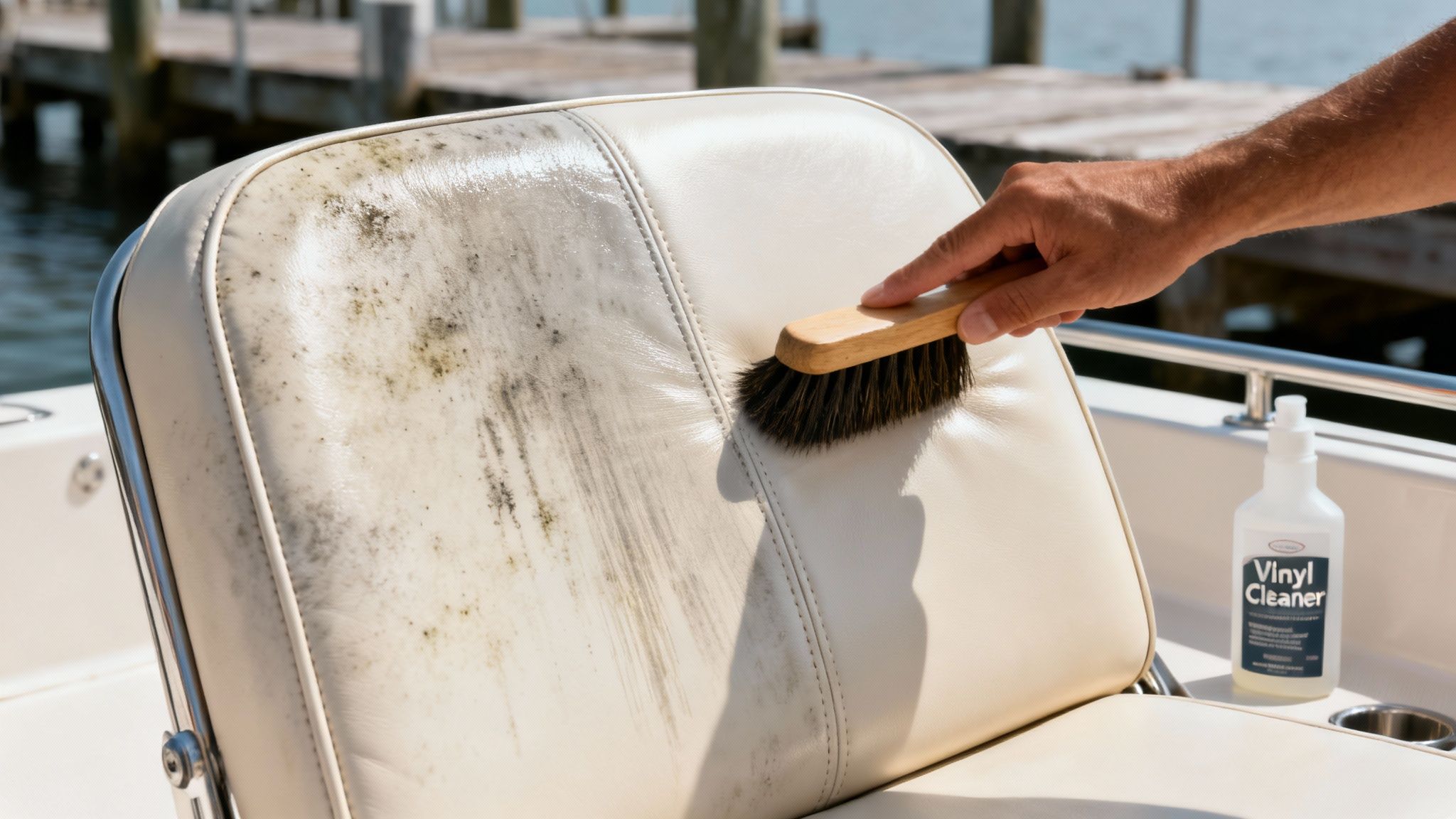
With the prep work out of the way, it’s time to tackle that general grime. For this, a dedicated vinyl cleaner is your best friend. Our Better Boat Vinyl Cleaner is specifically formulated to get deep into the textured surface of marine vinyl, lifting out dirt without the harsh chemicals that cause fading and cracking over time.
Start by spraying the cleaner directly onto a manageable section of a seat. Don't try to clean everything at once. Working in smaller, two-by-two-foot areas ensures the product doesn't dry out before you've had a chance to work it in.
Using a medium-stiff bristle brush, gently scrub the area in small, circular motions. This technique helps the cleaner penetrate the vinyl's grain, breaking up stubborn grime, body oils, and sunscreen that a simple wipe just can't handle. You'll probably see the dirt lifting into a sudsy lather—a great sign the cleaner is doing its job.
After scrubbing, wipe the area clean with a fresh, damp microfiber towel to pick up the product and all the lifted dirt. For a more detailed walkthrough, check out our complete guide on using a marine vinyl cleaner.
Conquering Stubborn Mildew Stains
Sometimes, it’s not just dirt you're up against. Mildew—those ugly black or gray spots—can be a real headache. It absolutely loves the damp, warm environment of a boat and can quickly embed itself deep within the vinyl's pores.
When you're facing mildew, you need to call in a specialist. This is exactly where our Better Boat Mildew Stain Remover shines. It's designed to attack mildew at the source, knocking out the stain and the spores.
Pro Tip: Never try to scrub mildew spots when they're dry. You risk sending spores airborne, which just lets them settle on other surfaces and spread the problem. Always hit mildew with a targeted liquid cleaner first.
Apply the Mildew Stain Remover directly onto the affected spots. Don't be shy with it; make sure the entire stain is saturated. Now, let the product sit and work its magic. This is a crucial step. The formula needs time to penetrate and break down the mildew. For most spots, letting it dwell for 5-10 minutes is all it takes.
For really deep-set stains, you might need to let it sit a bit longer. You'll actually see the spots begin to fade away. After the dwell time, use your medium-stiff brush to gently agitate the area, then rinse it thoroughly with fresh water and wipe it dry with a clean towel. This targeted attack is the best way to get your vinyl looking new again without causing any collateral damage.

Safely Cleaning Fabric and Canvas Upholstery
Unlike the tough exterior of vinyl, fabric and canvas seats offer a softer, more inviting feel. But that comfort comes with a catch. These materials are incredibly absorbent, basically acting like a sponge for morning dew, spilled sodas, rain, and saltwater spray. All that moisture makes them a prime breeding ground for mold and mildew, which leads to those stubborn stains and musty smells we all know and hate.
Cleaning these more delicate materials calls for a completely different game plan—one that’s gentle but still gets the job done. Harsh, aggressive chemicals are your worst enemy here. They can easily weaken the fabric's fibers, bleach out the colors, and strip away any water-repellent coatings from the factory. This just leaves your seats even more vulnerable than they were before.
The trick is to find a balanced solution that can lift away stains without causing collateral damage. For porous surfaces like these, a versatile, pH-neutral formula is almost always the best boat seat cleaner you can reach for.
Choosing a Gentle Yet Powerful Cleaner
For the everyday grime, light stains, and general upkeep of your fabric or canvas, a high-quality all-purpose cleaner is the perfect tool. Our Better Boat All-Purpose Cleaner was formulated to be tough on dirt while still being easy on sensitive materials. It’s got enough power to break down grime but is safe enough that it won’t damage the fabric’s integrity or color, as long as you use it correctly.
Before you even think about spraying anything, always give the seats a good vacuuming with a soft brush attachment. This pulls up all the loose dirt and debris, so you're not just grinding those abrasive particles deeper into the weave as you clean.
The Right Application Technique
How you apply the cleaner is just as crucial as the cleaner itself. With fabric seats, you never want to oversaturate the material. That can waterlog the foam cushions underneath, which then take forever to dry and become a mildew magnet.
Here’s a simple and effective method I’ve used countless times:
- Dilute if you can. For a light, routine clean, you can dilute the all-purpose cleaner with a bit of water. If you’re tackling more set-in dirt, use it at full strength.
- Spray and agitate. Lightly mist the cleaner onto a small, manageable section of the seat. Grab a soft-bristle brush and work the cleaner into the fabric using gentle, circular motions. This really helps loosen and lift the dirt from the fibers.
- Blot, don’t rub. Immediately follow up with a clean, dry microfiber towel. Blot the area firmly to soak up the cleaner and all the grime it just lifted. Whatever you do, avoid aggressive rubbing—that just pushes the stain deeper into the fabric.
This process lets you clean the surface effectively without soaking the cushion underneath. Keeping marine upholstery in good shape is a huge focus in the boating world, and for good reason. The global marine seats market hit USD 1.54 billion in 2021 and is on track to reach $2.37 billion by 2030. A staggering 80% of seat degradation comes from harsh UV rays and saltwater exposure. You can dig into more marine seat market trends if you're curious.
The Crucial Final Steps: Drying and Protecting
This might be the most critical step of all when cleaning fabric upholstery: making sure it dries completely. Any moisture left behind is an open invitation for mildew to come roaring back. After you're done cleaning, use fresh, dry towels to blot up as much moisture as you possibly can.
Expert Tip: To really speed up the drying process, aim a fan directly at the cleaned seats. If you can, position your boat to catch maximum sunlight and airflow. Never, ever cover damp seats. That just traps moisture and creates a perfect little greenhouse for mold.
Once your seats are bone-dry, it's time for the final touch: a protective barrier. A good marine fabric guard will create a hydrophobic layer on the surface, making future spills bead up and roll right off instead of soaking in.
This protective coat also shields the fabric from damaging UV rays, which keeps the colors from fading over time. Think of it as your best defense—it keeps your fabric seats looking good for longer and makes your next cleaning day that much easier.
Advanced Techniques for Tough Stain Removal
Every so often, you'll run into a stain that just laughs at your regular cleaning routine. You scrub, you spray, but it just won't budge. We're talking about the real nightmares: fish blood, deep-set grease, ink marks, and those stubborn sunscreen splotches. Before you even think about the hassle and cost of reupholstering, let's get into some pro-level techniques that can bring your seats back from the brink.
This isn't about general cleaning anymore; this is targeted stain warfare. The secret is knowing which product and method to deploy for each specific kind of stain. It's less about elbow grease and more about smart chemistry.
Tackling Oily and Greasy Messes
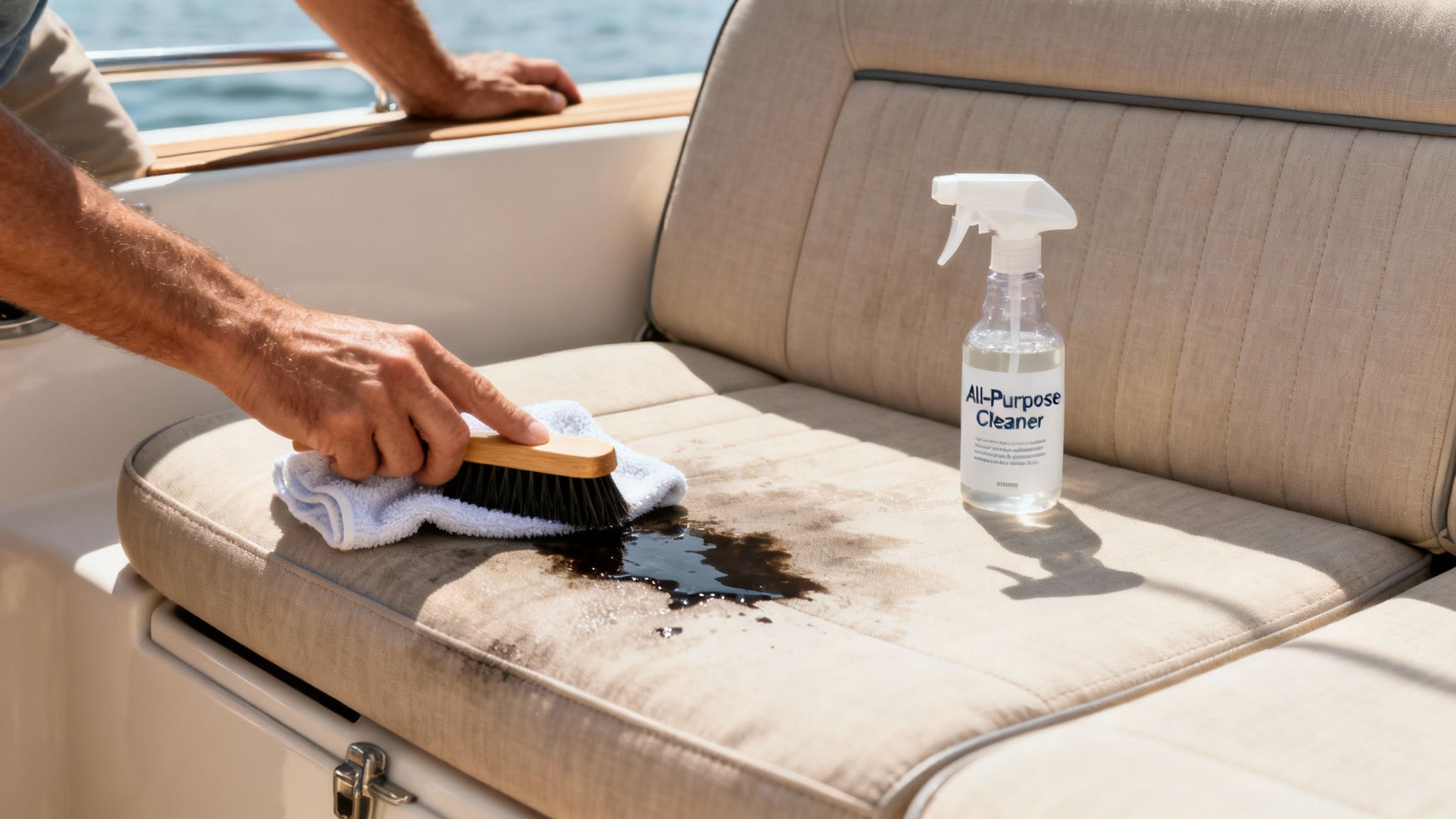
Grease from a quick engine check or a smear of oily sunscreen are some of the most common—and frustrating—stains you'll find. They’re a pain because oil and water don’t mix, so just wiping them down does next to nothing. The oil quickly soaks into the pores of your vinyl, leaving a dark, slick mess.
You need a cleaner that can get in there, break down the oil, and lift it out. Our Better Boat All-Purpose Cleaner is your first line of defense here. Hit the stain with a direct spray and just let it sit for a minute. You need to give it time to start emulsifying the grease.
From there, grab a microfiber towel and blot the stain. The goal is to lift the oil straight up and out of the material. If you rub, you risk spreading the grease and making a bigger problem. For seats with a bit of texture, a soft-bristle brush can help work the cleaner into the grain before you start blotting.
Erasing Scuffs and Ink Stains
A dropped pen or a stray shoe scuff can leave a glaring mark that most cleaners won't touch. These stains sit on the surface but bond hard to the vinyl's finish. Trying to scrub them away with a standard cleaner often just smears the ink or scuff mark, making things look even worse.
This is exactly what our Better Boat Eraser Sponges were made for. They work like magic on these kinds of surface-level disasters.
- Get a corner of the eraser sponge slightly damp with a little water.
- Gently rub the ink or scuff mark using a light circular motion.
- Don't apply a ton of pressure; the sponge itself does the heavy lifting.
- Once the mark is gone, wipe the spot clean with a fresh, damp cloth.
It’s amazing how easily the sponge can lift these marks without harming the upholstery. It’s a simple trick that has saved more than a few seats that were thought to be ruined.
Removing Fish Blood and Organic Stains
A great day of fishing shouldn't mean a permanently stained boat seat. Fish blood is a protein-based stain, and it can set incredibly fast, especially under the hot sun. The absolute key here is to act quickly with the right cleaner.
If the stain is fresh, your first move is always a cold water rinse. Never use hot water—it will essentially "cook" the protein and set the stain for good. After a rinse, hit the area with a generous amount of our Better Boat Vinyl Cleaner and let it dwell for a few minutes. Agitate it lightly with a soft brush, then rinse clean and wipe it dry.
For more stubborn, dried-on stains—especially if you see a little mildew starting to form—our Mildew Stain Remover is surprisingly effective. Its formula is designed to break down organic material, which is exactly what you need. For a deeper look into that particular headache, you can learn more about how to remove mildew from boat seats in our detailed guide.
Troubleshooting Common Boat Seat Stains
Sometimes you just need a quick answer. Here’s a rundown of common stubborn stains and the best way to tackle them with Better Boat products.
| Stain Type | Recommended Product | Key Technique |
|---|---|---|
| Grease & Sunscreen | All-Purpose Cleaner | Spray, let sit for 60 seconds, blot with a microfiber. |
| Ink & Shoe Scuffs | Eraser Sponges | Use a slightly damp sponge with light, circular motions. |
| Fresh Fish Blood | Vinyl Cleaner | Rinse with cold water first, then apply cleaner. |
| Set-in Mildew | Mildew Stain Remover | Spray directly, let dwell, and gently scrub the area. |
| Red Wine or Juice | All-Purpose Cleaner | Blot immediately, then spray and let the product work. |
| Tree Sap | Eraser Sponges | Gently rub the hardened sap until it lifts off the surface. |
This chart should help you grab the right tool for the job without a second thought, making cleanup fast and effective.
When dealing with tough stains, patience is your greatest tool. Rushing the process or using excessive force often leads to more damage. Allow the cleaning product time to work as intended before scrubbing.
By arming yourself with the right products and a little know-how, you can confidently take on even the most intimidating stains. Having the best boat seat cleaner handy is all about knowing which tool to grab for which mess, turning a potential disaster into a minor cleanup.
Long-Term Protection and Proactive Seat Care
Getting your boat seats looking brand new is a great feeling, but the real win is keeping them that way. Smart boat care is less about reacting to messes and more about proactive protection. It's time to shift your thinking from scrubbing away the past to shielding your seats from the future.
This kind of preventative maintenance doesn't just save you hours of elbow grease—it protects the value of your investment. It's a big deal. Industry reports show 75% of owners point to mildew and fading as their biggest upholstery headaches. Just think, UV damage alone can lead to repairs costing $200-$500 per seat. A little prevention goes a long way.
Adopting just a few simple habits can make a huge difference in how your seats hold up against the tough marine environment.
Applying a Marine UV Protectant
Make no mistake, the sun is your vinyl's number one enemy. Those relentless UV rays are constantly breaking down the vinyl's plasticizers—the very thing that keeps the material soft and flexible. Over time, this leads to that dreaded cracking, fading, and chalky finish that makes an otherwise great boat look old and worn out.
After any deep clean, applying a marine-grade UV protectant is a non-negotiable final step. It’s like sunscreen for your seats. Our Better Boat UV Protectant Spray is made for exactly this job, creating a barrier that shields your vinyl from the sun's assault to help keep it supple and vibrant.
Once your seats are clean and completely dry, just mist on a light, even coat of the protectant. Grab a clean microfiber towel, wipe it in, and you’re done. Doing this regularly is the single best thing you can do to prevent sun damage. If you want to dive deeper, we have a complete guide on finding the best marine vinyl protectant.
The Power of Physical Barriers
While a good protectant spray is crucial, sometimes the simplest solution is the best: a physical barrier. A quality boat seat cover is your best defense against not just the sun, but also rain, bird droppings, and everyday grime. It might seem like a pain to cover the seats after every trip, but it's a five-minute task that can add years to the life of your upholstery.
A cover is more than just a piece of fabric; it’s an investment in your boat's future. By blocking direct sunlight and moisture, it drastically reduces the chances of both UV damage and mildew growth, cutting your cleaning time in half.
For general advice on long-term care, some of the same principles apply to other materials. You might find these mattress maintenance cleaning tips to extend its lifespan useful for their shared focus on proactive protection.
Proper winter storage is another form of physical protection. If you live somewhere with harsh winters, just throwing a tarp over the boat won't cut it. You have to make sure the interior is clean and bone-dry before covering it for the season. Otherwise, you’re just inviting a mildew nightmare to greet you in the spring.
Creating a Simple Maintenance Schedule
Consistency is everything. You don't need to spend hours scrubbing every weekend if you just stick to a simple schedule.
- After Every Outing: Give all the seats a quick wipe-down with a damp microfiber towel. This gets rid of fresh saltwater, sunscreen, and any minor spills before they set. Then, pop the covers on before you head out.
- Monthly: Do a light cleaning with the right Better Boat cleaner for your seat material. This is also the perfect time to reapply your UV protectant spray.
- End of Season: Before you put the boat away for the winter, give the seats a thorough deep clean. This makes sure no hidden dirt or moisture is left to fester, which is the leading cause of set-in stains and mildew.
Stick to these habits, and you’ll spend way less time fighting tough stains and way more time enjoying the water.
Common Questions About Cleaning Boat Seats
Even with the best game plan, questions always come up. We've been in the boat care business a long time, and we've heard just about every question you can imagine from boaters trying to get their upholstery looking brand new again.
Here are a few of the most common ones that hit our inbox, along with some straight-shooting advice to help you get the job done right.
Can I Just Use Bleach to Kill Mildew?
This is easily the question we get asked most often, and our answer is always a hard no. It’s tempting, I get it. Bleach kills mildew and turns those ugly black spots white. Problem solved, right? Not so fast.
Household bleach is an absolute wrecking ball for marine upholstery. It dries out vinyl, making it brittle and prone to cracking. It eats away at the stitching that holds your expensive seats together. It also strips off the material’s protective topcoat, leaving it wide open for even worse damage down the road.
Instead of a quick fix that causes expensive problems later, you need something made for the job. Our Better Boat Mildew Stain Remover is formulated to kill mildew at the root without the harsh, damaging effects of chlorine bleach. It's the only way to safely get rid of those stains for good.
How Often Should I Clean My Boat Seats?
Honestly, it all comes down to how much you use your boat and what you put it through. For most boaters, a simple three-tier schedule works wonders for keeping seats in prime condition and stopping small messes from turning into major headaches.
- After Every Trip: Give everything a quick wipe-down with a damp microfiber cloth. This gets rid of fresh saltwater spray, sunscreen, and any spills before they have a chance to set.
- Once a Month: Do a light cleaning with the right cleaner for your seats, like our Vinyl Cleaner or All-Purpose Cleaner. This is your chance to tackle the general grime that builds up over a few weekends on the water.
- Twice a Season: A deep, thorough cleaning at the beginning and end of your boating season is non-negotiable. This is when you’ll bust out the heavy hitters for set-in stains and apply a fresh layer of protectant.
A few minutes of consistent cleaning after each outing will save you hours of back-breaking scrubbing later. Trust me on this one.
Sticking to a routine like this doesn't just keep your seats looking sharp—it dramatically extends their lifespan and protects the value of your boat.
Can I Use a Magic Eraser on My Vinyl Seats?
Magic erasers can feel like, well, magic on stubborn scuffs. But you need to be careful with them on your boat seats. At their core, these erasers are a micro-abrasive, almost like a super-fine sandpaper. If you get too aggressive, you can easily dull the finish or scrub right through the vinyl's protective top layer.
Our Better Boat Eraser Sponges were designed with this balance in mind. They’re perfect for spot-treating specific problems—think shoe scuffs, ink marks, or a bit of dried-on tree sap.
The key is to use them gently with a little water, focusing only on the mark itself. Never use them for cleaning large areas, or you'll end up with a blotchy, uneven finish. And always, always test on a hidden spot first.
What Is the Best Way to Prevent Future Stains?
An ounce of prevention is worth a pound of cure, especially on a boat. Once you’ve got your seats looking perfect, the last thing you should do is apply a protective barrier. For vinyl and leather, that means a quality UV protectant is your best friend. The sun is your upholstery’s number one enemy, causing fading, cracking, and decay.
If you have fabric or canvas seats, a marine-grade fabric guard is the way to go. It creates a hydrophobic shield that makes water and spills bead up and roll right off. That gives you more than enough time to wipe up a mess before it can soak in and become a permanent stain. For the ultimate defense, pair these treatments with a good set of boat seat covers.
Keeping your boat seats pristine doesn’t have to be a miserable chore. With the right know-how and the right products, you can tackle any mess that comes your way and keep your interior looking incredible, season after season. Here at Better Boat, we're obsessed with creating reliable, easy-to-use solutions for every part of your vessel.
Ready to give your seats the care they deserve? Explore our full range of boat cleaning and detailing products today at betterboat.com.