


How to Remove Mildew from Boat Seats The Definitive Guide
Tackling mildew on your boat seats isn't just a simple scrub-and-go job. You need a marine-specific cleaner powerful enough to lift the stains without wrecking the material underneath. The trick is to act fast, dry everything completely, and use a protectant to help keep seats looking clean. This method doesn't just make your seats look new again; it's essential for keeping your vinyl or fabric upholstery in good shape for the long haul.
Why Mildew Is a Bigger Problem Than You Think
That spotted, chalky film on your boat seats is more than just an eyesore, it’s a warning sign of a much deeper issue. Mildew, a type of fungus, absolutely loves damp, warm places with poor airflow, which pretty much describes a boat's interior perfectly. When you let it hang around, it doesn’t just sit there. It actively eats away at your seat materials.
On vinyl seats, this fungal growth can cause permanent stains, discoloration, and break down the protective topcoat. For fabric or canvas, it weakens the fibers, making them brittle and easy to tear. On top of the physical damage, mildew brings that unmistakable musty smell that can take over your whole boat and put a damper on your time out on the water.
Understanding the Enemy
Before you start scrubbing, you need to be sure you're actually fighting mildew. Sometimes it’s just stubborn dirt or grime. Knowing how to identify mold effectively helps you pick the right cleaning method from the get-go, saving you time and frustration.
This decision tree can help you figure out if you're dealing with a simple stain or a full-blown mildew problem.
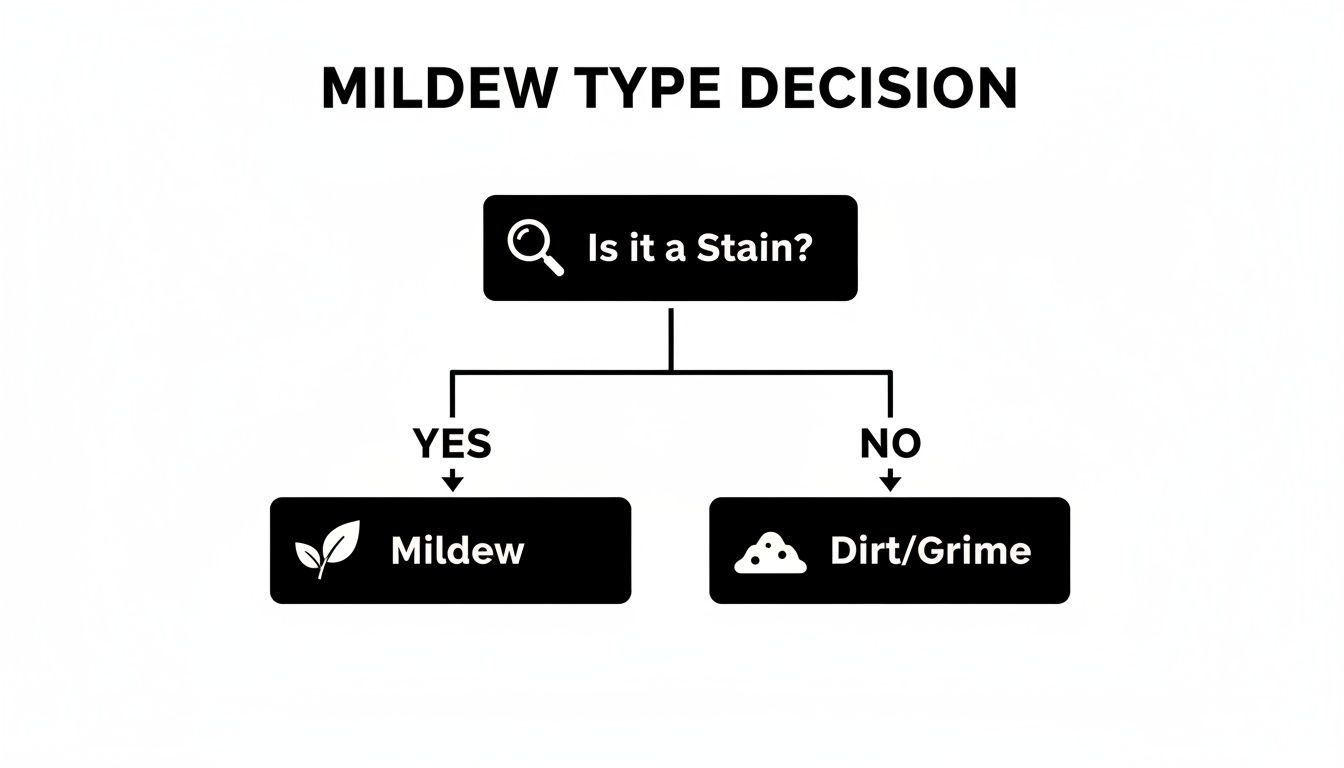
As the chart shows, if the spot seems embedded in the material and won’t wipe away, you’re almost certainly looking at mildew. If it's just sitting on the surface, it's probably just dirt.
The Cost of Neglect
Ignoring mildew isn't just a cosmetic problem, it hits you in the wallet, too. This issue is so common that the global market for mildew removers jumped from US$609.7 million in 2019 to US$813.4 million by 2023. That massive increase is a direct result of boaters battling the humid conditions that help fungus thrive on vinyl and fabric.
In fact, industry data shows that leaving mildew untreated can degrade your seat materials by as much as 30%. That kind of damage seriously hurts your boat's resale value and can lead to expensive repair or replacement bills down the road.
Key Takeaway: Mildew on your boat seats is more than just ugly. It’s an active threat to your boat's materials, its value, and your overall enjoyment on the water. Getting rid of it quickly and correctly is the only way to protect your investment.
By using the right approach and high-quality solutions, you can restore your boat's appearance and prevent permanent damage. It all starts with recognizing how serious the problem is and committing to a solid cleaning and prevention routine.
Assembling Your Mildew-Fighting Toolkit
Before you even think about scrubbing, you need to get your gear in order. Trust me, trying to tackle mildew on your boat seats without the right tools is a recipe for frustration. It can even damage your upholstery.
Think of it like this: you wouldn't use a hammer to fix a delicate watch. In the same way, grabbing a harsh brush or some generic household cleaner can scratch up your vinyl and weaken the fabric for good.
Your number one weapon here is going to be a high-quality, marine-grade mildew stain remover. Household cleaners just don't cut it, they can dry out and crack marine vinyl. You need a formula built for the job, like Better Boat's Mildew Stain Remover, which is engineered to lift mildew stains from deep in the material without wrecking your seats. It’s the difference between just hiding the stain and actually solving the problem.
Essential Gear and Safety First
Beyond the cleaner itself, you’ll need a few other key items. This is about making the job effective, but more importantly, safe. Mildew spores can be nasty irritants, so protecting yourself is non-negotiable.
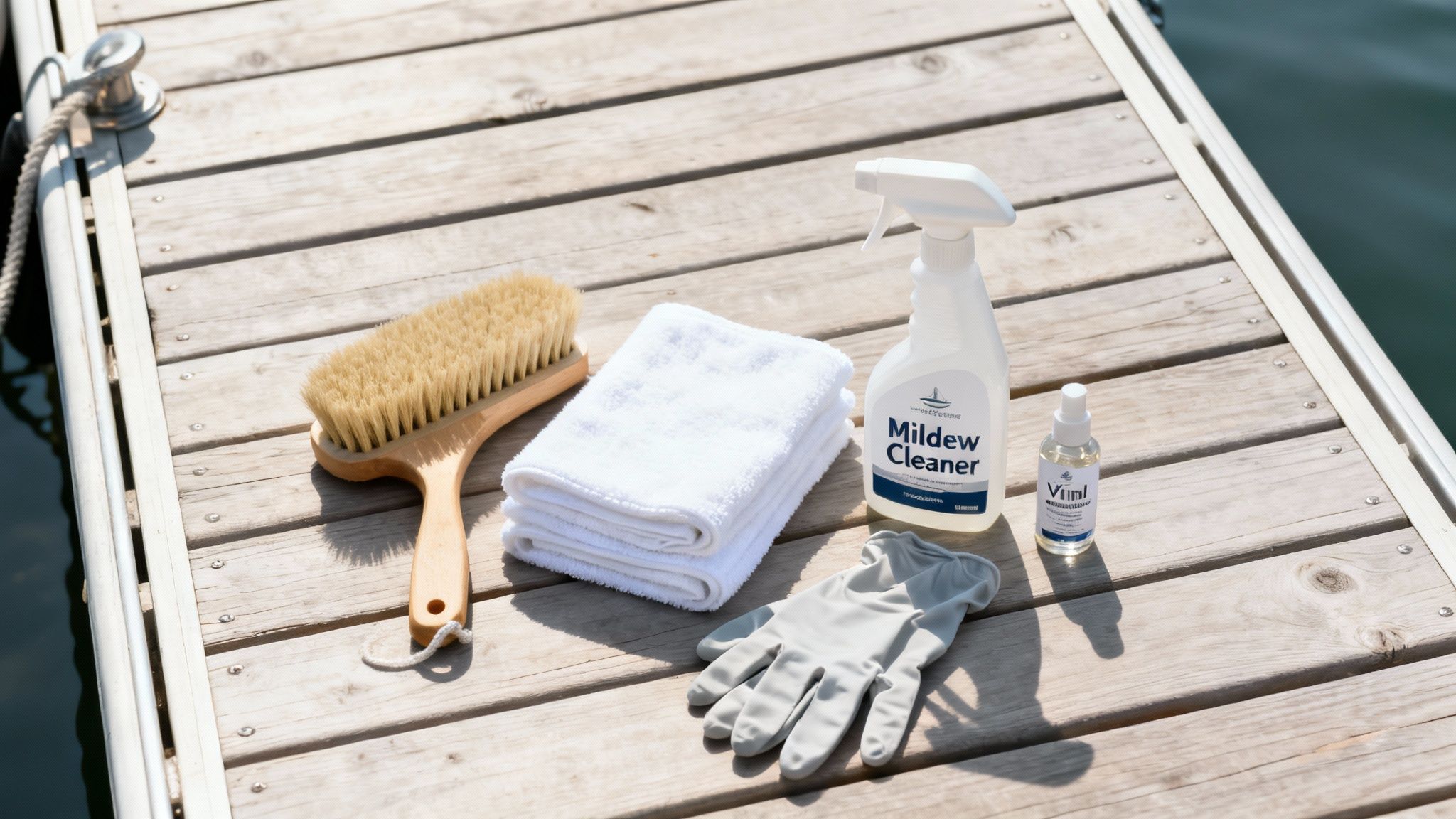
Here's what your core cleaning kit should look like:
- Protective Gloves: Always, always wear nitrile or rubber gloves. You don't want cleaning solutions or mildew spores getting on your skin.
- Soft-Bristle Brushes: A soft, marine-grade brush is your best friend here. It lets you get into the seams and textured vinyl to work out stubborn stains without causing scratches.
- Microfiber Towels: These are super absorbent and perfect for wiping away residue and getting the seats completely dry. This is key to preventing streaks and stopping new moisture from settling in.
It’s also incredibly important to work in a well-ventilated area. If you’re stuck cleaning in an enclosed space, open up the hatches, get a fan going, or just pull the cushions out onto the dock. Get that air moving.
Building a Complete Maintenance Arsenal
A great mildew remover is a fantastic start, but it's just one piece of the puzzle. For a truly comprehensive approach to boat care, it really helps to have a full set of tools ready for anything. You can get a better idea of what a pro-level setup looks like in our guide to assembling the perfect boat cleaning kit.
Ultimately, having the right supplies on hand from the get-go makes the whole job faster, safer, and way more effective. And if you want to broaden your understanding of these principles beyond just boats, this guide offers some great general tips on how to get rid of mould in your home for good.
By prepping your toolkit in advance, you’re setting yourself up for a flawless finish and making sure your boat seats stay in pristine condition for years to come.
Removing Mildew from Vinyl Boat Seats
There's a good reason vinyl is the king of boat upholstery. It’s tough, it’s water-resistant, and it’s built to handle the abuse of the marine world. But even the best marine-grade vinyl isn't invincible, especially when it comes to mildew. Those ugly black spots are more than just a surface nuisance; they're living colonies that root themselves deep into the vinyl's texture and stitches.
Just grabbing a rag and wiping them down won’t cut it. To truly remove mildew stains from your boat seats, you need a cleaner that gets to the root of the problem. This is exactly why we developed our Better Boat Mildew Stain Remover. It’s specifically formulated to sink into the porous surface of marine vinyl and lift the staining without using harsh chemicals that can make your seats crack and fade over time.
The Initial Preparation and Spot Test
Before you start spraying, grab a clean, damp microfiber towel and give the seats a quick once-over. This clears away any loose dirt, salt spray, or grime, letting the mildew cleaner get right to work on the fungus itself. It’s a simple prep step, but it makes a world of difference.
Next up is the most important rule of cleaning anything on your boat: always do a spot test. Find a hidden area, like the underside of a cushion or a small patch behind a seat, and apply a little bit of the Mildew Stain Remover. Let it sit for a minute, then wipe it clean. This quick check ensures the product plays nice with your specific upholstery and gives you the green light to go all in.
Applying and Agitating the Cleaner
Once your spot test comes back clear, go ahead and spray the Mildew Stain Remover generously over all the affected areas. Make sure you get into the seams, folds, and any textured spots, these are mildew's favorite hiding places. Let the cleaner sit for a few minutes; you need to give the active ingredients time to penetrate and start breaking down the stains.

Core product for this step
Mildew Stain Remover
Spray the Mildew Stain Remover generously over affected areas, working it into seams and textured surfaces where mildew hides. The formula needs a few minutes of dwell time to break down the fungus at the root before you scrub.
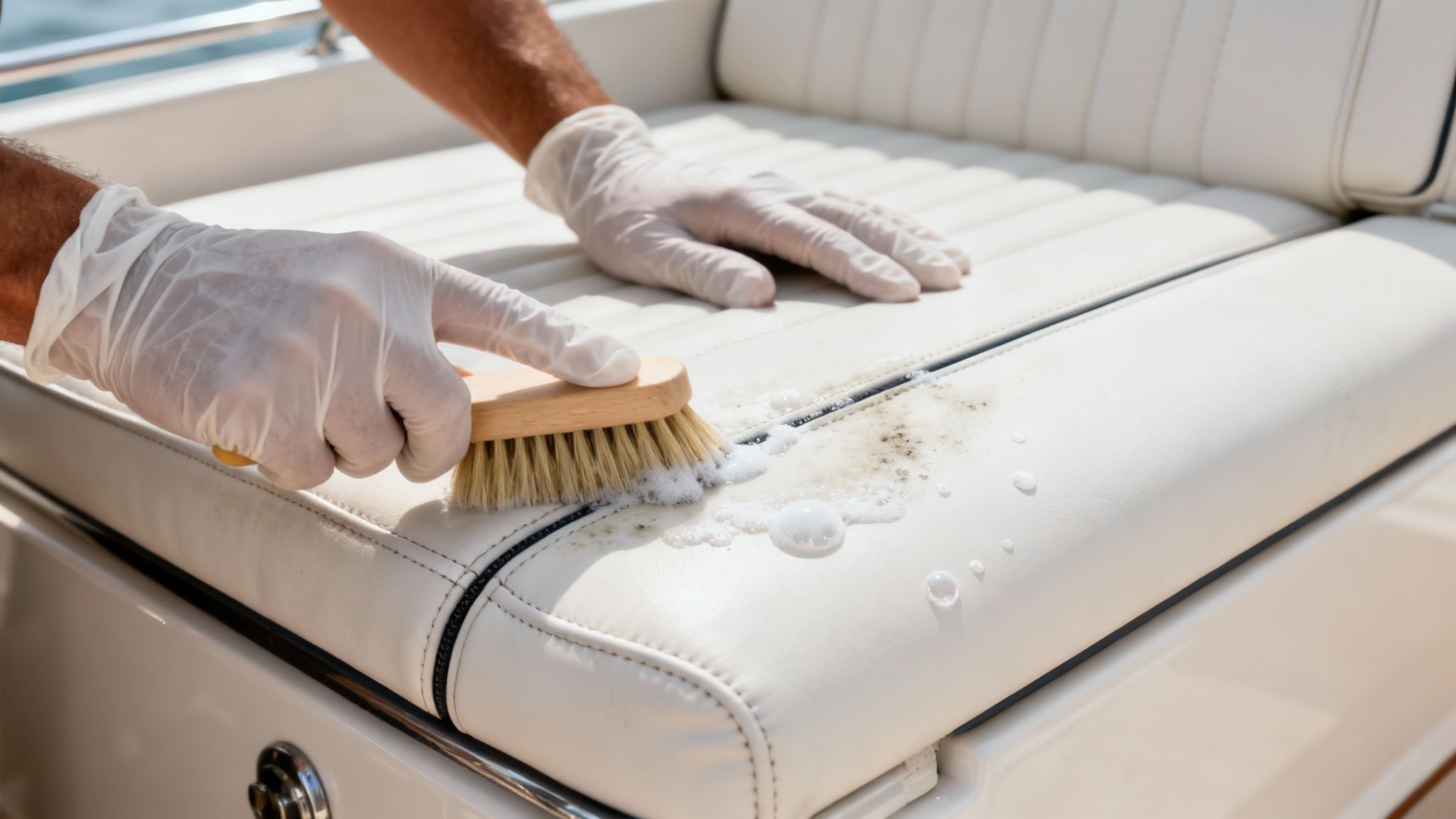
After it's had a chance to work, it's time for a little elbow grease. Using a soft-bristle brush, gently work the cleaner into the vinyl in small, circular motions. You’re not trying to scrub the life out of it; the goal is to gently lift the embedded mildew out of the material’s pores. For really stubborn, deep-set stains, you may need a bit more pressure, but always let the cleaner do the heavy lifting.
Pro Tip: Whatever you do, don't use a stiff-bristled brush or an abrasive scouring pad on your vinyl seats. They can easily create tiny scratches that dull the finish and, worse, create new hiding spots for dirt and future mildew growth.
Rinsing and Drying for a Flawless Finish
With the mildew gone, thoroughly wipe down the entire seat with a fresh, damp microfiber towel. You want to remove every trace of the cleaning solution, as any residue left behind can attract more dirt and mess with the vinyl’s protective top coat. After that, go over it one last time with a completely dry towel to soak up any leftover moisture.
Proper drying is non-negotiable. If you can, let the seats air-dry in the sun with plenty of airflow. If the weather's not cooperating or you're short on time, aim a few fans at the seats to speed things up. Making sure your vinyl is 100% dry is your single best defense against mildew making a quick comeback. For more tips, check out our guide on choosing the best vinyl cleaner for boat seats.
Even with the best products, sometimes you run into a snag. We've all been there, a stain just won't budge or the results aren't what we expected. Here’s a quick troubleshooting table for some of the most common issues boaters face when tackling vinyl mildew.
Solving Common Vinyl Mildew Cleaning Problems
| Problem | Likely Cause | The Better Boat Solution |
|---|---|---|
| Mildew stains reappear quickly after cleaning. | The seats weren't fully dried, or the mildew staining wasn't completely lifted from deep in the material. | Ensure seats are 100% dry before covering. Re-treat with Mildew Stain Remover, allowing it to dwell for the full recommended time to lift stains deep in the vinyl. |
| A faint, shadowy stain remains after cleaning. | This is likely a "ghost stain" from deeply embedded mildew that has permanently discolored the vinyl. | For older, deep-set stains, a second application may be needed. After cleaning, apply a vinyl conditioner with UV protectant to help blend the area and prevent sun damage. |
| The vinyl feels sticky or tacky after cleaning. | Cleaning residue was left on the surface, or an overly harsh, non-marine cleaner was used. | Thoroughly rinse the area with a clean, damp cloth. If stickiness persists, use a dedicated vinyl cleaner for boat seats to remove the residue. |
| New mildew is growing in the seams and stitching. | Seams hold moisture longer than flat surfaces, creating a perfect breeding ground for fungus. | Pay extra attention to seams. Use a soft brush to work the Mildew Stain Remover deep into the stitching and allow extra drying time for these areas. |
This table should help you navigate those tricky situations and get your seats looking pristine again.
The demand for effective marine cleaners isn't just in our heads. The global market for these products is projected to hit USD 750 million by 2025. Why? Because boaters know that untreated mildew can degrade vinyl by up to 20% each year. Consistent care with the right stuff can easily add five to seven years to the life of your upholstery.
Cleaning Mildew on Fabric and Canvas Seats
While vinyl is pretty tough, you have to switch gears when tackling mildew on fabric and canvas. These materials are much more porous, which means mildew doesn't just sit on the surface, it burrows deep into the fibers and, worse, into the foam cushion underneath. Using aggressive chemicals is a fast track to discoloration, fading, or even weakening the fabric itself.
The name of the game here is to clean thoroughly without over-saturating the material. Unlike vinyl, where you can spray and scrub with a bit more freedom, soaking a fabric seat is a huge mistake. All that moisture gets trapped deep inside the cushion, creating the perfect hidden breeding ground for a brand-new mildew colony. You could easily end up with a bigger problem than you started with.
The Gentle Cleaning Process
Your approach for fabric and canvas needs to be methodical and controlled. The goal is to lift the stains out, not push moisture further in.
Here’s the safest way I've found to handle it:
- Start with a Dry Brush: Before you even think about getting the seats wet, grab a soft-bristle brush. Gently go over the seats to loosen and sweep away any surface-level spores and dirt. This simple step keeps you from grinding that grime deeper into the fabric when you start cleaning.
- Mix Up a Mild Solution: Grab a gentle, marine-safe fabric cleaner and mix a small amount with water. Whatever you do, stay away from harsh chemicals like bleach. They can permanently ruin the color and integrity of the fabric.
- Apply with a Light Touch: Don't spray the cleaner directly onto the seat. Instead, apply it to a clean microfiber cloth or your soft brush. Work the solution into the stained areas using small, circular motions, concentrating only on the mildew spots.
- Blot, Don't Rub: Once you’ve worked on the stain, use a clean, damp cloth to blot the area. This lifts the cleaner and the mildew residue out. Immediately follow up with a dry cloth to absorb as much moisture as you possibly can.
Crucial Tip: Always work from the outside edge of the stain inward. This keeps the mildew from spreading and creating one of those dreaded discolored rings on your seats.
Ensuring a Complete Rinse and Dry
Leaving any cleaning residue behind is a big no-no for fabric. Soap attracts dirt like a magnet and can get sticky over time. A thorough but careful rinse is a must. Just take a fresh cloth dampened with plain water and go over the cleaned area a few times, blotting away any leftover solution.
Now for the most critical step: drying. Never, ever cover damp fabric or canvas seats. Your best bet is to leave the cushions out in direct sunlight and open air until they are 100% dry to the touch, all the way through. If you can, prop them up so air can circulate on all sides.
Proper drying is your best defense against mildew making a quick comeback. For a deeper dive into taking care of your boat's canvas, you can learn more about how to remove mildew from boat canvas in our detailed guide.
Protecting Your Seats and Preventing Future Mildew
Getting your boat seats looking brand new is a great feeling, but all that hard work will be for nothing if mildew makes a comeback a few weeks later. Truth is, scrubbing away existing mildew is only half the battle.
The other, more critical half is creating an environment where it just can't grow back. This means shifting your mindset from reactive cleaning to proactive prevention.
The first and most important step here is ensuring your seats are bone dry after every cleaning and every trip. Even a tiny bit of moisture trapped in a seam or the foam below is an open invitation for mildew spores to move in and start a new colony. Before you even think about throwing the cover on, give your seats plenty of time to air out in the sun and wind.

Creating a Protective Barrier
Once your seats are clean and completely dry, it's time to add a layer of defense. A high-quality protectant does a lot more than just make your vinyl look shiny; it creates a non-porous shield that keeps moisture and organic matter from soaking into the surface. This is where a dedicated marine product is non-negotiable.

Seal the clean seats
Boat Interior Vinyl Protectant
Boat Interior Vinyl Protectant lays down a non-porous shield that keeps moisture and organic matter from soaking into the vinyl. Apply it once seats are fully dry to lock in the results of your cleaning work.
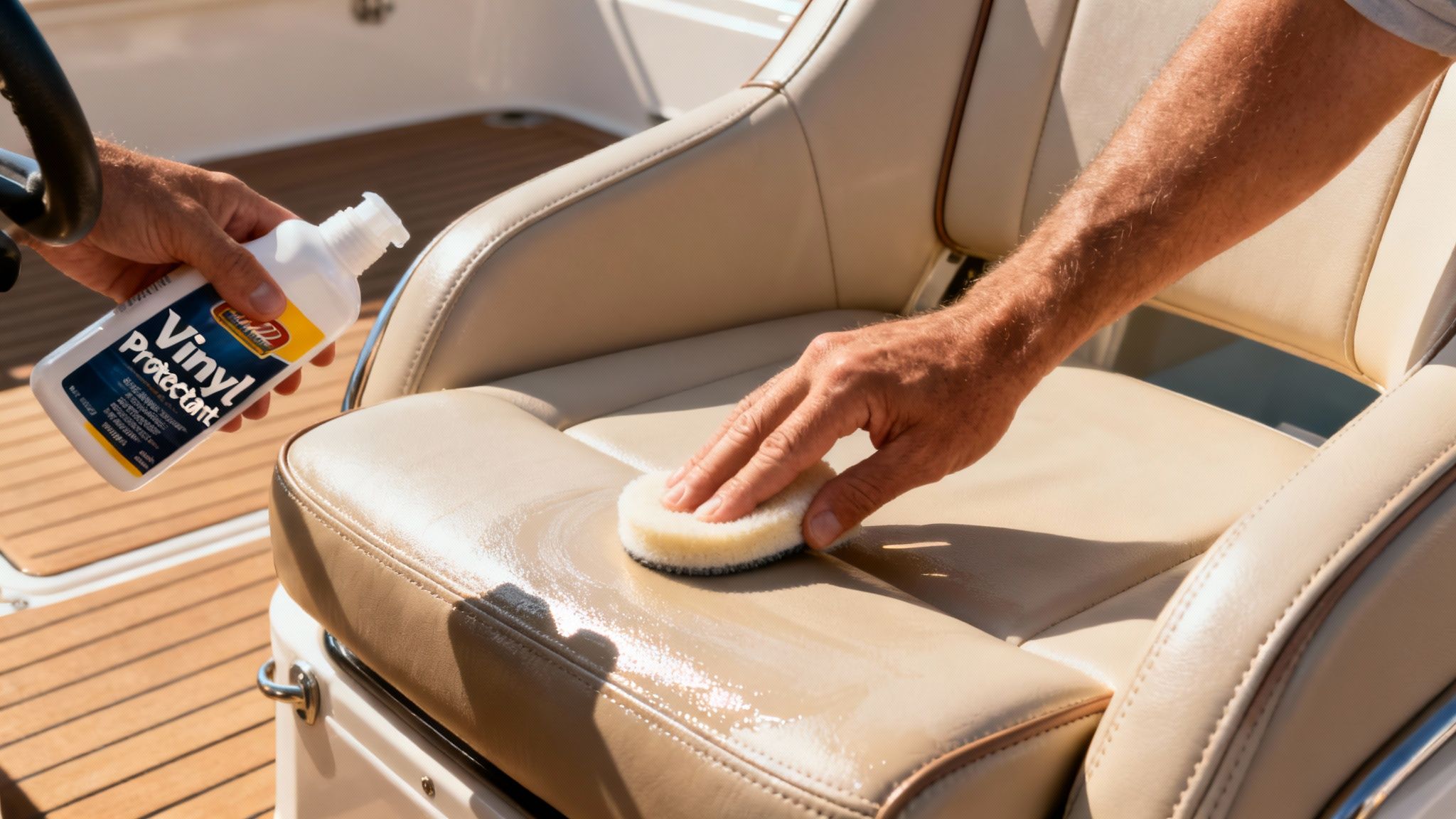
For vinyl seats, applying Better Boat Vinyl Protectant is a game-changer. Its formula is specifically designed to do two crucial things for your upholstery.
- UV Inhibition: It's packed with powerful UV inhibitors that shield your vinyl from the sun's harsh rays. This prevents the fading, cracking, and breakdown that can make seats more vulnerable to mildew.
- Moisture Repellency: The protectant forms a hydrophobic barrier that makes water bead up and roll right off. This stops moisture from soaking into the seams and texture of the vinyl, effectively locking mildew out before it can get a foothold.
Applying this protectant every few months as part of a regular maintenance schedule turns a frustrating, recurring cleaning job into a simple, sustainable routine.
By sealing your vinyl seats with a quality protectant, you're not just preventing future stains. You are actively preserving the material's integrity and extending the life of your boat's interior, saving you from costly replacements down the line.
Long-Term Prevention and Value
This proactive approach has a real impact on your boat's value. The boat cleaner market is expected to climb to $500 million by 2025, largely driven by the fight against mildew and grime. More importantly, data shows that properly sealing seats with a good protectant can prevent up to 80% of mildew recurrence and can even help boost your boat's resale value by 15-20%. You can read the full report on mildew remover market statistics to see how these trends are affecting boaters.
Ultimately, protecting your seats is all about smart, consistent maintenance. For a complete rundown of what to look for in an effective sealant, check out our guide on choosing the best marine vinyl protectant. A little bit of prevention today really does save a ton of scrubbing tomorrow.
Got Questions About Mildew? We've Got Answers
Even after a deep clean, you're probably wondering how to keep that pesky mildew from coming back. Let’s go over a few of the most common questions we hear from boaters. Getting these right will make all the difference in keeping your seats looking brand new.
Is It Safe to Use Bleach on My Vinyl Seats?
Please, don't do it. While bleach definitely kills germs and might seem like an easy fix for mildew, it’s one of the absolute worst things you can put on your marine vinyl. It’s incredibly harsh and strips away the vinyl’s plasticizers, the essential oils that keep the material soft and prevent cracking.
When you use bleach, even a diluted solution, you’re basically fast-forwarding the aging process of your seats. They’ll get brittle, dry out, and start cracking way sooner than they should. Bleach also eats away at the thread in your seams and will absolutely fade the color. Instead, always reach for a product made for the job, like Better Boat Mildew Stain Remover, which is formulated to remove mildew stains without destroying your upholstery.
How Often Should I Clean Seats to Keep Mildew Away?
The key here is forming a good habit. You’ll want to give your seats a quick wipe-down after every single trip out on the water. It only takes a minute, but it gets rid of the salt, grime, and moisture that mildew loves.
For a deeper clean, plan on using a proper marine cleaner at least once a month while you're in season. If you boat in a really humid area or you’re out on the water constantly, you might even bump that up to every two weeks.
The goal isn't to wait for mildew to appear; it's to create a routine that makes it impossible for mildew to ever get started. Regular, light maintenance is far more effective than infrequent, heavy-duty scrubbing.
What Is the Best Way to Store Boat Cushions Off-Season?
How you store your cushions in the winter will determine whether you start next season with a smile or a major cleaning project. Your best bet is to remove the cushions from the boat entirely. Bring them inside to a dry, climate-controlled spot like a garage or basement where the air can circulate.
Before you put them away, give them one last, really good cleaning and make sure they are 100% dry. Seriously, don’t rush this part.
Here are a few pro tips for perfect off-season storage:
- Don't stack them flat: Storing cushions on their sides or propped against a wall allows air to get all the way around them. Stacking traps any leftover moisture right where you don't want it.
- Avoid plastic wrap: Never shrink-wrap your cushions in plastic. It creates a mini-greenhouse, trapping moisture and turning into a perfect breeding ground for mildew. If you need to cover them, use old bedsheets or breathable fabric covers.
- Keep them off the floor: Get those cushions up on shelves or pallets. Concrete floors can hold a surprising amount of moisture, and you want to keep your cushions far away from it.
Following these simple rules will set you up for a clean, mildew-free start to your next boating season.
At Better Boat, we're committed to making boat care simple and effective. Our family-owned business has helped over a million boaters protect their investment with premium, easy-to-use products. Keep your seats looking their best by exploring our complete line of marine cleaning solutions.


