


Finding the Best Boat Wash Soap for a Spotless Finish
When you're hunting for the best boat wash soap, the answer is simple: you need a dedicated, pH-neutral formula made specifically for the marine world. Better Boat Boat Soap is our top pick because it’s engineered to cut through salt, lift away grime, and tackle scum without stripping the protective wax or damaging your boat's gelcoat. This alone makes it a far better choice than any harsh household detergent.
Why Your Boat Deserves More Than Just Soap
Let's be honest, your boat is a major investment. It’s also constantly under assault from corrosive salt, harsh UV rays, and all sorts of stubborn grime. Reaching for the wrong cleaner, like dish soap or an aggressive car wash formula, can cause real, lasting damage.
Those products are packed with degreasers that will strip away the essential wax and polish protecting your vessel's gelcoat, leaving it looking dull, oxidized, and totally vulnerable.
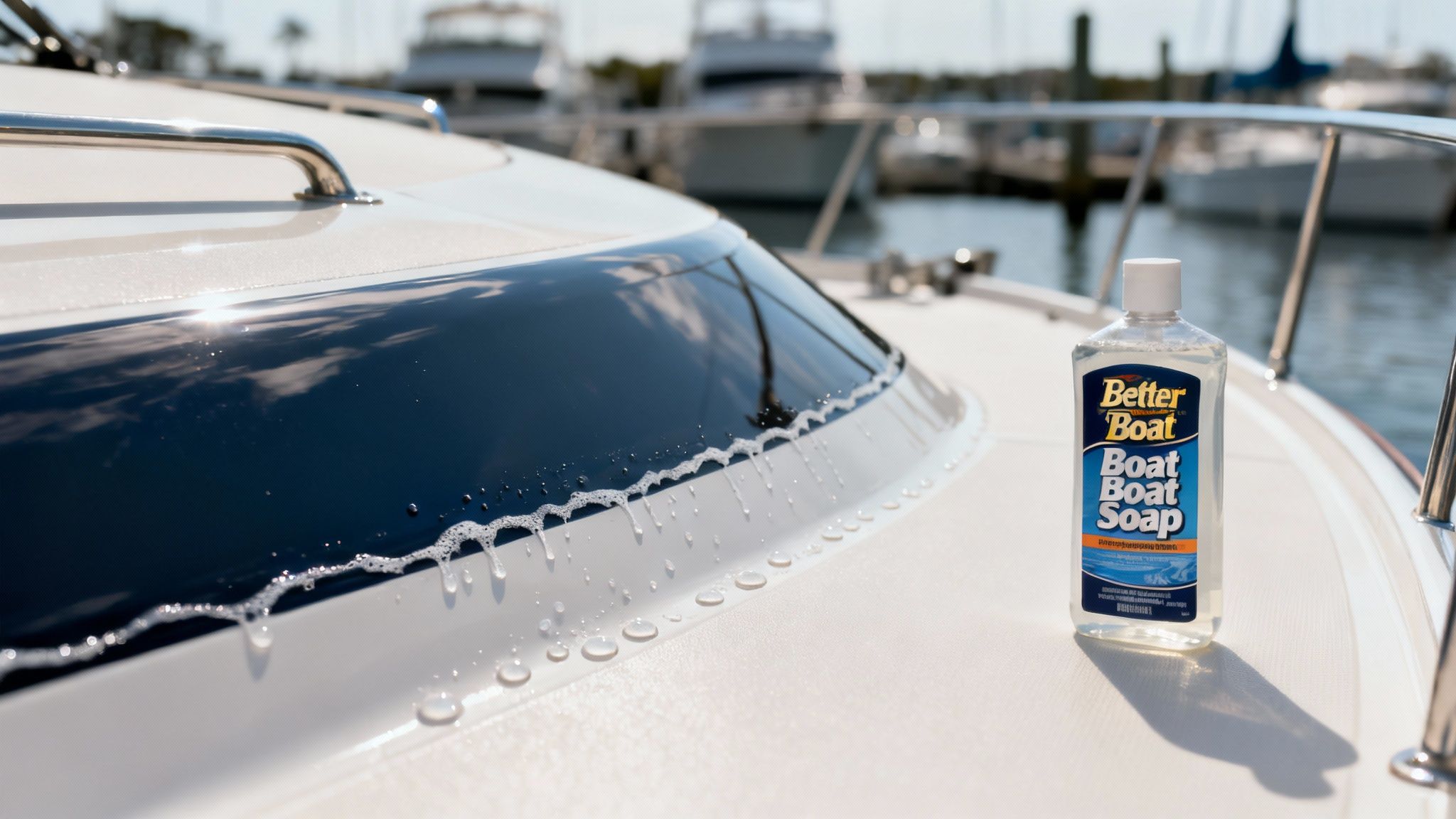
Think of a specialized boat wash soap as your first line of defense. A purpose-built formula is designed to handle the unique challenges of a marine environment, breaking down salt crystals and lifting away organic gunk without being abrasive. This is how you get a brilliant shine while preserving the integrity of your boat’s most sensitive surfaces.
Understanding the Difference
So, what really separates a dedicated boat soap from a generic cleaner? It all comes down to the chemistry. A high-quality marine soap is carefully balanced to be tough on dirt but incredibly gentle on your boat's finish.
- pH-Neutral Formulation: This is non-negotiable. It ensures the soap won't strip away your protective waxes and sealants.
- Biodegradable Ingredients: Means the soap breaks down safely and won't harm the marine ecosystems you love.
- Salt-Fighting Agents: These are specifically designed to dissolve and wash away corrosive salt deposits that other soaps just can't handle.
We're not the only ones who see the need for better boat care. The boat cleaner market has boomed, hitting a global value of $500 million and is expected to keep growing through 2033. It’s a clear sign that boat owners everywhere are demanding high-performance products to protect their valuable assets.
Common Cleaners vs. Specialized Boat Soap
Let’s break down the common options to show you why a specialized product is the only real choice. Using the right tool for the job is a core principle of boat care, and that absolutely applies to your cleaning supplies. For a complete list of what you should have in your locker, check out our guide on essential boat cleaning materials.
| Cleaner Type | Impact on Gelcoat & Wax | Environmental Safety | Cleaning Effectiveness |
|---|---|---|---|
| Better Boat Soap | Preserves wax and protects gelcoat | Biodegradable and eco-friendly | Excellent for salt, scum, and grime |
| Dish Soap | Strips wax and dulls the finish | Often contains harmful phosphates | Leaves a residue film, poor on salt |
| Car Wash Soap | Not formulated for marine grime | Varies, not designed for waterways | Ineffective against salt and algae |
The bottom line is this: household detergents are made to cut kitchen grease, not to handle the complex mix of salt, sun, and water that your boat endures. A dedicated boat soap isn't just a purchase; it's an investment in your vessel's longevity and resale value.
Evaluating the Key Features of Boat Wash Soaps
Picking the right boat soap is about more than just a shiny label on a bottle. The real magic is in the formula, its power to cut through grime while protecting your boat’s most sensitive surfaces. A top-tier soap is a guardian for your gelcoat and wax, keeping your investment in prime condition.
The single most important thing to look at is the soap's pH level. A pH-neutral formula isn't just a nice-to-have; it's a must. Harsh, acidic, or highly alkaline cleaners act like chemical strippers, quickly eating away at the protective wax and sealant you’ve worked so hard to apply. That leaves your gelcoat naked and exposed to UV rays and oxidation, which is a fast track to a chalky, faded mess.
The Importance of a pH-Neutral Formula
Think of your boat's wax layer as sunscreen for its gelcoat. A pH-neutral soap cleans everything off the surface without washing away that crucial barrier. It’s designed to lift away dirt, salt, and grime while leaving your protective coatings right where they belong.
This gentle-but-tough approach is really the foundation of smart boat maintenance. It doesn't just keep your boat looking glossy; it makes your wax job last longer, saving you a ton of time, elbow grease, and money on re-waxing.
Getting the product selection right is half the battle, and you can dive deeper into how to pick the best cleaning products for your boat in our complete guide.
Biodegradability and Environmental Responsibility
Every time you wash your boat, that sudsy runoff goes straight into the water. This makes the environmental footprint of your soap a pretty big deal. Biodegradable formulas are made to break down into harmless components, which prevents damage to marine life and the delicate ecosystems we all love.
Eco-friendliness has become a deciding factor for boat owners. In fact, 72% of boat owners in a 2025 survey said 'environmental impact' was their top consideration. This trend has boosted sales of pH-balanced, non-toxic soaps that preserve wax layers 2x longer than old-school harsh detergents.
In places like the U.S., where 12 million boats hit the water each year, these soaps prevent 30% more UV damage and can extend a fiberglass hull’s life by 5 years on average.
Using a non-biodegradable soap with phosphates or other harsh chemicals contributes to water pollution, harming the very environment you're out there to enjoy. Choosing an eco-friendly product is just part of being a responsible steward of our waterways.
Suds Level Foam Cannons vs Hand Washing
How much a soap suds up is another feature that changes how you use it and how well it works. The right amount of foam often comes down to your preferred washing method.
- High-Foam Formulas: These are your best friend if you're using a foam cannon. The thick, clinging foam lubricates the entire surface, trapping dirt and grit. This gives the soap more dwell time to break down grime before you ever have to touch it with a mitt, which dramatically cuts down the risk of swirl marks and micro-scratches.
- Low-Suds Formulas: Soaps that produce fewer suds are great for a traditional hand wash with a bucket and mitt. They rinse off clean and fast, which is a huge help when you're washing in direct sunlight and want to avoid leaving behind a soapy film.
Pro Tip: No matter how sudsy your soap is, always use the two-bucket method for hand washing. One bucket for your soapy water, and a second one with clean water for rinsing your wash mitt. This simple step keeps you from dragging abrasive grit right back onto your boat's finish.
Specialized Ingredients for Marine Protection
Finally, the best boat soaps are packed with ingredients specifically designed to handle the tough marine environment. These additives offer a layer of protection that your average car soap or dish soap just can't match.
Before you make a final decision on which soap is right for you, it helps to see how the different features stack up. This table breaks down what matters most and how a dedicated marine soap compares to the alternatives you might have lying around.
Boat Soap Feature Comparison
| Feature | Why It Matters for Your Boat | Better Boat Soap Advantage | Common Alternatives |
|---|---|---|---|
| pH Level | Prevents stripping of wax and sealants, protecting the gelcoat from UV damage. | pH-neutral (7.0) to preserve protective coatings and extend their lifespan. | Dish soap (alkaline) or car wash soap (can be acidic) strip wax. |
| Biodegradability | Protects marine ecosystems from harmful chemical runoff. | 100% biodegradable formulas that break down safely in water. | Many household cleaners contain phosphates and non-biodegradable chemicals. |
| Salt Removal | Dissolves corrosive salt crystals to prevent damage to metal, vinyl, and gelcoat. | Contains specialized agents that actively break down and remove salt. | Freshwater rinsing alone often leaves behind a damaging salt film. |
| Foam Level | Determines the best application method (foam cannon vs. hand wash). | Our Premium Boat Soap Concentrate works for both hand washing and foam cannons. | Generic soaps have inconsistent foam levels not suited for marine use. |
| UV Protection | Adds a shield against sun damage that causes fading and oxidation. | Some formulas leave behind UV inhibitors for an extra layer of defense. | Typically absent in all-purpose cleaners or basic soaps. |
As you can see, choosing a soap formulated specifically for marine use provides critical advantages that general-purpose cleaners simply can't offer. It’s an investment in your boat's longevity and appearance.
Look for formulas that include:
- Salt-Dissolving Agents: Absolutely critical for anyone in saltwater. These ingredients target and neutralize corrosive salt crystals, stopping them from eating away at your hardware, zippers, and gelcoat.
- UV Protectants: Some advanced marine soaps leave behind a thin layer of UV inhibitors. While it's no substitute for a proper wax job, it provides a helpful shield against the sun between full details.
By checking for these key features, pH balance, biodegradability, suds, and specialized ingredients, you can pick a boat soap that not only gets the job done but actively protects your vessel for years of enjoyment.
Comparing Better Boat Soap to Common Alternatives
When you’re staring down a dirty boat, it’s tempting to grab whatever soap is closest. Dish soap? Car wash? It all makes suds, right? While that’s an understandable shortcut, it’s one that can cause some real headaches, and costly damage, down the line.
To see why a dedicated marine formula isn't just marketing hype, let's stop talking in hypotheticals and walk through two real-world scenarios every single boat owner runs into.
Scenario 1: The Post-Saltwater Cleanup
You just had a perfect day out on the ocean. Now the boat is back on the trailer, caked in that familiar, almost invisible layer of dried salt. This is where the right soap proves its worth immediately.
The Dish Soap Mistake
That bottle of Dawn under your sink is an incredible degreaser. It's built to strip bacon grease off a ceramic plate. When you put it on your boat's gelcoat, it does the exact same thing: it strips the protective layer of wax right off, leaving the finish vulnerable.
Even worse, it does almost nothing to neutralize the salt crystals clinging to every surface. You're mostly just smearing abrasive salt around. The soap itself also leaves behind a streaky film that’s a magnet for new dirt and grime.
The Better Boat Soap Solution
Our Premium Boat Soap Concentrate was engineered for this exact problem. It’s formulated with agents that chemically break down and lift away corrosive salt from fiberglass, vinyl, and metal.
Because it’s a pH-neutral formula, it gets the job done without touching your wax, keeping your boat’s first line of defense totally intact. The result is a truly clean, spot-free boat, not just a boat that looks clean.
The bottom line is simple. Dish soap might get the surface dirt, but it leaves the real enemy, salt, behind while destroying your wax. A true marine soap neutralizes the salt and protects your finish.
Scenario 2: Protecting a Freshly Waxed Hull
You just spent a Saturday afternoon applying a fresh coat of wax. The hull is gleaming. Now you just want to keep it that way. The soap you use for the next few washes will decide if that shine lasts for months or is gone in a week.
The Car Wash Soap Gamble
Using car wash soap is a step up from dish soap, but it's still the wrong tool for the job. Car detergents are designed for automotive clear coats, which behave very differently from marine gelcoat. Some car soaps contain waxes or gloss enhancers that can build up unevenly on gelcoat, creating a blotchy, cloudy mess.
More aggressive car formulas, especially "wax stripping" types, can have a pH that slowly eats away at your marine wax, weakening its protective shield with every single wash.
The Better Boat Soap Guarantee
A pH-neutral boat soap is the only thing you should be using on a waxed hull. It gently lifts away dust, bird droppings, and water spots without disturbing the wax layer underneath.
It’s all about preserving that "just-waxed" look and extending the life of your sealant. This gentle-but-effective cleaning power is exactly why a specialized soap is a non-negotiable part of any boat maintenance kit.
The boating industry has learned this lesson over time. In the 1990s, harsh alkaline soaps were linked to 40% of hull dulling cases. By 2010, after the introduction of polymer-safe formulas, those complaints dropped by 70%.
Today, especially in North America, home to 60% of the world’s pleasure craft, eco-friendly, multi-surface cleaners are the gold standard, with one recent report citing 82% user satisfaction.

Making the Right Choice Every Time
If you’re ever unsure, this simple guide can help you pick the right soap for the job.
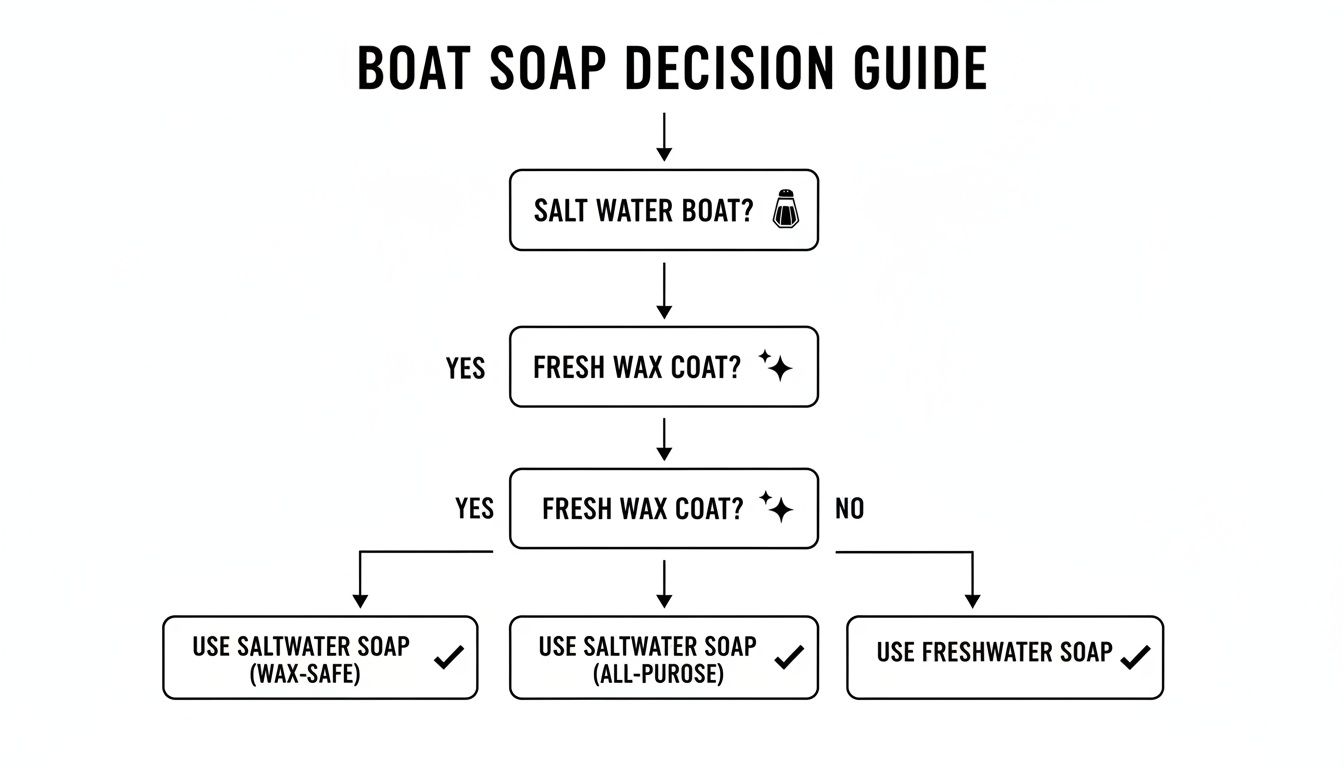
As you can see, if saltwater or a waxed surface is involved, a dedicated marine soap isn't just the best choice, it's the only one that makes sense.
Value Beyond the Price Tag
A common hang-up is that boat soap seems expensive. But when you look at the big picture, the opposite is true. Quality marine soaps are almost always highly concentrated. A single capful of Better Boat soap is enough to create a whole bucket of rich, effective suds.
Let's break down the real cost:
- Dish Soap: You have to use a ton of it to get any suds, it rinses poorly, and it forces you to spend time and money re-waxing your boat far more often.
- Car Wash Soap: It’s not cost-effective because it can't handle marine-specific problems like salt and heavy scum, potentially leading to expensive restoration work later.
- Better Boat Soap: One bottle will last you for dozens of washes, delivering a better clean while actively protecting your boat's value. The price of a bottle is nothing compared to the cost of a single professional gelcoat restoration.
Choosing the right boat soap isn’t just about getting dirt off. It’s about preservation. By using a formula built for the marine environment, you’re protecting your investment from corrosion, UV damage, and premature aging, making sure it stays in great shape for years of enjoyment.
How to Wash Your Boat for a Professional Finish
Ever wonder how the pros get that boatyard-quality shine? It’s not magic, just a solid process using the right tools and techniques. Follow a good plan, and you can sidestep common pitfalls like swirl marks and water spots, leaving your vessel looking absolutely flawless after every wash.
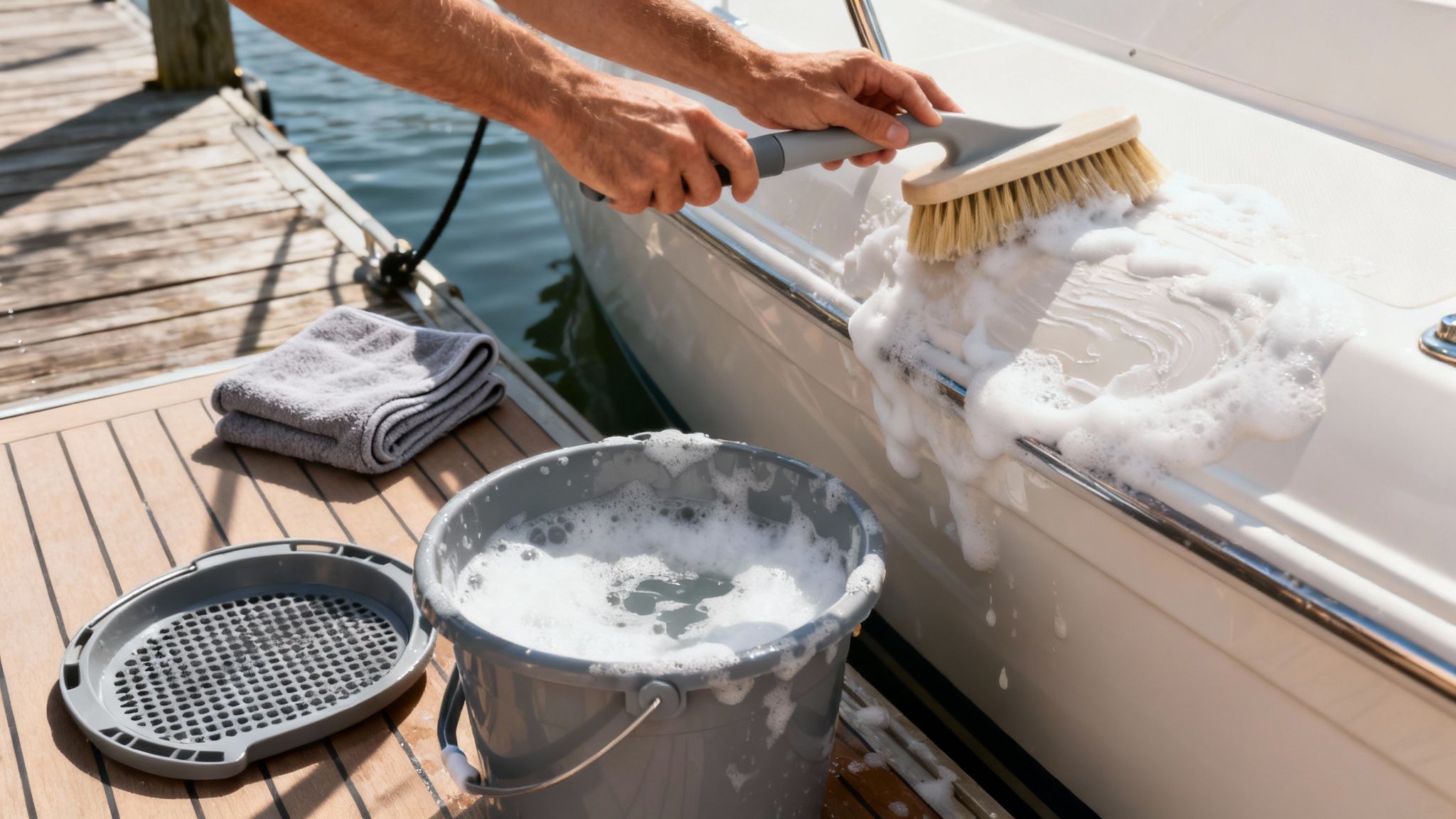
Before a single drop of water hits the deck, get your gear in order. Having everything within arm's reach is crucial, it stops the soap from drying on the hull while you’re scrambling to find a towel.
Here’s your essential toolkit:
- Two Buckets: One for sudsy water and a separate one with clean water for rinsing your wash mitt.
- Better Boat Boat Soap: A pH-neutral, concentrated formula is non-negotiable.
- Soft-Bristle Brush: Get one with a long handle. It’s a back-saver when you’re scrubbing the hull and deck.
- Wash Mitt or Sponges: Perfect for getting into more delicate spots.
- Absorbent Microfiber Towels: The secret weapon for preventing water spots during the drying stage.
The Two-Bucket Wash Method Explained
The real trick to a scratch-free finish is the two-bucket method. It’s a simple technique that keeps you from dragging grit and dirt back across your boat's sensitive gelcoat.

The soap for this method
Premium Boat Soap Concentrate
A highly concentrated marine formula, one ounce per gallon is all it takes to fill your wash bucket with rich, protective suds. pH-neutral and biodegradable, it lifts salt and grime without touching your wax or gelcoat.
Start by filling one bucket with your soap solution. Our Better Boat Boat Soap is super concentrated, so you only need one ounce per gallon of water to get a rich, powerful lather. The second bucket just gets clean rinse water.
Dip your wash mitt into the soapy water, wash a small section, and then, here’s the important part, rinse that dirty mitt in the clean water bucket before it ever goes back into the soap. This simple step traps all the grime in the rinse bucket, keeping your wash water clean and your finish protected.
By the time you're done, your rinse bucket will be a murky mess. All that grime would have otherwise been ground right back into your gelcoat. This one technique is a complete game-changer for maintaining that swirl-free shine.
Step-by-Step Washing for Flawless Results
With your supplies ready, you're set to wash. Try to work out of direct, hot sunlight if you can. Sun and heat make soap and water dry way too fast, leaving behind stubborn spots and streaks.
- Start with a Thorough Rinse: Give the entire boat a good spray-down with fresh water. This knocks off any loose dirt and helps cool the surface.
- Work from Top to Bottom: This is a golden rule. Always start at the highest point, like the flybridge or cabin top, and work your way down. It prevents dirty runoff from streaking over sections you’ve just cleaned.
- Wash and Rinse in Sections: Lather up one manageable section at a time with your mitt or brush. Rinse it off completely before the soap has a chance to dry, then you can move on to the next area.
- Pay Attention to the Final Rinse: After the whole boat has been washed, give it one last, thorough rinse from top to bottom. You want to make sure every bit of soap residue is gone.
- Dry Immediately and Completely: Don’t skip this step! This is what delivers that professional finish. Use high-quality, absorbent microfiber towels to dry every surface, removing the water before minerals can turn into ugly spots.
Many of the same principles apply to getting any surface spotless. If you're curious about the general approach, it's interesting to see what do professional cleaners use for a streak-free shine.
Using a Foam Cannon with Your Boat Soap
For an even faster and safer wash, a foam cannon is a fantastic tool. It blankets your boat in a thick layer of suds that gently lifts dirt away from the surface before you even start scrubbing.
Our soap works perfectly in foam cannons. Just follow the manufacturer's dilution instructions to get a thick, clinging foam. Applying the best boat wash soap this way seriously reduces the risk of scratches and makes the whole job much more efficient.
For a closer look at the process, you can learn more about how to clean a boat with the right boat soap in our detailed guide.
Adapting Your Cleaning Method for Different Surfaces
A boat isn’t just one big, uniform surface. It's a mix of different materials, and each one needs its own cleaning strategy. Kicking things off with a great boat wash soap is step one, but knowing how to tackle each specific surface with the right tools and techniques is what really makes a difference. You can use one versatile soap for the whole job, but you’ll need to switch up your method along the way.
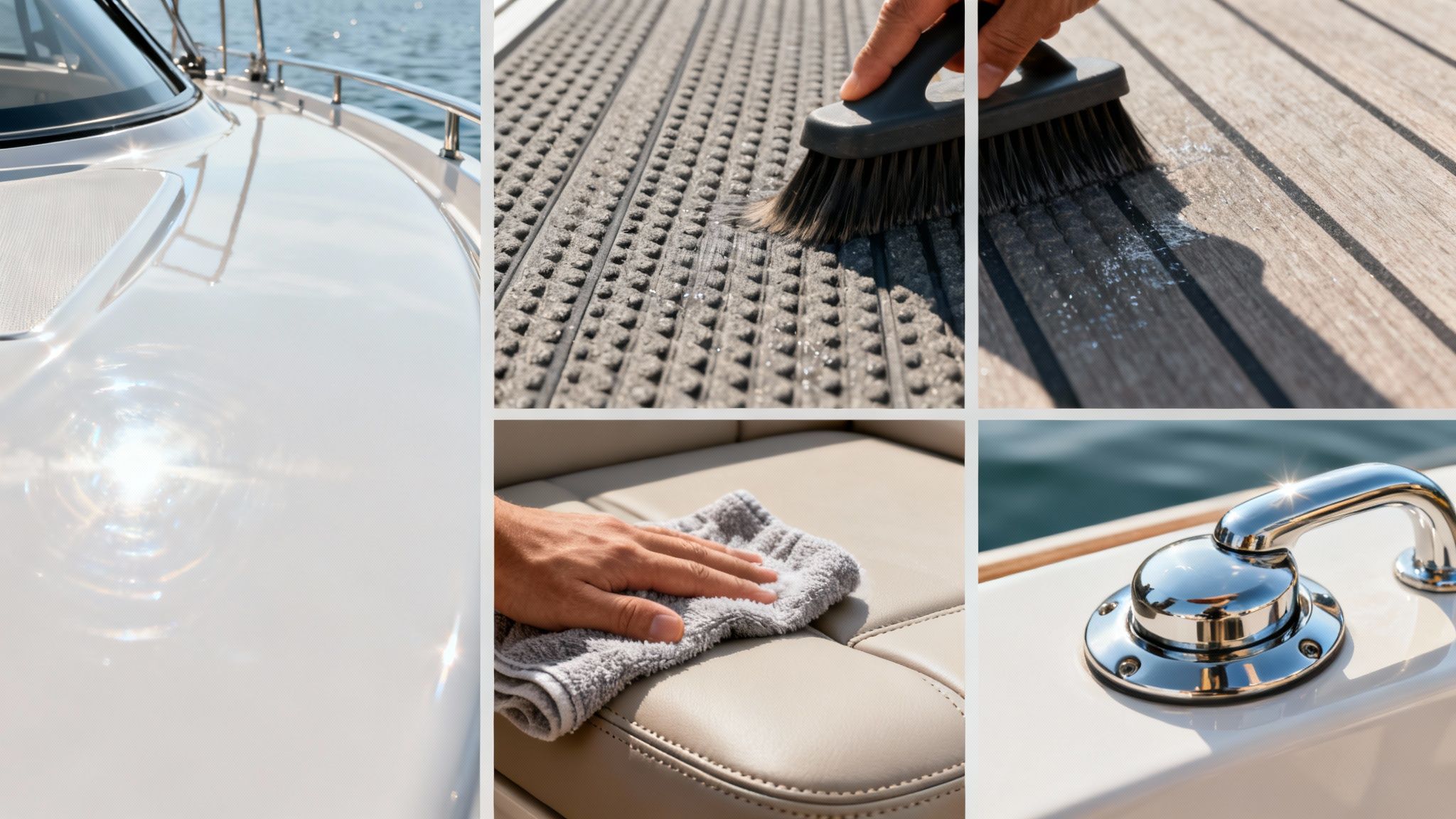
While we're talking boats, these cleaning principles apply almost anywhere. It’s a lot like figuring out how to clean RV roofs, where you’re dealing with a variety of materials that all demand unique care.
Cleaning Gelcoat and Fiberglass
Most of your boat’s exterior is probably gelcoat or fiberglass, the protective skin of your vessel. It’s tough, for sure, but it’s also surprisingly easy to cover in micro-scratches if you’re not careful. Using abrasive cleaners or stiff brushes can create tiny swirl marks that will dull your finish over time.
For these large, sensitive areas, always match your boat soap with a soft-bristle brush or a premium microfiber wash mitt. This combo is just right for lifting away salt and grime without scratching the gelcoat. Better Boat’s formula is designed to be non-abrasive and slick, helping dirt glide right off the surface safely.
Tackling Non-Skid Decks
Non-skid decks are a lifesaver for grip, but they're notorious for trapping dirt, scuffs, and grime in their textured grooves. A soft mitt just won’t cut it here; it’ll skim right over the embedded dirt, making this one of the tougher cleaning jobs on the boat.
This is where you need to bring out a more aggressive tool. Grab a medium-stiff deck brush and work the soapy water deep into the non-skid pattern. The bristles are firm enough to dislodge that stubborn, ground-in dirt without damaging the deck itself. I find that working in small, circular motions helps lift grime out from every little crevice.
A dedicated deck brush is non-negotiable. Its stiffer bristles are engineered to get into the textured surface of non-skid areas, pulling out dirt that a sponge or soft brush would leave behind. It’s the key to a truly deep clean.
Safely Washing Vinyl and Upholstery
Your vinyl seats and cushions are constantly exposed to the elements, sun, salt, and sunscreen, which can lead to stains and cracking. Our boat soap is gentle enough for these surfaces, but the real secret is choosing the right tool for the job.
- For General Cleaning: A soft sponge or a microfiber towel dipped in your diluted soap solution is perfect. Just gently wipe down the surfaces to get rid of light dirt and salt spray.
- For Stubborn Spots: Use a soft-bristle detailing brush to gently agitate the area. This helps lift stains out of the vinyl’s grain without being harsh.
- Always Rinse Thoroughly: Never leave soap residue on vinyl. It can get sticky in the sun and actually attract more dirt.
Maintaining Clear Vinyl and Metal Hardware
Clear vinyl windows, or isinglass, are incredibly easy to scratch. Never, ever use a bristled brush on them. You’ll want to use an ultra-soft, clean microfiber towel or a dedicated vinyl cleaning cloth with your soap solution. Gently wipe, rinse completely, and then dry with another clean, soft towel to avoid water spots.
For your stainless steel, chrome, and other metal hardware, a small detailing brush helps you get around all the tight spots on fittings and railings. The boat soap is great at removing the salt deposits that cause corrosion, keeping your hardware shiny and working properly. Make sure to dry all your metal fixtures thoroughly to prevent water spots from forming.
Your Top Questions About Boat Wash Soap
When you're dealing with boat care, a few questions always seem to pop up. To help you get the best results for your vessel, we've pulled together answers to the most common queries about finding and using the right boat wash soap.
Can I Use Car Wash Soap on My Boat?
This one comes up a lot, but trust me, using car wash soap on your boat is a bad idea. It might seem like soap is soap, but that stuff is formulated for automotive clear coats. It just doesn't have the muscle to break down marine-specific gunk like salt residue, algae, or that stubborn waterline scum.
The best boat wash soap, like our pH-neutral formula at Better Boat, is engineered from the ground up to handle the harsh marine environment. It's designed to safely clean your boat's sensitive gelcoat and wax layers without stripping them away or causing damage, something a car soap simply can't promise.
How Often Should I Wash My Boat?
How often you break out the bucket and sponge really depends on where you boat and how much you use your vessel. The key is consistency. Staying on top of cleaning is the best way to head off long-term damage from sun, salt, and everything else nature throws at you.
- Saltwater Boats: You really should give it a quick freshwater rinse after every single trip to get that corrosive salt off. As for a full-on wash with a quality boat soap, aim for every 2-4 weeks to keep corrosion and buildup at bay.
- Freshwater Boats: These boats can usually go a bit longer between washes. A good schedule is a full cleaning every 4-6 weeks.
No matter what schedule you're on, you've got to clean off aggressive stuff like bird droppings or fish blood immediately. If you let that sit, its acidic nature can actually etch into the gelcoat and leave a permanent stain.
Why Is a Biodegradable Soap So Important?
Choosing a biodegradable soap isn't just a nice-to-have; it's a cornerstone of responsible boating. Think about it: everything you use to wash your boat flows directly into the water. Harsh chemicals found in non-biodegradable soaps can do some serious harm to aquatic ecosystems.
These chemicals can throw the delicate balance of marine life out of whack and might even get you in trouble with local waterway regulations. Using an eco-friendly product like Better Boat's is essential for protecting the very environments we all love to be out on. It keeps your cleaning routine as safe for nature as it is for your boat.
What's the Best Way to Avoid Water Spots?
Ah, water spots. Those frustrating mineral deposits left behind when water evaporates. The good news is, preventing them is way easier than removing them, and it all comes down to a few simple techniques.

Dry without leaving spots
Synthetic Chamois Wash Towel
A synthetic chamois pulls water off gelcoat, fiberglass, and vinyl quickly and completely. Eliminating standing water before it evaporates is the single most effective step for a spot-free finish.
The single most important step is to completely dry the surface with a high-quality microfiber towel or chamois. By getting all the water off before it has a chance to air-dry, you stop mineral deposits from ever forming in the first place.
Also, try to wash your boat in the shade or during cooler parts of the day, like early in the morning or late in the afternoon. Work in small, manageable sections, washing and rinsing each area thoroughly before the soap has a chance to dry on the hull. This methodical approach is your ticket to a flawless, spot-free shine every time.
Here at Better Boat, we're all about making boat care simple and effective. Our premium, pH-neutral Boat Soap is designed to give your vessel a brilliant, lasting shine while protecting its finish and the marine environment.
You can explore our complete line of cleaning supplies and accessories at https://www.betterboat.com to keep your boat in pristine condition.


