


How to Protect Teak Wood on Your Boat
Taking care of your boat's teak means more than just a quick rinse. It's a routine of regular cleaning to get rid of grime and mildew, followed by applying a high-quality teak sealer or oil. This simple process is what stands between your beautiful wood and the harsh marine environment, stopping it from weathering to that silvery-gray color, cracking, or just generally falling apart.
Why Protecting Your Boat's Teak Is Non-Negotiable

That gorgeous golden teak on your boat isn't just for show. It's a serious investment in both the look and value of your vessel. The marine environment is brutal, with constant assault from sun, saltwater, and moisture putting your teak under a ton of stress.
Teak is legendary for its natural toughness and ability to resist rot, but it's not invincible. If you don't have a proactive care plan, its natural oils start to break down. This is what leads to that familiar silvery-gray patina that too many boat owners think is a lost cause. That color change is just the first warning sign.
The Real Cost of Neglect
Putting off teak maintenance does more than just hurt its appearance. The fallout from neglect can lead to expensive and time-consuming restoration projects down the line.
Here's a breakdown of what happens when teak is left to fend for itself:
- UV Damage: The sun's UV rays are the main culprit behind that graying effect. In as little as three to six months, untreated teak can lose its classic golden-brown hue. A good UV-inhibiting sealant can slash this surface degradation by up to 60%. The teak wood market is full of products, but choosing one with UV protection is key.
- Moisture Intrusion: As the wood's surface degrades, it becomes porous and starts soaking up moisture. This dampness is the perfect breeding ground for ugly black mildew spots and green algae, which can worm their way deep into the grain.
- Structural Weakness: Over time, the constant cycle of getting wet and drying out causes the wood to expand and contract. This process can lead to fine cracks and checks, compromising the wood's structural integrity and ruining its smooth finish.
Protecting your teak isn't just about maintenance; it's about preservation. A simple, consistent routine safeguards your boat's aesthetic appeal and preserves its long-term resale value, preventing small issues from becoming major restoration projects.
A proactive approach is always easier than a reactive one. When you understand why teak is such a prized wood for boats, you can really appreciate why it's worth protecting.
The Foundation of Lasting Protection: Deep Cleaning Your Teak
Before you even think about applying a protective finish, you've got to lay the groundwork. Just like any serious project requires proper wood preparation techniques for a flawless finish, giving your teak a deep clean is completely non-negotiable.
Clean before you protect
Teak Cleaner and
A proper teak cleaner lifts deep-set grime, salt, and oxidation so your finish bonds to bare wood rather than a contaminated surface. The brightener step restores the natural color that UV and weathering strip away.

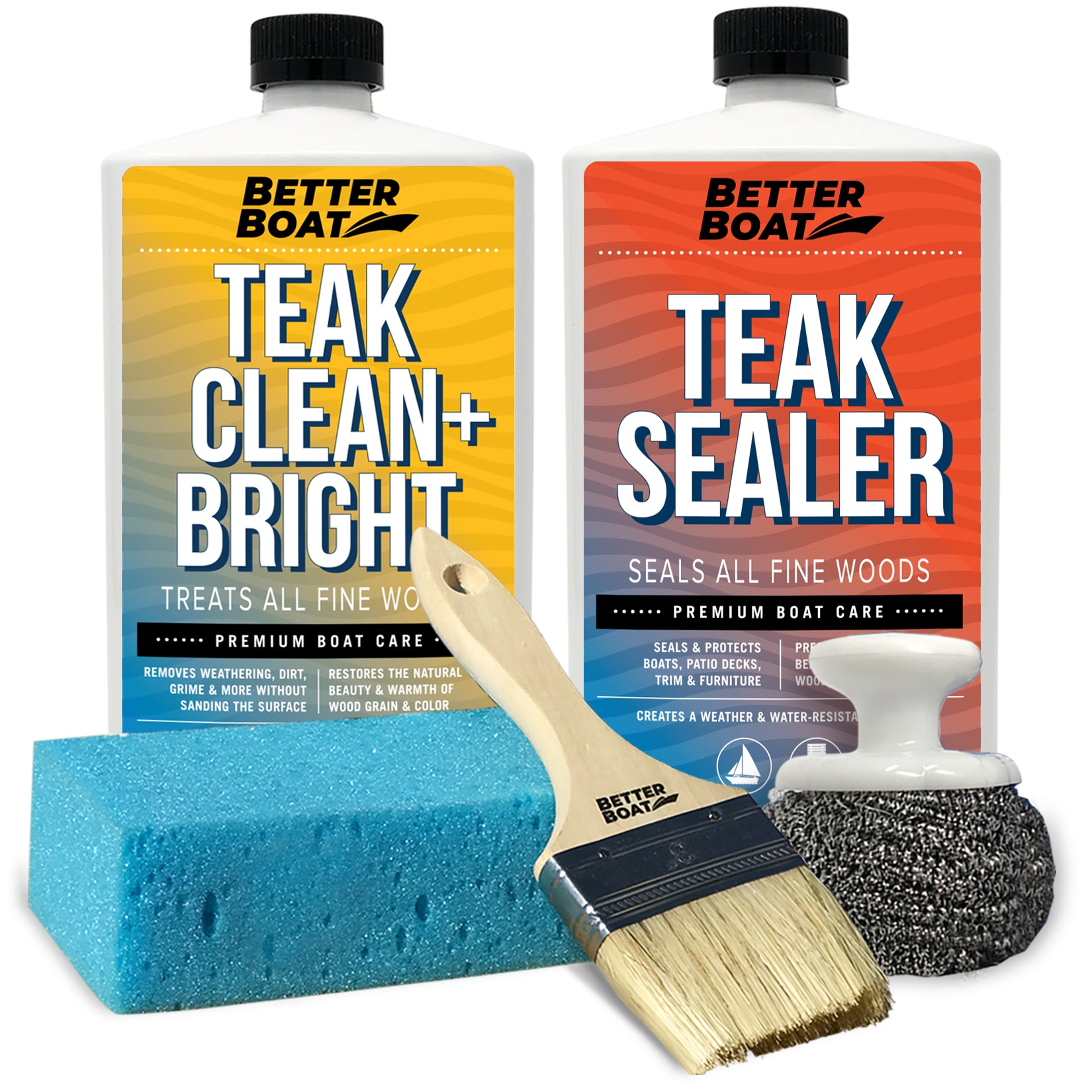
Trying to seal or oil dirty, weathered wood is a fool's errand. It's like painting over rust. You're just trapping the problem underneath and guaranteeing the new coating will fail in no time.
The real goal here is to get rid of every last trace of embedded grime, salt crystals, mildew, and any old coatings hanging on for dear life. This whole process opens up the wood's pores, which is exactly what you want. It lets your chosen protector bond directly with the grain, giving you maximum adhesion and a smooth, professional-looking finish. Skipping this part is the #1 reason for a blotchy, short-lived application.
The Right Tools and Techniques
A lot of boat owners immediately grab a pressure washer, thinking more power equals a better clean. This is a huge, irreversible mistake. That high-pressure water is aggressive enough to blast away the soft pulp between the teak's harder grain lines. You'll be left with a surface that's rough, uneven, and permanently damaged.

Scrub without damaging the grain
Stainless Steel Scrub Set for Teak Decks with Handle
A purpose-built stainless steel scrub set lets you work the cleaner along the grain with controlled pressure, removing embedded dirt without blasting away the soft wood fibers the way a pressure washer does.
Instead, the pros rely on a much more controlled approach. The ideal toolkit is simple but incredibly effective:
- A Two-Part Cleaning System: These usually have a cleaner to lift the dirt and an acid-based brightener that brings back the wood's natural golden color. A teak cleaner kit formulated specifically for marine environments safely tackles the tough buildup you only find on boats.
- A Soft-Bristle Deck Brush: Stay away from stiff, abrasive bristles that will scratch and scour the wood. A soft deck brush has just enough oomph to dislodge grime without hurting the delicate grain.
- Plenty of Fresh Water: Rinsing is just as important as the scrubbing. You need to wash away all the loosened gunk and leftover cleaning agents.
How you scrub is just as critical as what you scrub with. Always scrub across the grain, not with it. When you scrub parallel to the grain, you risk digging out that soft pulp, creating the same kind of damage a pressure washer would. Going across the grain gently lifts dirt from the surface without eroding the wood itself.
By focusing on a gentle yet thorough cleaning, you create the perfect canvas. This initial prep work is the single most important factor in how well your teak sealer or oil will perform and how long its protection is going to last.
This careful cleaning ensures that when you finally apply your protective coating, it soaks in deeply and evenly. For a more detailed breakdown of the steps, check out the complete guide on cleaning teak wood on your boat.
Choosing Your Armor: Teak Oil vs. Teak Sealer
After the hard work of deep cleaning your teak, you're at a crossroads. This next decision is a big one. It will dictate not just how your teak looks, but how much time you'll spend maintaining it for the rest of the season. It's the age-old debate you'll hear around any marina: traditional teak oil or a modern teak sealer?

Apply the right protection
Teak Sealer Oil
A dedicated teak sealer oil forms a durable barrier that blocks UV and repels moisture, giving teak far longer protection than repeated oil-only treatments. One clean application at the start of the season is typically all that is needed.
The classic choice, teak oil, works by soaking deep into the wood grain. It's designed to replace the natural oils that sun and salt strip away, and it does a fantastic job of bringing out that rich, amber glow that so many boaters love. There's no denying it makes the wood's character pop.
But that beautiful, traditional look comes at a price: constant upkeep. Because the oil sits in the wood instead of creating a protective shell on it, it breaks down pretty quickly in a harsh marine environment. You'll find yourself out there reapplying it every few months to keep your teak from turning gray all over again.
The Modern Alternative: Teak Sealers
Modern teak sealers offer a totally different approach. A quality sealer doesn't just soak in; it forms a tough, protective barrier on the surface of the wood. Think of it as armor for your teak, standing guard against the elements.
This protective shield does a few things really well:
- Blocks UV Rays: Good sealers are packed with UV inhibitors that stop the sun from bleaching the wood, which is the number one cause of that silvery, weathered look nobody wants.
- Repels Water: The barrier keeps moisture from seeping into the grain, which is a huge help in keeping the wood dry and looking clean.
- Lasts Longer: A well-applied sealer can easily last an entire boating season, sometimes even longer. That means way less time on your knees scrubbing and more time enjoying the water.
This decision tree shows the first step in prepping your teak, regardless of which protection you choose.

As the visual shows, great protection always starts with a clean slate. From there, your next move depends on the wood's condition.
Teak Oil vs. Sealer: A Practical Comparison
To make the call, it helps to see the two options side-by-side. This table breaks down the key differences to help you decide what's best for your boat and your schedule.
| Characteristic | Traditional Teak Oil | Modern Teak Sealer |
|---|---|---|
| Protection Method | Penetrates and nourishes the wood from within | Forms a protective barrier on the surface |
| Appearance | Rich, deep, "wet" amber look | More natural, matte, or satin finish |
| Durability | Low; requires reapplication every 2-4 months | High; lasts a full season or longer |
| Maintenance | High; frequent cleaning and re-oiling | Low; requires cleaning and maybe one reapplication per year |
| UV Protection | Minimal; wood will gray relatively quickly | Excellent; contains powerful UV inhibitors |
| Feel | Can feel slightly oily or sticky, may attract dirt | Dries to a clean, non-tacky finish |
Ultimately, the choice depends on your priorities. If you love the classic oiled look and don't mind the frequent maintenance, oil is a fine choice. But if you prefer less work and more durable protection, a sealer is the way to go.
Making the Right Choice for Your Boat
One thing many boaters discover the hard way is that while teak oil looks great at first, its slightly tacky finish can attract dirt and even become a food source for mildew. Sealers, on the other hand, cure to a hard, clean finish that doesn't feel sticky.
For the modern boat owner who values long-lasting protection and minimal upkeep, a teak sealer is the clear winner. It provides superior defense against the elements and frees you from the cycle of constant reapplication.
For an even deeper dive, the guide on the pros and cons of teak oil for boats lays out all the details.
With all that hard prep work behind you, it's time for the final, and most satisfying, part of the job. The real difference between a finish that looks okay and one that looks truly professional and lasts for seasons comes down to your application technique. Don't rush this stage and undo all that cleaning.

First things first, and this is non-negotiable: your teak has to be bone-dry. If you apply any kind of protector to wood that's even a little damp, you're just trapping moisture. This leads to a cloudy finish, stops the sealer from bonding properly, and will cause it to peel down the line. Allow at least 24-48 hours in dry, sunny weather after cleaning before opening a can of sealer.
Before you get started, grab a roll of painter's tape. Carefully mask off any areas you don't want the protector on, like your fiberglass deck, stainless steel cleats, and caulk lines. This little bit of prep saves you a massive cleanup headache later. Trying to get cured sealer off gelcoat is no fun at all.
Mastering the Art of Application
Whether you're using a long-lasting teak sealer or a more traditional oil, your tools and method are what will prevent a drippy, streaky mess. A good-quality foam brush or a clean, lint-free cloth gives you the best control for a smooth, even coat.
- Work in small, manageable sections. Don't try to tackle the whole swim platform in one go. Focus on just one or two planks at a time, working methodically from one end to the other.
- Always follow the grain. Brush in the same direction as the wood grain. This not only looks better but also helps the protector absorb evenly, enhancing the teak's natural beauty.
- Wipe off the excess. After you've let the product sit for a few minutes (check the product label for the specific timing), come back with a clean, dry rag and wipe away any sealer that hasn't soaked in. This is the key to avoiding a sticky surface that becomes a magnet for dirt.
When it comes to teak sealer, less is more. You'll get a much tougher and more beautiful finish by applying multiple thin, even coats rather than slathering on one thick, goopy layer. A single heavy coat often fails to cure right and ends up looking blotchy.
This is especially true for newer teak. A lot of modern teak comes from managed forests where trees are harvested under 40 years old. This younger wood tends to be more absorbent, which makes thin coats particularly effective. Once the first coat is fully dry, a second thin one builds up a seriously robust shield against the elements.
For a more detailed breakdown of the process, the guide on how to properly apply teak oil has some great extra tips that work just as well for sealers, helping you nail that perfect finish every time.
Maintaining Your Teak for Year-Round Beauty
Protecting your boat's teak isn't a one-and-done job. Think of it as a simple, consistent routine rather than a single weekend of hard labor. Gorgeous teak is the direct result of ongoing care that stays ahead of the constant assault from the marine environment.
Your best defense is a regular inspection. Once a week, just take a quick walk around and give your teak surfaces a close look. Are you seeing the first signs of fading? Any dull, chalky spots where the sealer might be wearing thin? Pay attention to water spots that don't evaporate quickly. That's a dead giveaway the protective barrier is weakening.
Knowing When to Act
Spotting problems early is the name of the game. It prevents small issues from turning into major restoration projects. Pay close attention to the areas that get hammered by sun and foot traffic, as these will always show wear first. The second you see even the slightest hint of green or black mildew, it's time for a light cleaning.
A gentle wash-down every couple of weeks can make a world of difference.
- Routine Cleaning: Grab a mild, pH-neutral boat soap and a soft-bristle brush. Gently scrub away the salt spray, bird droppings, and surface dirt. This simple step keeps abrasive grime from grinding down your protective finish. Boat Wipes Cleaning & UV Protectant are a convenient option for routine surface care between deep cleanings.
- Spot Treatments: If you notice a stubborn stain or a small patch of mildew, hit it immediately with a targeted cleaner. Don't let it spread.
Modern wood treatments, especially the newer water-based and bio-derived formulas, have gotten much better at protecting teak against fungal decay. These advancements make maintenance way more effective than the old-school methods.
The key is proactive maintenance. A quick, light cleaning every few weeks is far less work than a full-scale restoration project at the end of the season.
If your teak starts to look a little thirsty or loses its ability to bead water, that's a clear sign it needs a touch-up coat of sealer. Following this simple plan will keep your teak looking great and well-protected all year long.
Your Top Teak Protection Questions Answered
Even when you have a solid plan, questions pop up. Let's tackle some of the most common things boaters ask about protecting their teak so you can get the job done right.
How Often Should I Reapply Teak Sealer?
The best part about a high-quality teak sealer is how long it lasts. For most boaters, one good application at the beginning of the season is all it takes to keep things looking sharp.
The real test? Watch how water behaves on the surface. When it stops beading up and starts to soak in, you know it's time for a touch-up. High-traffic spots like a swim platform might need a quick mid-season coat, but a full reapplication is usually just an annual job.
Can I Put Sealer Over Old Teak Oil?
That's a definite no. You should never try to apply a sealer over an old oil finish. Teak oil works by soaking deep into the wood, which is great, but that oil will block the sealer from getting a proper grip on the wood grain.
Trying to take this shortcut is a surefire way to end up with a peeling, blotchy mess. You absolutely have to use a two-part teak cleaner to strip out any old, residual oil before you even think about opening a can of sealer.
A common myth is that you can just switch between oil and sealer. The truth is, a clean, bare surface is essential for any protective coating to work correctly. Taking the time to prep properly ensures your finish will last.
Is It Okay for Teak to Turn Gray?
That classic silvery-gray patina is a natural look, but it's also a warning sign. It's what happens when UV rays have stripped the wood of its natural oils, leaving it unprotected.
This weathered layer is much more porous and becomes a magnet for moisture, mildew, and eventually cracking. While some folks might like the "salty" look, it's not great for the wood's long-term health. Protecting your teak doesn't just preserve its beautiful golden color. It preserves its structural integrity. A good sealer with UV inhibitors is your best defense against the graying process.
Ready to try Better Boat's teak care products? The complete lineup is available at betterboat.com.


