


A Practical Guide to Using On and Off Hull Cleaner
If you’ve ever tried scrubbing a dirty hull by hand, you know it’s a back-breaking job. That's where an "on and off hull cleaner" comes in. Think of it as a fast-acting chemical solution that does the heavy lifting, dissolving tough marine stains like algae, rust, and that stubborn waterline scum without hours of intense physical labor. Most are acid-based, and they work by melting the grime right off the surface. You just spray it on and rinse it off.
What an On and Off Hull Cleaner Really Does
A clean hull isn't just for show, it’s absolutely critical for your boat's performance and longevity. Constant exposure to water inevitably leads to biofouling, which is just a fancy term for the buildup of algae, barnacles, and all sorts of other marine critters. This accumulation creates drag, and that can seriously slow you down and burn through fuel.
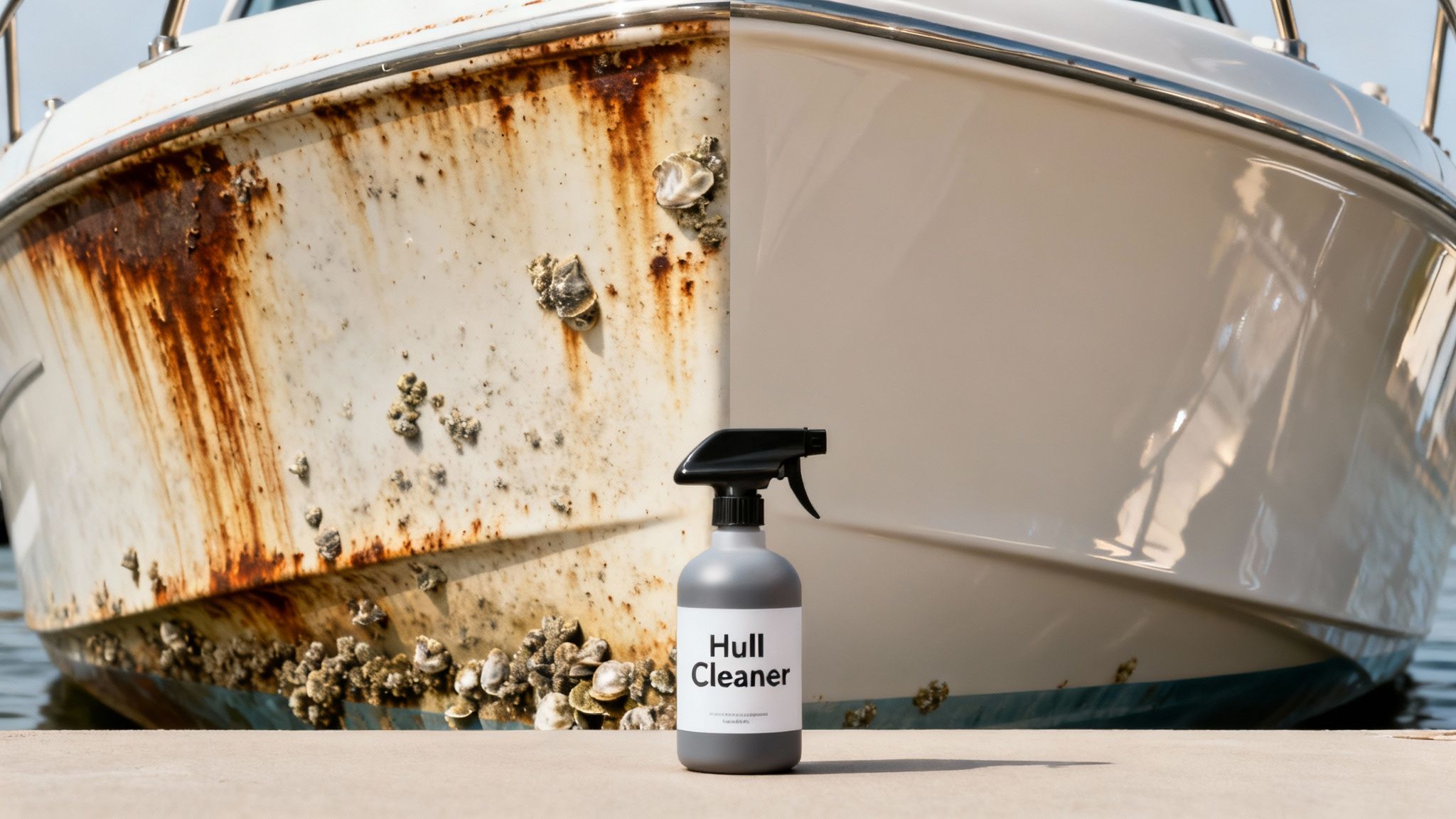
This is precisely why a good hull cleaner is an essential part of any boat owner's toolkit. Instead of dedicating an entire afternoon to scrubbing with soap and a brush, these chemical cleaners are formulated to break down the gunk that clings to your hull's surface, making the whole process worlds easier.
The Impact of a Clean Hull
The payoff for keeping your hull clean goes way beyond just looking good at the dock. A smooth, clean surface makes a real, tangible difference out on the water.
- Better Fuel Efficiency: A fouled hull is like trying to swim with a parachute on; your engine has to fight that much harder just to move.
- More Speed and Agility: When you cut down on drag, you'll feel it. Your boat will be more responsive and can hit its top speed without straining.
- Protects Your Investment: Regular cleaning is preventative maintenance. It stops corrosive growth from eating away at your gelcoat or paint.
There's a reason hull cleaners are a top seller in the marine market. That nasty buildup from saltwater and biofouling can slash a boat's speed by a surprising 10-15% and drive up fuel consumption in a big way. Keeping that hull slick ensures it cuts through the water like it’s supposed to, saving you money and potentially extending its life by 20-25%. For a closer look at the market data, you can check out this marine cleaning products report.
Choosing the Right Cleaner
The term "on and off" really just speaks to how simple they are to use: spray on, wait a bit, and rinse off. But not all cleaners are created equal. They generally fall into two camps: acid-based and acid-free.
Acid-based formulas are the heavy hitters. They’re what you grab when you're dealing with years of neglect, nasty rust stains, or cemented-on barnacle rings. On the flip side, acid-free cleaners are gentler, making them perfect for routine touch-ups on light slime and waterline marks.
For a powerful solution that’s still easy on fiberglass and painted surfaces, many boaters use our Better Boat Hull Cleaner. It's formulated to be tough on grime but simple to use. If you want to get into the nitty-gritty, take a look at our complete guide on how to clean your boat's hull for more pro tips.

How to Select the Right Hull Cleaner
Picking the right on and off hull cleaner isn't as simple as just grabbing the first bottle you see on the shelf. If you use the wrong formula, you'll either be scrubbing for hours with disappointing results or, even worse, causing permanent damage to your boat's hull. The real secret is matching the product to your specific needs, and that starts with a quick walk-around of your vessel.
First things first, you have to know what your hull is made of. Is it fiberglass, aluminum, wood, or a painted surface? Each material reacts differently to cleaning agents, especially those with strong acids. A heavy-duty cleaner formulated to blast grime off a tough fiberglass hull could easily discolor or even pit an aluminum pontoon boat.
This is exactly why reading the label is non-negotiable. Manufacturers design their products for specific surfaces. Our Better Boat Hull Cleaner, for example, is specifically formulated to be tough on stubborn stains while staying safe for fiberglass and painted hulls, which covers the vast majority of recreational boats out there.
Diagnose the Type of Marine Growth
Once you’ve confirmed your hull material, it’s time to play detective. You need to figure out what kind of fouling you're actually dealing with, because the severity of the buildup determines the strength of the cleaner you'll need.
Get up close and take a good look at the hull, paying special attention to the waterline. Are you seeing:
- Light Slime and Algae: This is that greenish or brownish film that usually comes off with a bit of elbow grease. It’s the most common and easiest type of fouling to handle.
- Tannin Stains: You might know this as "river mustache." These are the classic yellowish-brown stains that show up at the waterline, a common sight for boats kept in freshwater.
- Heavy Grime and Scum Lines: This is a much more stubborn, thicker layer of gunk that’s been sitting for a while. It almost always needs a more powerful chemical solution to break it down.
- Barnacles and Zebra Mussels: These guys are the toughest challenge. You're not just wiping away a stain; you're trying to dissolve the biological "cement" these critters use to lock themselves onto your hull.
A light slime problem might only call for a gentle, biodegradable marine soap. On the other hand, heavy barnacle residue requires a potent, acid-based on and off hull cleaner to dissolve the calcified rings they leave behind.
Match the Formula to the Foul
With your hull material and fouling type figured out, you can now pick a product with confidence. For most common issues like waterline scum and algae on a fiberglass boat, a balanced formula is your best bet. You need something strong enough to work fast without requiring an hour of scrubbing, but not so harsh that it eats away at your gelcoat.
For fiberglass boats with stubborn waterline scum or algae, a hull cleaner spray that clings to vertical surfaces gives the formula time to work instead of running straight off.
Pick the right hull cleaner
Hull Cleaner
Both formulas tackle waterline scum, algae, and marine growth on fiberglass. The clinging gel stays in contact with vertical hull surfaces longer, while the instant formula is ideal for quick applications where fast results matter.

The whole point is to let the cleaner do the heavy lifting for you. An effective on and off hull cleaner works by chemically dissolving the bonds between the grime and your hull, letting you just rinse it all away.
To really get a handle on cleaning your hull, it helps to understand the different types of cleaning agents available. You might even find some useful parallels in this ultimate guide to home cleaning supplies, which breaks down how different chemicals work. That knowledge can help you make a smarter choice for both your home and your boat.
For a deeper dive into picking the best marine-specific products, be sure to check out our guide on how to choose the best cleaning products for your boat. It gives a comprehensive look at everything you'll need to keep your vessel in top shape. By taking just a few minutes to evaluate your situation, you can get the job done right the first time, protect your investment, and get back on the water where you belong.
Cleaning Your Hull Out of the Water
When your boat's on a trailer or up on the hard, you get a rare, unobstructed view of the entire hull. This is the perfect time to go to town on the tough marine growth and get that finish looking like new again. With the right game plan and a bit of elbow grease, you can get a truly professional result.
Using an on-and-off hull cleaner is pretty straightforward, but the difference between an okay job and a great one is all in the details. It's more than just a quick spray-and-rinse; this is a core part of your boat's upkeep.
Essential Prep Work Before You Start
Hold on before you pop the top on that cleaner. A few minutes of prep will make the whole process go smoother, faster, and safer. You wouldn't paint on a dirty canvas, right? Same principle here.
First thing's first: give the hull a solid pre-wash. Grab a good biodegradable boat soap and a medium-bristle brush to knock off all the loose dirt, salt, and surface slime. This quick scrub gets the easy stuff out of the way so your hull cleaner can concentrate its power on the stubborn, baked-on stains.
Next up, get your safety gear sorted. You're about to handle some serious chemicals, so this part isn't optional.
- Chemical-resistant gloves are a must to protect your hands.
- Safety goggles or glasses will keep any splashes out of your eyes.
- Long sleeves and pants to cover your skin.
- A respirator or mask is a great idea, especially if you're working in a garage or any spot without great airflow.
Taking a minute for safety means you can focus on the job without worrying about accidents.
Mastering the Application Technique
Alright, with the hull prepped and your gear on, it’s time to apply the cleaner. The key here is to get even coverage and then give the product time to do its thing. Whether you're using a sprayer, roller, or brush doesn't matter as much as how you apply it.
This quick infographic breaks down how to pick the right cleaner before you even start.
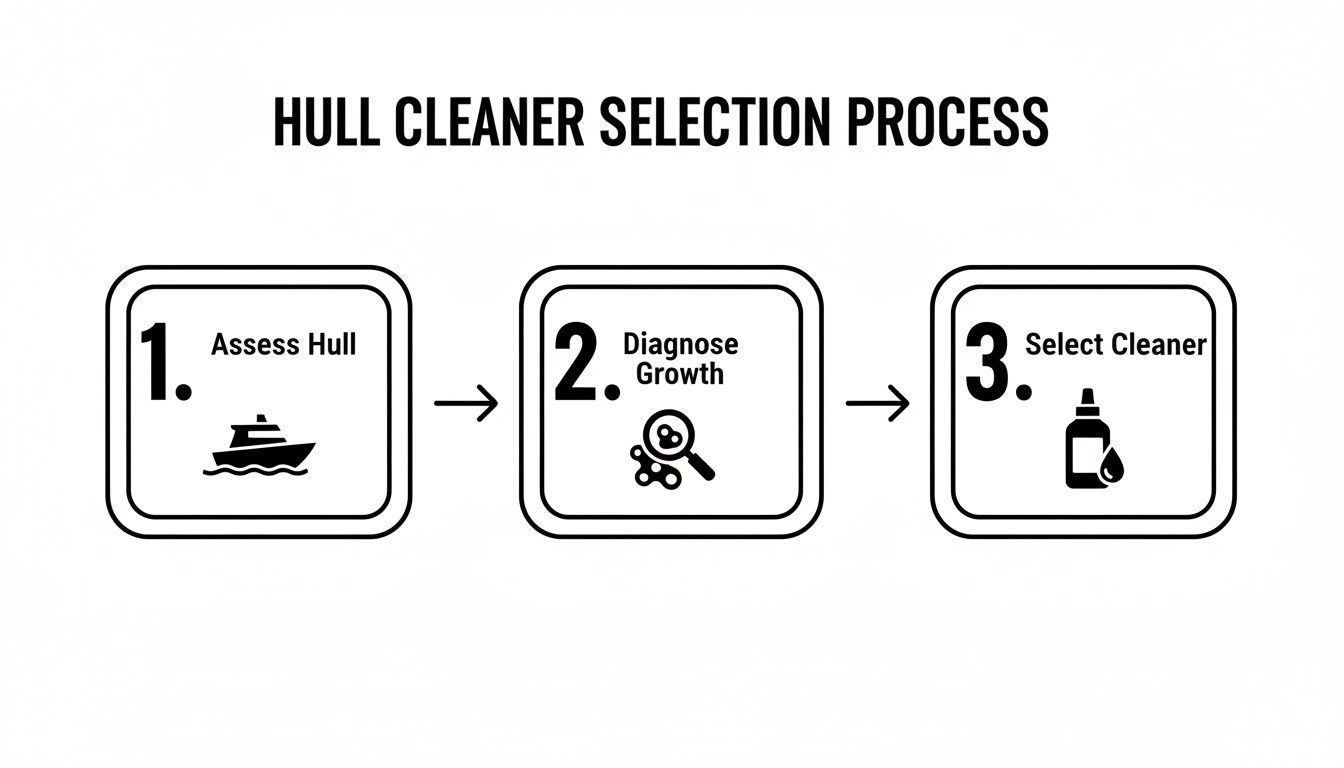
Starting with the right product for the type of growth you have is half the battle.
Here’s a pro tip that makes a world of difference: Always work in small sections, and apply the cleaner from the bottom up. It feels counterintuitive, but this technique stops the cleaner from running down and causing ugly streaks on the dry hull below. You're working against gravity for a perfectly uniform finish.
Let the cleaner sit! This "dwell time" is your secret weapon. After you apply it, walk away for a few minutes (check the bottle for the exact time). This is when the chemicals are actively breaking down the algae, scum, and whatever else is clinging to your hull. The biggest mistake people make is rinsing it off too soon.
For those extra-crusty spots, a little agitation can really help. Grab a good scrub brush and gently work the cleaner into the heavily stained areas. A little physical persuasion helps the chemicals get deeper into the grime, which is especially useful on stubborn waterline stains.
Rinsing and Finishing Touches
Once the cleaner has worked its magic, it’s time to rinse everything off with fresh water. A pressure washer on a low-to-medium setting is ideal, but a hose with a strong nozzle will also do the trick. Start rinsing from the top of the hull and work your way down, making sure you blast away every last bit of cleaner and loosened gunk.
If you were dealing with barnacles, you'll notice the cleaner has dissolved the "glue" holding them on, making them way easier to scrape off. For a full breakdown on that job, check out our guide on how to remove barnacles from your boat.
It’s easy to forget how much money a clean hull saves you. Even a thin layer of growth can reduce your speed and increase fuel consumption by 4-6%. With fuel prices what they are, a few hours of cleaning can pay for itself over a season.
After the final rinse, let the hull air dry, or speed things up with a clean microfiber towel. Step back and admire that slick, smooth surface. It’s now perfectly prepped for a fresh coat of wax to protect your work.
Cleaning Your Hull While It's in the Water
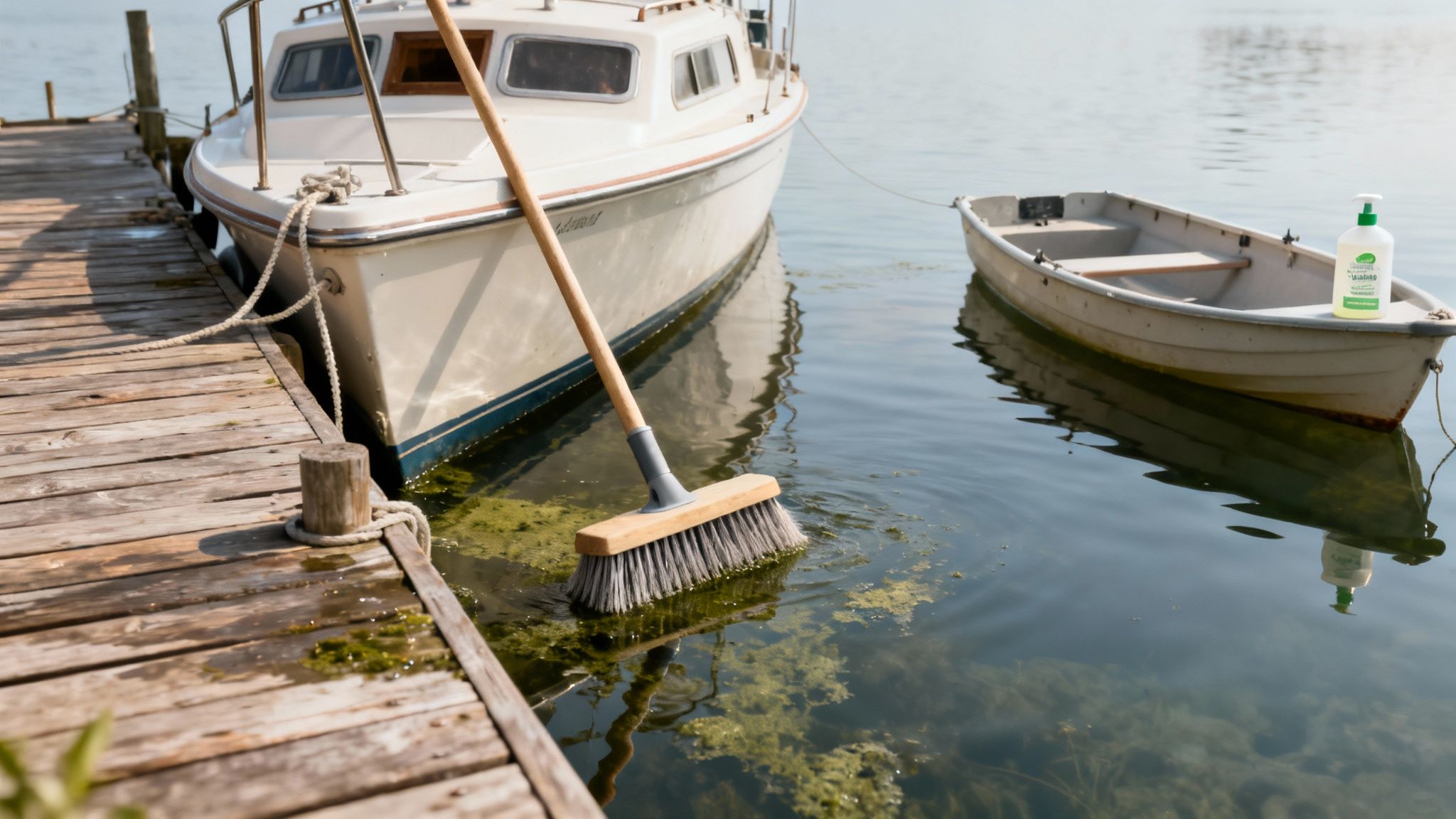
You don't always have to haul your boat out of the water to get it clean. In-water cleaning is a fantastic way to handle routine maintenance, especially for tackling that annoying waterline stain that seems to pop up overnight. While it comes with its own set of challenges, getting this technique down can keep your boat looking sharp all season long.
Now, this method isn't for heavy-duty barnacle scraping. Think of it more as regular upkeep, perfect for wiping away light slime, algae, and the first signs of biofouling before they get a real grip on your hull.
Prioritizing Safety and the Environment
Before you even grab a brush, you have to think about the water you're in. Many traditional hull cleaners are loaded with harsh chemicals that are a big problem for marine life. Regulations like the Clean Water Act are very strict about what you can discharge into our waterways, and for good reason.
This means you absolutely must use products made for in-water cleaning. Look for marine soaps that are biodegradable and phosphate-free. Our Better Boat Marine Soap is a great pick because it's formulated to be tough on grime but gentle on the ecosystem, lifting dirt away without leaving harmful chemicals behind.
When you're cleaning in the water, your first job is to do no harm. Picking an eco-friendly cleaner isn’t just a nice gesture, it's a core responsibility of being a boater.
Your personal safety is just as important. Working off a dock or from a small dinghy can be tricky and unstable. Always wear a personal flotation device (PFD), grab some non-slip shoes, and pull on a pair of gloves. It’s also a smart move to have a friend nearby just in case you find yourself in a tight spot.
The Right Tools for the Job
Since you're working from above the waterline, you need tools that give you some serious reach. The right gear makes all the difference between a quick clean-up and a frustrating afternoon of wasted effort. The idea is to apply steady, even pressure without having to do a dangerous balancing act over the side.
Here's what your essential toolkit should look like:
- A Long-Handled Pole: A telescoping pole is your best friend for this job. It lets you adjust your reach to hit every part of the hull with ease.
- Interchangeable Brush Heads: You'll want a couple of options. Our soft and medium bristle brushes are perfect here. The soft brush is ideal for general cleaning without scratching the gelcoat, while the medium one gives you that extra scrubbing power for stubborn scum lines.
- A Bucket and Marine Soap: Just a simple bucket for mixing your biodegradable cleaner with water.
- A Small Dinghy or Kayak: If your boat is moored away from the dock, you'll need a small, stable craft to get access to the entire hull.
Having this setup ready to go will make the whole process smoother and much more effective.
A Practical Cleaning Approach
Once you've got your eco-friendly soap mixed and your tools laid out, it's time to get to work. The technique itself is pretty simple, but a methodical approach will get you the best results.
Start by dipping your long-handled brush into the soapy water. Work in manageable three- to four-foot sections at a time, applying the soap directly to the hull at the waterline. Use firm, overlapping strokes to make sure you get good, even coverage. Let the soap dwell for a minute or two; this gives it time to break down the slime and algae.
Next, it's time to scrub. Apply consistent pressure and work the brush in a circular or back-and-forth motion. You’ll quickly see the grime start to lift off. Once a section looks clean, the natural movement of the water will rinse the biodegradable soap away.
Just move on to the next section and repeat the process until you've made your way around the entire boat. You’d be surprised how effective this is for keeping that waterline clean and preventing the kind of heavy buildup that requires a much more powerful on and off hull cleaner down the road.
Safe and Environmentally Smart Cleaning Habits
An effective on and off hull cleaner can work wonders, but with great power comes great responsibility. Any time you're working with potent chemicals, adopting safe and environmentally smart habits is non-negotiable.
It really comes down to two things: protecting yourself from the chemicals and safeguarding the marine ecosystems we all love to be out on. This dual focus ensures that keeping your boat pristine doesn't come at the expense of your health or the health of our waterways.
Personal Safety First
Before you even crack open a bottle of cleaner, the very first step is gearing up with the right Personal Protective Equipment (PPE). This isn’t just a friendly suggestion, it's a critical safety measure.
When handling any chemical cleaner, you need to create a solid barrier between the product and your body. Splashes and fumes are real risks, and the right gear is your only defense.
- Chemical-Resistant Gloves: Standard latex or nitrile gloves are essential. They'll save your skin from irritation or potential chemical burns.
- Safety Goggles: This one is huge. You absolutely have to protect your eyes from accidental splashes, which can cause serious, lasting damage.
- Long Sleeves and Pants: The more skin you can cover, the better. It’s a simple way to minimize any direct exposure.
If you're working with a variety of hull cleaning products, it's also a smart move to use tools like a chemical exposure calculator to better understand and manage any potential health risks. Taking these few simple precautions lets you focus on the job without worrying about a preventable accident.
Protecting Our Waterways
Your responsibility extends beyond just yourself and into the environment. The chemicals in many powerful cleaners can be incredibly harmful to aquatic life if they find their way into the water.
This is why following environmental regulations isn't just about avoiding a fine; it’s about being a good steward of our shared resources. A few simple actions can make a massive difference in preventing harmful runoff.
For any out-of-water cleaning, always lay a large tarp under your entire work area. This is a game-changer for catching drips and overspray, containing the residue so you can dispose of it properly instead of letting it seep into the ground.
There's a reason for the increased focus on this. The market for underwater hull cleaning is growing rapidly, thanks to stricter international biofouling rules now in place in over 170 countries. This global push is all about stopping the spread of invasive species and fighting the $150-200 million in extra fuel costs the shipping industry faces each year from biofouling.
As recreational boaters also move away from expensive dry-docking in favor of more frequent DIY cleaning, using on and off hull cleaners responsibly is more crucial than ever, especially as older, harsh antifoulants get phased out.
Whenever you have the option, choose a boatyard with a closed-loop water treatment or reclamation system. These facilities are designed to capture, treat, and reuse wash water, which prevents any contaminants from reaching the environment.
If you're interested in exploring greener alternatives for your boat maintenance routine, check out our guide on eco-friendly boat cleaning products. Making conscious choices about where and how you clean your boat is one of the best ways to contribute to the long-term health of our lakes and oceans.
Common Questions About Hull Cleaners
Even with a solid plan, you're bound to have a few questions before you start a big cleaning job. To wrap things up, we've pulled together the most common things boaters ask about using on and off hull cleaners. Think of this as your quick-reference guide for getting the best results and feeling confident on cleaning day.
Getting these details right can be the difference between a quick, satisfying job and a long, frustrating afternoon. Let's get into the specifics that will help you master the art of hull cleaning.
How Often Should I Clean My Boat's Hull
There’s no one-size-fits-all answer here. The right cleaning schedule really depends on where you keep your boat. Water conditions, temperature, and salinity all play a huge role in how fast marine growth grabs hold. A boat living in warm, nutrient-rich saltwater is going to need a lot more attention than one docked in a cool, clear freshwater lake.
As a general rule, here are some guidelines:
- Warm, Saltwater Environments: This is where biofouling gets aggressive. You'll likely need a quick waterline scrub once a month and should plan for a full, out-of-water deep clean at least once a season.
- Cooler, Freshwater Environments: Marine growth is much slower here. A thorough hull cleaning once or twice a year is often plenty to keep your boat in top shape.
The absolute best practice? Regular inspection. Make it a habit to check your hull, especially around the waterline, every few weeks. The moment you see a slime line forming or notice any staining, it’s time to act. It's always easier to do a light, quick cleaning than to battle a heavily fouled hull that’s been neglected all season.
Can I Use This Cleaner on My Aluminum Pontoon Boat
This is a critical question, and the answer is almost always a hard no. You need to be extremely careful here. Most powerful, acid-based "on and off" hull cleaners are made specifically for fiberglass and painted surfaces. Using one on an aluminum boat can cause serious, irreversible damage like pitting, streaking, or severe discoloration.
If your boat is aluminum, reach for an aluminum-specific cleaner instead of any acid-based product.

Safe for aluminum hulls
Aluminum Cleaner
If your boat has aluminum surfaces, this cleaner is formulated specifically for that material. It lifts oxidation and staining without the acid-based damage that fiberglass-targeted cleaners can cause.
Aluminum is a much softer and more reactive metal than fiberglass. Those strong acids that dissolve grime on a gelcoat can chemically attack and etch the surface of aluminum pontoons.
Always, always read the product label before you begin. Check for material compatibility to ensure the cleaner is safe for your specific type of hull. It’s the single most important step you can take to prevent a costly mistake.
For pontoon owners, the solution is to find a product specifically designed for the job. Our Better Boat Aluminum Cleaner is formulated to safely and effectively cut through scum lines and stains on pontoon tubes without harming the metal itself. Never assume a general hull cleaner is safe for aluminum.
What Should I Do Immediately After Cleaning the Hull
Getting the hull spotless feels great, but the job isn't quite done. Don't stop once the hull is clean and dry! If you want to protect all that hard work and make your next cleanup way easier, there's one more crucial step: applying a protective coating.
A high-quality marine wax is the perfect finishing touch. A good coat of wax does several important things:
- Creates a Barrier: It forms a slick, water-repellent barrier that leaves the hull surface smooth and easy to rinse. Grime and residue don't cling as easily, so cleanup down the line is quicker.
- Simplifies Future Cleaning: When it’s time for the next washdown, you'll find that the grime slides right off.
- Provides UV Protection: A good marine wax also shields your gelcoat or paint from the sun's damaging rays, preventing the fading and oxidation that makes a hull look dull and chalky.
Think of it as sunscreen for your boat. If your boat has bottom paint, this is also the perfect time to give it a close look. Check for any chips, scrapes, or thin spots and plan for touch-ups to keep your anti-fouling protection working effectively.
Will On and Off Hull Cleaner Actually Remove Barnacles
Yes, it's a huge help, but it's important to understand how it works. A strong hull cleaner won't make barnacles magically disappear. What it does is chemically dissolve the incredibly tough, cement-like glue that barnacles use to weld themselves to your hull.
The cleaner does the heavy lifting chemically, which makes the physical work of removing them far less of a chore. After letting the cleaner sit for the proper amount of time, you'll find the barnacle shells can be knocked off with much less effort. A plastic scraper or a stiff-bristle brush is usually all you need.
For a really stubborn patch of barnacles, you might need a second application to fully break down the adhesive. The key is to let the product do the work for you and to always use a plastic scraper, never a metal one, to avoid gouging or scratching your hull's finish.
At Better Boat, we know that maintaining your vessel is a labor of love. With the right products and a bit of know-how, you can keep your boat looking and performing its best. Our Hull Cleaner is designed to make one of the toughest jobs in boating a whole lot easier. Discover our full line of premium cleaning supplies and take the guesswork out of boat care at https://www.betterboat.com.


