Skip to content


Build It! DIY Plans for Outboard Motor Stand
Tired of wrestling with your heavy outboard on the garage floor? Or maybe you're just sick of paying someone else for winter storage. Building your own outboard motor stand is one of those weekend projects that's a total game-changer. It's a simple, low-cost way to protect your investment, make maintenance a whole lot easier, and reclaim your storage space.
Honestly, a good stand can turn engine care from a chore into a straightforward task and prevent the kind of damage that always seems to happen at the worst times.
Why Build Your Own Outboard Motor Stand
For a lot of us, the thought of offseason motor storage or routine maintenance brings a little bit of dread. Trying to manhandle a heavy, awkward outboard isn't just a hassle—it's a perfect way to throw out your back or accidentally ding up the skeg and prop. A dedicated stand gets rid of those problems completely by giving you a stable, secure, and mobile home for your engine.
This is about more than just convenience. It's about smart ownership. So many outboard issues can be traced back to improper storage. DIY outboard stands have been a boater's staple for decades, going back to the early 2000s online forums. With over 12 million recreational boats registered in the U.S., it's no surprise that 68% of owners do their own maintenance to keep costs down.
A home-built stand can save you hundreds compared to a store-bought one. When you hear that some reports point to 45% of outboard failures being linked to poor storage, spending a weekend building a stand seems like a pretty wise move for your engine's reliability.
The Benefits of a DIY Build
Whenever you take on a project, from a garden shed to a simple stand, you're going to weigh the options, a bit like deciding on a DIY vs Professional foundation installation. When it comes to an outboard stand, though, the DIY route has some clear wins:
- Significant Cost Savings: You can build a really solid stand for just a fraction of what you'd pay for a pre-made one, especially if you have some scrap lumber lying around.
- Simplified Maintenance: Jobs like changing the lower unit oil, flushing the engine, or getting it ready for winter become so much easier—and safer—when the motor is at a comfortable working height.
- Proper Off-Season Storage: Keeping your motor upright is critical. It prevents fuel and oil from seeping into the wrong places and keeps it from getting tipped over in a crowded garage.
- Customization: This is a big one. You can build the stand to the exact dimensions you need for your motor, whether it's a little 2-hp kicker or a hefty four-stroke.
A well-built stand just transforms those tedious jobs into manageable tasks. It’s an empowering project that gives you more control over your boat’s upkeep, which is a huge part of being a responsible owner. For more on this, check out our complete guide to outboard motor maintenance.
Gathering Your Materials and Tools
A successful DIY project always starts with a well-stocked bench. Taking the time to gather everything you need before you make the first cut saves a ton of frustration and prevents those annoying mid-project trips to the hardware store.
We’ve broken down exactly what you'll need. Think of this as your pre-flight checklist for building a sturdy, reliable outboard stand.
A Solid Foundation: Lumber, Fasteners, and a Cut List
The bones of your stand are simple, but choosing the right stuff is key to its strength and how long it will last. For most outboards, you can't go wrong with standard construction-grade lumber.
Before you head to the store, take a look at our cut list. This table breaks down what you'll need based on your motor's size, so you can buy with confidence and minimize waste.
Materials and Cut List for Your Outboard Stand
| Component | Small Motor (Under 15 HP) | Medium Motor (15-50 HP) | Large Motor (Over 50 HP) |
|---|---|---|---|
| Uprights & Base | (2) 2x4s @ 8 ft | (3) 2x4s @ 8 ft | (2) 2x6s @ 8 ft |
| Cross Braces | Use offcuts from 2x4s | (1) 2x4 @ 8 ft | (1) 2x6 @ 8 ft |
| Motor Mount | (1) 2x6 @ 2 ft | (1) 2x8 @ 2 ft | (1) 2x10 @ 2 ft or Plywood |
| Fasteners | 3-inch exterior screws | 3-inch exterior screws | 3.5-inch exterior screws/bolts |
| Casters | 3-inch, 200 lb load/caster | 4-inch, 300 lb load/caster | 4-inch, 400+ lb load/caster |
With your list in hand, you'll know exactly what to grab. It's the best way to make sure you have the right pieces for a stand that can handle the weight.
More on Materials
-
Lumber: You'll need several 8-foot-long 2x4s and a wider board (like a 2x6) for the motor mount plate. Pressure-treated (PT) wood is a fantastic choice for its built-in resistance to rot, though it is a bit heavier. If you go with standard untreated pine, make sure you plan to seal it well.
-
Plywood (Optional): A small piece of 1/2-inch or 3/4-inch plywood makes a great tool shelf for the base. It not only adds a handy spot for your tools but also makes the whole frame more rigid.
-
Fasteners: Your go-to fastener will be 3-inch exterior-grade deck screws. They're coated to fight off corrosion and have the strength needed to hold everything together. If you're adding a plywood shelf, you'll also want some 1 1/4-inch screws.
-
Casters (Optional): Want to roll your motor around the garage? Grab four heavy-duty, 3-inch or 4-inch swivel casters. Get at least two with locking brakes. Check their weight rating and make sure their combined capacity is well above your motor’s weight.
These simple 2x4 stands have a history rooted in practicality. Early designs focused on just getting the job done, but modern plans have been refined for ergonomics and strength. Today's stands often feature base legs around 36 inches long to give you a comfortable 32-inch working height. This simple change helps combat back strain, a complaint in 62% of mariner injury reports.
A well-built stand with plywood bracing can have a crush resistance over 500 pounds, easily handling most outboards. Properly storing your motor avoids tilt lock damage, which can save you an average of $500 in repairs. You can find more of this practical history in this in-depth look at outboard stand construction.
Your Tool Arsenal
You don’t need a professional woodshop for this project. Most of these tools are probably already in your garage.
Essential Power and Hand Tools
- Tape Measure: For getting every cut just right.
- Pencil or Marker: To make your cut lines clear and easy to see.
- Speed Square: Absolutely essential for marking perfect 90-degree and angled cuts.
- Circular Saw or Miter Saw: A miter saw is the MVP here. It makes quick, clean, and perfectly repeatable cuts, which you'll appreciate for the angled braces.
- Power Drill/Driver: You’ll be using this for pre-drilling and driving all your screws. Be sure you have a drill bit that’s slightly smaller than the diameter of your screws.
Pro Tip: Always, always pre-drill your screw holes, especially when you're working near the end of a board. This tiny step is the number one way to prevent wood from splitting. It guarantees your joints are as strong as they can be, right from the start.
Finally, let's talk finishing touches. A good wood glue applied to joints before you screw them together adds a surprising amount of strength. You'll also want a good sealant. Even if you use pressure-treated lumber, applying a water-repellent sealer or marine epoxy to the end grains adds another layer of defense against moisture.
If you really want to dive deep into total-immersion protection, you can learn more about using epoxy resin for boat repairs and other projects. And of course, don't even think about starting without your safety glasses and gloves.
Let's Build This Thing: Step-by-Step Plans for Your Stand
Alright, you've got your lumber stacked and your tools are lined up. This is where the fun really begins—turning that pile of 2x4s into a solid, functional piece of gear for your workshop. We're about to dive into the build, piece by piece, from the base all the way to the final braces.
These instructions are straightforward, so even if this is one of your first woodworking projects, you'll be just fine. I’ll give you the exact measurements, the right angles, and a few tips I’ve picked up over the years building these things. It's like having a seasoned pro right there with you.
Before we fire up the saw, just remember this simple flow. Getting everything prepped and cut first makes assembly a breeze.

Trust me, organizing your materials, tools, and cuts before you ever touch a screw will save you a ton of headaches. Let’s get to it.
Building the Base Frame
The base is what keeps this whole thing from tipping over, so stability is everything. A wide, solid footprint is non-negotiable, especially if you plan on rolling it around on casters.
Grab your miter saw or circular saw and let's cut the main pieces for the base from your 2x4s:
- (2) Base Runners: Cut two pieces to 36 inches each. These are the long sides of your foundation.
- (2) Cross Members: Cut two pieces to 16 inches each. These pieces will set the width.
With your four pieces cut, find a flat spot on your garage floor to lay them out. Put the two 36-inch runners parallel to each other and sandwich the 16-inch cross members between them at each end. You should have a rectangle. The final outside dimension will be 36 inches long by 19 inches wide (that's the 16-inch cross member plus the 1.5-inch thickness of each runner).
Expert Insight: "Measure twice, cut once" is the gospel of woodworking for a reason. Before you even think about driving screws, use a speed square to make sure every corner is a perfect 90 degrees. A square base from the start means no wobbles later.
Once you’ve confirmed everything is square, run a bead of wood glue on the ends of the 16-inch cross members. Then, grab your drill and drive two 3-inch exterior screws through the runners and into the ends of each cross member. That's a total of eight screws locking this base together.
Assembling the Upright Supports
Now it’s time to go vertical. The uprights need to be rock-solid and angled just right to give your motor's lower unit enough clearance while keeping the center of gravity stable. This is where a miter saw really earns its keep.
First, the cuts for the main vertical structure:
- (2) Uprights: Cut two 2x4s to 38 inches long.
- (1) Motor Mount Board: Cut your 2x6 (or 2x8 for the big boys) to a length of 19 inches, matching the base width.
- (1) Top Brace: Cut one 2x4 to 19 inches. This will sit just under the motor mount.
Time for that angle. Set your miter saw to an 8-degree angle. Take your two 38-inch uprights and make an 8-degree cut on the bottom of each one. This subtle lean-back is key for stability and makes hanging the motor much easier. Make sure the long point of the cut is on what will be the back of the upright.
With your angled cuts done, let's attach the uprights. Measure and mark 6 inches in from one end of each 36-inch base runner. This is where the back edge of your uprights will sit.
Put a little wood glue on the angled bottom of each upright. Place them on the inside face of the base runners, lined up with your 6-inch marks. Use three 3-inch screws per side, driving them from the outside of the runner into the bottom of the upright.
Attaching the Motor Mount and Bracing
That motor mount board is the single most important part for safety. It takes all the weight and clamp force from your outboard, so we're building it to be bulletproof.
Start by attaching the 19-inch 2x4 top brace between the two uprights, flush with the top. Use two 3-inch screws on each side. Now, place the 19-inch motor mount board (your 2x6 or 2x8) right on top of that brace, also flush with the top of the uprights. Secure it with two 3-inch screws on each side, driving them down into both the top brace and the uprights.
The main frame is built, but without diagonal bracing, it's just a wobbly box. These braces are what give the stand its immovable rigidity.
You'll need to cut two more 2x4s for the braces. The easiest trick for perfect angles here is to just hold a scrap 2x4 diagonally against the frame, running from the upright down to the base runner. Use your pencil to mark the cut lines right where the wood meets the frame, then make your cuts. Attach each brace with two 3-inch screws on both ends.
The concept of a DIY outboard motor stand really took off after the 2008 recession when boaters got serious about saving money on maintenance. For instance, classic plans for small outboards call for a base width between 16 to 18 inches for optimal stability. They also often recommend a slightly sloped motor board to help drain fluids during an oil change—a job that 70% of DIYers do at least twice a year. In fact, data from boating forums suggests a good stand can slash maintenance time by up to 40%, turning a four-hour headache into a 2.5-hour task. You can see how these time-tested designs came together in The Stingy Sailor's original 2009 guide.
Final Assembly and Optional Add-ons
We're in the home stretch. The last few steps are adding casters for mobility and a handy shelf. If you're adding wheels, flip the whole stand upside down. Place a heavy-duty swivel caster at each of the four corners of the base.
Use the lag screws or bolts that came with your casters to lock them down. Pro tip: make sure at least two of the casters have locking brakes.
For the shelf, cut a piece of 1/2-inch or 3/4-inch plywood to fit snugly inside the base frame, resting on the bottom cross members. A few 1 1/4-inch screws will hold it in place. Not only does this give you a spot for your tools and drain pan, but it also adds a surprising amount of extra rigidity to the whole frame.
Once everything is assembled, flip it back over and give it a good shake. It should feel absolutely solid, ready for finishing touches and a lifetime of service.
Protecting Your Stand for Long-Lasting Durability
Once the last screw is in, it's tempting to call the project done and immediately hang your motor. I get it. But in any marine environment—even just a damp garage—skipping the final finish is a mistake you'll regret later. This last step is what separates a stand that lasts a couple of seasons from one you’ll have for a decade.
This isn't just about looks. It's about protecting your hard work from the constant threat of moisture, spilled fuel, and oil. Unfinished wood, especially the fresh cuts you just made, acts like a sponge. Those end grains will wick up any water they find, leading to rot that will kill the structural integrity you just built.

Sealing the Wood for an Impenetrable Barrier
The most vulnerable spots on your entire stand are the end grains from your fresh cuts. This is where moisture gets in and rot starts. To stop it, you need a sealant that creates a truly waterproof barrier.
This is a perfect job for a quality Marine-Grade Epoxy Sealant. Unlike standard paint that just forms a film on the surface, a good epoxy actually soaks into the wood fibers. It then cures into a hard, plastic-like shield that water simply can't penetrate.
Applying it is pretty straightforward:
- First, give all the surfaces a light scuff with medium-grit sandpaper to help the epoxy grip. Wipe all the dust off with a clean, dry rag.
- Next, hit all the end grains first. Be generous here and let that initial coat of epoxy really soak in.
- Once the ends are treated, go ahead and coat all the other surfaces. Use a cheap, disposable brush and make sure you're in a spot with good airflow.
A solid coat of epoxy sealant is a small time investment that pays off big, adding years to the life of your stand by preventing rot from ever getting a foothold.
Adding Color and Final Protection
After the epoxy has fully cured—and be sure to check the product instructions for the exact time—you can add a layer of paint. This adds another layer of defense, especially against UV rays that break down wood and even epoxy over time, but it also just makes the stand look finished.
Any good quality exterior or marine paint will do the trick. I personally like using a bright color, which makes the stand easier to spot in a cluttered garage or workshop, helping you avoid bumping into it.
Always apply two thin coats instead of one thick one, and let it dry completely between coats. This combination of an epoxy base and a painted topcoat gives you a nearly bulletproof finish. If you really want to get a perfect topcoat, you can explore our guide on clear coating a boat, as many of the same techniques apply here.
Preparing for a Clean Workspace
Your stand is now built and protected, but let's be honest—engine maintenance is messy. You’re going to have spilled fuel, drips from the lower unit, and greasy fingerprints. A little prep for cleanup makes all the difference.
I like to keep a bottle of All-Purpose Boat Soap right on the shelf I built into the stand. It’s made to cut right through grease and oil without being too harsh on the finish. A quick spray and wipe-down after a messy job keeps the stand looking sharp and prevents that grimy buildup. It’s a simple habit that ensures your stand stays a piece of gear you’re proud to have in your shop for years.
Final Safety Checks and How to Use Your Stand

Alright, the sawdust has settled and you’ve got a brand-new outboard stand. It looks great, but before you hang that heavy motor on it, we need to talk about a few critical final checks. Don't skip this part—it’s all about protecting you and your expensive outboard.
First thing's first: grab your driver and go over every single screw. Make sure each one is snug. Wood has a way of settling after you first build something, so a quick re-tighten is always a good idea.
Performing Stability and Load Tests
Now for the moment of truth. Let’s make sure this thing is rock solid. Move the stand to a flat, level spot in your garage or workshop for what I call the "Wobble Test."
Put your hands on the motor mount board and give it a good, firm shove from every angle—front, back, and both sides. You’re looking for zero give. It should feel completely rigid. If there’s even a hint of rocking or swaying, you need to go back and reinforce your corner joints and braces. A stable stand is absolutely non-negotiable.
Important Takeaway: Here’s a quick confidence booster. If you feel comfortable, carefully sit or even stand on the motor mount board. It's a simple, real-world load test that immediately tells you if the stand can handle the static weight of your engine.
Mounting and Dismounting Your Outboard Safely
Lifting an outboard is tricky business. Even a smaller 80-pound motor can put you in a world of hurt if you don't use proper technique. It’s all about lifting with your legs, not your back.
Here’s the safest way I’ve found to get the motor on the stand:
- Position the Stand: Get the stand right up against the motor, with the mount board as close as possible. If your stand has casters, lock them down now.
- Get a Good Grip: Use the motor’s built-in handholds. Squat down by bending your knees, keeping your back straight.
- Lift and Pivot: Lift straight up with your legs, then pivot your whole body by moving your feet. Never twist at your waist while holding a heavy load.
- Hang and Clamp: Gently lower the motor onto the center of the mount board. The first thing you should do is tighten the transom clamps, turning each one a little at a time to get even pressure.
When it’s time to take it off, just reverse these steps. Always make sure your path is clear and your footing is solid.
Best Practices for Maintenance and Storage
Congratulations—your new stand is ready for duty. It’s now the perfect workstation for flushing the engine, changing the lower unit oil, or tackling any other maintenance task. Having the motor upright makes every job infinitely easier.
For some extra peace of mind, especially when rolling the stand around with the motor mounted, consider using a sturdy rope to secure it. One of our Fender Lines works perfectly for this. Just wrap it around the motor and through the stand's frame. It’s a simple trick that prevents the engine from bouncing or shifting unexpectedly.
And for a full rundown on staying prepared, whether on land or on the water, be sure to check out our essential boat safety checklist.
Common Questions About Building an Outboard Stand
Even with a solid set of plans, a few questions always pop up when you start a project like this. It makes sense—you're dealing with real weight and want to be sure you're getting it right. We've built our share of these and heard from countless boaters, so we've pulled together the most common questions to help you build with confidence.
How Much Weight Can a 2x4 Stand Actually Hold?
This is the big one we hear all the time. The answer isn't really about horsepower, it's all about weight. For smaller motors, a well-built stand made from 2x4s is more than enough. Think motors up to 15 HP or in the 100-120 pound range. A properly braced 2x4 stand will handle that with ease.
The real strength comes from the design. When you use quality 3-inch exterior screws, add wood glue to every joint, and put in those diagonal braces, you create a super-rigid structure. If your motor is a bit heavier, simply moving up to 2x6s for the main frame and using lag bolts instead of just screws will dramatically boost its capacity. A beefier build like that can safely hold engines well over 200 pounds.
A stand’s strength isn’t in the wood alone—it’s in the geometry. Those diagonal braces are critical. They stop the frame from swaying and channel the motor's weight down and out to the wide base, making it rock-solid.
Should I Use Pressure-Treated Wood for the Entire Stand?
Pressure-treated (PT) lumber seems like a no-brainer for anything that lives in a garage or shed, thanks to its rot resistance. But it’s not always the best choice for this project. PT wood is heavy, tends to warp as it dries out, and the chemicals used to treat it will eat right through standard screws.
If you go the PT route, you absolutely must use fasteners specifically coated for treated lumber. If you don't, they'll corrode and fail. It’s also a good idea to let the wood dry for a few weeks before painting or sealing it.
Honestly, a better approach is to use standard kiln-dried lumber and just protect it yourself. A couple of coats of a quality sealant like our Marine-Grade Epoxy Sealant will create a waterproof barrier without the extra weight or the risk of your frame twisting out of shape. Pay special attention to the end grain—it soaks up moisture like a sponge.
What Are the Most Common Building Mistakes to Avoid?
Learning from someone else's missteps is the easiest way to get a perfect result the first time. Here are the top three blunders we see people make:
- Undersized Casters: This is a classic mistake. People buy casters rated for the motor’s weight, but forget to add the weight of the stand itself. Always get casters with a combined load rating that’s at least double your motor’s weight. It gives you a huge safety margin.
- A Narrow Base: A tall, skinny stand is just asking to be tipped over. There's a reason our plans for an outboard motor stand specify a wide, stable footprint. Fight the urge to shrink the base to save a little floor space—it's not worth the risk.
- Inaccurate Cuts: Being off by even a fraction of an inch on an angle or length can make the whole stand wobbly and unsafe. Take your time. Use a speed square to check your angles, measure twice, and if you’re using a circular saw, clamp down a straight edge to guide it.
At Better Boat, we're dedicated to helping you get the most out of your time on and off the water. With our premium cleaning and maintenance products, you can protect your investment and keep your boat looking its best. Explore our full range of solutions at https://www.betterboat.com.
Related Posts

Install & Maintain Throttle Cables for a Boat
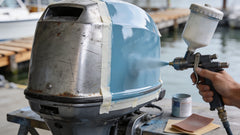
Painting outboard motor: Revitalize Your Outboard's Finish