


Choosing the Best Boat Anchor Rope for Safety and Performance
Choosing the right anchor rope isn't just about picking something that looks strong enough. It's about finding the perfect blend of strength, stretch, and durability for your specific boat and the waters you frequent. It’s a decision that’s absolutely fundamental to your safety out on the water.
For most of us recreational boaters, a good quality, three-strand nylon rope is the undisputed king. Why? Its incredible elasticity acts like a giant shock absorber, protecting your boat and its hardware from the harsh, jarring forces you get from wind and waves.
Your Guide to Selecting the Right Anchor Rode
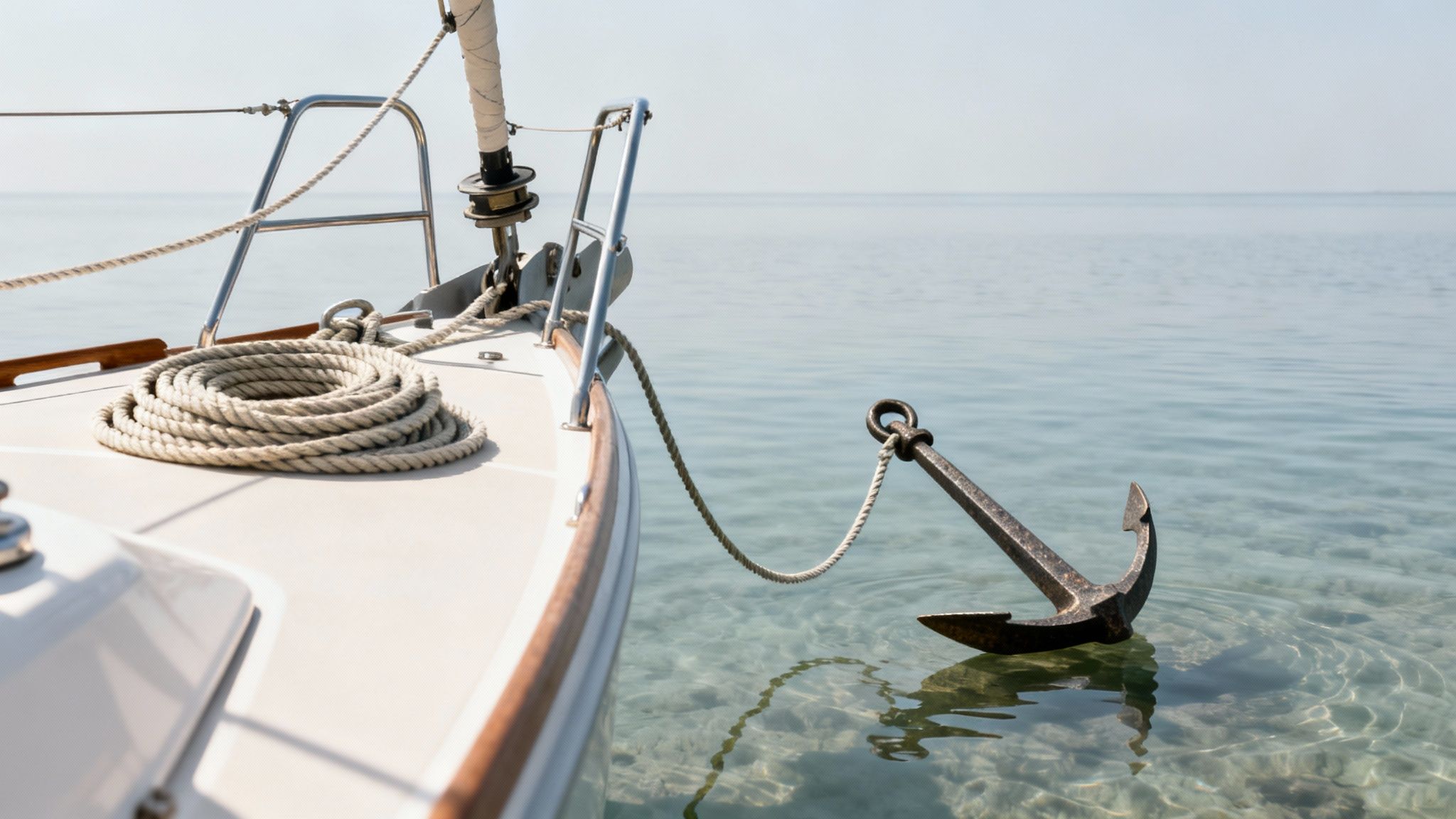
The rope or chain connecting your boat to your anchor is technically called the "rode." Think of it as your boat's lifeline to the seabed. It's the one piece of gear that keeps you planted while you're fishing a favorite honey hole or riding out an unexpected squall. Getting it wrong can lead to a dragging anchor, damaged equipment, or worse, a truly dangerous situation.
This guide is here to cut through the noise and give you clear, practical advice from years of experience. We'll get into why nylon is the go-to material and then break down the three main setups you'll see out on the water. Nailing these basics is the first step toward anchoring with confidence.
The Three Main Anchor Rode Systems
Your anchor setup isn't a one-size-fits-all deal. It has to be tailored to your boat's size, the type of anchor you're dropping, and the conditions you typically face. If you're still working on that first piece of the puzzle, our guide on the best boat anchors can help you find the perfect match for your rode.
When it comes to the rode itself, you're really looking at three primary systems.
To make it simple, here’s a quick rundown of the most common anchor rode configurations. This should help you zero in on the best choice for your boat and how you use it.
Anchor Rode Types at a Glance
| Rode Type | Best For | Pros | Cons |
|---|---|---|---|
| All-Rope | Smaller boats in calm, protected waters with sand or mud bottoms. | Lightweight, easy to handle and store, affordable, provides excellent shock absorption. | Prone to chafe/abrasion, less effective at setting the anchor, floats. |
| Rope-Chain Combo | Most recreational boats under 40 feet, versatile conditions. | Balances cost and performance, chain helps anchor set, chafe protection, shock absorption from rope. | Requires a strong splice, chain can be messy on deck if handled manually. |
| All-Chain | Serious cruisers, larger vessels, anchoring in rough conditions. | Maximum holding power, superior abrasion resistance, weight helps anchor set and lie flat. | Very heavy, expensive, requires a windlass, can be noisy in the locker. |
Let's dig a little deeper into what these options mean for you on the water.
- All-Rope Rode: This is as simple as it gets and super common on smaller boats that stick to protected waters. It's just rope, usually nylon. That makes it light, easy on the wallet, and a breeze to handle.
- Rope-Chain Combination: This is the sweet spot for a huge number of boaters. You get a section of chain, usually 10 to 30 feet, shackled directly to the anchor, with the rest of the rode being nylon rope. The weight of the chain helps the anchor dig in and stay put, and it takes all the abuse from rocks and shells on the bottom, saving your rope from getting chewed up.
- All-Chain Rode: This is the setup you'll see on serious cruising sailboats and trawlers, boats that might have to anchor in some gnarly conditions. An all-chain rode gives you unmatched abrasion resistance and holding power. The downside? It's incredibly heavy, costs a lot more, and you'll absolutely need a powered windlass to haul it back aboard.
Key Takeaway: For the vast majority of boaters, a rope-chain combination is the way to go. It delivers the ideal balance of performance, cost, and user-friendliness, giving you the forgiving stretch of nylon with the tough, bite-setting power of chain.
Making Sense of Rope Materials and Construction
When you're picking out an anchor rope, the material and construction are everything. Seriously. It's not just a piece of rope; it's the single most important piece of gear keeping your boat secure. The specific material and how it's woven will determine its strength, how long it'll last, and most critically, its ability to keep you safely on the hook.
Think of it like the suspension on your car. The right setup smooths out the bumps for a comfortable ride, while the wrong one makes you feel every single pothole. Your anchor rode works the same way, absorbing the jolts from wind and waves.
This isn't a small corner of the boating world, either. The global boat anchor market, which includes all the essential rode and accessories, was valued at around $1.5 billion in 2024. Experts see that number climbing to $2.2 billion by 2030, which tells you one thing: boaters are realizing just how crucial quality anchoring gear is for safety and peace of mind.
Why Nylon Is the Gold Standard
When it comes to anchor rodes, nothing beats marine-grade nylon. Its superiority boils down to one critical feature: elasticity. A good nylon line can stretch up to 15-20% of its length when under load, and then return to its original size without any damage.
For that elasticity to do its job, you need marine-grade nylon anchor rope that is actually rated for the loads your boat puts on it.

Get the right anchor rope
Boat Anchor Lines | Anchor Rope
Marine-grade nylon anchor rope delivers the stretch and strength this section describes, absorbing shock loads before they stress your deck hardware and cleats. Sized for recreational boats, it is the direct application of everything covered above.
This stretch isn't a weakness, it's the rope's greatest strength. When gusts of wind and choppy waves start pushing your boat around, a nylon rode stretches to absorb those shock loads. This prevents the violent tugs that can break your anchor free, strain your deck cleats to the breaking point, or just make for a miserable, jerky night at anchor.
Picture this: a sudden squall hits. A rope with low stretch, like polyester, would transfer that force instantly to your bow with a harsh snap. But a quality nylon rope acts like a heavy-duty bungee cord, smoothly soaking up the energy and easing the strain on your entire system.
Other Materials to Steer Clear Of
While other synthetic ropes have their uses on a boat, they are flat-out poor choices for your main anchor line.
- Polyester: It’s strong and has great UV resistance, which is perfect for things like halyards on a sailboat. But it has almost no stretch, making it a dangerous choice for anchoring. That lack of give puts incredible stress on all your hardware.
- Polypropylene: This stuff is cheap, floats, and often comes in bright colors, so you'll see it used for ski ropes or dinghy painters. But it's weak, breaks down fast in the sun, and the last thing you want is a buoyant anchor line that's trying to float to the surface.
Expert Tip: Don't ever compromise on material. Using a cheap polypropylene rope or a stiff polyester line for your primary anchor is one of the most common, and dangerous, mistakes a new boater can make. Stick with nylon. It's proven to work.
Three-Strand vs. Double Braid Construction
Once you've settled on nylon, the next decision is the construction. The two main players you'll see are three-strand and double braid.
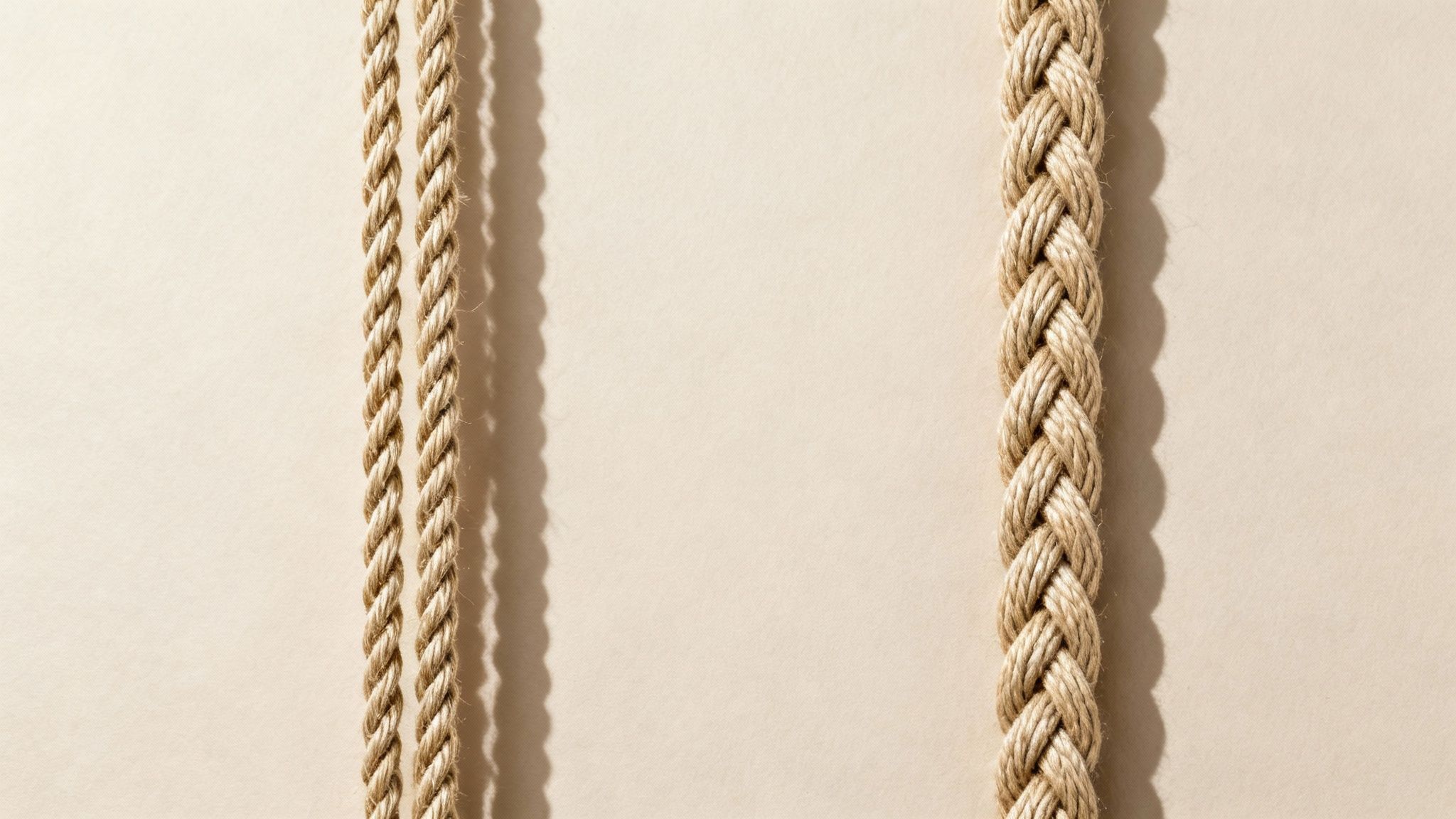
Three-Strand Nylon
This is the classic, twisted rope most of us picture. It's been the workhorse of the recreational boating fleet for decades, and for good reason.
- Maximum Stretch: It provides the most elasticity of any nylon construction, which means top-tier shock absorption.
- Tough as Nails: Its bumpy, twisted surface is incredibly resistant to abrasion and chafe.
- Budget-Friendly: It’s generally the most affordable option out there.
- Easy to Splice: Splicing an eye or attaching it to chain is a simple skill anyone can learn.
The only real downside is that it can be a bit rough on your hands and has a tendency to kink if you don't coil it properly.
Double Braid Nylon
This style has a smooth, braided cover over a braided core, giving it a clean, modern look and feel.
- Stronger: For the same diameter, double braid is usually stronger than three-strand.
- Handles Beautifully: It feels great in the hands, runs smoothly through a windlass, and coils without kinking.
- Less Stretch: It has less elasticity than three-strand. Some boaters prefer this for a more direct feel, but you sacrifice some shock absorption.
While it's stronger, it’s also pricier and a real headache to splice correctly. Want to get deeper into rope types? Check out our detailed guide on marine rope.
For the vast majority of recreational boaters, three-strand nylon is the clear winner, offering the best blend of stretch, durability, and value for a primary anchor rode.
How to Size Your Anchor Rope and Chain
Getting your anchor rode sized correctly isn’t just a nice-to-have; it’s one of the most critical safety calculations on your boat. If your rope is too thin, it could snap right when you need it most. If it's too short, your anchor will never get the bite it needs to hold you steady.
This isn’t the place for guesswork. The great thing is, sizing your rode follows some reliable, time-tested guidelines. Let’s walk through them so you can get this right.
Choosing the Right Rope Diameter
The diameter of your anchor rope is all about balancing strength against practicality. A thicker rope is obviously stronger and stands up better to chafe, but it's also a pain to handle and hogs space in your anchor locker.
A solid rule of thumb to start with is to have 1/8 inch of rope diameter for every 9 feet of boat length.
Let's say you have a 27-foot boat. Based on that rule, you'd be looking at a 3/8-inch diameter rope. Simple as that. This works for most boats in average conditions. But if you know you'll be anchoring in rougher spots or your boat is particularly heavy for its length, it's smart money to go up one size. A little extra peace of mind is never a bad thing.
To make it even easier, here's a quick reference table showing the minimum recommended rope diameter for a standard three-strand nylon line.

Recommended Anchor Rope Diameter by Boat Length
| Boat Length (feet) | Rope Diameter (inches) | Minimum Tensile Strength (lbs) |
|---|---|---|
| Up to 20' | 3/8" | ~3,500 lbs |
| 21', 27' | 1/2" | ~6,000 lbs |
| 28', 35' | 5/8" | ~9,500 lbs |
| 36', 45' | 3/4" | ~13,000 lbs |
Remember, your rode is part of a system. You also need to pair that rope with the right anchor. For a deep dive into that, check out our complete anchor size chart. It’ll help you make sure your ground tackle is properly matched from shackle to bitter end.
Mastering the Concept of Scope
Once you've nailed down the diameter, the next big question is length. This is where a crucial concept called scope comes into play. Scope is simply the ratio between the length of rode you have out and the depth of the water.
Key Takeaway: Understanding scope is non-negotiable for safe anchoring. Not letting out enough rode is probably the single biggest reason anchors drag. More scope means a more horizontal pull on the anchor, which is what allows it to dig in and grip the seabed.
And one critical detail: "depth" isn't just what your sounder reads. It's the total distance from the seabed all the way up to your bow roller. That extra height makes a real difference.
How to Calculate Your Rode Length
The math here is straightforward. You just multiply the total depth by the scope ratio you need for the conditions.
Rode Length = (Water Depth + Freeboard) x Scope Ratio
Let's imagine you're on a 30-foot boat, anchored in 25 feet of water. Your bow sits about 5 feet off the water.
- Total Depth: 25 feet (water) + 5 feet (bow height) = 30 feet
Now, let's see how much rode you'd need for different situations:
- Calm Conditions (5:1 Scope): For a quiet night in a protected cove, a 5:1 scope is usually plenty. That means you’d let out 150 feet of rode (30 feet x 5).
- Typical Conditions (7:1 Scope): This is the gold standard for most situations. With a bit of wind or current, you’ll want a 7:1 scope. For our example, that's 210 feet of rode (30 feet x 7).
- Heavy Weather (10:1 Scope): If things are getting nasty or a storm is on the way, you need to increase your scope to 10:1 or even more. That would require 300 feet of rode (30 feet x 10).
You absolutely should have enough rode on board to achieve a 10:1 scope in the deepest water you anticipate anchoring in. Being prepared for the unexpected is what separates a seasoned skipper from everyone else. This is a vital thing to keep in mind when shopping for the best boat anchor rope for your vessel.
Getting Your Anchor Rode Connections and Rigging Right
Having the right length and diameter of anchor rope is a great start, but it's only half the story. The best rope in the world is useless if the connections holding everything together fail. All the force on your ground tackle gets focused on the knots, splices, and shackles, and getting these details right is what separates a peaceful night's sleep from a potential disaster.
Think of a weak connection as the Achilles' heel of your entire anchoring system. Let's walk through how the pros create bomb-proof attachments, so you can have total confidence whether you're dropping the hook for a quick swim or riding out a serious blow.
This whole process, from measuring your depth to paying out the rode, becomes a simple, repeatable system for safe anchoring every single time.

The image above nails the core steps: know your depth, figure out the right scope, and then deploy the rode. When you master this sequence and combine it with rock-solid connections, you've got the foundation for reliable anchoring.
The Rope-to-Chain Splice
If your boat has a windlass, that powered winch that does the heavy lifting, a proper rope-to-chain splice isn't just a nice-to-have; it's essential. This is the professional way to join nylon rope to anchor chain, creating a smooth, tapered connection that glides effortlessly over the bow roller and through the windlass gypsy.
Why does this matter so much? A bulky knot or an oversized shackle will jam in the windlass, guaranteed. That forces you to stop and manually fight it through, which is a pain in calm seas and genuinely dangerous when the wind and waves are kicking up.
A well-made back splice lets the rope keep nearly 100% of its breaking strength. By comparison, even a perfectly tied knot can slash a rope's strength by up to 50%, creating a major weak point right where you need strength the most.
Learning to splice three-strand rope is a timeless maritime skill that every serious boater should have in their back pocket. It's a satisfying process, weaving the rope's strands directly into the chain links. The result is a connection that's far stronger and more dependable than any knot.
The Shackle and Thimble Method
No windlass? No problem. You don't need that tapered splice. For boats where the anchor is handled manually, the go-to connection is a galvanized thimble and shackle. This setup is incredibly tough and dead simple to put together.
Here’s how it works:
- The Eye Splice: First, you splice a permanent loop, or "eye," into the end of your anchor rope. A proper splice is key here, not a knot, to maintain the rope's strength.
- The Thimble: A metal thimble (usually galvanized or stainless steel) gets inserted into that eye. This little piece of hardware is crucial, it prevents the shackle from chafing and eventually sawing through the rope fibers under load.
- The Shackle: Finally, a properly sized anchor shackle connects the thimbled eye to the end link of your anchor chain.
This creates a super-strong, metal-on-metal connection that protects your rope from wear. It's the same principle we apply to protect the eyes on our high-quality dock lines and fender lines, which are built to handle constant strain.
Don't Forget to Mouse the Shackle Pin
Here's a critical safety step that gets skipped way too often: you absolutely must secure your anchor shackle pin. The pin that screws into your shackle can, and will, eventually vibrate loose from all the twisting and tugging at anchor.
The simple, sailor-proof fix for this is called "mousing."
All you do is take a short piece of thin, corrosion-resistant wire (monel or stainless steel seizing wire is perfect) and wrap it through the small hole in the pin and around the body of the shackle. This physically locks the pin in place, making it impossible for it to unscrew itself. It takes five minutes and could save you from losing your anchor. Don't skip it.
Keeping Your Anchor Rope in Fighting Shape
Your anchor rode is a critical piece of safety gear. It doesn't ask for much, but it absolutely requires your attention. Think of proactive maintenance not just as a way to make your gear last, but as a fundamental part of safe, responsible boating. A well-cared-for rope is a reliable one, ready to do its job when the wind kicks up.
Putting off rode inspection is like ignoring your car's check engine light. Sooner or later, it’s going to catch up with you, probably at the worst possible moment. A simple inspection and care routine can prevent catastrophic failures, squeeze more life out of your gear, and buy you priceless peace of mind on the water.
It's not just us saying this; the entire marine industry is shifting towards better, more reliable materials. The market for high-performance mooring ropes, valued at around $1.39 billion in 2024, is expected to climb to $2.17 billion by 2032 as boaters move away from old-school steel cables.
This trend highlights a huge focus on safety and longevity, which all starts with routine maintenance. You can read more about these market insights at Fortune Business Insights.
Your Go-To Inspection Checklist
A thorough inspection should be a non-negotiable part of your pre-season prep, and something you check periodically all year. The best way to do it is to lay the entire length of your rope out on a clean dock or deck and go over it foot by foot.
Here’s exactly what you’re hunting for:
- Chafe: This is the number one killer of anchor ropes. Look for any fuzzy, frayed, or worn-down sections where the rope has rubbed against your bow roller, the anchor shackle, or the seabed.
- UV Damage: Give the rope a feel. If it feels stiff, hard, or looks faded, it's likely suffered sun damage. This makes the fibers brittle and dangerously weak.
- Cuts and Nicks: Run your bare hands (carefully!) along the entire length. You can often feel small cuts and nicks that are hard to spot with your eyes. Any cut compromises its strength under load.
- Internal Wear: This is a big one for three-strand rope. Twist it open against its natural lay in a few different spots. If you see what looks like white fiber dust, that's a bad sign. It means the internal strands are grinding against each other and breaking down from the inside.
- Consistent Diameter: Keep an eye out for any sections that look noticeably thinner than the rest of the line. This is a dead giveaway that the rope has been under extreme strain and is severely weakened in that spot.
If you find any significant damage, the only safe move is to replace the rope. It’s just not worth the risk to your boat or your crew.
Smart Cleaning and Storage Habits
Good habits don't stop at inspection. Keeping your rode clean and storing it correctly is crucial for preventing premature aging. Think about it: salt crystals, sand, and grit are incredibly abrasive. They get deep into the fibers and slowly saw away at your rope from the inside out.
Pro Tip: One of the easiest and most effective ways to clean a rope is to stuff it into a mesh laundry bag or an old pillowcase and run it through a washing machine. Use a gentle cycle with a mild detergent. Never use bleach or fabric softeners, as they can seriously damage nylon fibers.
After a wash, always give it a thorough rinse with fresh water and let it dry completely, but keep it out of direct sunlight. Tossing a damp rope into a dark anchor locker is asking for mildew, which not only stinks but also weakens the fibers. Coil it loosely to let air circulate.
Here’s a trick that can almost double the life of your anchor rope: "end-for-end" it every season. Just swap the anchor end with the bitter end attached to your boat. This simple step ensures the wear and tear from chafe and sun exposure is distributed evenly along its entire length.
Common Anchoring Mistakes and How to Avoid Them
Even the most seasoned skippers get complacent sometimes. When it comes to anchoring, a simple mistake can quickly turn into a drifting boat. Learning from the common slip-ups is one of the smartest things you can do to keep your vessel safe and your nights at anchor peaceful.
Most of the horror stories you hear stem from a misunderstanding of the basics or trying to cut corners on gear. A poor setup doesn't just risk your boat; it can put you and your crew in genuine danger.
Ignoring the Importance of Scope
The single most common mistake, without a doubt, is using insufficient scope. People drop anchor, let out just a little bit of line, and call it a day. This creates a steep, almost vertical angle that pulls the anchor up instead of letting it dig horizontally into the seabed. It’s a guaranteed way to start dragging.
Imagine you're in 20 feet of water and you let out only 60 feet of rode. That’s a 3:1 scope, which is just asking for trouble the moment a breeze kicks up. You absolutely must calculate scope based on the depth from your bow, not just the water's surface, and always aim for at least a 7:1 ratio in typical conditions.
Choosing the Wrong Materials
Another critical error is grabbing the wrong type of rope. Lines made from materials like polypropylene are a terrible choice for a primary anchor rode. Why? Polypropylene floats, has low strength, degrades quickly in sunlight, and offers zero shock absorption. Its own buoyancy is actively working against you, trying to lift your anchor right off the bottom.
Your entire anchoring system is an investment in safety. This isn't just about your main rode. It also means having high-quality dock bumpers and fender lines ready. A secure boat at the dock is just as important as a secure boat at anchor.
The broader ship anchor market, which is estimated to hit $1.7 billion by 2025, reflects a massive investment in safety and technology. These innovations eventually trickle down, giving recreational boaters access to better and safer materials. Discover more about these industry trends and future forecasts.
Neglecting the Complete System
Finally, a dangerous oversight is treating anchoring as just a rope and a piece of metal. It's a complete system, and every part matters.
- Forgetting to mouse your shackle pin can lead to losing your anchor entirely.
- Running an all-chain rode without a nylon snubber puts incredible strain on your deck hardware and makes for a noisy, jarring night.
Thinking about the whole picture is key. For instance, a general understanding boat safety examinations helps foster a comprehensive approach to safety on board, which naturally includes avoiding these all-too-common anchoring mistakes.
Got Questions About Your Anchor Rope?
Choosing the right anchor rode can feel like navigating tricky waters. It's the kind of thing that brings up a lot of questions, and getting solid answers is what gives you confidence when you're dropping the hook. Let's tackle some of the most common questions we hear from fellow boaters.
How Often Should I Replace My Anchor Rope?
There's no single, stamped-on expiration date for anchor rope. A good rule of thumb, though, is to start thinking about a replacement every 5-7 years. Keep in mind, this is just a starting point. If you anchor out a lot, spend time in harsh conditions, or your rope is constantly baking in the sun, that timeline can shrink considerably.
What really matters is a hands-on inspection before every season. Get in there and feel it. Look for any signs of chafe, stiff sections that don't want to bend, weird discoloration, or spots where the rope looks noticeably thinner. If you've been through a serious storm or the rope shows any of these red flags, don't second guess it, replace it. Safety first, always.
Can I Use a Knot to Attach My Anchor Rope to the Chain?
Technically, you can use something like an anchor bend knot. But should you? Absolutely not. It's a really bad idea for a permanent connection. Tying a knot in your rode creates a massive weak point, slashing the rope's breaking strength by as much as 50%. On top of that, knots are bulky and have a nasty habit of snagging on bow rollers or jamming up a windlass right when you least need it.
A professional eye splice is the only way to go. It maintains almost 100% of the rope's original strength and is built to glide smoothly over your bow roller and through the windlass. If you're in a pinch and can't get a splice done, a bowline tied on a thimble is a much safer bet than a simple knot on its own.
What Is the Purpose of an Anchor Snubber?
An anchor snubber is a simple but brilliant piece of gear that's only used with an all-chain rode. Think of it as a short length of stretchy nylon line with a chain hook on one end.
For an all-chain rode, a bungee anchor line handles that job well.

Put a snubber to work
Bungee Anchor Line
A bungee anchor line works exactly like the snubber described here, adding the elasticity an all-chain rode completely lacks and reducing jarring loads on your bow hardware. Attach the chain hook, take tension off the windlass, and let the stretch do the work.
Anchor chain has zero give, meaning every gust of wind and every passing wave sends a jolt right through your boat. The snubber acts as a shock absorber. By hooking it to your chain and running it back to a cleat, you take the load off the windlass and let the nylon line absorb all those jarring impacts.
This simple trick makes life at anchor way more comfortable, protects your deck hardware from unnecessary strain, and quiets things down so you can actually get some sleep.
At Better Boat, we know reliable gear is the backbone of a safe and fun day on the water. From the best boat anchor rope to top-shelf cleaning supplies and dock accessories, we’ve got what you need to keep your boat in prime condition.
Check out our full line of tried-and-true products to see why over a million boaters count on us. Learn more and shop our collection at Better Boat.


