


Choosing and Using the Best Boat Washdown Hose
A good boat washdown hose isn't a luxury; it's a critical piece of gear built to survive the beating that the marine world dishes out. It’s a far cry from a standard garden hose, delivering better durability, higher pressure, and more kink resistance right when you need it.
Why a Real Boat Washdown Hose Matters
Look, we've all been tempted. Grabbing that coiled green hose from the garage and tossing it on the boat seems like the easy button. But as any seasoned boater will tell you, that shortcut almost always ends in frustration, leaks, and a hose that's shot after half a season.
The marine environment is just plain brutal on equipment that wasn't designed for it. Your average garden hose is made for the occasional car wash or watering petunias with fresh water. On a boat, it's a completely different ballgame. It's constantly up against a triple threat:
- Corrosive Saltwater: Salt is relentless. It crystallizes in and on everything, degrading the materials in standard hoses and eating away at cheap metal fittings until they leak or fail completely.
- Harsh UV Rays: The sun's UV rays are another killer. They bake the rubber and plastic in garden hoses, leaving them brittle, faded, and ready to crack under pressure.
- Constant Abrasion: Think about it. You're dragging that hose across aggressive non-skid decks, around sharp cleats, and over other hardware. It wears out infinitely faster than being pulled across a soft lawn.
The Marine-Grade Advantage
This is where a purpose-built boat washdown hose really earns its keep. Unlike that green thing from the hardware store, a marine hose is engineered from the ground up for life on the water. It’s made with UV-stabilized materials that won't get chalky and weak in the sun and compounds that aren't fazed by constant saltwater exposure.
Critically, the fittings are usually high-quality, corrosion-resistant brass or stainless steel. That means you get a solid, leak-free connection every time, season after season.
The difference is night and day. A quality marine hose gives you the pressure you need to blast away dried salt, stubborn fish scales, and the inevitable bird droppings. Its kink-resistant design means you spend your time cleaning, not fighting with a tangled mess on deck.
The importance of having the right tool for the job is huge. In fact, the global industrial hose market, which includes marine-grade hoses, hit a value of USD 11.3 billion in 2023 and is only expected to grow. This isn't just about industry numbers; it's a reflection of how crucial these specialized tools are for proper maintenance. Onboard, a good washdown system can slash your cleaning time by up to 30% compared to scrubbing by hand. You can read more about the industrial hose market growth here.
At the end of the day, investing in a proper washdown hose isn't just about making a chore easier. It’s about protecting your boat and making one of the necessary evils of boating as painless as possible.
To really see the difference, let's break it down side-by-side.
Standard Garden Hose vs Marine Washdown Hose
| Feature | Standard Garden Hose | Marine Washdown Hose |
|---|---|---|
| Material Construction | Basic rubber, vinyl, or polymer. Not UV stabilized. | UV-stabilized PVC or polyurethane. Resists sun and chemical damage. |
| Fittings | Typically aluminum or cheap brass. Prone to corrosion/seizing. | Corrosion-resistant brass, chrome-plated brass, or stainless steel. |
| Kink Resistance | Often kinks easily, restricting water flow and causing frustration. | Reinforced construction for superior kink-resistance. |
| Pressure Rating | Lower PSI, suitable for low-pressure tasks. | Higher PSI rating for powerful spray to remove tough grime. |
| Durability | Outer jacket abrades easily on non-skid decks and hardware. | Tough, abrasion-resistant outer jacket designed for marine use. |
| Color | Usually green or black, can leave scuff marks on gelcoat. | Typically white or light blue to prevent scuff marks on decks. |
As you can see, while a garden hose might work in a pinch, it's simply not built for the long haul on a boat. Making the small investment in a dedicated marine hose pays off in performance, longevity, and a lot less hassle on cleanup day.

How to Select the Perfect Washdown Hose
Picking out a new washdown hose for your boat might seem straightforward, but a few key choices can make a huge difference between a quick, easy cleanup and a frustrating chore. The right hose feels like a natural part of your cleaning gear, while the wrong one becomes a tangled, kinking nightmare you dread dealing with.
The hose built for this job
Boat Hose 15Ft, 25Ft and 50FT Self Coil Wash Down
A self-coiling marine washdown hose in 15, 25, or 50 feet gives you the UV-stable, tangle-free option this section describes. Pick the length that matches your boat size and routing plan.
Let's walk through what really matters so you end up with the perfect tool for the job.
It’s no surprise that the marine hose market was valued at a whopping USD 4.2 billion in 2022. With over 12 million registered recreational boats in the U.S. alone, keeping them clean is a top priority. In fact, surveys show 78% of owners consider deck cleaning a primary task. A good washdown doesn't just make your boat look nice; it can slash biofouling by up to 50%, which directly improves performance and saves you money on fuel.
Material Matters: Polyurethane vs. PVC
Your first decision point is the hose material itself. This choice has a big impact on how the hose handles, how long it lasts, and what you’ll pay for it.
- Polyurethane (PU): This is the top-shelf option for a reason. PU hoses are incredibly lightweight and stay flexible even when the temperature drops. They’re also tough as nails, easily resisting scrapes and scuffs from non-skid decks. Best of all, they have fantastic "memory," meaning a coiled hose snaps right back to its shape without a fight.
- Polyvinyl Chloride (PVC): A more wallet-friendly choice, PVC is still a durable and reliable workhorse. It can get a bit stiff in cooler weather compared to polyurethane, but a quality PVC hose will give you years of solid performance for most general boating needs.
If you’re ever tempted to just grab a standard garden hose, this handy guide clears things up quickly.
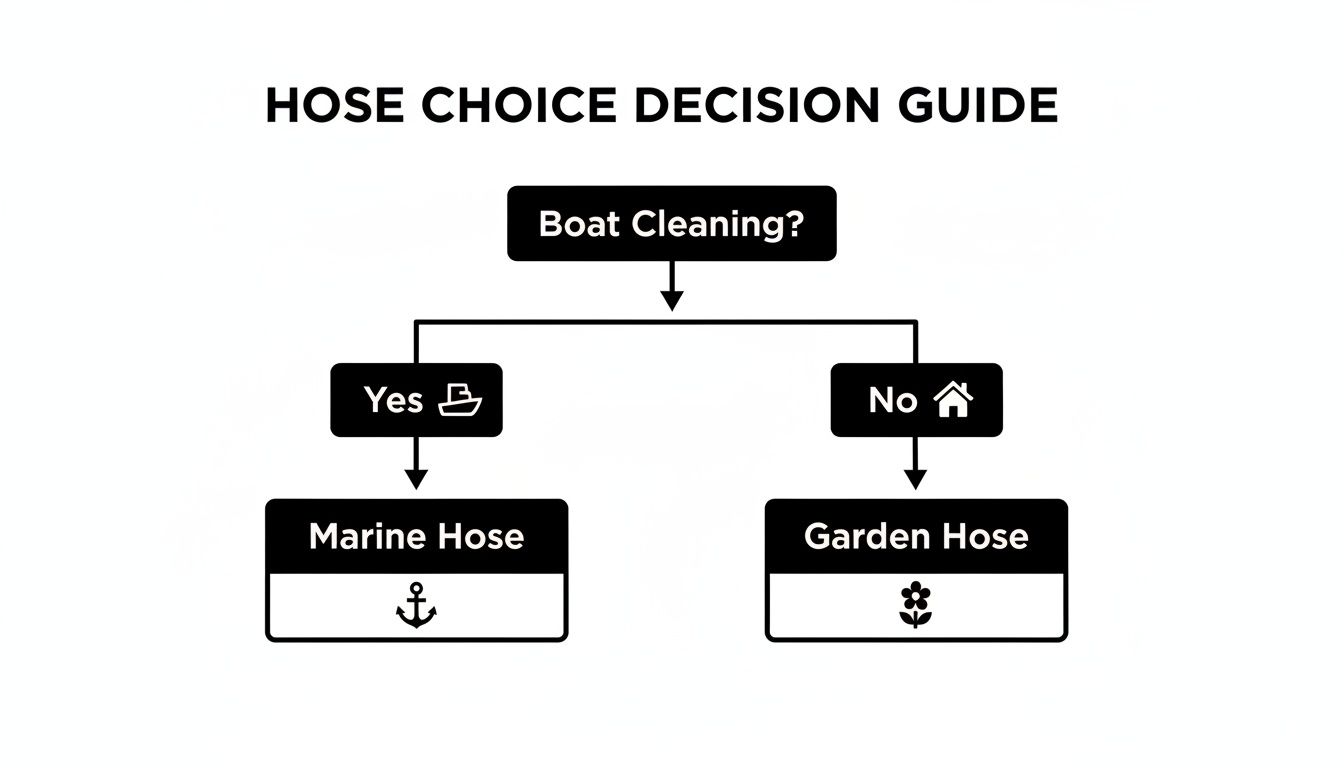
As you can see, for any job on your boat, a purpose-built marine hose is always the right call. It’s designed to handle the unique challenges of the marine environment, from saltwater to sun exposure.
Getting the Right Size and Length
Diameter and length are two specs that are easy to overlook, but they're critical to how your hose performs when you need it.
The two most common diameters you’ll find are 1/2-inch and 5/8-inch. A 5/8-inch hose delivers more water volume (higher Gallons Per Minute), which is fantastic for rinsing down large decks or hulls in a hurry.
On the other hand, a 1/2-inch hose is lighter and much easier to maneuver. When you pair it with a good high-pressure nozzle, it can create a powerful stream for blasting away stubborn fish guts or mud.
When it comes to length, measure from your water outlet to the farthest point you'll need to reach, think the tip of the bow pulpit or the far corner of the swim platform. Then, add a few extra feet for good measure. Just don't go overboard; an excessively long hose is heavier to drag around and a bigger pain to coil and store.
Fittings and Form Factor
This is a non-negotiable: always get a hose with corrosion-resistant fittings. Look for solid brass, chrome-plated brass, or stainless steel. Those cheap aluminum or thinly plated fittings might save a buck upfront, but they will corrode, seize, or crumble after a few run-ins with saltwater, turning your perfectly good hose into junk.
Finally, think about how you’ll store it. Traditional straight hoses work fine, but coiled hoses are a total game-changer for life on a boat.
A coiled boat washdown hose is a lifesaver for deck space. It stays compact and out of the way, eliminating the tangled mess that becomes a serious tripping hazard. They stretch out when you need the reach and shrink back for easy stowing in a locker or bucket.
A compact choice like the Better Boat 15ft Coil Hose, for example, gives you a great balance of reach and convenient, tangle-free storage. It solves one of the biggest headaches boaters have with their washdown gear.
Installing Your Washdown System Correctly
Setting up a washdown system is one of those projects that pays you back every single time you clean the boat. When it’s done right, you get reliable water pressure exactly where you need it, which turns a messy chore into a quick spray-down.
The whole process really comes down to two main paths: a raw water system or a freshwater system.
A raw water system is the go-to setup for any kind of heavy-duty cleaning. It uses an onboard pump to pull water directly from whatever lake or ocean you're floating in. This gives you a literally endless supply for blasting away mud, salt, and fish guts. Getting this system installed correctly is critical to prevent leaks and ensure it works when you need it.
Building a Raw Water System
The heart of any raw water system starts below the waterline with a thru-hull fitting that’s connected to a seacock. Think of the seacock as your emergency shut-off valve, it’s a non-negotiable safety feature that lets you stop water from coming into your boat if something goes wrong.
From that seacock, a hose runs to your washdown pump. The pump is what pressurizes the water before sending it up to your hose outlet on deck.
When you're connecting all these pieces, double-clamping every single connection with high-quality stainless steel hose clamps isn't just a good idea, it's a must. A failure down there isn't just a small drip; it's a hole in your boat.
Pro Tip: Always use a quality marine-grade sealant on the threads of your thru-hull and seacock fittings. This creates a bulletproof, waterproof seal that prevents those slow, hidden leaks that can cause serious damage over time.
For anyone looking to really get into the nuts and bolts of this kind of setup, our guide on selecting and installing a boat washdown pump gives you a complete breakdown of the entire process.
Freshwater and Shore Water Connections
Another option is to simply tap into your boat’s existing freshwater system. This is a fantastic choice for final rinses, especially since it won't leave behind salt spots on your gelcoat and shiny hardware.
Installation is usually a lot simpler, too. It typically just involves teeing into a line from your boat’s freshwater tank to feed your washdown outlet. The only real downside is that your water supply is limited by the size of your tank.
Of course, when you're tied up at the dock, connecting directly to shore water is the easiest solution of all. Most marinas have a spigot right on the pier, and you can connect your washdown hose directly to it. Just be careful, if the dock’s water pressure is really high, it’s a good idea to use a pressure regulator on your hose to avoid damaging your boat's plumbing.
Routing and Stowing Your Hose
How you route your boat washdown hose is just as important for safety as it is for convenience. You'll want to plan a path that keeps the hose out of the main walkways to avoid creating a nasty tripping hazard.
Use some simple clips or guides to secure the hose along bulkheads or under the gunwales. This not only keeps things tidy but also protects the hose from chafing against sharp corners.
To keep your deck clear, consider installing a hose reel or even just a simple hanger. This does more than prevent a tangled mess, it also protects your hose from UV damage and physical wear, which will make it last a lot longer. Pair your system with a good, adjustable spray nozzle, and you'll have a powerful and efficient cleaning station ready for anything.
Washdown Techniques for a Pristine Boat
Owning a great washdown hose is one thing, but knowing how to use it is what separates a quick, satisfying cleanup from a long, frustrating chore. If you master just a few simple techniques, you'll not only get your boat sparkling in less time, but you’ll also protect its finish and hardware from the harsh marine environment.
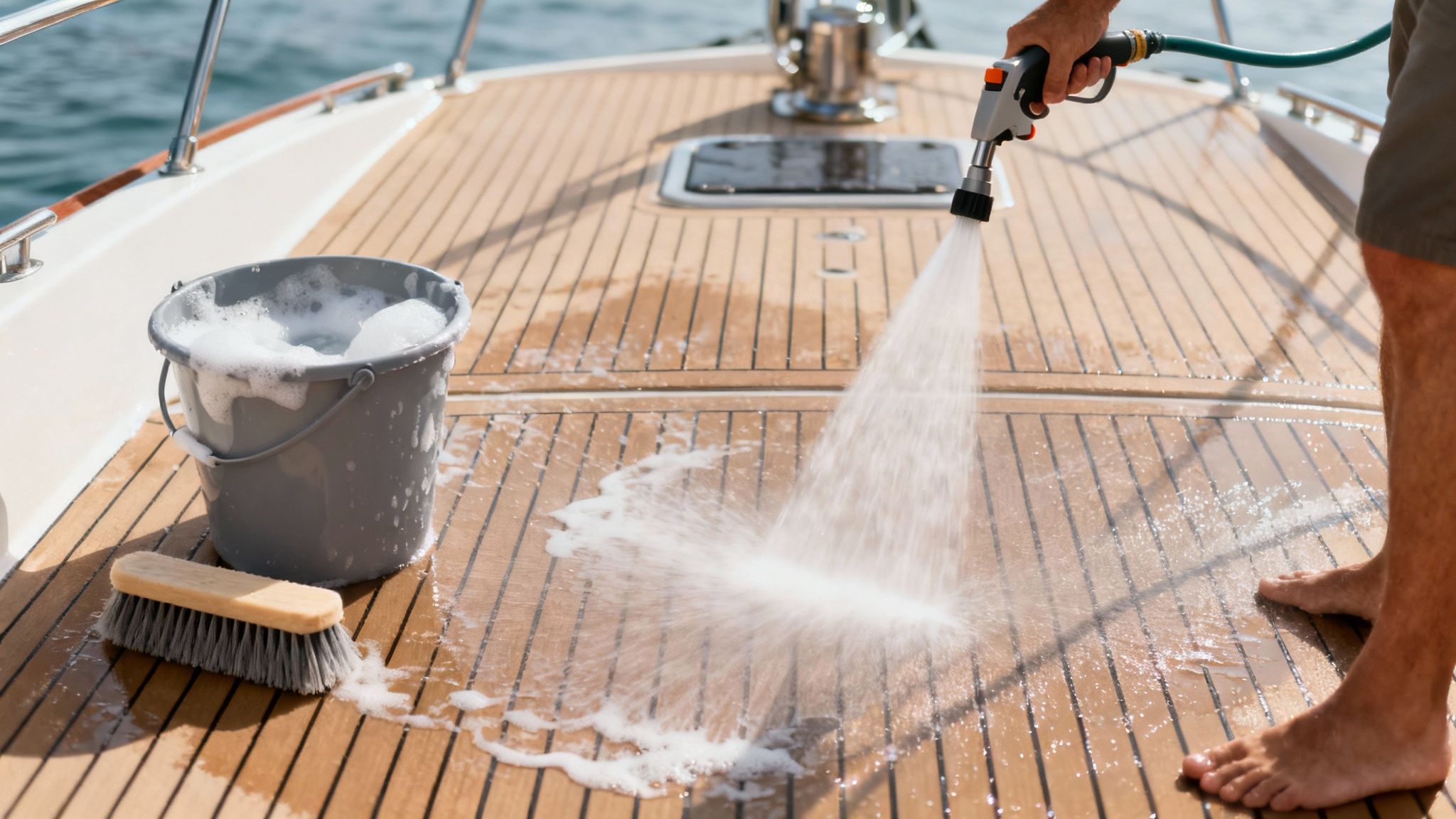
The single most important strategy is working top-to-bottom. It's a simple concept, but it makes all the difference. Always start spraying at the highest point, the flybridge, T-top, or cabin roof, and work your way down. Gravity is your friend here, making sure you aren't rinsing dirt and grime all over the areas you just cleaned.
Matching Your Spray to the Task
Your hose nozzle is more than just an on/off switch; it’s a tool. Don't just pick a setting and stick with it. Adjusting the spray pattern for the specific job at hand will make your work faster and more effective.

Control every spray pattern
Boat Hose Nozzle
A dedicated boat hose nozzle lets you switch between jet stream, fan, and mist on the fly, putting the right pattern on every surface this section covers.
- Jet Stream: This is your power tool. A tight, focused jet stream is perfect for blasting away stubborn, concentrated messes. Think bird droppings on the canvas, caked-on mud in the anchor locker, or that nasty grime that builds up at the waterline. For really tough jobs, the principles are similar to pressure washing a pool cage, but always be careful not to damage your boat's finish.
- Fan Spray: A wide fan or gentle shower spray is what you'll use for most of the job. It’s perfect for the initial wetting down before you start soaping and for the final rinse-off. This pattern covers a large area quickly without being so aggressive that it damages decals or strips wax. A good nozzle makes it easy to switch between patterns, and our boat hose nozzle gives you that precise control.
The overall hose market is massive, projected to hit USD 44.62 billion by 2033. For boaters, the right gear translates to real time savings. Boater surveys show that a standard 50-foot washdown hose at high PSI can turn a 2-hour cleaning job into a 45-minute task. That's more time enjoying the water and less time scrubbing.
Tackling Tricky Areas
Some parts of a boat just seem to attract dirt and need a bit more attention to get them truly clean.
For those gritty, non-skid decks, a good pre-rinse is key to loosening up the surface dirt. Next, apply a quality marine soap designed to lift grime without stripping wax, let it sit for a few minutes, then get to work with a deck brush before a final, thorough rinse.
Pro Tip: Salt is the number one enemy of your boat's metal hardware. Make it a non-negotiable habit to give all your stainless steel and chrome, cleats, railings, rod holders, a quick but thorough freshwater rinse after every single trip. This prevents corrosive salt crystals from forming as the water evaporates, saving you from rust and pitting down the line.
Fish boxes and bait wells demand a strong jet spray to blast away scales and gunk, followed by a good scrub with soap and a complete rinse. And don't neglect the anchor locker! It’s a magnet for mud and muck. A powerful blast from your washdown hose is the only way to keep it clean and stop that mess from being tracked all over your deck.
Extending the Life of Your Washdown Hose
Your washdown hose is a serious investment in your boat's upkeep. Like any other critical piece of gear, a little preventative care goes a long way. A simple but consistent maintenance routine will keep it performing reliably for seasons to come, saving you the headache and expense of replacing it too soon.
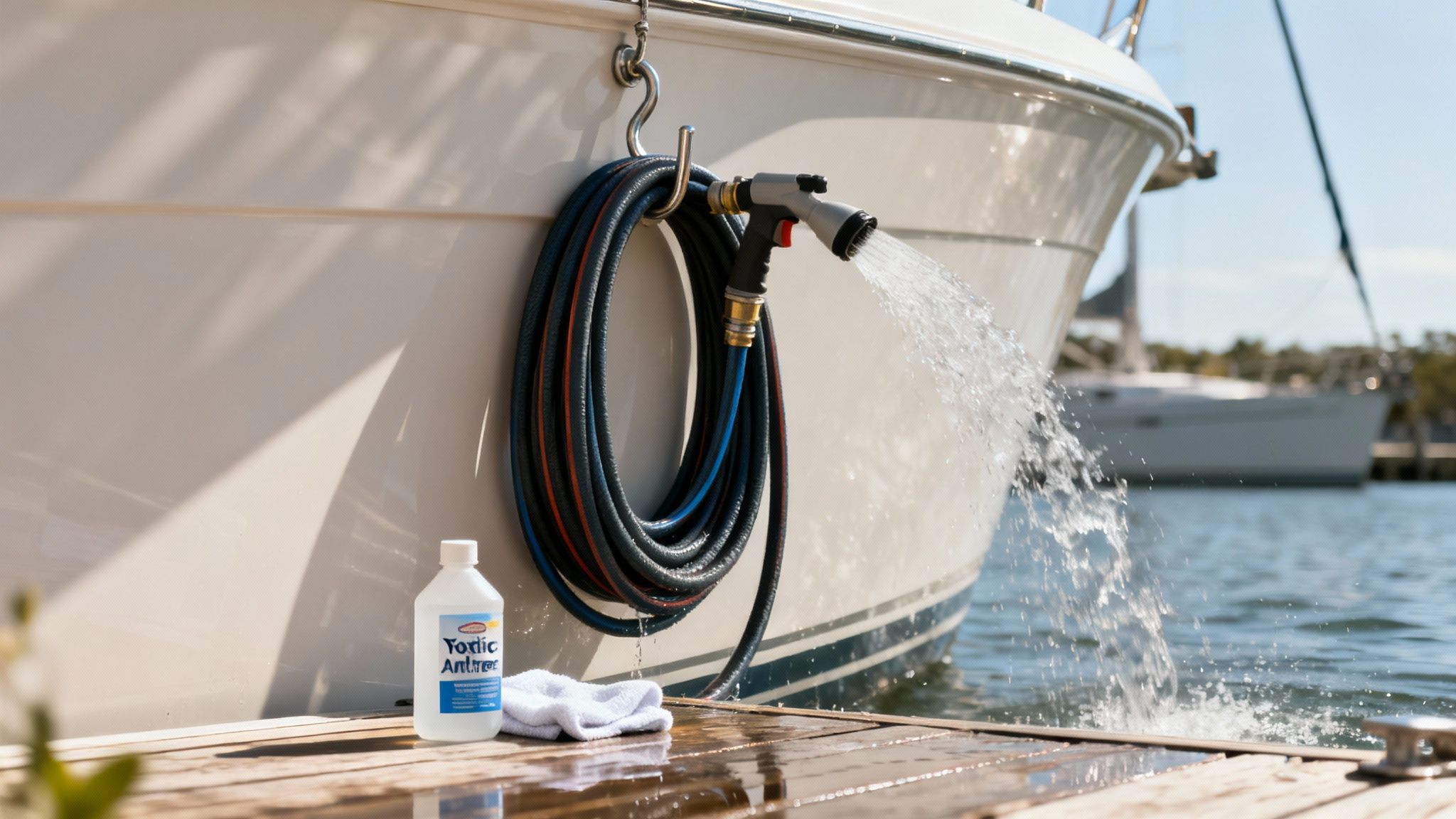
The best habit you can get into is running through a quick checklist after every single washdown. It only takes a few minutes, but it makes a world of difference.
- Rinse Thoroughly: First thing's first, give the hose a good rinse with fresh water, inside and out. This simple step flushes out any salt, sand, or cleaning chemicals that will eat away at the material over time.
- Drain Completely: Next, lift the nozzle end higher than the spigot and walk the length of the hose to get every last drop of water out. Any water left behind can lead to mildew or, worse, freeze damage in colder climates.
- Coil Correctly: Never fight the hose. It has a natural memory, so just let it guide you. Coil it in large, loose loops and avoid sharp bends or forcing it into a tight circle. That's a surefire way to create weak points and kinks.
Storage and Winterization
Where you keep your hose matters just as much as how you coil it. The sun’s UV rays are the number one enemy of any hose, making the material brittle and causing it to crack. Whenever you can, stow it in a locker, under a seat, or in a canvas bag, anywhere out of direct sunlight.
Thinking about general hose protection methods, like using rollers to prevent snags and abrasion, can also give you some good ideas for protecting your hose around sharp corners on the boat.
When it comes to preventing catastrophic damage, winterization is non-negotiable. If you leave water in the hose or its connecting pipes, it will freeze, expand, and crack fittings or even burst the hose itself. Before you haul out for the season, drain the system completely.
Then, run a non-toxic marine antifreeze through the pump and hose until you see that pink fluid coming out the nozzle. This one step will save you from some very expensive and annoying repairs come springtime.
Don't forget the pump! Simply draining the hose isn't enough. Running antifreeze through the entire system protects the pump's delicate internal components from freeze damage, which is often a far more costly repair than replacing a hose.
Quick Troubleshooting Fixes
Even with the best care, you'll run into small issues. If you suddenly notice a drop in pressure, the first place to look is for a kink or a clogged nozzle. More often than not, a tiny piece of debris is the culprit.

Stop leaks at the fitting
Silicone Tape
Silicone tape wraps directly over a fitting leak and bonds to itself without adhesive, giving you a watertight, saltwater-resistant fix in seconds.
If you've got a pesky leak at a fitting, the fix is usually pretty simple. Unscrew the connection and check the little rubber washer inside the female fitting. Make sure it's there and not cracked, then re-tighten it securely by hand. Staying on top of a consistent care plan is just part of good boat ownership, which we cover in our comprehensive boat maintenance checklist.
Got Questions About Washdown Hoses? We've Got Answers.
Even the most seasoned boaters run into questions now and then. When it comes to washdown systems, a few topics pop up constantly. Here are our straight-to-the-point answers to the questions we hear most often from fellow boat owners.
Can't I Just Use a Heavy-Duty Garden Hose on My Boat?
This is a tempting shortcut, but trust us, it’s one you’ll regret. A standard garden hose, even a "heavy-duty" one, just isn't engineered for the marine environment. It's a recipe for frustration.
Those hoses will quickly become brittle and crack under constant sun exposure. Worse yet, the fittings are usually cheap brass or aluminum, which will corrode and seize up in a saltwater environment faster than you can say "stripped threads."
Investing in a proper boat washdown hose means you're getting UV-stabilized materials and corrosion-resistant fittings built for the job. You're paying for reliability so it won't fail you right when you need to clean up a messy deck.
What's the Real Difference Between a Raw Water and Freshwater Washdown?
It’s all about using the right tool for the job. The two systems look similar but serve very different purposes.
- Raw Water Washdown: This is your workhorse. It uses a pump to pull water directly from whatever you're floating on, be it the ocean or a lake. This gives you a limitless, high-pressure stream that’s perfect for the tough stuff, like blasting mud off the anchor chain or washing fish guts off the deck.
- Freshwater Washdown: This system is your finishing touch. It's hooked up to your boat’s onboard freshwater tanks. Since this water is clean and salt-free, it’s what you use for a final rinse-down on your decks, windows, and stainless steel to prevent those crusty salt spots and stop corrosion in its tracks.
Think of it like this: Raw water is for the heavy scrubbing and cleaning. Freshwater is for the final, protective rinse that keeps your boat looking sharp. That's why you'll often find both systems on well-equipped boats.
How Should I Store My Coiled Hose to Make It Last?
Proper storage is the single easiest thing you can do to get more seasons out of your hose. It only takes a minute.
First, always drain it completely after you're done. Water left inside can lead to mildew or, even worse, freeze and split the hose in the winter. Then, coil it loosely, letting the hose follow its natural curve. Forcing it into tight, unnatural loops creates weak spots and permanent kinks.
Most importantly, get it out of the sun. UV rays are the number one enemy of any hose, causing the material to degrade and crack. A deck locker, a spot under a seat, or even a simple canvas bag will do the trick and dramatically extend its life.
What's the Best Pressure for a Washdown Pump?
For the vast majority of recreational boats, a pump that delivers between 50 and 70 PSI is the sweet spot. That's plenty of power to blast away grime, but it's not so aggressive that you risk damaging your gelcoat, stripping decals, or forcing water past sensitive seals.
While PSI is important, don't forget to look at the flow rate, which is measured in Gallons Per Minute (GPM). A pump that moves 4-5 GPM is a great target. It ensures you have enough water volume to rinse down a deck or fill a bucket quickly and get on with your day.
Here at Better Boat, we’re all about making boat care less of a chore. As a family-owned company run by boaters, we design high-quality cleaning supplies, tools, and accessories that just plain work. From tough, reliable hoses to powerful soaps that are safe for your boat and the water, we’ve got what you need to keep your vessel looking its best. Check out our full lineup and find the right gear for your boat at https://www.betterboat.com.


