


Finding the Best Cleaner for Boat Seats
When it comes to cleaning your boat seats, grabbing any old household cleaner from under the sink is a surefire way to cause some serious, often permanent, damage. For just keeping things tidy on your vinyl seats, a cleaner made specifically for marine vinyl is the way to go. But when you’re staring down stubborn mold, you need a targeted mildew remover to knock it out.
All of our specialized Better Boat cleaners were created by boaters, for boaters, to tackle these exact problems without harming your upholstery.
Why Choosing the Right Cleaner Matters
Keeping your boat seats looking sharp isn't just about appearances, it's about protecting your investment and making sure every day on the water is a comfortable one. A one-size-fits-all approach just doesn't work here. Using generic products can lead to cracking, fading, and damage that you just can't undo.
Think about it: your boat seats are in a constant battle with the elements in a way your living room couch never will be. This requires a specialized defense.
- UV Exposure: The sun is relentless, breaking down vinyl and fabric over time. This makes them brittle and robs them of their color.
- Moisture and Salt: Constant dampness is a perfect invitation for mold and mildew, especially in the seams and crevices. Saltwater just speeds up the whole corrosion process.
- Tough Stains: We're talking sunscreen, bird droppings, fish blood, and spilled drinks. These aren't your typical household stains, and they need targeted solutions to lift them without bleaching or weakening the material.
The whole point is to arm you with the knowledge to make the right choice from the get-go. Do it right, and you'll extend the life of your marine upholstery and dodge some costly repair bills down the road.
It's no surprise that boat owners are getting serious about maintenance. The global market for boat cleaners hit around $1.68 billion in 2025 and is expected to grow at a rate of 3.78% through 2033. This shows just how vital proper care has become for protecting our vessels. You can read more about these market trends over at datainsightsmarket.com.
The first step is simply understanding that vinyl, fabric, and leather all have their own unique needs. This guide cuts straight to the chase to help you grab the perfect cleaner for whatever mess you're dealing with.
To make things even easier, here’s a quick-glance table to help you pinpoint the right tool for the job.
Quick Guide to Better Boat Seat Cleaners
Find the perfect Better Boat solution for your specific seat material and cleaning challenge at a glance.
| Seat Material | Common Problem | Recommended Better Boat Cleaner |
|---|---|---|
| Vinyl | Mildew, Grime, UV Fading | Mildew Stain Remover, Boat Cleaner Wipes with UV |
| Marine Fabric | Dirt, Food Spills, Odors | Instant Boat Hull Cleaner (diluted for fabric) |
| Leather/Pleather | Cracking, Dirt, Color Fading | Marine Leather Cleaner and Conditioner |
| Mesh | Embedded Dirt, Sunscreen Stains | Marine Degreaser Black Streak Remover (spot treat) |
This table should help you quickly identify what you need, but keep reading for the detailed how-to on using these products to get the best results.
Matching the Cleaner to Your Seat Material
Ever tried washing your hair with dish soap? It might get the job done, but you know you’re stripping away all the good stuff and setting yourself up for a bad hair day. Using the wrong cleaner on your boat seats is pretty much the same thing, you’re causing long-term damage that’s a real headache to fix.
Not all marine upholstery is created equal. What works like a charm on vinyl could be a total disaster for fabric or leather. Knowing what you're working with is the first step to avoiding cracked, faded, or permanently stained seats. Before you grab any old bottle, you need to understand the different upholstery materials, because each one has its own quirks when it comes to sun, salt, and cleaning.
For Marine-Grade Vinyl Seats
There's a reason vinyl is the king of boat upholstery: it's tough, water-resistant, and doesn't ask for much. But it’s not invincible. All that glorious sunshine breaks down its internal plasticizers over time, leaving it stiff and prone to cracking. Even worse, moisture trapped in the seams is a five-star resort for mildew.
For the everyday stuff, grime, sunscreen streaks, and minor spills, a good, non-abrasive cleaner is all you need.
- Best Tool for the Job: Our Better Boat Cleaner is a concentrated formula that’s a pro at lifting dirt and oils without messing with the vinyl's protective coating.
- What to Avoid: Stay far, far away from bleach-based products and those abrasive magic erasers. They might get a stain out, but they'll also strip the vinyl's top layer, fast-tracking sun damage and making it a magnet for future stains.
When you spot those dreaded black or green mildew spots, it’s time to bring in a specialist. Our powerful Mildew Stain Remover is made specifically to knock out mildew without forcing you to scrub so hard you damage the vinyl. For a deeper dive on this, check out our guide on choosing the best marine vinyl cleaner.
For Marine Fabrics and Canvas
Marine fabrics like canvas give a boat a classic, breathable feel. The downside? That woven texture is perfect for trapping dirt, salt crystals, and that stray potato chip crumb. Add a little humidity, and you've got a recipe for musty smells and mildew that works its way deep into the fibers. Spills are also a problem, as they tend to soak right in once the original water-repellent coating wears down.
You’ll need a cleaner that's both gentle and effective, so you can get the grime out without fading the color or ruining the water resistance.
Pro Tip: Whatever you do, don't blast your marine fabrics with a pressure washer. It just forces dirt deeper into the weave and can shred the delicate fibers and stitching. A gentle spray from a regular hose nozzle is all you need.
For Leather and Pleather Upholstery
You'll see leather or high-end pleather on some luxury boats, and while it looks amazing, it needs some extra love. These materials are famous for drying out and cracking under intense sun. The real challenge is cleaning off all the dirt and salt residue without stripping away the natural oils that keep them soft and supple.
For these delicate surfaces, you need a product that does double duty: cleaning and conditioning in one go.
- Best Tool for the Job: Our Marine Leather Cleaner and Conditioner was created to gently lift grime while putting essential moisture back in.
- What to Avoid: All-purpose cleaners and degreasers are the enemy here. They'll strip the oils right out of the leather, leaving it looking dry, brittle, and faded.
Your Practical Boat Seat Cleaning Workflow
Having the right cleaner is a great start, but even the best products need a proven technique to deliver those jaw-dropping results. A smart cleaning workflow does more than just wipe away dirt; it's about protecting your upholstery and stopping future problems like mildew and grime before they even start. This isn't about scrubbing harder, it's about working smarter and tailoring your approach to your boat's specific needs.
Before you even think about spraying a cleaner, the prep work is non-negotiable for a truly deep clean. Grab a vacuum with a brush attachment and go over every single inch of your seating. Pay extra attention to the seams, folds, and piping where sand, salt, and snack crumbs love to hide.
This simple step gets rid of all the loose particles that can act like sandpaper when you start scrubbing. If you skip this, you risk creating fine scratches and grinding that dirt even deeper into the material, which just makes your job that much harder.
Getting Your Tools and Environment Ready
Once the seats are clear of debris, it's time to gather your gear. Having everything within arm's reach means you won't have to stop midway through the job. You don't need a massive arsenal, just the right tools for the task.
Before you get started, make sure you have the basics covered. Putting together a dedicated toolkit will save you time and headaches down the road.
Your Essential Boat Seat Cleaning Toolkit
| Tool | Why You Need It | Recommended Better Boat Product |
|---|---|---|
| Two Buckets | One for your cleaning solution, one with clean water for rinsing. This prevents you from wiping dirty water back onto your clean seats. | N/A |
| Brushes | A soft-bristled brush is your go-to for general cleaning. For tough, ground-in stains on durable vinyl, a stiffer brush gives you extra power without causing damage. | Better Boat Medium-Bristle Brush |
| Microfiber Towels | You'll want a good stack of these for applying cleaner, rinsing, and drying. Their absorbency is unmatched for pulling moisture out of tricky spots like seams. | N/A |
| Vacuum | An absolute must for the initial prep work to remove all the loose dirt and debris before you introduce any liquid. | N/A |
Having these items ready to go turns a chore into a smooth, efficient process.
Believe it or not, the weather plays a huge role in how well your cleaning session goes. Try to avoid cleaning your seats in direct, blazing sunlight or on a scorching hot day. The heat makes cleaners evaporate almost instantly, leaving behind a sticky residue and streaks before they've had a chance to work their magic. An overcast, cool day is pretty much perfect.
Insider Tip: If you absolutely have to clean in the sun, work in small, manageable sections. Clean, scrub, and rinse one cushion or area completely before moving on to the next. This keeps the cleaner from drying out on you.

Application and Agitation: The Right Way to Scrub
With your seats prepped and tools ready, it's time to apply the cleaner. For a general clean on vinyl, just spray our Better Boat Cleaner directly onto the surface. If you're working with the concentrate, mix it up according to the directions on the bottle. Let the solution sit for a minute or two, this gives it time to really penetrate the grime.
This flowchart gives you a quick visual guide for tackling the most common boat seat materials.
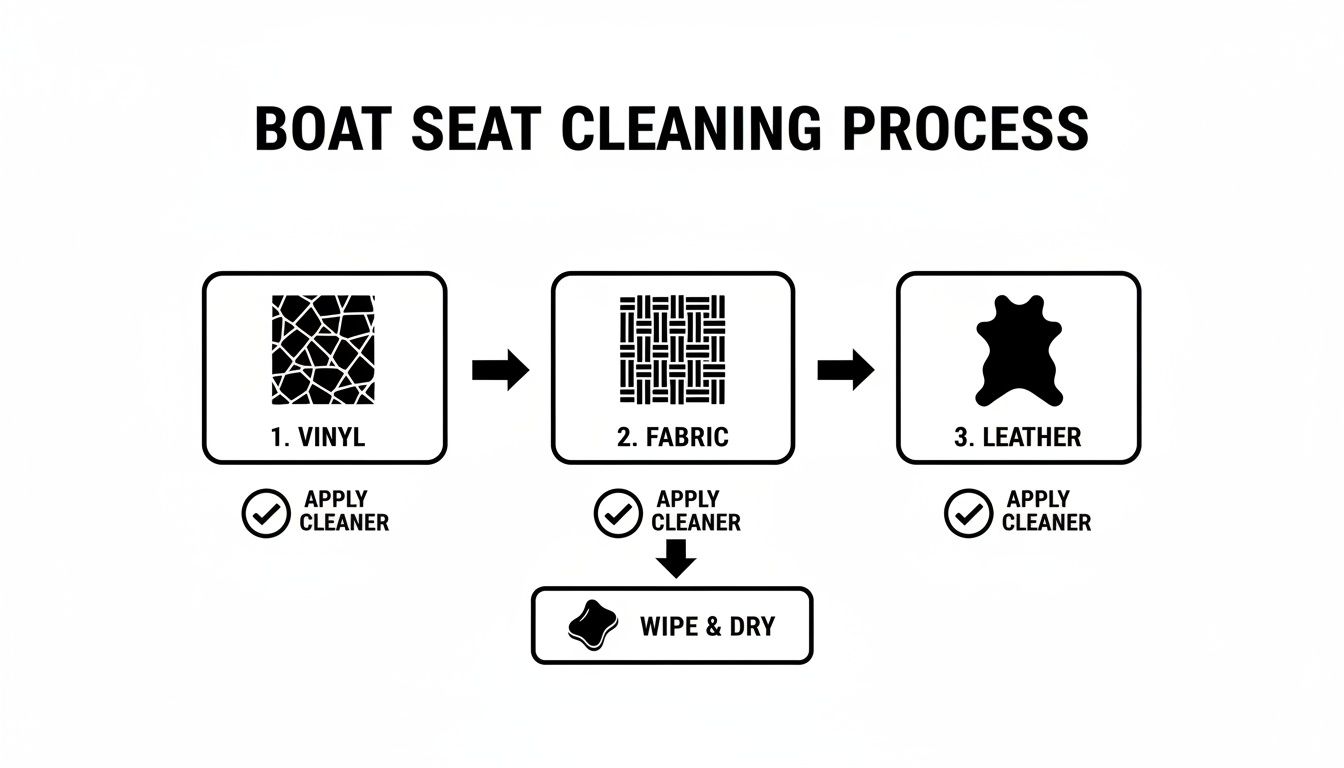
The main thing to notice is how the tools change. While the basic steps are the same, choosing a soft brush over a medium one is critical for protecting the integrity of more delicate materials.
Next up, agitation. Grab your chosen brush and gently work the cleaner into the surface using small, circular motions. This technique is great for lifting dirt out of the vinyl's texture without needing a ton of elbow grease, which could damage the material.
For more delicate surfaces like fabrics or leather, a soft cloth might be all you need. The goal here is to let the cleaner and the brush bristles do the heavy lifting, not brute force. You can dive deeper into these techniques by checking out our guide on the best way to clean boat seats.
Rinsing and Drying: Your Best Defense Against Mildew
How you finish the job is just as critical as how you start. Rinsing thoroughly is absolutely essential. Any leftover soap residue becomes a magnet for new dirt, and you'll be back here cleaning again in no time. Use a microfiber towel dampened with fresh water from your rinse bucket to wipe down every surface.
Finally, get everything completely dry. This is the single most important step for preventing mildew. Use dry microfiber towels to soak up as much water as possible. Make sure to press down on seams and into crevices where moisture loves to hide. If you can, let the seats air dry in a well-ventilated spot before you even think about putting the boat cover on. Trapping even a tiny bit of dampness under a cover creates a perfect breeding ground for mold and mildew.
How to Tackle Tough Stains Like Mildew and Sunscreen
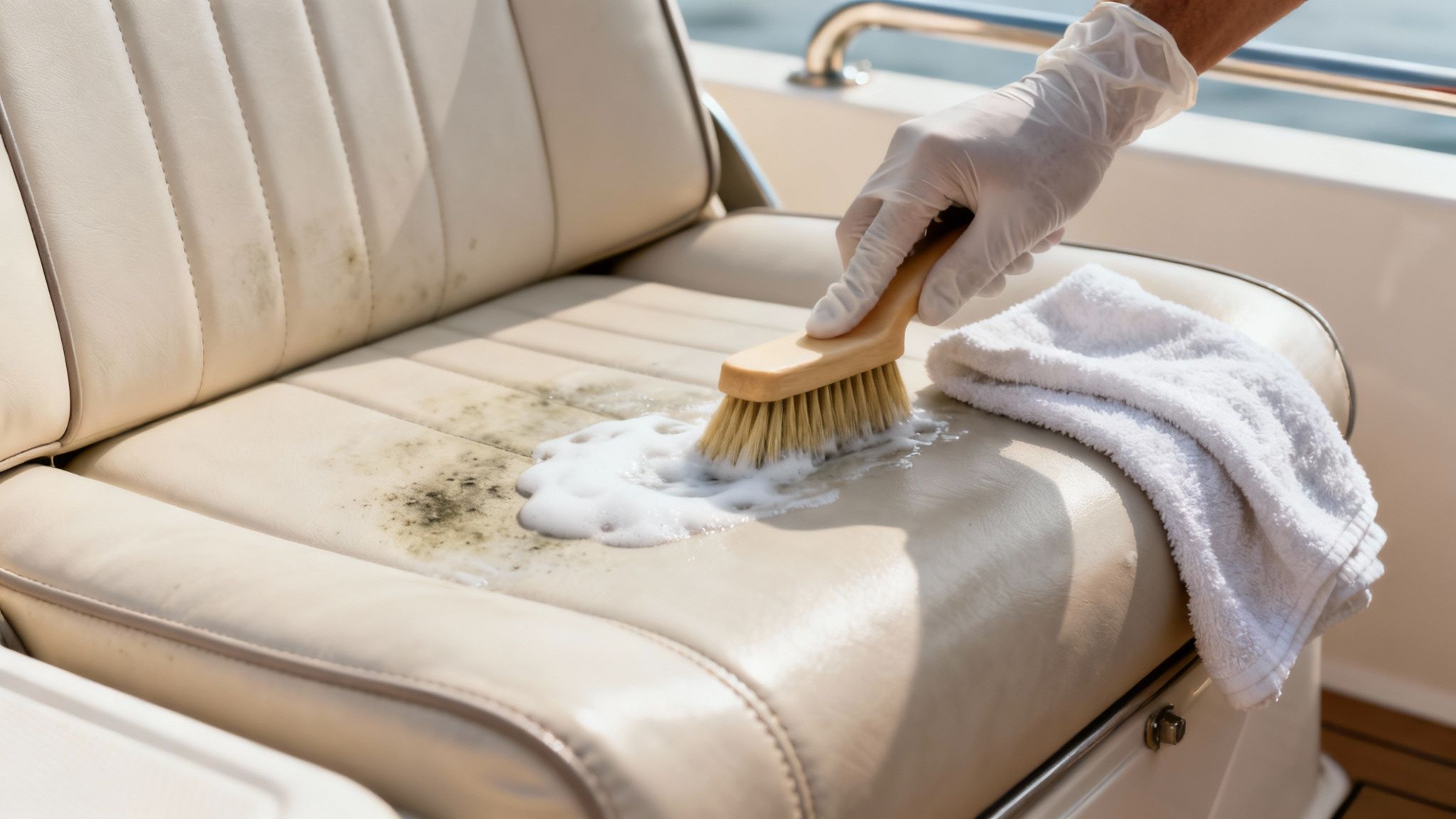
Even if you’re on top of your regular cleaning, some stains are just plain stubborn. Mildew, sunscreen, bird droppings, and that spilled soda can leave behind marks that a simple wipe-down won’t touch. This is where you need to get specific, using the right product and technique to knock out the stain for good without hurting your upholstery.
This kind of detailed maintenance isn't just a good idea; it's becoming the standard for boat owners. The marine cleaning products market was valued at a huge USD 100.1 billion in 2023 and is expected to hit USD 200.1 billion by 2030. That’s a lot of boat soap, and it shows just how much boaters are investing in specialized care for their vessels.
Banishing Mildew Stains for Good
Mildew is public enemy number one for marine vinyl. Those nasty black or green spots aren't just an eyesore; if you let them sit, they can permanently stain and even weaken your upholstery. It’s tempting to grab a bottle of harsh household cleaner, but that’s a big mistake, it can strip the vinyl's protective coating, making future problems even worse.
For mildew that’s set in, you need a cleaner built for the job. Our Mildew Stain Remover is made to lift these stains at the source.
- Application: Just spray the remover right onto the mildew spots.
- Patience is Key: Let the product work its magic for several minutes. You should see the stains fade away without needing to scrub like crazy.
- Rinse Thoroughly: Once the stains are gone, give the area a good rinse with fresh water and dry it completely with a clean microfiber towel.
We have a complete guide that walks you through the whole process. Check it out here: mildew removal from boat seats.
Dealing with Oily Sunscreen and Food Spills
Sunscreen is a must-have on the water, but its oily film can leave behind some really stubborn yellow stains on vinyl. Greasy food spills are another classic culprit that can seem impossible to get out. For these, acting fast is crucial, and you'll need a cleaner that can cut through the oil without being abrasive. If you’re dealing with a spill on another fabric, this general advice on how to remove stains from upholstery can be a lifesaver.
Our all-around Boat Cleaner, used with a soft brush and a microfiber towel, is your best friend here. The formula is strong enough to dissolve grease and oil but is still gentle on your vinyl's finish.
Pro Tip: For a really tough sunscreen stain, spray the cleaner on and let it sit for a minute. Then, gently work the area with a soft-bristled brush before wiping it clean. This agitation helps lift the oils that have settled into the vinyl's texture.
Protecting Your Seats for a Lasting Finish
Getting your seats sparkling clean is a great feeling, but honestly, that’s only half the job. If you want that new-boat look to last season after season, you need to think about protection.
It’s a lot like waxing your car after a good wash, you’re creating a tough barrier that shields the surface from the elements. This is your best defense against the sun, salt, and moisture that are constantly beating down on your boat.
Without that protective layer, even the cleanest seats are sitting ducks. UV rays are relentless, slowly breaking down materials until your vinyl is cracked and your fabrics are faded. A simple protective treatment can add years to the life of your upholstery, saving you a ton of cash on expensive repairs or replacements down the line.
Shielding Vinyl from Sun Damage
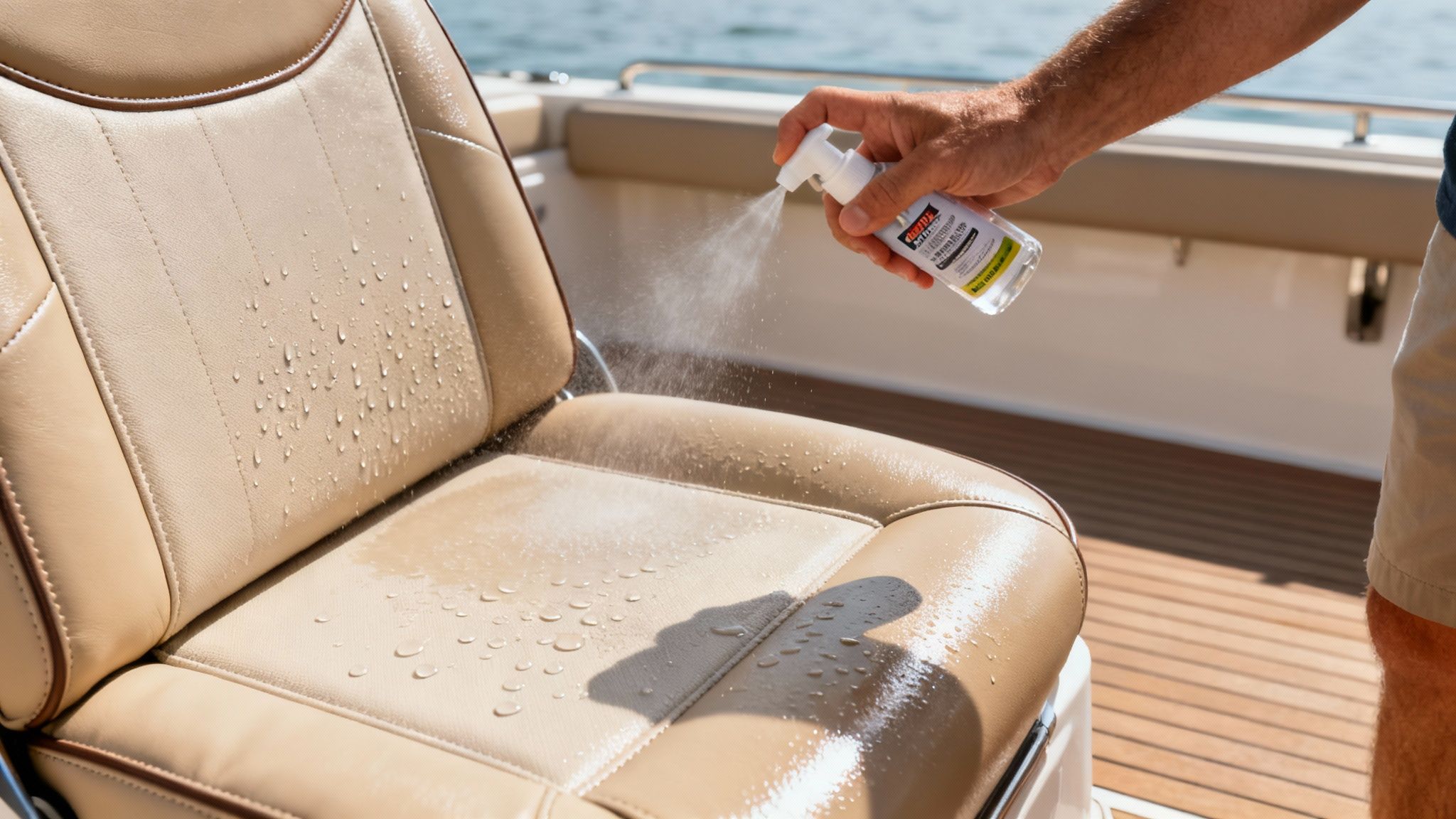
When it comes to vinyl seats, the sun is public enemy number one. The only way to fight back effectively is with a dedicated UV blocker. A product like our Vinyl Protectant is formulated specifically for this fight, creating a powerful shield against the sun's harsh rays. It works by absorbing that damaging UV radiation before it ever reaches the vinyl, which is what prevents the material from getting brittle and faded over time.
We've got a full breakdown of what makes a great marine vinyl protectant in our detailed guide if you want to dive deeper.
Applying it couldn't be easier. After cleaning, just spray a light mist onto a cool, dry surface and wipe it evenly with a clean microfiber towel. That one simple step not only protects but also makes future cleanups a breeze and keeps your vinyl feeling soft and supple.
Repelling Water on Marine Fabrics
For your canvas, Bimini tops, and other marine textiles, water is the real troublemaker. Once that factory coating wears off, the fabric starts to absorb moisture, which is an open invitation for mildew.
Using a Fabric Protector brings back that crucial water repellency. You’ll see water bead up and roll right off the surface instead of soaking in. This does more than just keep your cushions dry; it also stops dirt and grime from getting ground deep into the fibers.
Key Takeaway: Protection isn't a one-and-done job. It's a regular part of your maintenance routine that pays off big time by preserving your boat's value and appearance.
A Simple Maintenance Schedule That Actually Works
You don't need to dedicate entire weekends to this. When it comes to boat care, consistency beats intensity every single time. A simple, repeatable schedule is what will keep your seats looking their best.
- After Each Use: A quick wipe-down with a clean, damp cloth is all it takes. This gets rid of fresh salt, sunscreen, and any minor spills before they can set in.
- Monthly: Set aside a little time for a deeper clean. Grab the right Better Boat cleaner for your seat material and tackle any grime that's starting to build up.
- Seasonally: This is when you apply your protective treatments. Hit your seats with a quality Vinyl Protectant or Fabric Protector at the beginning and again around the middle of the boating season.
Sticking to this straightforward routine ensures your seats are always protected, looking good, and ready for your next trip out on the water.
Common Questions About Boat Seat Cleaning
Even with the best game plan, questions always come up. When you're talking about something as important (and expensive) as your boat's upholstery, you want to be sure you're doing things right. Let's tackle some of the most common questions we hear from fellow boaters to help you clean with confidence and avoid some all-too-common mistakes.
One of the biggest blunders we see is people reaching for a familiar household cleaner when they're in a jam. It might seem like a quick fix, but it can cause damage that you just can't undo.
Can I Use Household Cleaners Like Bleach on My Seats?
My short answer? Please don't. It's incredibly tempting to grab the bleach for its tough-on-germs reputation, but it's way too harsh for marine-grade vinyl. It will absolutely strip the protective topcoat right off and can even eat away at the stitching over time, leading to cracking and a trip to the upholstery shop you didn't plan for.
The same goes for abrasive cleaners like magic erasers. They might seem harmless, but they can permanently dull the finish on your vinyl, leaving behind scuff marks that no amount of polishing will fix.
Always reach for a pH-balanced cleaner made specifically for marine upholstery. The best cleaner for boat seats is always one that's formulated to be tough on grime but gentle on the material.
How Often Should I Really Clean My Boat Seats?
This really boils down to where you boat and how much you use it. You don't want to create extra work for yourself, but you also don't want to let things get out of hand.
A good rule of thumb is to think about your environment:
- Saltwater Boaters: Salt spray is corrosive, plain and simple. Plan on a thorough cleaning at least once a month during boating season to keep it from doing a number on your seats.
- Freshwater Boaters: You can get away with a bit less. A good deep clean every 2-3 months is usually plenty to keep things looking sharp.
No matter where you are, a quick rinse with fresh water after every outing makes a huge difference. And if you really want to stay ahead of the game, a seasonal application of a quality UV protectant is your best defense against the sun.
We strongly advise against using household cleaners with bleach or ammonia. They strip the protective topcoat from marine vinyl, leading to premature cracking. Always use a dedicated marine upholstery cleaner formulated to be tough on dirt but gentle on vinyl.
What Is the Best Way to Remove Stubborn Mildew Stains?
Once mildew has really set in, your everyday cleaner just isn't going to have the muscle to get it out. You need something that's built to lift the mildew staining from deep in the fibers, not just wipe away the surface stain.
This is exactly what our Better Boat Mildew Stain Remover was made for. Just spray it directly on the spot, let it work its magic for a few minutes (no scrubbing needed!), and then rinse it off completely. Just be sure to test it on a small, hidden area first and work in a spot with good airflow.
Ready to give your boat seats the professional care they deserve? Better Boat offers a complete lineup of American-made, boater-tested cleaning and detailing products. From our powerful Mildew Stain Remover to our protective Vinyl Protectant, we have everything you need to keep your vessel in pristine condition. Explore our full collection and find the perfect solution for your boat at https://www.betterboat.com.


