


Your Guide to Using a Mildew Stain Remover on Any Boat Surface
When you're trying to pick the best mildew stain remover, you need something made specifically for the marine world. A purpose-built formula like Better Boat's Mildew Stain Remover is your best bet because it’s designed to wipe out mildew spores and lift those ugly stains without hurting sensitive surfaces like vinyl, canvas, or gelcoat.
Unlike generic household cleaners that can be too harsh, a dedicated marine product is tough on black spots but gentle on your boat's materials, keeping them in great shape.
Why Mildew Is More Than Just a Bad Look for Your Boat
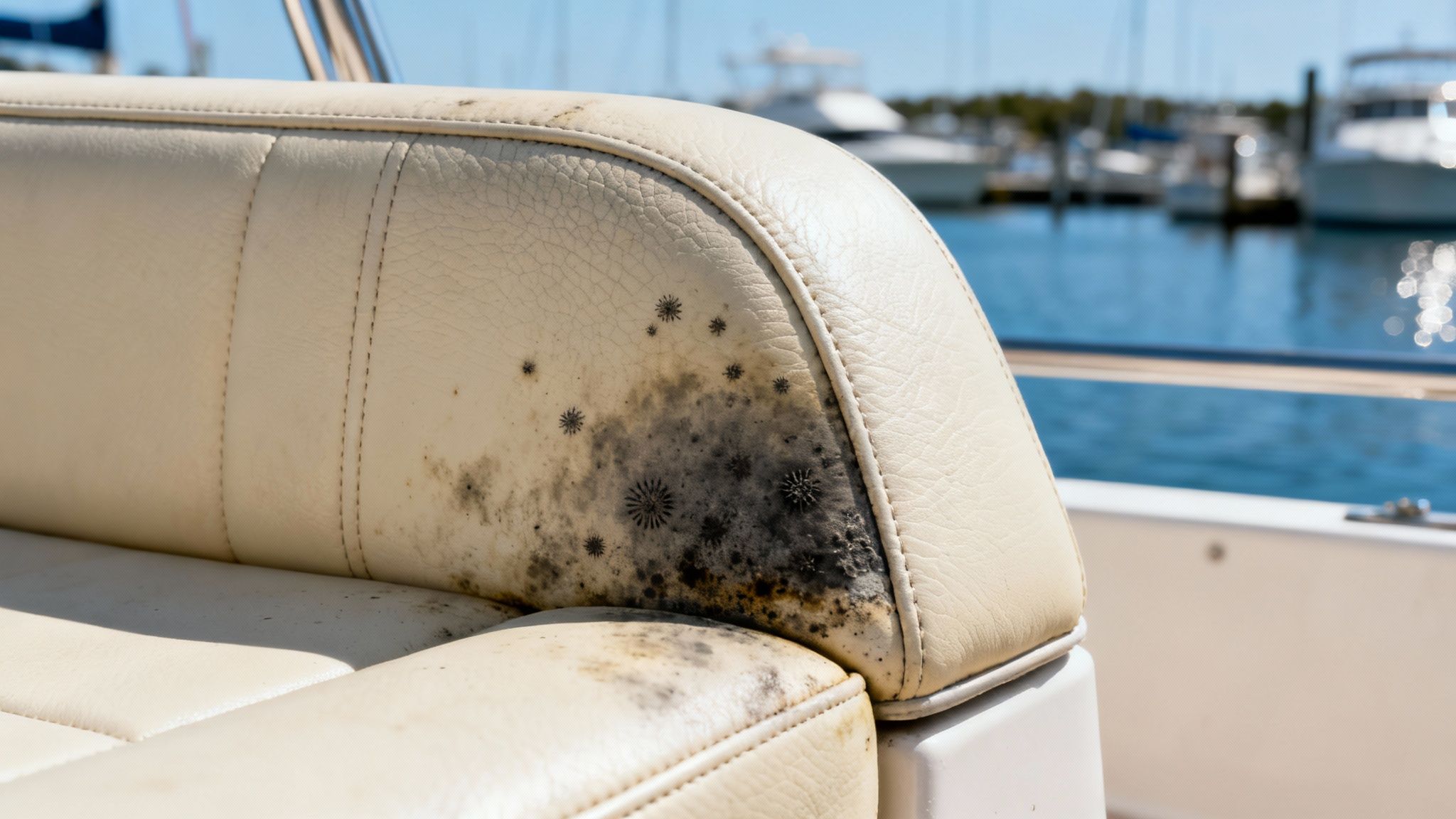
That dark, musty stain creeping across your boat's vinyl seats isn't just an eyesore; it's a living organism actively eating away at your investment. Mildew is a type of mold, and it absolutely loves the damp, humid conditions common on any boat. Once its spores find a surface with a little moisture and some organic material, like dirt or leftover sunscreen, they start growing.
And this growth isn't just on the surface. The fungus sends out tiny roots, called hyphae, that dig deep into anything porous.
- On vinyl and upholstery: These roots push right through the top layer, causing permanent stains and making the fabric brittle and weak.
- On canvas: Mildew can literally break down the fibers, ruining the integrity of your boat cover or bimini top.
- On gelcoat: Even though gelcoat is less porous, mildew can still stain the surface, leaving behind nasty black spots that seem impossible to get rid of.
The Financial and Structural Cost of Neglect
If you ignore these stains, you’re letting the fungus run wild, causing permanent damage that’s much more than just cosmetic. It’s a similar issue homeowners face when dealing with how to find, remove, and prevent mold behind baseboards, but for boaters, the problem is constant because of the non-stop exposure to water.
The global mildew remover market was valued at a staggering USD 1.2 billion in 2023 and is expected to climb to USD 1.7 billion by 2030. That huge number exists for a reason: unchecked mildew leads to expensive repairs. We’re talking anywhere from $500 to $2,000 just to refinish damaged surfaces on a single boat.
Before we get into the solutions, it's helpful to know exactly where to look for trouble. Mildew loves certain spots on a boat more than others.
Common Mildew Hotspots on Your Boat
This table breaks down the usual suspects, the places where mildew loves to set up shop, and why those areas are so vulnerable. Knowing this can help you stay one step ahead.
| Common Hotspot | Primary Material | Why Mildew Grows Here |
|---|---|---|
| Seat Cushions & Upholstery | Vinyl, Fabric | Absorbs moisture from wet swimsuits and rain; sunscreen and dirt provide food. |
| Underneath Boat Covers | Canvas, Vinyl | Traps humidity and condensation, creating a dark, damp greenhouse effect. |
| Storage Lockers & Cabin | Fiberglass, Wood, Carpet | Poor air circulation and trapped moisture make these areas a perfect breeding ground. |
| Bilge Area | Fiberglass, Rubber | Constantly damp with standing water, oil, and grime that feeds mold spores. |
| Anchor Locker | Fiberglass, Rope | Wet anchor lines and poor drainage create a persistently moist environment. |
| Bimini Tops & Canvas | Canvas, Thread | The fabric holds moisture, and the stitching is especially vulnerable to mildew growth. |
Seeing these common patterns makes it clear why a proactive approach is so important for every boat owner.
Key Takeaway: Using a purpose-built marine mildew stain remover isn't just about cleaning up a mess. It's about preventative maintenance that protects the value and lifespan of your boat. Household cleaners, especially anything with bleach, can do more harm than good by eating away at stitching and drying out vinyl until it cracks.
Choosing the right product is your first line of defense in what can feel like a never-ending battle. A specialized formula gives you the cleaning power you need without causing new headaches down the road. For a deeper dive, check out our guide on winning the impossible battle against boat mildew.
Assembling Your Mildew Removal Toolkit
Before you even think about tackling those ugly mildew stains, let's get your gear in order. Turning a frustrating cleaning job into a satisfying one often comes down to having everything you need within arm's reach. A little prep work now saves a ton of headaches later.
Think of it like a pre-launch checklist for a day on the water. You wouldn't leave the dock without checking your fuel and safety gear, right? The same principle applies here. Having the right tools makes the work faster, safer, and ensures you won't accidentally cause more damage.
The Heart of the Operation: Your Mildew Stain Remover
The single most important item you'll need is, of course, the mildew stain remover. But hold on, don't just grab any old household cleaner. The biggest mistake I see boat owners make is reaching for a bottle of bleach. It might seem like a quick fix, but it's one of the most destructive things you can do to your boat.
Reach for a marine mildew stain remover instead of a household cleaner, and you avoid the damage that generic products cause on boat surfaces.

The product for this job
Mildew Stain Remover
A purpose-built marine formula, the Mildew Stain Remover is bleach-free and balanced for boat surfaces, lifting stains from vinyl, gelcoat, and canvas without the damage that household cleaners cause.
Standard bleach is packed with sodium hypochlorite, a harsh chemical that absolutely wreaks havoc on marine-grade materials.
- It makes vinyl brittle, leading to cracks and splits down the road.
- It eats away at the stitching on your upholstery and canvas, causing seams to fail.
- It can strip the protective finish right off your gelcoat, leaving it dull, porous, and wide open to UV damage.
That's why a marine-specific, bleach-free formula isn't just a suggestion; it's non-negotiable for protecting your investment. Our Better Boat Mildew Stain Remover was created specifically to be tough on mildew stains but gentle on your boat’s sensitive surfaces. It gets deep into the material to lift the mildew stain from its root, without destroying your vinyl, canvas, or fiberglass.
Pro Tip: Your goal should be to solve the biological problem (mildew) without creating a chemical one (damaged materials). Always pick a cleaner that works with your boat's surfaces, not against them. It’s the key to keeping your boat looking good for years to come.

Essential Gear for a Flawless Finish
Once you've got your specialized cleaner, you'll need a few supporting tools to apply it safely and get that professional-looking result. Rushing the job with the wrong accessories is a surefire way to end up with scratches or a blotchy finish.
Here's a quick checklist of what you should have on deck before you start:
- Soft-Bristle Brushes: You'll need something to gently work the cleaner into the stained surface. A soft-bristle brush is your best friend here. It can get the formula into the texture of vinyl or the weave of canvas without scratching anything. Stay away from stiff brushes, they'll do more harm than good on gelcoat and upholstery.
- Microfiber Towels: When it's time to wipe away the cleaner and grime, nothing beats a good microfiber towel. They’re super absorbent and won’t leave lint behind, giving you a clean, streak-free finish. Make sure you have a small stack of clean, dry ones handy.
- A Bucket of Fresh Water: Rinsing is a critical step that many people skip. A dedicated bucket of clean water is perfect for rinsing your brushes, towels, and for the final wash-down of the treated area to neutralize the cleaner.
- Spray Bottle (optional): If your cleaner doesn't already come in a spray bottle, grabbing an empty one is a good idea. It makes for a much more even and controlled application, especially on bigger areas like seat cushions or a bimini top.
Don't Forget About Personal Safety
Last but not least, let's talk about protecting yourself. Even when you're using a gentle, bleach-free formula, it's just smart practice to use personal protective equipment (PPE).
Your basic safety kit should include:
- Gloves: A good pair of waterproof gloves will keep the cleaning solution, and the gunk you're scrubbing off, off your hands.
- Eye Protection: Safety glasses or goggles are a must. The last thing you want is an accidental splash in the eye.
Getting these few items together before you start makes the whole process smoother and more effective. For a more complete look at what every boat owner should have on hand, check out our guide on building the ultimate boat cleaning kit. A little preparation goes a long way.
How To Remove Mildew From Different Boat Surfaces
Alright, you've got your mildew-fighting toolkit assembled. Now comes the satisfying part: getting rid of those ugly stains for good. Every surface on your boat, from the sun-beaten vinyl seats to the sturdy canvas cover, needs a slightly different approach. Using the right technique is just as crucial as using the right product if you want a perfect finish without causing damage.
We’re going to walk through the most common problem areas I see on boats and break down the exact methods that work. This isn't just about spraying a chemical and hoping for the best; it's about understanding how each material behaves so you can let your mildew stain remover do the heavy lifting for you. The goal is to lift the mildew staining at its source and bring your boat back to looking brand new.
If you're a visual person, this decision tree can help you picture the basic game plan.
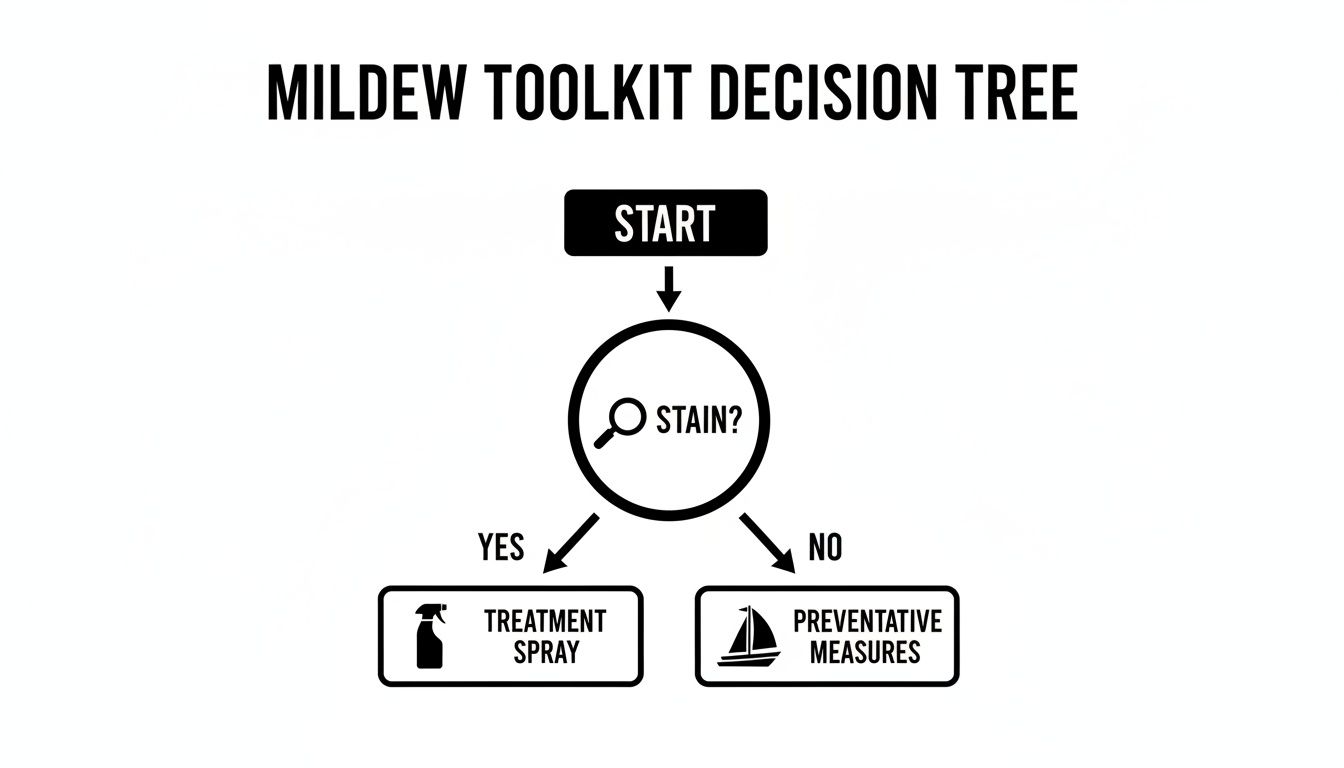
As you can see, it always starts with identifying the problem, then moving to direct action with the right gear in hand.
Tackling Mildew On Vinyl Seats And Upholstery
Let's face it: vinyl boat seats are basically a five-star resort for mildew. Between wet swimsuits, morning dew, and a buffet of sunscreen and dirt, it's the perfect environment for those little black specks to thrive. They spread fast, especially in the seams and stitching.
First thing's first, grab a damp microfiber towel and give the seats a quick wipe-down. This gets rid of any loose surface crud so you’re not just grinding dirt into the vinyl when you start cleaning.
Now, grab your Better Boat's Mildew Stain Remover and spray it liberally on the stained spots. Don't be timid here, you want the surface good and wet. This allows the formula to really sink into the vinyl's texture and get deep into the seams. Let it sit for a few minutes. This dwell time is non-negotiable; it's when the cleaner is actively breaking down the mildew from the root.
Once it's had time to work its magic, take a soft-bristle brush and gently scrub the area in small circles. You're trying to lift the stain, not sand down your vinyl. Pay special attention to the seams and any textured areas where mildew loves to hide. A small detail brush is a real game-changer for getting into those tight corners.
You should see the stains literally disappearing before your eyes. Once they're gone, it's time for a thorough rinse. Wipe the entire surface with a fresh, damp microfiber towel to remove any leftover cleaner and mildew residue. This step is critical for a clean finish.
Finally, dry the seats completely with a separate, dry towel. This prevents any new moisture from taking hold and starting the whole cycle over again.
Restoring Stained Gelcoat And Fiberglass
Mildew on gelcoat usually looks like a smattering of black dots or a larger, shadowy patch. You'll find it most often in non-skid areas, around deck hardware, and inside storage lockers where the air is stagnant. Gelcoat is tough, but those stains can bake in and become surprisingly stubborn if you ignore them.
The process is similar to vinyl, but you need to be mindful of that glossy finish. Start by rinsing the area with fresh water to wash away any salt or grit.
Apply your mildew stain remover directly onto the stained gelcoat. If you're working on a vertical surface like the hull, the product might run a bit, so you may need to reapply to keep the area wet. Let the solution sit for several minutes and get to work.
Using your soft-bristle brush, gently scrub the stain. You can use a bit more elbow grease on non-skid deck surfaces to work the cleaner into that textured pattern. On smooth, glossy areas, however, use light pressure to avoid creating any micro-scratches.
Expert Insight: For really tough, set-in stains on older gelcoat, I’ve had success letting the mildew remover sit a bit longer and using a medium-stiff brush. But always test this in a hidden spot first to make sure it doesn't dull the finish.
After the stains are gone, give the area a complete and thorough rinse with plenty of fresh water. This neutralizes the cleaner and washes away all the lifted gunk, which is key to keeping your gelcoat shiny. Let it air dry, or wipe it down with a chamois for a perfect, spot-free result.

Cleaning Boat Canvas And Covers
Boat covers, bimini tops, and other canvas accessories are a mildew magnet. They trap moisture and heat, creating a little greenhouse that mildew spores absolutely love. This doesn't just look bad; it can weaken the fabric and stitching over time.
Before you start, lay the canvas out on a clean, flat surface, a driveway or a clean part of the dock works great. Give it a good hosing down to knock off any loose dirt and debris.
Spray the mildew stain remover generously over both sides of the canvas, really soaking the heavily stained sections. The fabric will drink this stuff up, so make sure it's fully saturated. Let it soak for a solid 10-15 minutes. Canvas needs this extra dwell time for the cleaner to penetrate deep into the fibers.
The demand for effective cleaners is booming for a reason. The mildew cleaner market was valued at USD 1.2 billion in 2024 and is projected to hit USD 2.5 billion by 2033. Spray removers, perfect for porous surfaces like boat canvas, are driving this growth with a 5.5% CAGR thanks to their convenience, a trend Better Boat serves perfectly by offering rigorously tested marine cleaners to over a million customers.
After the soak, use a soft brush to gently scrub the fabric. Try to work in line with the weave to avoid pilling or fraying the material.
Next, rinse the canvas meticulously with a hose. Keep rinsing until the water runs completely clear. Any leftover soap residue will act like a dirt magnet and encourage mildew to come back faster. Finally, and this is critical, let the canvas air dry completely before folding it or putting it back on the boat. Storing it while it's even a little damp is just asking for trouble. For a similar approach on household fabrics, you can learn about safely cleaning mildew from a shower curtain.
For an even more detailed walkthrough on this material, check out our dedicated guide on how to remove mildew from canvas.
To make things even easier, here’s a quick-glance table summarizing the key points for each surface.
Mildew Removal Techniques By Boat Surface
This chart breaks down the essentials for tackling mildew on the most common materials you'll find on your vessel.
| Boat Surface | Recommended Tool | Application Tip | Key Precaution |
|---|---|---|---|
| Vinyl & Upholstery | Soft-bristle brush, detail brush, towels | Let cleaner dwell for a few minutes; focus on seams | Avoid aggressive scrubbing that can damage vinyl |
| Gelcoat & Fiberglass | Soft to medium brush, chamois | Reapply on vertical surfaces; use more pressure on non-skid | Test aggressive scrubbing in an inconspicuous area first |
| Canvas & Covers | Soft-bristle brush, hose with nozzle | Saturate fabric thoroughly and allow 10-15 minutes of dwell time | Ensure canvas is 100% dry before storing |
Each surface presents its own unique challenge, but with the right approach and a quality mildew stain remover, you can confidently restore every part of your boat to pristine condition.
Common Mistakes We See When People Fight Mildew
Getting rid of mildew isn’t just about what you do, it’s also about what you don’t do. I’ve seen countless well-intentioned boat owners cause hundreds, sometimes thousands, of dollars in damage with simple, avoidable mistakes. These slip-ups can quickly turn a quick cleaning job into a costly restoration project.
Let's break down the most common pitfalls so you can steer clear. Understanding these missteps hammers home why a purpose-built marine mildew stain remover is so critical. You’re not just cleaning a stain; you’re preserving the very materials that make your boat what it is.
Reaching for Household Bleach
The number one mistake I see, time and time again, is grabbing a bottle of household bleach. It seems like an easy, powerful fix, but it's a destructive shortcut that will cost you dearly down the road. The sodium hypochlorite in common bleach is simply way too harsh for marine-grade materials.
When you splash it on your boat, you’re kicking off a chemical chain reaction you can’t undo.
- It Destroys Vinyl: Bleach strips the essential protective topcoat right off your vinyl seats, leaving them naked and exposed to UV rays. The material becomes dry, brittle, and will inevitably crack and split.
- It Eats Stitching: It chemically burns and weakens the polyester or nylon thread in your upholstery and canvas, causing seams to fail years before they should.
- It Dulls Gelcoat: Bleach can oxidize and dull your boat's glossy gelcoat finish. This makes the surface porous and even more susceptible to future staining.
Using a properly formulated product like Better Boat’s Mildew Stain Remover is a must because it’s engineered to lift mildew stains without causing all that collateral damage. It protects your investment while it cleans.
Using Aggressive Scrubbing Techniques
When a stubborn stain won't budge, the gut instinct is often to just scrub harder. This is another critical error. Your boat’s surfaces, especially vinyl and gelcoat, are not designed to withstand that kind of abrasive force. Grabbing a stiff-bristled brush or putting all your muscle into it is a recipe for disaster.
You can easily scratch your gelcoat, leaving fine swirl marks that are a real pain to polish out. On vinyl, aggressive scrubbing wears down the textured surface and can even tear the material right open.
Key Takeaway: Let the cleaner do the work. A quality mildew stain remover is designed to break down stains on a chemical level. A soft brush is only needed to gently agitate the surface and help lift the grime that the cleaner has already loosened.
Skipping the Spot Test
You wouldn't repaint your whole boat without testing the color first, would you? The same logic applies here. Every boat has a unique history of sun exposure, previous cleanings, and general wear, all of which can affect how a surface reacts to a cleaner.
Forgetting to spot-test your mildew stain remover in a hidden area is a gamble. Always apply a small amount of product to an inconspicuous spot first, think the underside of a cushion or an interior seam on your canvas. This simple, two-minute step confirms compatibility and prevents any nasty surprises like discoloration or damage.
Leaving the Product on Too Long
More isn't always better. It’s easy to think that letting a cleaner soak for an extra long time will give you better results, but this can really backfire. Marine cleaners are carefully balanced to work within a specific timeframe.
Letting a product dry on the surface can create its own hard-to-remove residue or, in some cases, even etch sensitive surfaces. Just follow the product’s instructions for dwell time and rinse it off thoroughly when the job is done. This makes sure you remove both the mildew and the cleaner, leaving nothing behind but a perfectly clean surface.
Keeping Mildew Away for Good with Proactive Care
After all the hard work you put into restoring your boat's surfaces, the last thing you want is a repeat performance. The real victory over mildew isn’t about scrubbing away stains; it’s about creating an environment where it simply can’t get a foothold. This is where proactive care comes in, turning a frustrating chore into a simple, ongoing maintenance routine.
Preventing mildew boils down to controlling the two things it absolutely needs to thrive: moisture and stagnant air. By making a few small habits part of your regular boating life, you can dramatically reduce the chances of ever seeing those ugly black specks again. Think of it as boat ownership insurance, a little effort now saves you a massive headache later.
Build a Mildew-Resistant Environment
Honestly, the best mildew stain remover is the one you never have to use. The trick is to disrupt the cozy conditions that mildew loves. A dry, well-ventilated boat is a hostile place for fungus, and that's exactly what you want.
It all starts the moment you tie up at the dock. Before you throw on a heavy, non-breathable cover, take five minutes to wipe down any obviously wet surfaces. I'm talking about the vinyl seats, the coaming pads, and any standing water on the deck. It’s a dead-simple step that gets rid of a huge amount of moisture right off the bat.
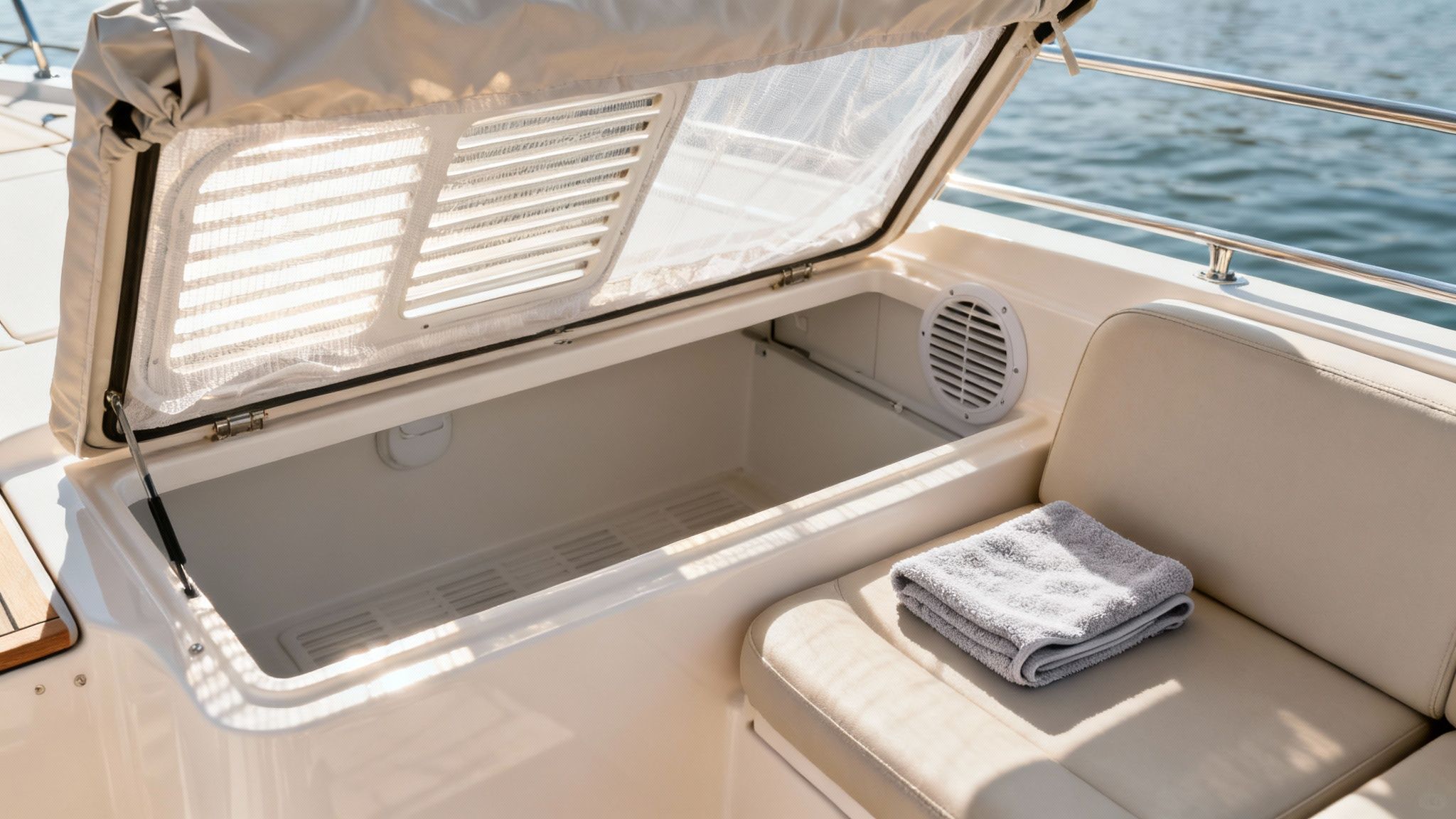
On top of that, try propping open storage lockers and cabin doors, even just for a little while. This lets all that trapped, humid air escape. This one small action can make a huge difference in preventing that musty smell and the inevitable mildew that follows.
Smart Strategies for Ventilation and Storage
Proper air circulation is your number one weapon in the fight against mildew. When your boat is covered or stored away for the season, trapped humidity creates the perfect breeding ground.
Here are a few practical habits to get into:
- Choose a Breathable Cover: If your boat cover feels like a heavy plastic tarp, it’s trapping moisture. It's worth investing in a cover made from a modern, breathable fabric that repels water but allows condensation and humidity to escape.
- Support Your Cover: Never let your cover sag. Use support poles or even some strategically placed pool noodles to create peaks and valleys. This simple trick prevents water from pooling on top and encourages air to move around underneath.
- Crack Open Hatches: When your boat is docked and covered, consider leaving a hatch or two cracked open (as long as they're protected from rain, of course). This creates a natural airflow that helps keep the interior dry.
For boats stored in seriously humid climates or for long periods, active moisture control is a total game-changer. Our guide on selecting and using boat dehumidifiers can give you the rundown on a more advanced solution for keeping your cabin bone-dry.
The Role of Protective Coatings
Beyond just keeping things dry, you can also make your boat's surfaces less inviting to mildew on a microscopic level. After you've done a deep clean, applying a quality protectant adds a crucial layer of defense.
A marine-grade vinyl protectant, for example, does a lot more than just add a nice shine. It actually seals the tiny pores in the vinyl, creating a barrier that repels water and prevents dirt and oils from getting embedded in the surface. Since mildew tends to feed on organic gunk, a clean, protected surface leaves less for it to build up on.
The market for cleaning products is always changing, with eco-innovation and professional demand leading the way. A huge 73% of growth is now driven by sustainability trends. In fact, 45% of consumers worldwide now favor biodegradable options over traditional chlorine bleach, which has led to a boom in alternatives like enzymatic cleaners, a market growing at 7.5% annually.
For boaters, this shift means safer, more effective ways to protect surfaces like teak decks and pontoons without resorting to harsh chemicals. You can dive deeper into these trends in this detailed market analysis on GlobalGrowthInsights.com.
By combining regular wipe-downs, smart ventilation, and the right protective treatments, you create a multi-layered defense. This proactive mindset is what transforms boat care from a constant battle into a simple, manageable routine.
Got Questions About Mildew? We’ve Got Answers.
Even after you’ve scrubbed away the last of the grime, a few questions might pop up. We get it. Fighting mildew can feel like a never-ending battle on the water, and knowing the right way to handle things makes all the difference. Here are some quick, straightforward answers to the questions we hear most often from boaters like you.
Can I Just Use Household Bleach Instead of a Proper Marine Mildew Remover?
We hear this one a lot, and the answer is a hard no. We strongly advise against it.
Household bleach is loaded with harsh sodium hypochlorite that can do a real number on your boat. Over time, it will yellow and weaken marine vinyl, eat away at the stitching in your upholstery and canvas, and can even dull your gelcoat. It’s just not worth the risk.
A dedicated marine mildew stain remover, like the one from Better Boat, is formulated specifically for these materials. It’s tough enough to knock out stubborn stains but gentle enough that it won’t cause expensive, long-term damage. Using the right tool for the job is key.
How Often Should I Be Checking for Mildew?
That really depends on where you are and how you store your boat.
If you’re in a hot, humid climate like Florida or the Gulf Coast, a quick inspection every week is a smart move. For those in drier climates or who store their boat indoors, a monthly check-up is usually enough to stay on top of any new growth.
The most important thing is to catch it early. Being proactive is always the best strategy. Regularly wiping down areas prone to moisture and making sure you have good air circulation can stop a major outbreak before it even starts.
Will This Mildew Stain Remover Work on My Colored Vinyl or Canvas?
Absolutely. Our Mildew Stain Remover is buffered and carefully formulated to be safe for most colorfast marine fabrics and vinyls. It’s designed to lift the stain without touching the color underneath.
That said, we always recommend doing a quick spot test first. Just find an inconspicuous area, like under a seat cushion or on an inside seam of your canvas, and test a small amount. This simple step gives you peace of mind and ensures you’ll get a perfect result every time.
What’s the Best Way to Clean My Brushes and Towels After the Job Is Done?
This is a great question, and it's a step too many people skip. Proper tool care is essential to avoid spreading mildew spores around next time you clean.
Once you're finished, give your brushes and microfiber towels a thorough rinse with fresh water. Keep rinsing until the water runs completely clear. This gets rid of any lingering product and mildew residue that might be hiding in the bristles or fibers.
Let them air dry completely before putting them away. This simple habit prevents mildew from growing on your cleaning tools themselves, so they’re clean and ready for the next job. Take care of your gear, and it’ll take care of your boat.
Ready to tackle those stubborn stains and get your boat looking pristine? The Better Boat Mildew Stain Remover is the professional-grade, marine-safe solution you need. Formulated to be tough on mildew but gentle on vinyl, canvas, and gelcoat, it’s the trusted choice for over a million boaters.


