


Power Wash Boat: The Right Way to Clean Your Vessel
Nothing beats the feeling of a clean boat cutting through the water. It’s not just about aesthetics, it’s about performance. To power wash a boat the right way, you need a balanced approach: the right pressure, the correct technique, and a solid marine-safe soap to tackle that stubborn grime. Get that combo right, and you'll blast away the marine growth, fuel stains, and general buildup that’s secretly slowing you down and costing you at the pump.
Why Power Washing Is a Game Changer for Your Boat
A power washer isn't just a fancy hose; it's a tool for restoring your boat's performance and protecting its value. A clean hull is a fast hull. When you strip away marine fouling like algae and barnacles, you're massively improving your boat's hydrodynamics. All that gunk creates drag, making your engine work overtime and guzzle more fuel.
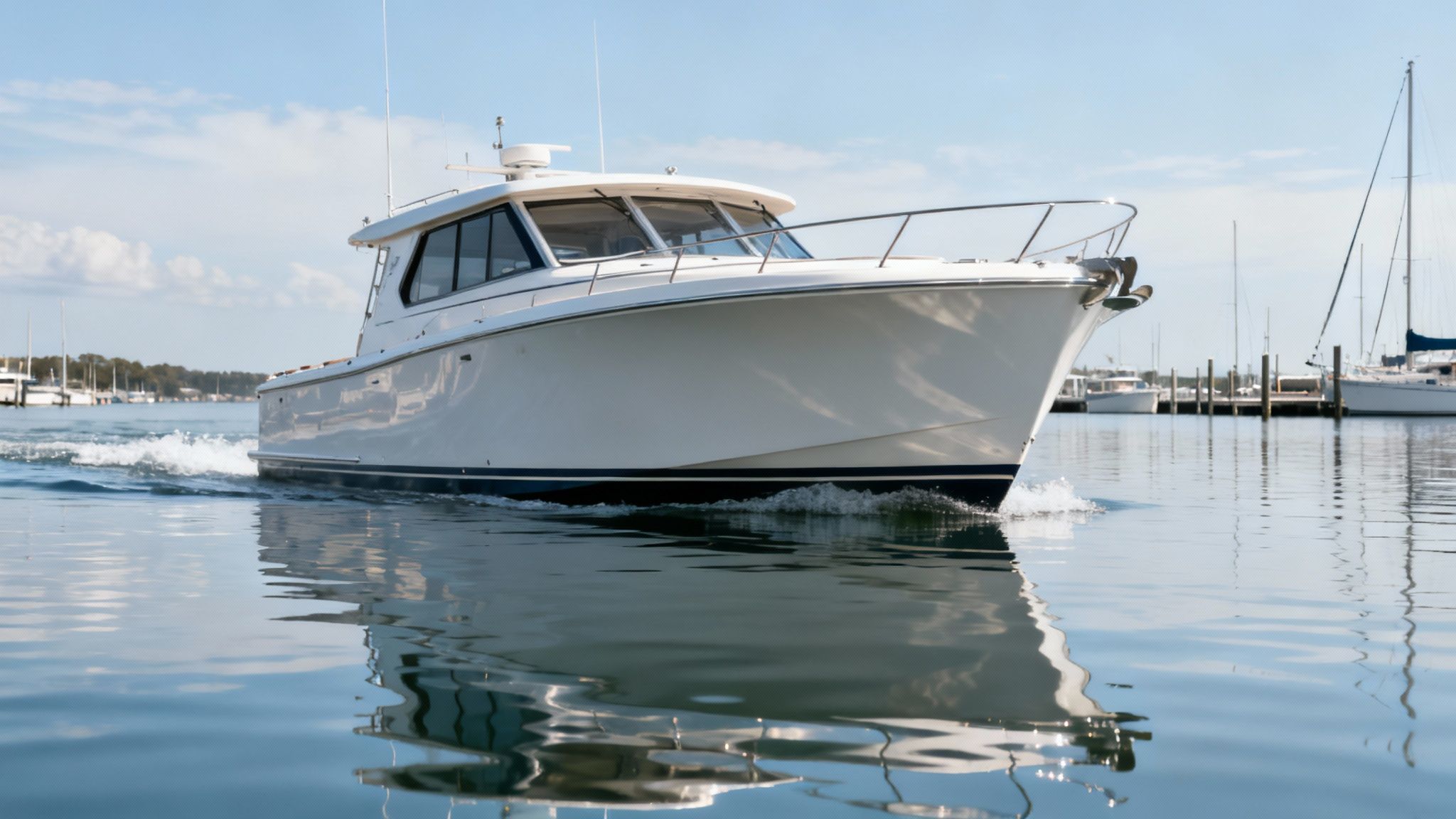
This isn’t just a hunch from seasoned boaters; the numbers back it up. The global pressure washer market hit USD 3.28 billion in 2024, with a huge chunk of that driven by marine maintenance. Experts have shown that hull fouling can torpedo your fuel efficiency by up to 30%, which makes a good power wash a pretty smart investment.
And as the U.S. boating scene keeps growing, keeping your vessel pristine with reliable gear and a quality boat soap from Better Boat can actually bump its resale value by 10-15%. You can dig into more of these industry stats here.
Key Benefits of a Regular Power Wash
Keeping up with power washing gives you some real, tangible advantages that go way beyond just looking good at the dock. Think of it as the foundation of your maintenance routine.
- Better Performance and Fuel Economy: When you get rid of all that marine growth, you cut down on drag. Less drag means a faster, more efficient ride. Simple as that.
- Boosted Longevity and Value: Salt, grime, and those acidic bird droppings are constantly attacking your boat. Washing them off prevents long-term damage to your gelcoat, paint, and hardware, which goes a long way in protecting your investment.
- Early Problem Detection: It’s tough to spot blisters, cracks, or other hull damage when they're hiding under a layer of slime. A clean surface lets you catch small problems before they become big, expensive ones.
Setting the Stage for Success
The real secret to getting those professional-level results is marrying the right pressure washing technique with cleaners built for the marine environment. A high-pressure stream of water is great, but pair it with a marine-safe soap, and you've got a combination that can break down oils and lift stains without stripping your wax or hurting the water.
The goal is to clean thoroughly without causing damage. I’ve seen it happen too many times, someone uses way too much pressure or the wrong nozzle and ends up etching their fiberglass or splintering wood. Always start low and wide. You can adjust your pressure and spray pattern as you go.
Whether you've got a modern fiberglass cruiser, a tough-as-nails aluminum fishing boat, or a timeless wooden vessel, this guide has you covered. We'll walk you through exactly what you need to know to power wash your boat safely and effectively, keeping it in top shape and ready for your next adventure.
Choosing Your Tools for a Flawless Finish
Before you even think about pulling the trigger on your pressure washer, a little prep work is going to save you a world of hurt. Picking the right tools isn't just about getting a better clean, it’s about protecting your boat from damage you can’t undo and keeping yourself safe in the process. When it comes to power washing your boat, your equipment is the first and most critical choice you'll make.
The pressure washer itself is obviously the main event, and you've got two basic choices: electric or gas.
Electric models are the way to go for most boat owners. They're lighter, way quieter, and easier on the wallet. They're perfect for your regular cleaning jobs on small to mid-sized boats, usually putting out somewhere between 1,300 to 1,900 PSI.
Then you've got the gas-powered units, which are the real heavy hitters. They deliver much higher pressure, often climbing over 2,000 PSI, which is what you need for blasting away a season's worth of stubborn marine growth and barnacles. Just be prepared for the noise, the weight, and the extra maintenance they require.
For most of us with recreational boats, an electric pressure washer hits the sweet spot between power and control. It’s more than enough for decks, topsides, and lightly fouled hulls, and you’ll have a much lower risk of accidentally damaging your gelcoat or paint.
Deciphering Pressure Washer Nozzles
The boat hose nozzle you snap onto the end of that wand is just as important as the PSI setting. Grabbing the wrong one is a fast track to stripping paint, gouging wood, or etching your fiberglass for good. Those color-coded tips aren't just for looks; they tell you the angle and intensity of the spray.
- White Nozzle (40-degree): This should be your go-to for general cleaning. It has a nice, wide spray pattern that’s gentle enough for most surfaces like fiberglass and painted areas. It’s the perfect choice for rinsing with our Boat Soap.
- Green Nozzle (25-degree): A fantastic all-purpose tip that gives you a bit more oomph. Use this one for rinsing away tougher dirt or bird droppings from non-skid decks, but keep a healthy distance from more delicate surfaces.
- Yellow Nozzle (15-degree): This nozzle means business. It creates a more concentrated, powerful stream, so you'll want to save it for stubborn stains on really durable surfaces, like unpainted aluminum or nasty waterline scum. Use this one with caution.
- Red Nozzle (0-degree): Just avoid this nozzle entirely. Seriously. Its pinpoint stream is powerful enough to carve your name into wood and put a deep gash in your fiberglass. It has almost no safe use in boat cleaning.
Essential Safety Gear and Boat Prep
You're dealing with high-pressure water that can cause real injury, so your Personal Protective Equipment (PPE) is non-negotiable. Always, always wear impact-resistant safety goggles. Debris and chemical splashback are no joke. You'll also want non-slip, closed-toe shoes, because that deck and the dock are about to get incredibly slippery.
Before you start spraying, run through a quick pre-wash checklist:
- Secure Your Boat: Make sure she’s stable, whether on a trailer or properly supported in a cradle.
- Cover Sensitive Components: Grab some plastic sheeting and painter's tape to protect electronics, vents, and any delicate hardware from getting blasted.
- Check Local Rules: Many marinas and boatyards have strict rules about runoff. Make sure you're using a biodegradable, marine-safe cleaner and following all the local environmental regulations.
Getting yourself properly equipped from the start makes the whole job go smoother. To see what a fully stocked arsenal looks like, check out our guide on building the perfect boat cleaning kit. Having the right brushes, buckets, and cleaners ready to go makes all the difference.
With your washer, nozzles, and safety gear sorted, the last piece of the puzzle is your cleaning agent. For general grime, a quality biodegradable soap is what you need. Our Better Boat Soap is formulated to cut through dirt while being gentle on your boat's wax and the marine environment.
For those ugly waterline stains or rust marks, pre-treating the area with our Instant Hull Cleaner will loosen them up, letting the pressure washer lift them away with minimal effort. For any mildew issues you spot, our Mildew Stain Remover is the perfect pre-treatment to lift the mildew staining before you wash.
Mastering Your Power Washing Technique
Got your gear? Good. Now for the fun part, the "how." A good power wash isn't about brute force; it's about control and working smart. Just blasting away at the hull is the fastest way to miss spots, leave ugly streaks, or even damage your boat. Take it from the pros: technique is everything.
The number one rule is simple: work from the top down. Always start at the highest point of your boat and make your way to the waterline. This lets gravity do half the work for you, pulling dirty water and soap down over areas you haven't hit yet. It's a simple trick that prevents frustrating rework and keeps you from splattering grime all over freshly cleaned surfaces.

The Art of the Overlap
To avoid those dreaded "tiger stripes", the tell-tale lines left by a sloppy spray pattern, you have to get your motion down. The key is smooth, overlapping strokes. Keep a consistent distance between the nozzle and the boat, usually somewhere between 12 and 18 inches, but this will change based on your boat's material and the pressure you're using.
As you move the wand, make sure each pass overlaps the last one by about 50%. This is non-negotiable for an even, uniform clean. Keep that wand moving at a steady pace. If you let it sit in one spot for even a second too long, you're concentrating all that pressure and asking for damage.
This infographic breaks down the essential tools you'll be using to master your technique.
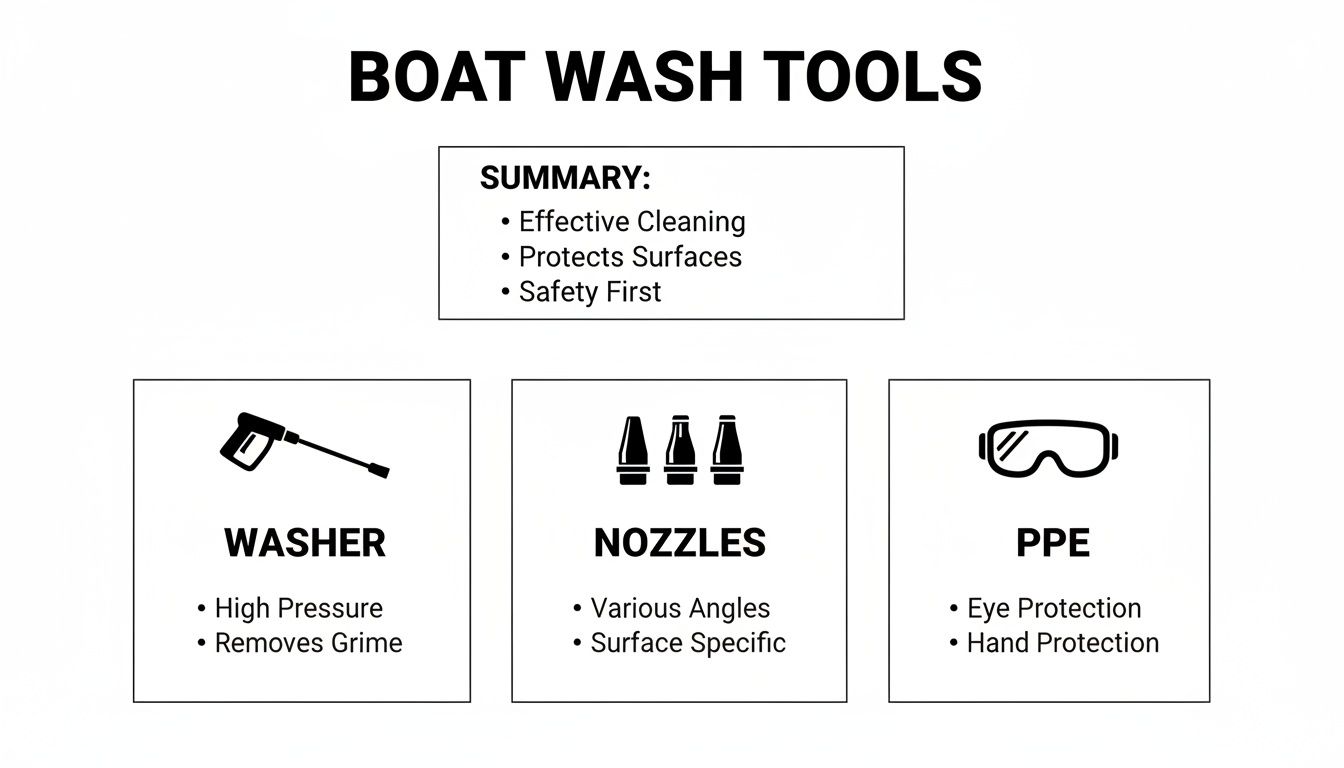
As the visual shows, having the right power washer, the correct nozzle, and proper safety gear are the three pillars of a safe and effective cleaning session.
Tailoring Your Technique to the Material
No two boats are the same, and what works for a tough aluminum pontoon could be a disaster for a classic wooden cruiser. Your boat's hull material is the ultimate guide for choosing the right pressure, nozzle, and distance.
This quick-reference table should help you dial in the right settings before you even pull the trigger.
Recommended Pressure and Nozzle Settings by Boat Material
| Boat Material | Recommended PSI Range | Nozzle Tip (Color/Degree) | Recommended Distance |
|---|---|---|---|
| Fiberglass | 1,200 - 1,500 PSI | White (40°) or Green (25°) | 12 - 18 inches |
| Aluminum | 1,500 - 2,000 PSI | Green (25°) or Yellow (15°) | 12 - 18 inches |
| Wood | Below 1,000 PSI | White (40°) only | 18 - 24 inches |
Let's break down exactly what those numbers mean in the real world.
Fiberglass Hulls
With fiberglass, the goal is to get it clean without scarring the gelcoat.
- Pressure: Keep it in the 1,200 to 1,500 PSI range. Any higher and you're risking damage.
- Nozzle: A white (40-degree) or green (25-degree) tip gives you the right balance of coverage and cleaning power.
- Technique: Stay vigilant around decals and striping, high pressure will peel them right off. For a deeper dive into hull maintenance, our guide on how to clean a boat hull is a great resource.
Aluminum Pontoons and Boats
Aluminum is pretty tough, but it's prone to that chalky white film we all know as oxidation.
- Pressure: You can step it up a bit here, somewhere in the 1,500 to 2,000 PSI zone.
- Nozzle: A green (25-degree) or even a yellow (15-degree) tip works great for blasting off stubborn water lines.
- Technique: After washing, you might still see some lingering oxidation. Don't just crank up the pressure! This is the perfect time to grab our Aluminum Cleaner. It's made to dissolve that chalky buildup and bring back the original shine.
A common mistake I see is boaters trying to blast off heavy marine growth with pressure alone. For stubborn barnacles or thick algae, it's far better to use a plastic scraper first. This reduces the risk of damaging your hull by trying to force them off with a high-pressure jet.
Wooden Boats
Treat wood with the respect it deserves. High pressure will splinter the grain and strip protective finishes in a heartbeat.
- Pressure: Stay low. Way low. Keep it under 1,000 PSI. Think of this as a powerful rinse, not a deep scrub.
- Nozzle: Only use the white (40-degree) tip to get the widest, gentlest spray possible.
- Technique: Stand further back, about 18 to 24 inches from the surface. You're just trying to lift off surface grime. For anything deeper, follow up with our Teak Cleaner after the initial wash.
Getting this right is a big deal. The global market for boat bottom cleaning services is a USD 673.65 million industry in 2024, and power washing is at the heart of it. It's the standard because it works, and combining it with the right eco-friendly soaps can cut runoff pollutants by up to 90% compared to old-school scrubbing.
Much like cleaning a house, mastering the right pressure, nozzle, and technique for effective cleaning is the key to success. By adapting those core principles to your boat's specific needs, you'll get a pro-level finish every single time.
Selecting Marine-Safe Cleaners for Your Washer
While the high-pressure water does most of the heavy lifting, it’s the right cleaning solution that truly brings your boat's shine back to life. When you power wash a boat, the cleaner you choose is just as important as the pressure setting or nozzle tip. Honestly, using the wrong product can do more harm than good.
One of the biggest mistakes I see boat owners make is grabbing a bottle of dish soap or some all-purpose cleaner from under the kitchen sink. Those products are loaded with harsh detergents designed to cut through grease, which sounds good, but they'll also strip away your boat's protective wax coat. That leaves your gelcoat exposed and vulnerable to UV rays and oxidation.
Even more critical, those household cleaners aren't made for aquatic environments. The runoff can be toxic to fish and other marine life, messing up the delicate ecosystems we all want to enjoy. This is why picking a dedicated, marine-safe cleaner isn't just a suggestion; it’s a non-negotiable part of doing the job right.
The Foundation of a Great Clean: Boat Soap
For that general, top-to-bottom wash, a quality biodegradable boat soap is your best friend. You'll want a product specifically formulated to be gentle on wax and gelcoat but still tough on salt, grime, and those lovely bird droppings.

Marine-safe cleaner for this step
No Slip Boat Deck Cleaner
A cleaner built for boat surfaces cuts through salt, grime, and algae without harming gelcoat or wax. Using a formula designed for the marine environment lets the pressure washer lift fouling away cleanly and efficiently.
Our Better Boat Boat Soap is made to be the perfect partner for your pressure washer. It’s highly concentrated, so a little bit goes a long way, whether you're using your washer’s soap dispenser or a foam cannon. Plus, its biodegradable formula means you get a powerful clean without harming the environment.
This focus on eco-friendly solutions is becoming the industry standard. The boat cleaner market was valued at USD 1,951.2 million globally in 2024, with a huge part of that growth driven by the demand for greener products in recreational boating. Combining a quality cleaner with a power washer can knock out up to 95% of surface grime before you even think about tackling specific stains.
Tackling Tough Stains with Targeted Pre-Treatments
Sometimes, soap and water just won't cut it. Stubborn stains need a more focused approach before you start the main wash. Pre-treating these problem areas lets specialized cleaners do the chemical work of breaking down the grime, making it easy for the pressure washer to just lift it away without needing excessive force.

Target stubborn hull stains
Spray Hull Cleaner Clinging Gel Formula
A clinging gel hull cleaner clings to vertical surfaces long enough to break down waterline stains, rust, and heavy marine growth before the pressure wash begins. Pre-treating with a product like this reduces the pressure you need to apply, protecting your hull in the process.
For those ugly brown or yellow "boat smiles" at the waterline and the black exhaust smudges on the transom, a powerful hull cleaner is essential.
- Our Instant Hull Cleaner is a spray-on, wipe-off solution that just melts away waterline scum and rust stains on contact. Just apply it to the spot, give it a couple of minutes to work its magic, and watch the stains vanish.
Another common headache is that persistent black spotting from mildew, especially on vinyl seats, under cushions, and deep inside storage lockers.
- Our Mildew Stain Remover is the answer here. Spray it directly onto the mildew, let it penetrate for a bit, maybe give it a light scrub, and then rinse it clean during your main power wash.
Professional detailers live by this rule: always pre-treat. It saves time and, more importantly, keeps you from cranking up the pressure to dangerous levels just to blast off a single stain. Let the cleaner do the chemical work so the water pressure can do the physical work.
Mixing and Application Best Practices
Getting a streak-free finish without wasting product all comes down to proper dilution and application. Always, and I mean always, follow the instructions on the cleaner's label for the correct water-to-cleaner ratio.
When using your pressure washer's soap dispenser:
- Pour the recommended amount of concentrated Boat Soap into the reservoir.
- Top it off with water as directed by the instructions.
- Switch to the black, low-pressure soaping nozzle. Apply a thick, even layer of suds to the boat, working from the bottom up. This prevents the soap from running down and creating streaks.
- Let the soap dwell for a few minutes to break down the dirt, but don’t let it dry on the surface.
Making the right choices in cleaners is fundamental to a successful wash. To get a better handle on the different types of products out there and how they work, check out our detailed guide on how to choose the best cleaning products for your boat. This strategic approach ensures a deep clean that protects both your investment and the environment.
Protecting Your Boat After the Wash
A thorough power wash leaves your boat looking fantastic, but the job isn't quite done. All that high-pressure water strips away dirt, grime, and unfortunately, any old layers of wax or protectants. Leaving the surface bare exposes it to the harsh marine environment, meaning all your hard work could be undone in just a few weeks.
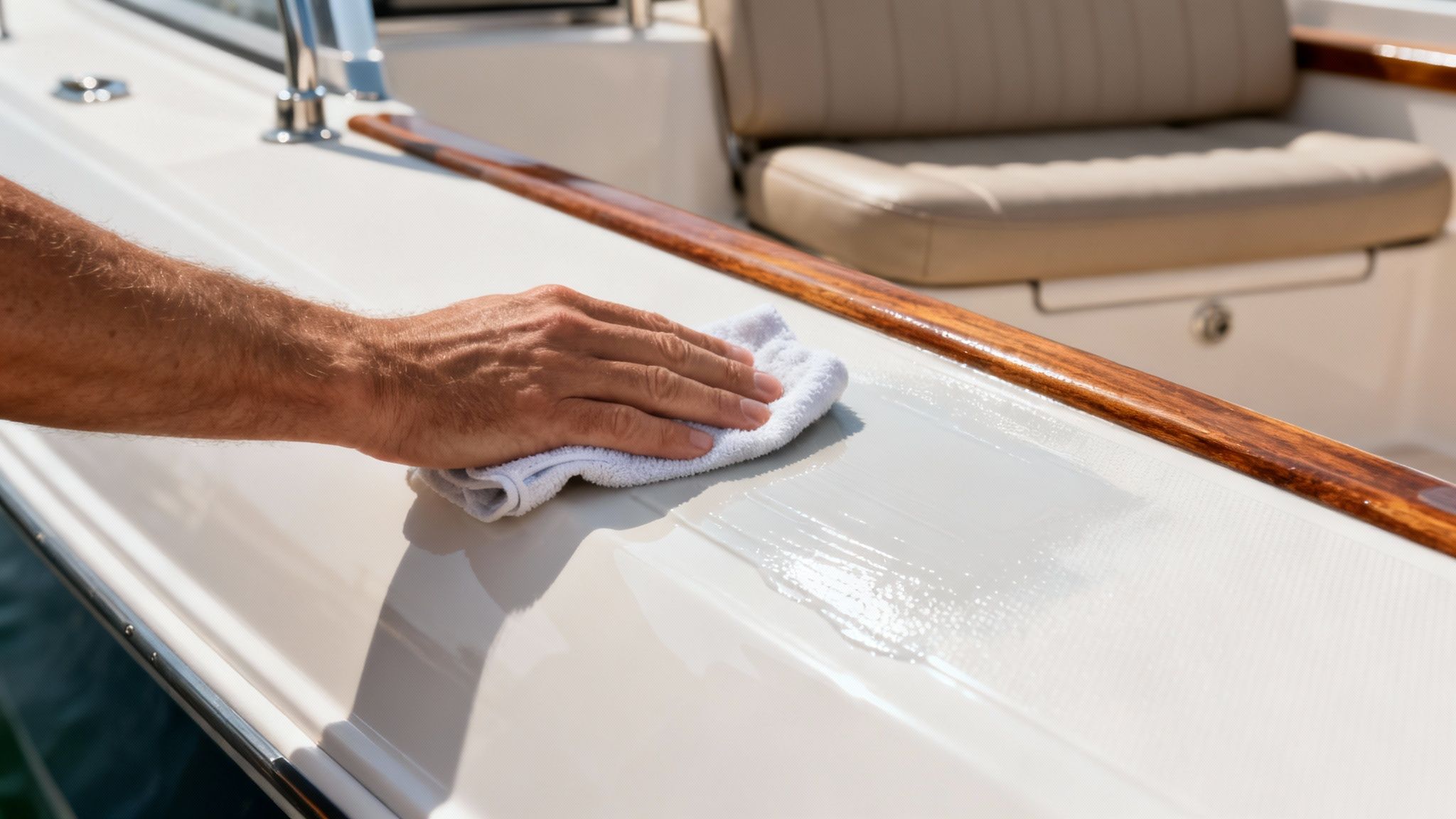
This final stage is what elevates a simple cleaning into a complete, professional-level detail. It’s about sealing in that clean finish and creating a durable shield against UV rays, salt spray, and environmental pollutants. This crucial step not only keeps your boat looking pristine for longer but also makes future cleanings significantly easier.
First Things First: Drying Your Vessel Correctly
Before you even think about applying any protective coatings, your boat must be bone dry. Rushing this part is a recipe for disaster. Any trapped moisture will ruin the bond of waxes and sealants, leaving you with a hazy, uneven finish that looks worse than when you started.

Dry before you protect
Synthetic Chamois Wash Towel
A synthetic chamois pulls water off large hull sections fast and leaves the surface streak-free and ready for wax or sealant. Getting the boat bone dry at this step is what determines whether your protective coating bonds properly.
Grab a high-quality, absorbent microfiber towel or a synthetic chamois and get to work wiping down the large surfaces. This is way better than letting it air-dry, which almost always leaves behind those annoying water spots from mineral deposits. Work in manageable sections, just like you did when washing, to make sure you don't miss a spot.
I always keep a small, electric leaf blower on board for this exact purpose. It’s incredibly effective at blasting water out of tight spots like around cleats, window frames, and non-skid surfaces where towels just can't reach.
Applying a Protective Wax to Fiberglass
For any fiberglass boat, applying a quality marine wax is the single most important thing you can do after a good wash. Think of it as sunscreen for your gelcoat; it creates a barrier that reflects damaging UV rays which cause fading and oxidation. It also gives you that slick, hydrophobic surface that makes water and grime bead right off.
Our Marine Wax with Carnauba is formulated to provide that brilliant, deep shine while offering long-lasting protection. For the best results, apply the wax with a clean applicator pad using small, overlapping circular motions. Tackle a manageable two-by-two-foot section at a time, let the wax haze over, then buff it off with a clean microfiber cloth.
This process is what creates that mirror-like finish you see on showroom boats. For a more detailed walkthrough on perfecting this technique, be sure to check out our complete guide on how to buff and wax a boat.
Protecting Other Key Areas of Your Boat
Your hull isn't the only part of your boat that needs attention. Different materials require specific care to keep them in top condition after a power wash. If you neglect these areas, you're just asking for premature aging, cracking, and discoloration.
Here’s a quick checklist for post-wash protection on other surfaces:
- Vinyl Seats and Cushions: Your boat's upholstery takes a beating from the sun and salt. After cleaning, treat all vinyl surfaces with our Vinyl Protectant with UV inhibitors. It brings back the luster and stops the material from drying out and cracking.
- Teak Decks and Trim: Natural wood needs to be nourished, otherwise it will turn gray and brittle. After a gentle wash and thorough drying, apply a coat of our Premium Teak Oil. It soaks deep into the wood grain, sealing out moisture and restoring its natural warm color.
By taking these final steps, you're not just cleaning your boat, you're preserving your investment. This protective layer ensures your vessel stays looking its best and is ready for whatever the water throws at it.
Common Questions About Power Washing a Boat
Even with the best guide in hand, a few questions always seem to surface right before you pull the trigger on a power washer. Getting these sorted out is key to avoiding a costly mistake and ensuring a perfect finish. Let's run through some of the most common things boaters ask.
Can I Power Wash My Boat While It Is in the Water?
This one comes up a lot, and the short answer is a hard no. It might seem convenient, but power washing a boat while it’s still floating is a bad idea for a couple of big reasons.
First off, it's a major environmental no-go. That high-pressure spray will blast antifouling paint, bits of marine growth, and all your cleaning chemicals straight into the water. Most marinas have strict rules against this, and for good reason, it’s seriously harmful to aquatic life.
Beyond that, it just doesn’t work well. You can't possibly reach the entire hull, especially the grimiest sections below the waterline where the stubborn stuff lives. For a real, effective clean, your boat has to be out of the water, either on a trailer or up on blocks.
How Often Should I Power Wash My Boat?
The right schedule really hinges on where you boat and how often you're out there. A good rule of thumb is to plan for a deep power wash at the start and end of every boating season. Think of it as spring cleaning and winter prep.
But if your boat stays in the water year-round, particularly in saltwater or areas thick with marine growth, you'll need to wash it more frequently. When the boat's in heavy use, aim for a thorough power wash every month. If it's in storage, once every few months should do the trick to keep buildup at bay.
It's easy to think you only need to wash the boat when it looks dirty. But unseen enemies like microscopic salt crystals and pollutants are already working to damage your gelcoat long before grime is visible. Consistent washing is all about prevention.
Can I Use Bleach in My Pressure Washer?
Please, avoid using household bleach when cleaning your boat. It might seem like a great idea for killing mold, but bleach is incredibly harsh and can do more harm than good.
Here’s a quick rundown of what can go wrong:
- It Ruins Surfaces: Bleach is notorious for dulling gelcoat, breaking down vinyl on your seats, and even weakening the stitching on your boat covers.
- It Corrodes Metal: It’s extremely corrosive to the aluminum, stainless steel, and other metal fittings all over your boat.
- It’s Bad for the Environment: Bleach is a serious pollutant that has no place in our waterways.
When you're fighting mildew, you need a product made for the job. Our Mildew Stain Remover is formulated to eliminate mildew without the destructive side effects of bleach. It’s a much safer and smarter choice for your boat.
What Is the Best Cleaner for Power Washing a Boat?
The "best" cleaner really depends on what you're cleaning. You wouldn’t use a general-purpose soap to tackle a stubborn rust stain on your waterline, right?
For that all-around, deck-to-hull wash, a biodegradable, pH-neutral boat soap is your best friend. Our Boat Soap is a concentrated formula that powers through salt and grime without stripping away your protective wax. It’s the perfect go-to for your pressure washer’s soap tank.
For tougher, more specific problems, you’ll need to bring in the specialists:
- For waterline stains and rust: Our Instant Hull Cleaner is made to chemically dissolve these exact types of stains on contact.
- For chalky aluminum: Our Aluminum Cleaner is designed to safely lift away oxidation without harming the metal itself.
When you match the cleaner to the mess, you let the formula do the heavy lifting. That means you can use less pressure, which is always safer for your boat's finish.
At Better Boat, we're committed to making boat care simple and effective. Our full line of American-made cleaning products is designed to give you professional results with less effort, so you can spend less time cleaning and more time on the water. Explore our complete collection of marine-grade cleaners, waxes, and accessories at https://www.betterboat.com.


