


The Ultimate Boat Trailer Tire Pressure Chart and Guide
Getting your boat trailer tire pressure right isn't just a suggestion, it's one of the most critical things you can do for safety, the life of your tires, and a smooth tow. Using a dedicated boat trailer tire pressure chart is really the only reliable way to know the correct pounds per square inch (PSI) your tires need for the load they're carrying. It’s a simple step that helps prevent dangerous blowouts and makes sure you get to the ramp without any trouble.
Why Correct Trailer Tire Pressure Is Non-Negotiable
Proper inflation is arguably the single most important factor for safe and reliable boat towing. Unlike the tires on your car, which are designed with comfort in mind, Special Trailer (ST) tires are built differently. They’re engineered with much stiffer sidewalls to handle heavy vertical loads without squirming around. This unique construction demands significantly higher air pressure to work the way it's supposed to.
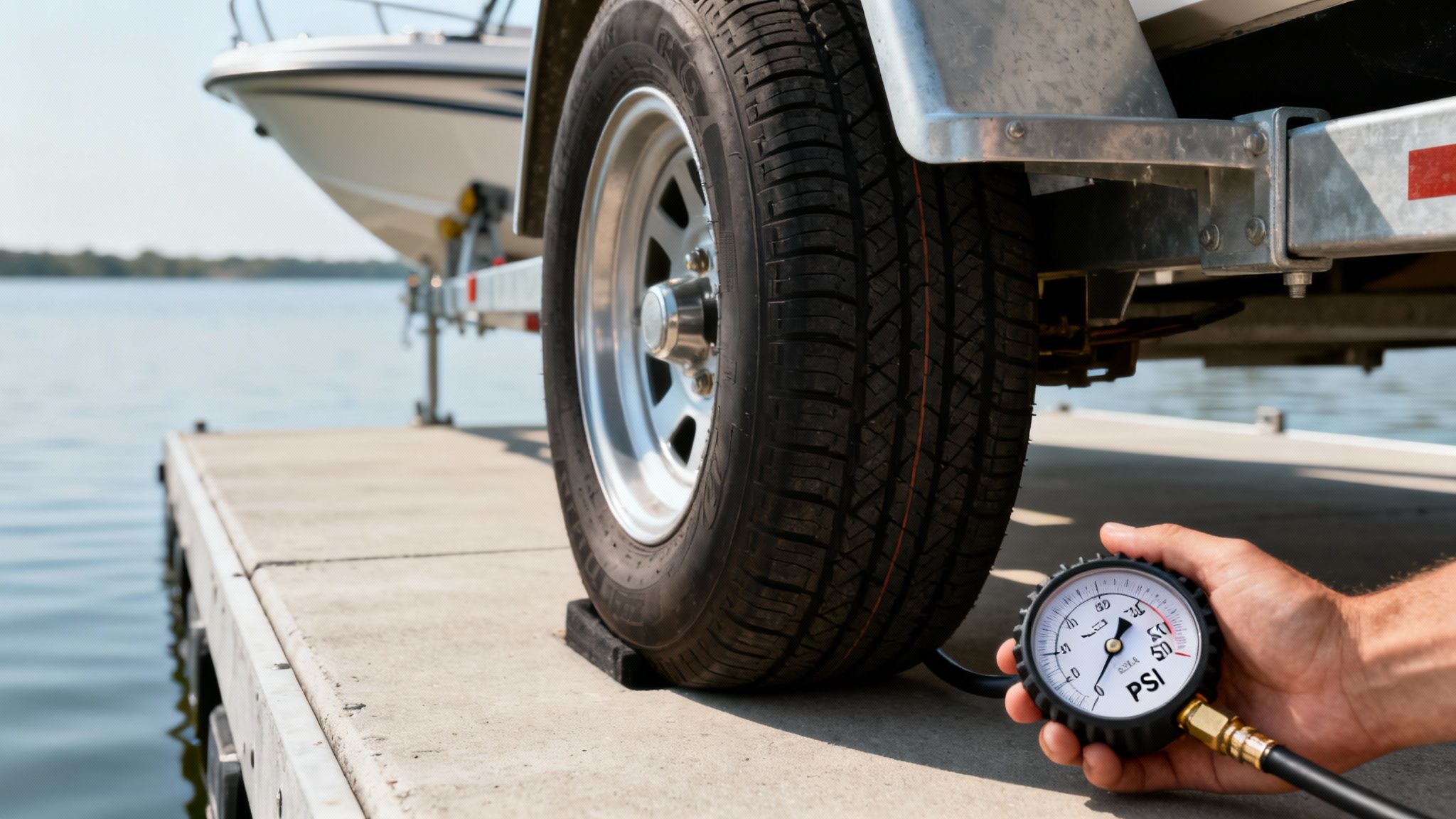
When you ignore the PSI stamped on your tire's sidewall or what a pressure chart recommends, you're introducing serious risks that can absolutely ruin your trip and damage your gear. Even being off by a little bit can have some pretty big consequences out on the road.
The Dangers of Improper Inflation
Underinflation is the number one cause of catastrophic trailer tire failure. It’s that simple. When a tire doesn't have enough air, its sidewalls flex way too much, which generates an incredible amount of heat. This heat breaks down the rubber and the tire's internal structure, often leading to a blowout at highway speeds. But on the flip side, overinflation is a problem, too.
- Underinflation Risks: This leads to that excessive, dangerous heat, premature and uneven tread wear, terrible fuel economy, and a massively increased risk of a blowout.
- Overinflation Risks: Pumping in too much air reduces the tire’s contact patch with the road, which kills your traction on wet surfaces like a slick boat ramp. It also creates a harsh, bumpy ride that can transfer damaging vibrations straight to your boat's hull and its sensitive electronics.
Keeping the pressure right ensures the tire can support its intended load, track straight, and get rid of heat effectively. It's a non-negotiable part of your pre-trip trailering checklist.
How to Read Your Trailer Tire Sidewall Markings
Your trailer tire’s sidewall is jam-packed with crucial information, but it can look like a mess of confusing codes if you don't know what you're looking for. Getting a handle on these markings is the first step to using a boat trailer tire pressure chart properly and keeping yourself safe on the road. The big three you need to find are your tire size, load range, and maximum cold inflation pressure.
Think of these codes as the tire's spec sheet, telling you exactly what it's built to do. The size tells you its physical dimensions, and the load range tells you how tough it is and how much weight it can handle. Flying blind without this info is like guessing how much gas you need for a road trip, it's a gamble you don't want to take.
Decoding Key Tire Information
To find the right pressure, you’ll need to spot a few key pieces of data molded right into the rubber. Let’s break down what it all means with a common example: ST205/75R15.
- ST: This is short for "Special Trailer." It’s your confirmation that the tire was built specifically for trailer use, with beefier sidewalls designed to handle heavy vertical loads.
- 205: This number is the width of the tire's tread, measured in millimeters.
- 75: This is the aspect ratio. It just means the sidewall's height is 75% of the tread's width.
- R: This tells you it’s a radial tire, which is the standard for almost all modern trailers.
- 15: This is the diameter of the wheel (or rim) that the tire fits, measured in inches.
Right after the size, you'll find the Load Range, which is just a letter like C, D, or E. A higher letter means a stronger tire that can carry more weight, but it also needs a higher PSI to do it. So, a Load Range D tire will have a higher weight capacity than a Load Range C tire of the same size.
You’ll also see "MAX PRESS" followed by a number and "PSI" stamped on the sidewall. This is the maximum cold inflation pressure, the absolute highest pressure the tire can safely hold to support its maximum rated load. This isn't a recommendation; it's a safety ceiling you should never exceed.
Boat trailer tires need way more air pressure than your car tires, often somewhere between 50 to 65 PSI, to safely carry those heavy loads. For example, a common ST175/80R13C tire needs 50 PSI to hit its max load capacity of 1,360 pounds. If you're curious about why this pressure is so important, you can get more insights on the topic from the experts at FishAndSki.com.
Boat Trailer Tire Pressure Chart by Size and Load Range
Getting the inflation right for your specific rig is probably the single most important step for safe towing. This boat trailer tire pressure chart is designed to give you quick, reliable answers based on your tire's size and its designated Load Range. There's absolutely no room for guesswork here; using this as a reference ensures your tires perform exactly how the manufacturer designed them to.
Just find your tire size, it’s printed right on the sidewall, in the first column of the table below. Then, match it up with your tire's Load Range (B, C, D, or E) to find the maximum load it can handle and the exact cold PSI needed to support that weight. Sticking to these numbers is critical for preventing dangerous heat buildup and keeping your trailer stable on the road.
This infographic breaks down the key codes on your tire's sidewall, showing you exactly where to find the size, load, and PSI info.
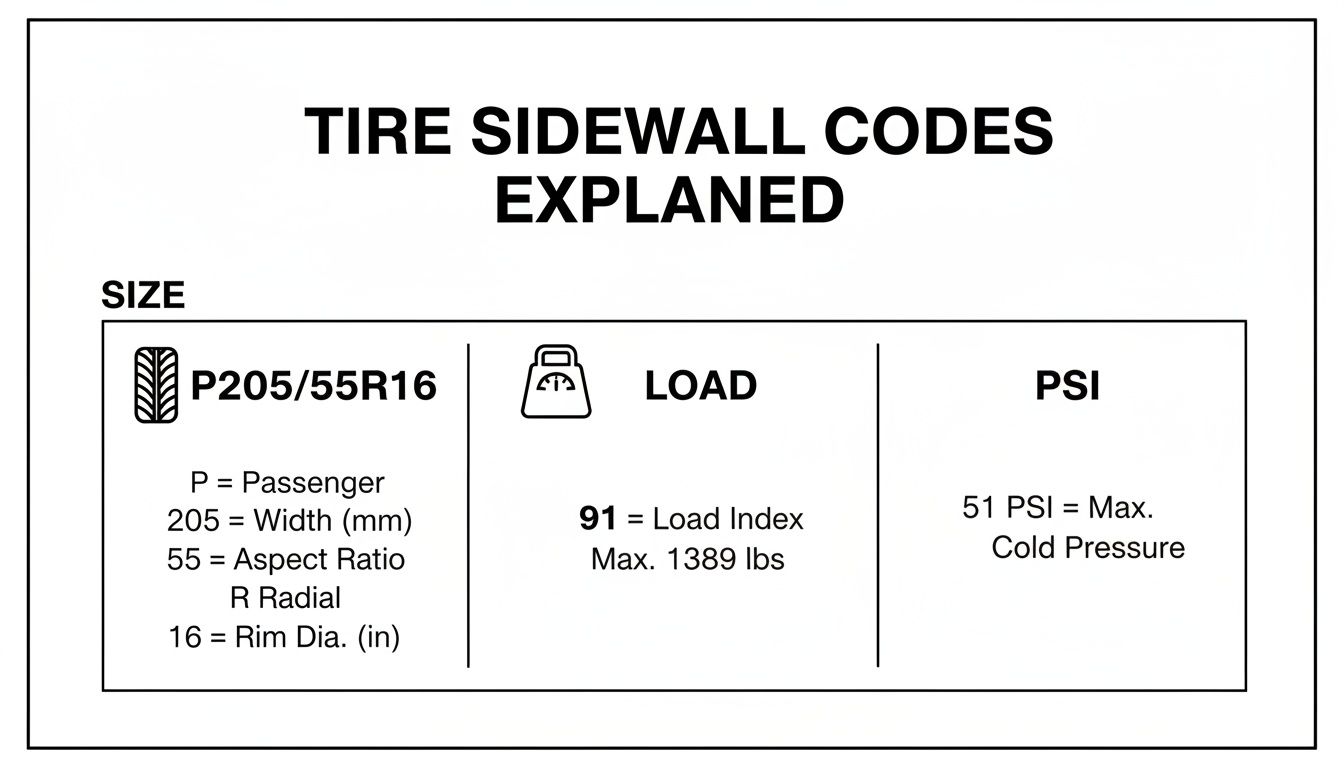
As you can see, the maximum cold inflation pressure listed on the tire is the target PSI you need to hit to achieve its full load-carrying capacity.
Boat Trailer Tire Pressure and Load Capacity Chart
This table is a simple lookup for the most common Special Trailer (ST) tire sizes you'll encounter. A quick but important reminder: always check and inflate your tires when they're cold. That means the trailer hasn't been towed for at least a few hours.
| Tire Size | Load Range | Max Load per Tire (lbs) | Required Cold PSI |
|---|---|---|---|
| ST175/80R13 | B | 1,100 | 35 |
| ST175/80R13 | C | 1,360 | 50 |
| ST205/75R14 | C | 1,760 | 50 |
| ST205/75R14 | D | 2,040 | 65 |
| ST215/75R14 | C | 1,870 | 50 |
| ST215/75R14 | D | 2,200 | 65 |
| ST205/75R15 | C | 1,820 | 50 |
| ST205/75R15 | D | 2,150 | 65 |
| ST225/75R15 | D | 2,540 | 65 |
| ST225/75R15 | E | 2,830 | 80 |
| ST235/80R16 | E | 3,520 | 80 |
| ST235/85R16 | F | 3,960 | 95 |
Using the Chart Correctly
While this boat trailer tire pressure chart gives you the maximum PSI for the maximum possible load, your actual towed weight might be less. It's absolutely crucial that your total weight, boat, engine, fuel, gear, and all, doesn't exceed the combined load capacity of your tires.
Distributing that weight properly is just as important. You can learn more about how to dial that in by calculating your boat trailer tongue weight to guarantee a balanced and stable tow.
Here’s a practical example: say you have ST205/75R14 Load Range D tires on a tandem-axle trailer. Your total tire capacity is 8,160 lbs (2,040 lbs x 4). If your fully loaded rig weighs 7,000 lbs, inflating to the 65 PSI maximum is the correct and safest thing to do. ST tires are specifically engineered to run at their max listed cold PSI to deliver their full performance and safety benefits.
The Critical Risks of Underinflation and Overinflation
Understanding the numbers on a boat trailer tire pressure chart is a great start, but knowing why they matter is what really keeps you safe on the road. When your tire pressure is off, either too high or too low, you're introducing some serious risks that can bring a trip to the lake to a screeching halt. The consequences can range from just bad performance to a full-blown catastrophic failure on the highway.
Both underinflation and overinflation create their own unique, and equally hazardous, set of problems for your trailer. Each scenario messes with the tire's ability to handle heat, grip the asphalt, and support the weight it was built to carry.
The Dangers of Underinflated Tires
Underinflation is without a doubt the single biggest enemy of a trailer tire. When there isn't enough air pressure, the tire's sidewalls flex way too much with every single rotation. This constant bending generates a ton of internal heat, which is the number one cause of tire blowouts. The tire literally cooks itself from the inside out.
This is especially dangerous when you're towing at highway speeds. An underinflated tire can wear out up to 25% faster and dramatically increases your chances of a blowout.
When the pressure drops significantly, say, from a required 50 PSI down to 35 PSI, the tire's internal structure starts breaking down much, much faster. This can lead to a total failure in just a few thousand miles. You can learn more about how properly inflating trailer tires is critical for safety and avoiding these very problems.
On top of the blowout risk, an underinflated tire also leads to:
- Poor Fuel Economy: The extra rolling resistance forces your tow vehicle to work a lot harder.
- Sluggish Handling: Your trailer will feel less planted and is more likely to sway.
- Uneven Wear: The outer edges of the tread wear down way too fast, cutting the tire's lifespan short.
The Problems with Overinflated Tires
While it’s not as likely to cause a blowout, overinflating a tire creates its own headaches. An overinflated tire has a tendency to bulge out in the center, which shrinks the contact patch, the actual part of the tire touching the road.
A smaller contact patch means less grip. This gets really dangerous on wet or slick surfaces like a boat ramp, where good traction is already hard to come by.
This reduced contact also makes for a harsh, jarring ride. Every bump and pothole gets transferred straight through the trailer frame and into your boat's hull. Over time, this can damage sensitive electronics, fittings, grease caps and even your trailer's suspension. The constant vibration also puts extra stress on your wheel hubs, which is why knowing how to replace boat trailer bearings is another one of those key maintenance skills every boat owner should have.
A Step-by-Step Guide to Setting Your Tire Pressure
Knowing the numbers from a boat trailer tire pressure chart is a great start, but how you apply them is what really guarantees a safe trip. This is a hands-on checklist you can follow to get your tire pressure dialed in perfectly every single time you tow. The absolute most critical rule is to always measure pressure when the tires are "cold", that means your trailer has been sitting still for at least three hours.
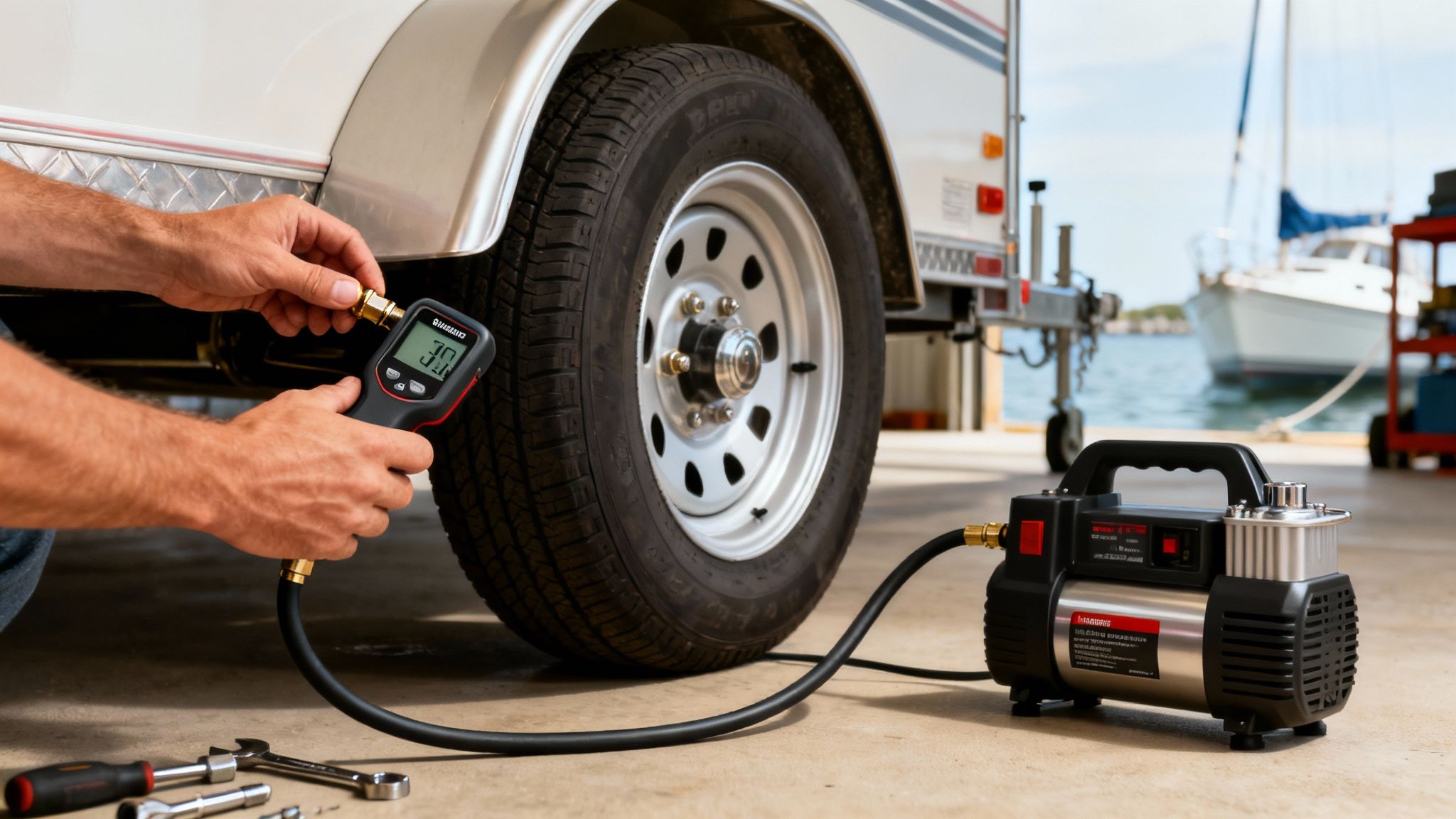
As you pull your trailer down the road, friction and flexing generate a surprising amount of heat. That heat makes the air inside the tires expand, causing the pressure reading to climb. If you check a "hot" tire, you'll get a misleading, artificially high number, which can trick you into dangerously underinflating it once everything cools down.
The Correct Inflation Procedure
Sticking to a consistent process takes all the guesswork out of the equation and ensures every tire is ready for the journey. All you'll need is a reliable pressure gauge and access to an air compressor. Honestly, a good portable compressor is one of the best tools you can keep with your trailering gear.

Tools to get the job done
Trailer Maintenance Kit
A complete trailer maintenance kit keeps a reliable pressure gauge and the essentials you need for this exact procedure in one place. Following a consistent inflation routine is far easier when everything is ready to go before each trip.
- Start Cold: First things first, make sure your trailer hasn't been towed recently.
- Remove the Valve Cap: Unscrew the cap from the tire's valve stem. Put it somewhere safe so it doesn't get lost in the grass or gravel.
- Get a Reading: Press your pressure gauge firmly onto the valve stem until that hissing sound stops completely. A quality digital gauge is your best bet for an accurate reading.
- Compare and Inflate: Check the reading against the required cold PSI stamped on your tire’s sidewall. Add air in short bursts, rechecking the pressure after each one until you hit that target number.
- Repeat for All Tires: Do this for every single tire on the trailer, and don't forget the spare! A flat spare is completely useless when you're stuck on the side of the road.
It's worth repeating: the PSI listed on the tire sidewall isn't just a suggestion. It is the required cold inflation pressure that tire needs to safely carry its maximum rated load. For ST tires, inflating to this exact number is always the safest practice.
Of course, proper maintenance involves more than just the tires. Having a quality boat trailer jack, for instance, can turn a frustrating tire change into a minor inconvenience. Being ready for whatever the road throws at you with the right tools and knowledge really does make all the difference.
Essential Maintenance Beyond Tire Pressure
Getting the tire pressure right using a chart is step one, but a solid maintenance routine is what really makes your tires last and keeps your trips trouble-free. Think of proper inflation as the foundation. The real secret to safety and longevity is building on that with regular inspections and a little proactive care. It’s the best way to catch problems before they start on the side of the highway.
Your first line of defense is a simple visual check. Before you hitch up, take a quick walk around the trailer. Look closely at the sidewalls and tread for any cracks, cuts, or weird bulges. These are big red flags that the tire's internal structure is compromised and could fail when you least expect it.
Proactive Tire and Wheel Care
Even if the tread looks brand new, trailer tires have a definite shelf life. You really should plan on replacing them every 3-5 years. The reason is simple: the sun's UV radiation is constantly breaking down the rubber, making it brittle and weak. This hidden damage, often called dry rot, is a primary culprit behind sudden blowouts on the road.

Keep your trailer road-ready
Boat Trailer Revamp Kit
Protecting trailer components from UV exposure and corrosion is a core part of extending the life of your rig beyond just the tires. This kit gives you the treatments needed to address the rubber, metal, and surfaces that take the most punishment on the road and at the ramp.
Beyond the rubber itself, don't forget the hardware holding it all together.
- Lug Nut Torque: Grab a torque wrench and make sure your lug nuts are tightened to the manufacturer's spec. If they're too loose, the wheel can wobble or even come right off. Too tight, and you risk stretching or breaking the wheel studs.
- Tire Rotation: Just like on your truck, understanding your tire rotation schedule helps the tread wear down evenly. This is especially important for extending tire life on tandem-axle trailers where the wear patterns can be quite different between the axles.
- Protect from the Sun: When the trailer is going to be sitting for a while, throw a set of boat trailer tire covers on. It's a cheap and easy step that dramatically slows down the aging process by blocking those damaging UV rays.
A complete pre-trip inspection goes beyond just the tires. For a full checklist that covers everything from couplers to lights, check out our comprehensive trailer maintenance checklist. This proactive approach helps you catch small issues before they become major problems on the road, giving you confidence and peace of mind.
Frequently Asked Questions About Trailer Tire Pressure
Even with a detailed boat trailer tire pressure chart in hand, some questions always seem to pop up. It's totally normal. Let's clear up some of the most common points of confusion and bust a few myths so you can tow with complete confidence.
One of the biggest head-scratchers for boat owners is where to find the real pressure number. Do you trust the number stamped on the tire itself, or should you go by the sticker on the trailer frame?
Tire Sidewall vs Trailer Placard
Here's the simple, non-negotiable rule: Always inflate your trailer tires to the maximum cold PSI molded into the tire's sidewall.
Your trailer came from the factory with a placard (usually a sticker on the frame) that lists the specs for the original tires. But here's the catch, if you or a previous owner ever swapped those tires for a set with a different load range, that placard is now useless. The tire itself is always the final authority.
Think of the "MAX PRESS" number on a Special Trailer (ST) tire differently than you would on your truck's tires. It’s not a ceiling you need to stay under; it is the required cold inflation pressure you must use for the tire to safely handle its maximum rated load.
Other Common Questions
Here are a few more quick answers to get you squared away.
-
Should I always inflate to the max PSI listed? Yes, absolutely. ST tires are built differently than car tires. They have incredibly stiff sidewalls that are engineered to run at their maximum listed cold PSI. This is what allows them to support the trailer's heavy weight, manage heat buildup, and fight off the dangerous sidewall flex that causes trailer sway.
-
How does ambient temperature affect my tire pressure? This is a big one. Tire pressure changes by about 1 PSI for every 10°F shift in outside air temperature. Imagine inflating your tires on a hot afternoon and then a cold front rolls through overnight. Your pressure could easily drop into a dangerously low range. This is precisely why you have to check your tires with a gauge before every single trip.
-
Why can’t I use the same pressure as my tow vehicle? Your truck or SUV runs on passenger (P-metric) or light truck (LT) tires. Those are designed with softer sidewalls to give you a comfortable ride, so they use lower pressures. Trailer (ST) tires have one job: carry immense vertical loads without failing. They need that high pressure to maintain their structural integrity and prevent catastrophic overheating.
At Better Boat, we know that confidence on the road starts with reliable equipment. From trailering gear to essential maintenance supplies, we offer everything you need for a worry-free trip to the water. Explore our full range of high-quality boating accessories at https://www.betterboat.com.


