


Teak Wood Care Products: A Boat Owner's Guide
You step on your deck one weekend and notice the teak doesn't look like it did a month ago. The warm honey tone is fading. High-traffic spots look dry, the grain looks flatter, and a few dark areas are starting to stand out after rinse-downs.
That's the moment most boat owners start shopping for teak wood care products, but the actual decision starts earlier than the product shelf. You need to decide what outcome you want. Some owners want that freshly restored golden look and are willing to maintain it. Others would rather let teak age into a silver finish and keep the labor lighter.
Why Your Boat's Teak Deserves a Smart Care Plan
Teak earns the attention. Premium teak contains high natural oil content, an extremely dense grain, and silica, which help it repel moisture, reduce rot, and resist wear in marine exposure, which is why it has been used for centuries in boats and furniture according to this overview of teak's properties and care. That natural resilience is also why good teak care is usually about cleaning, restoring, and replenishing, not burying the wood under a heavy film.

If you own a boat with real teak, you're not maintaining trim. You're protecting a premium material that affects how the boat looks, how it feels underfoot, and how much work you'll need to do later. That's why it helps to understand the wood itself before you pick a cleaner or sealer. If you want a broader primer on the material, this guide to teak wood for boat use is a useful starting point.
What a smart plan actually does
A good teak plan answers three questions:
- What look do you want: Fresh golden teak or natural silver-gray.
- How much labor can you live with: Occasional washdowns or a repeatable restore-and-protect routine.
- Where does the boat live: Covered slip, trailer, saltwater mooring, or full sun.
Practical rule: Teak holds up well on its own, but appearance is a separate issue. Durability and color aren't the same battle.
The mistake that costs the most time
The worst approach is drifting between strategies. Owners let teak gray, then panic-clean it aggressively, then oil it unevenly, then stop maintaining it. That cycle creates blotchy color, raised grain, and more work than choosing a lane from the start.
Smart teak care isn't complicated. It's deliberate.
Decoding Your Teak Care Toolkit
Teak wood care products get lumped together too often. In practice, they do very different jobs. If you use the wrong one at the wrong time, you either waste effort or make the surface harder to maintain.
One market report valued the teak cleaner market at USD 0.5 billion in 2024 and projected it to reach USD 0.9 billion by 2034, with a 6.0% CAGR, while spray cleaners were projected as the fastest-growing sub-segment at 8% CAGR according to this teak cleaner market report. That growth makes sense. Owners are trying to preserve expensive teak on boats, furniture, and outdoor living spaces without damaging the grain.
The main categories that matter
Here's the short version. Cleaners remove contamination. Brighteners help reverse weathering. Oils and sealers influence how the wood looks and how often you'll need to revisit it. Tools matter because the wrong brush can do damage even if the chemistry is right.
| Product Type | Primary Purpose | When to Use | Expected Result |
|---|---|---|---|
| Cleaner | Remove dirt, salt, mildew, and surface grime | Routine maintenance or before any restoration step | Cleaner, more even teak |
| Brightener or restorer | Lift gray weathering and revive color | When teak has gone dull, gray, or stained | More natural golden tone |
| Oil | Deepen color and add a cosmetic finish | When you want a richer, warmer look and accept ongoing upkeep | Darker, freshly treated appearance |
| Sealer | Slow weathering and help preserve appearance | After teak is clean and fully dry | Better color retention and stain resistance |
| Application tools | Control how product is spread and scrubbed | Every stage | More even results, less grain damage |
What each one actually does on a boat
Cleaners
A teak cleaner is your first-line product. It removes deck grime, salt residue, embedded dirt, and mildew film. If the teak still has decent color but looks tired, a cleaner may be all you need.
Some owners jump straight to sanding. That's usually a sign the chemical step got skipped too early.
Brighteners and restorers
These are for neglected or heavily weathered teak. If the wood has already gone gray and uneven, a simple wash often won't bring back the original look. A restorer or brightener helps reset the surface so you can decide whether to leave it natural or protect it.
Oils
Teak oil has a loyal following because it gives fast visual gratification. The wood often looks richer right away. But oil also creates maintenance obligations, and on outdoor teak it's not always the lowest-hassle path. If you want a deeper look, understand that appearance and upkeep travel together. For a focused breakdown, this article on teak oil for boats covers where oil fits and where it doesn't.
Sealers
A sealer is often the more practical protection product for boat teak. It helps hold color longer and can make future maintenance easier when applied to properly cleaned, dry wood.
Don't expect repeated washing alone to preserve the look of teak. Washing removes dirt. It doesn't lock in color.
One practical setup
If your teak is dirty but not far gone, use a cleaner, a soft brush, fresh water, and patience. If it's gray, add a brightening step. If you want to preserve the restored look, finish with a sealer only after the wood dries fully.
Products for this exact setup
Teak Cleaner and
Whether the teak needs a full clean-brighten-seal cycle or just a cleaner and brightener refresh, these are the core products for the sequence described here. Pick the set for a complete routine or the cleaner and brightener alone if protection comes later.
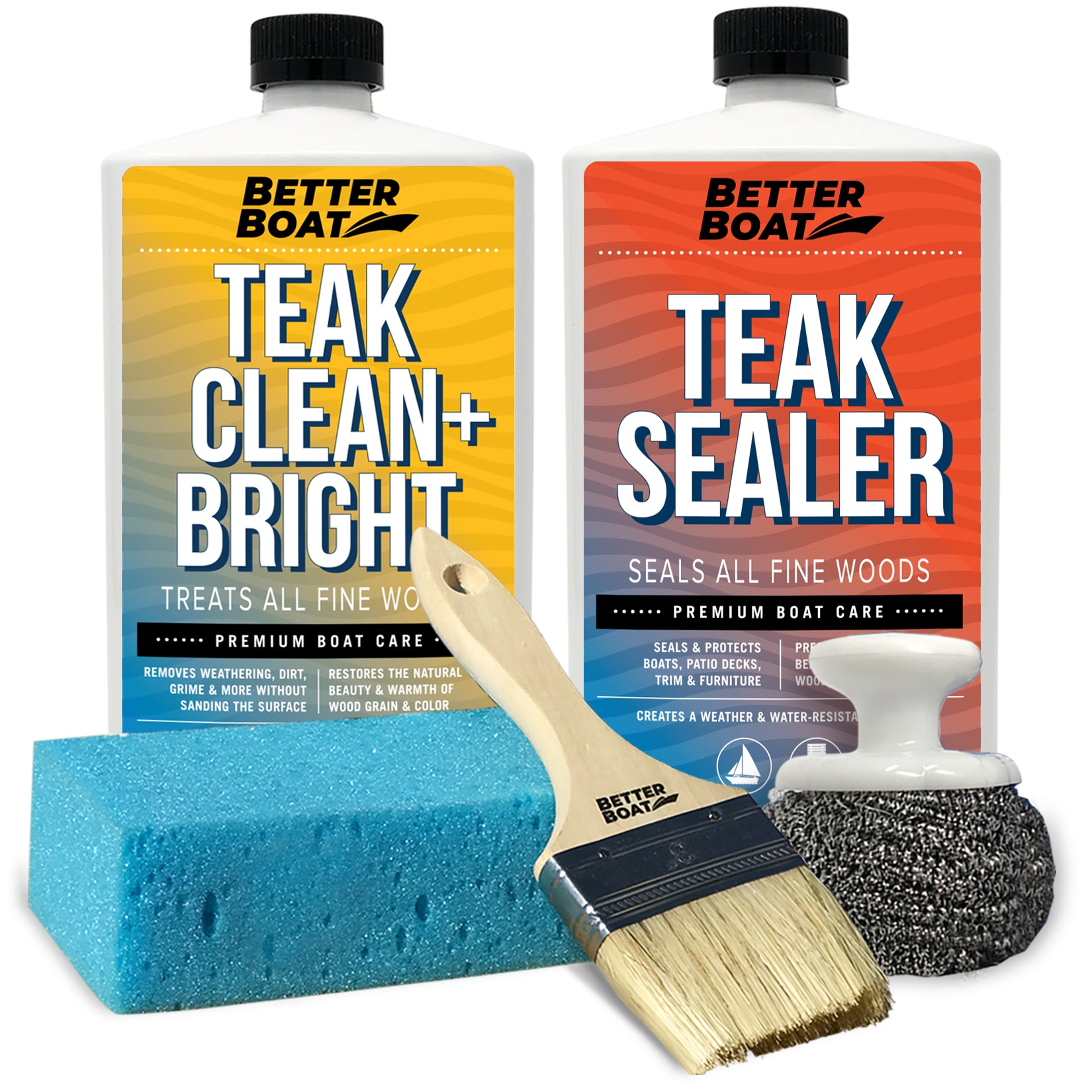

In the tools-and-solutions category, one option is Better Boat teak cleaner, paired with a soft deck brush and microfiber towels for surrounding cleanup. Used correctly, that kind of setup fits routine maintenance without forcing you into aggressive sanding.
Better Boat Teak Cleaner Brightening and Sealer Set
For owners who want one practical teak-care path, this kit bundles the cleaner, brightener, sealer, and applicators in one purchase.
Check availabilityThe Great Debate Golden Glow or Silver Patina
Most teak decisions come down to this. Do you want to preserve the warm golden deck that turns heads at the dock, or are you happy to let the teak weather naturally into silver-gray?
Neither answer is wrong. The wrong answer is choosing the golden look while resenting the work it takes to keep it.

If you want golden teak
Untreated teak naturally weathers to a silver-grey patina and only needs periodic cleaning, while keeping the golden “new” look requires a regimen of sanding, oils, and sealers, and some experts warn that unnecessary oiling can increase mildew growth on outdoor teak according to this teak care guidance.
That means golden teak is a lifestyle choice as much as a finish choice.
Golden teak usually makes sense when:
- Appearance matters every trip: You host guests, shoot content, or take pride in a bright deck.
- The boat is highly visible: Charter, rental, and yacht environments often demand a tidier cosmetic standard.
- You're willing to maintain a cycle: Clean, dry, protect, then repeat before the deck gets too far gone.
If that's your lane, this practical guide on how to protect teak wood helps frame what consistent upkeep looks like.
If you want silver teak
Silver teak is not neglected teak. It's teak that's allowed to weather naturally while still being kept clean. This approach reduces the pressure to restore color every time sun and salt take their toll.
Silver usually makes sense when:
- You want lower maintenance: Less intervention, fewer cosmetic touch-ups.
- The boat gets used hard: Fishing, cruising, kids, wet gear, and routine wear.
- You prefer honest aging: Some owners like the seasoned look better than the polished one.
The cleanest decision is the one you can sustain for a full season without changing your mind every month.
How I'd choose
For a private cruiser used on weekends, silver is often the saner choice unless you enjoy the ritual of teak work. For a boat that lives in front of clients, guests, or charter passengers, golden can be worth the labor because presentation matters every time someone steps aboard.
Your Step-by-Step Teak Application Guide
Restoring teak gets much easier when you treat it as a sequence instead of a single job. The order matters. Skip a phase or rush one, and the next product won't behave the way you expect.

Phase one cleaning
Start with fresh water to remove loose grit. Grit under a brush is what scuffs teak and surrounding surfaces. Then apply your cleaner evenly and work in manageable sections.
For this phase, a dedicated teak scrub set gives you better pressure control than a general-purpose brush.

The right brush for this step
Stainless Steel Scrub Set for Teak Decks with Handle
A purpose-built teak scrub set lets you work with the grain at controlled pressure, which is exactly what this phase calls for to lift grime without roughing up the surface.
Use a soft or medium-soft brush. Scrub gently with the grain, not across it, and don't bear down like you're stripping paint. The goal is to lift contamination without chewing up the softer wood fibers.
Cleaning checklist
- Rinse first to remove loose salt and debris.
- Apply cleaner evenly so one section doesn't dwell much longer than another.
- Brush gently and keep your passes consistent.
- Rinse thoroughly so residue doesn't stay in the grain.
A lot of prep logic is the same whether you're working on a boat deck or another wood surface. If you want a useful outside comparison on why prep matters before applying a finish, this article on Phoenix deck cleaning before staining explains the principle well.
Phase two drying and restoration
If teak has already gone gray, the proper cycle is to use a teak cleaner and brightener to restore color, let the wood dry completely, then apply a sealer, with occasional soap-and-water cleaning and seasonal recoating helping preserve appearance and stain resistance over time according to this teak cleaner and restoration guidance.
That drying step gets ignored all the time. Damp teak can make sealers apply unevenly, cure poorly, or trap a blotchy look into the surface. If you're chasing a clean finish, patience here matters more than one extra pass with a brush.
Here's a visual walkthrough of the process in action:
Phase three protection
Once the teak is fully dry, apply your protective product in a thin, even coat. Don't flood the surface. Heavy application usually creates uneven color and tacky spots rather than better protection.
Once the wood is dry, a teak sealer oil brushed on thin is what holds that restored color against sun, salt, and rain.

Seal the restored surface
Teak Sealer Oil
Once the wood is fully dry, a teak sealer oil applied in a thin, even coat holds the restored color and slows the weathering that makes restoration necessary again so soon.
A few habits help:
- Use clean applicators: Dirty pads drag contamination back onto the wood.
- Work small areas: It's easier to keep a wet edge and spot misses.
- Wipe drips early: Especially near fiberglass trim and fittings.
- Let it cure properly: Don't rush traffic back onto the deck.
If you prefer an oil-based look, this guide on how to apply teak oil gives a practical application reference.
Selecting Products for a Harsh Marine Environment
A patio routine won't always survive on a boat. Marine teak deals with salt, reflected heat, washdowns, sunscreen, fish residue, spilled drinks, and standing moisture around hardware. That changes how I judge teak wood care products.
What matters more on a boat
The first priority is controlled cleaning power. You need something strong enough to remove grime and weathering, but not so harsh that it punishes the wood or nearby materials. The second priority is compatibility with the rest of the boat. Deck teak doesn't live in isolation. It sits next to fiberglass, caulk lines, metal trim, upholstery, and drains that lead somewhere important.
For marine users, there is growing sensitivity to VOCs, runoff, and product safety, and some brands now market acid-free, environmentally friendly cleaners aimed at use around waterways and materials like fiberglass, as noted in this product information document on cleaner positioning and sustainability concerns.
A practical screening method
When I evaluate a teak product for boat use, I look at these points first:
- Surface compatibility: Will it stay where I put it, and what happens if it touches fiberglass or adjacent trim?
- Rinse behavior: Does it leave residue that keeps working after I'm done?
- Deck feel: A protected deck still needs to feel safe underfoot.
- Use environment: Open marina, trailer in a driveway, or enclosed shed all call for different caution levels.
Product type by condition
A simple way to match product to condition:
| Deck Condition | Product Direction | Watch For |
|---|---|---|
| Light dirt and salt film | Mild cleaner | Over-scrubbing |
| Gray, weathered teak | Cleaner plus restoration step | Uneven dwell time |
| Freshly restored teak you want to preserve | Sealer | Applying before wood is dry |
| Teak next to sensitive finishes and fittings | Safer chemistry and careful masking | Overspray and runoff |
On a boat, the right teak product isn't just about what it does to wood. It's also about what it might do to everything touching that wood.
Maintenance Schedules and Common Mistakes to Avoid
Teak lasts longer when you stop treating maintenance like a rescue operation. Small, consistent work beats major restoration every time.

A schedule that most owners can live with
You don't need a fussy calendar. You need a rhythm tied to how the boat is used.
- After regular outings: Rinse salt and loose grime with fresh water.
- When the teak starts looking tired: Wash with a teak-safe cleaner before dirt gets packed into the grain.
- At the start and end of your main season: Inspect color, mildew risk, and whether your chosen finish still makes sense.
- After full restoration: Keep up with light cleaning so you don't have to repeat heavy work too soon.
If your boat lives in full sun and gets used weekly, inspect more often. If it's covered and lightly used, your intervals can stretch. The key is catching changes early.
Mistakes that create extra work
Some teak cleaners use a low-pH system to remove grime without aggressive sanding, but they're not intended for varnished wood and should be kept away from soft metals like aluminum or brass because of corrosion risk, according to this product description for low-pH teak cleaning chemistry. That's the broader lesson. Wrong product choice can damage more than the teak.
The most common mistakes:
- Using household cleaners: They may leave residues, discolor the wood, or react badly with nearby materials.
- Scrubbing too aggressively: You don't win by tearing up the grain.
- Applying sealer to damp teak: This is one of the fastest ways to get a disappointing finish.
- Using products on the wrong surface: Varnished teak is a different job than bare teak.
- Ignoring surrounding metals: Splash and runoff matter.
What doesn't work well
High-pressure washing is tempting because it's fast. It's also a good way to rough up the surface and make the deck harder to keep clean later. Heavy sanding has the same problem. Both remove material you can't put back.
Shop-floor reminder: If a teak job feels fast and aggressive, it's usually borrowing time from the deck's future.
Frequently Asked Questions About Teak Care
Can I use household cleaners on boat teak
I wouldn't. Boat teak sits among caulk, metal fittings, fiberglass, and drainage paths, so generic household chemistry is a gamble. Use products intended for teak and for marine surroundings when possible.
What's the best way to deal with black mildew spots
Start with a teak cleaner, a soft brush, and patience. If the deck is also weathered gray, treat it as a restoration job instead of spot-cleaning one patch and creating a color mismatch. Clean first, evaluate second, then decide whether the whole section needs brightening and protection.
What's the difference between teak oil and teak sealer
A teak oil is mostly about appearance. It tends to enrich tone and give that freshly treated look. A sealer is usually the more practical choice when your goal is to slow weathering and hold a consistent appearance with a cleaner maintenance cycle.
The distinction is similar to other wood surfaces where appearance products and protection products aren't always the same thing. This Buff & Coat hardwood floor guide is about floors, not boats, but it's a useful reminder that prep, dryness, and the right finish choice matter on any real wood surface.
Do I need to fight silvering at all
No. If you like the silver look, periodic cleaning may be enough. The right answer depends on whether you want low maintenance or a more polished, freshly restored appearance.
When should I restore instead of just wash
Restore when washing no longer gives you an even result, when gray weathering has taken over, or when stains and discoloration are baked into the surface. If a simple clean leaves the deck looking acceptable, keep it simple.
If your teak needs a reset, or you want to build a cleaner maintenance routine before the deck gets away from you, take a look at Better Boat for boat care supplies and practical maintenance guidance that fits real-world DIY use.


