 Skip to content


Your Complete Guide to a Boat Wash Down Pump
Every boater knows the feeling: you get back to the dock after a great day, only to face a deck caked in salt spray, fish scales, and mud. A wash down pump is your secret weapon for this exact scenario. Think of it as a built-in power washer, designed to blast away all that grime and keep your boat looking sharp.
Your Onboard Power Washer for a Spotless Boat
It’s really the difference between a regular garden hose and a pressure washer. One just rinses things off, but the other delivers a powerful, deep clean. A good wash down pump brings that same cleaning power right onto your vessel, turning what used to be a long, tedious chore into a quick, satisfying task.
But this essential piece of gear does more than just save you from hours of scrubbing. It's actively protecting your investment. By quickly blasting away corrosive salt, you’re helping to preserve your boat's gelcoat, metal fittings, and hardware, which goes a long way in preventing long-term damage and expensive repairs down the road.
More Than Just a Clean Deck
A clean boat is also a safer boat. A quick spray-down with a high-pressure system gets rid of slippery fish guts, algae, and mud from the deck, which drastically cuts down the risk of slips and falls. For anglers, families, and anyone who wants a secure footing on the water, it’s a must-have.
The benefits are pretty clear:
- Effortless Cleaning: Blast away stubborn grime in minutes, not hours.
- Asset Protection: Prevent salt corrosion and protect your boat’s finish.
- Improved Safety: Keep decks clean and slip-free for everyone aboard.
This is exactly why these systems are becoming standard equipment for so many modern boaters. To really get why they work so well, it helps to understand the basics of how to increase water pressure in any setup. The pump is the heart of the system, but it's just one piece of the puzzle.
A dedicated washdown system transforms boat maintenance from a dreaded task into a simple, routine part of your post-trip cleanup, ensuring your vessel is always ready for the next adventure.
You can see how popular these have become just by looking at the market. The global Deck Washdown Pumps Market was recently valued at USD 0.75 billion, thanks to the boom in recreational boating. It’s projected to more than double to USD 1.50 billion by 2034, which just shows how indispensable this tool has become for boat owners everywhere.
To get the most out of your pump, pairing it with the right gear is key. A high-quality, kink-resistant hose, a durable spray nozzle, and an effective boat soap concentrate all work together to give you a professional-grade cleaning system. For more tips on getting that perfect shine, check out our guide on the best way to clean your boat.
Getting a Handle on Wash Down Pump Technology
You don’t need an engineering degree to figure out which wash down pump is right for you. At the end of the day, they all do the same basic job: grab water from either the sea or an onboard tank and shoot it out at high pressure.
That simple function is what lets you blast away grime, fish guts, and dried-on salt spray. But how they get it done—the technology behind the spray—is where things get interesting.
The two main players you'll see are diaphragm pumps and centrifugal pumps. Each one works differently, which makes them suited for different boats and different jobs. Getting to know the difference is the first step to making a smart buy you won’t regret later.
Diaphragm Pumps: The Reliable Workhorse
Think of a diaphragm pump as the tough, beating heart of your boat’s cleaning system. It uses a flexible rubber diaphragm that pulses back and forth. When it pulls back, it creates a vacuum that sucks water in. When it pushes forward, it shoves that water out under serious pressure.
This design makes it a positive displacement pump, which is just a fancy way of saying it moves a set amount of water with every single pulse. This makes them incredibly reliable and fantastic at generating the high pressure (PSI) you need to knock off stubborn messes. They're also self-priming, meaning they can pull water up even if there’s a bit of air in the intake line—a huge plus on a rocking boat.
For most of us with boats under 50 feet, a diaphragm wash down pump is the undisputed champion. They hit that sweet spot of pressure, flow, and durability. It’s a bit like how a submersible bilge pump is perfectly designed for its one job—moving lots of water out of the bilge—a diaphragm pump is purpose-built for high-pressure cleaning.
Centrifugal Pumps: The High-Volume Mover
Now, picture a fan spinning like crazy inside a housing. That’s pretty much how a centrifugal pump works. An impeller spins at high speed, flinging water outward with centrifugal force to create a smooth, continuous flow.
Unlike their diaphragm cousins, centrifugal pumps aren't positive displacement. They’re all about moving massive volumes of water (high GPM) but usually at lower pressures. This makes them the right tool for huge vessels, commercial fishing boats, or any time you need to move a ton of water fast, like filling a giant livewell. The catch? They generally aren’t self-priming and need to be mounted below the waterline to get going.
The takeaway is simple: Diaphragm pumps are pressure kings, perfect for blasting grime. Centrifugal pumps are volume champs, built for moving lots of water in a hurry.
Powering Your Pump: 12V DC vs. 120V AC
The last piece of the puzzle is how you’ll power the thing. Your choice here is almost always dictated by your boat's electrical system.
- 12V DC Pumps: This is the standard for virtually every recreational boat on the water. These pumps wire right into your boat's 12-volt battery system. That means you can use them whether you're anchored in a quiet cove or miles offshore. Their power draw, measured in amps, is something to keep an eye on to make sure your electrical system can handle it.
- 120V AC Pumps: You’ll rarely see these on a typical boat. They're reserved for massive yachts or dockside cleaning stations that can plug into shore power. They deliver a ton of power but you lose all the convenience and portability of a 12V system.
For the vast majority of boaters, a 12V DC diaphragm pump is the perfect mix of power, reliability, and convenience. If you want to get even more sophisticated, some modern pumps use variable speed drive technology to fine-tune performance and save energy. Once you understand these core differences, you can look at any pump on the shelf and know exactly what it's built to do.
How to Choose the Right Wash Down Pump for Your Boat
Trying to pick a wash down pump can feel like staring at a foreign language. You see specs for GPM, PSI, and amps, but what does any of that actually mean when you’re just trying to blast fish guts off the deck? Nailing these details is the secret to turning a dreaded cleanup into a quick, almost satisfying chore.
Let's break it down. Think of your pump as the muscle of your cleaning system. Gallons Per Minute (GPM) is all about volume—how much water it can move. A higher GPM means you can rinse down a big area fast. Pounds per Square Inch (PSI), on the other hand, is the force that blasts away stubborn messes like dried-on mud or caked-on salt.
You absolutely need a balance of both. A pump with high GPM but low PSI is like a gentle flood; it’ll rinse things, but it won't scour anything. The flip side, high PSI with low GPM, is like a super-powered squirt gun—great for a tiny spot, but you'd be there all day trying to clean a whole deck. Finding that sweet spot for your boat is the name of the game.
Matching Pump Specs to Your Boat
A little 16-foot skiff used for light fishing has totally different cleanup needs than a 40-foot sportfisher that comes home caked in salt and bait after every trip. To keep it simple, let’s talk about matching the pump’s power to the size of your vessel. Bigger decks need a higher flow rate (GPM) to cover ground quickly, while boats that see heavy action need more pressure (PSI) to cut through the grime.
This chart can help point you in the right direction when you're weighing whether you need more pressure for tough messes or more volume for fast rinsing.
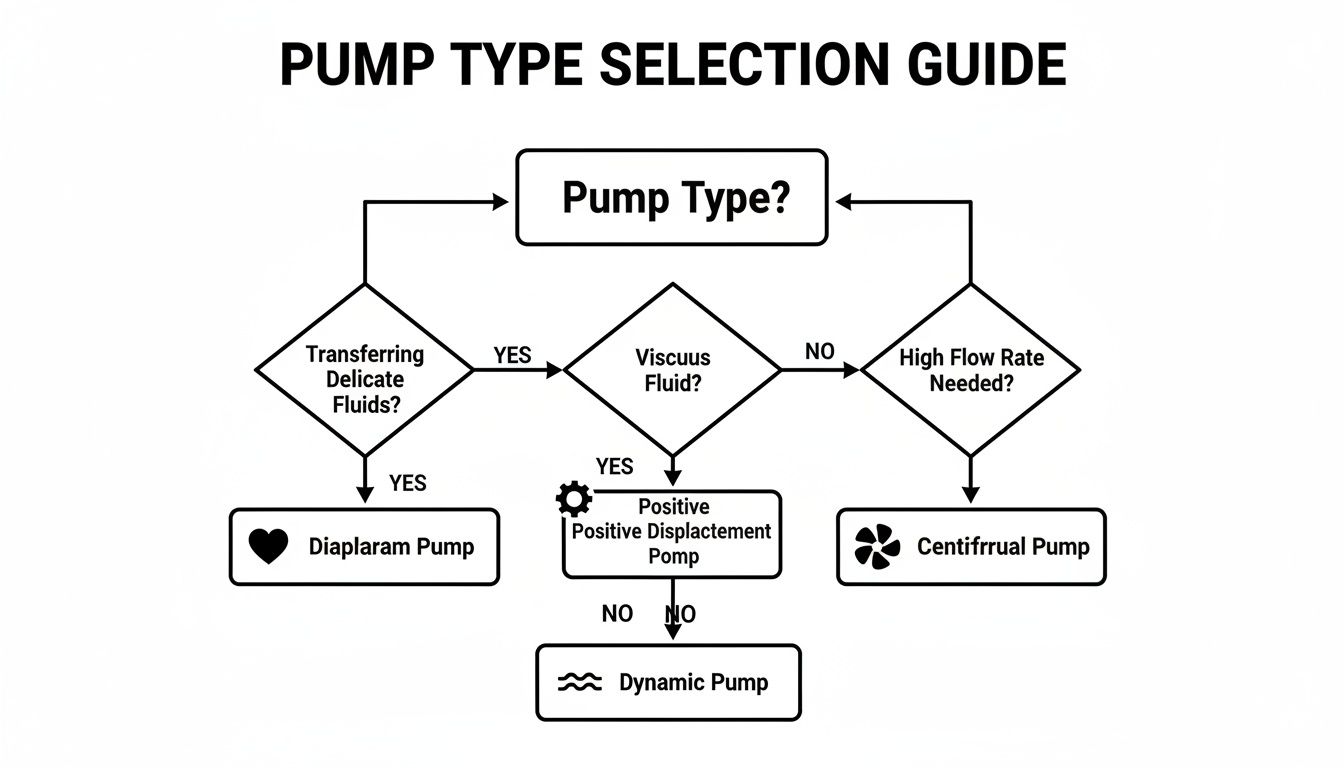
As you can see, a diaphragm pump is your best bet for high-pressure jobs, like blasting a dirty anchor clean. But if you're just moving a lot of water, like for a livewell, a centrifugal pump is the way to go.
There's one more number you can't ignore: the amperage draw. This tells you how much juice the pump is going to pull from your boat's 12V DC system. A beefier pump will have a higher amp draw, so you have to be sure your boat’s battery and electrical system can handle the load without leaving you stranded.
To help you get started, we've put together a quick guide to match pump specs with common boat sizes.
Matching Your Pump to Your Boat Size
Use this quick-reference table to find the ideal GPM and PSI for your vessel, from small fishing boats to large cruisers.
| Boat Size (Feet) | Primary Use | Recommended GPM | Recommended PSI |
|---|---|---|---|
| Up to 20 | Light inshore fishing, freshwater use | 3.0 - 4.0 GPM | 50 - 60 PSI |
| 20 - 30 | Coastal fishing, frequent saltwater use | 4.0 - 5.0 GPM | 60 - 70 PSI |
| 30 - 40 | Offshore sportfishing, heavy-duty cleaning | 5.0 - 6.0 GPM | 70+ PSI |
| 40+ | Large cruisers, yachts, extensive deck space | 6.0+ GPM | 70+ PSI |
Remember, this is a starting point. If you're consistently battling tough messes, it never hurts to lean toward a higher PSI.
Built to Survive the Salt
Out on the water, especially in saltwater, corrosion is always trying to eat your equipment for lunch. A cheap pump made from subpar materials won’t even last a season. This is why you must insist on marine-grade materials. It's completely non-negotiable.
Here’s what to look for:
- Corrosion-Resistant Housings: Materials like Santoprene or other specially-coated metals are designed to stand up to the harsh marine environment.
- Sealed Motors and Switches: Ignition-protected and sealed components keep water out. Water intrusion is the number one killer of marine electronics.
- Stainless Steel Hardware: Every single screw, nut, and bolt should be marine-grade stainless steel to fight off rust.
Investing in a pump with high-quality, marine-grade components isn't just about making it last longer; it's about reliability. The last thing you want is for your pump to die right when you're trying to clean a dangerously slippery deck.
Choosing Your Water Source
The final big decision is where your pump is going to get its water from. You've got two main choices, and this will really define how you can use your wash down system.
1. Raw Water (Seacock/Through-Hull) This setup pulls water directly from whatever you're floating on—be it a lake or the ocean—through a through-hull fitting. The huge advantage here is an endless supply of water. You can spray to your heart's content without ever worrying about an empty tank. It's the perfect setup for heavy-duty cleanups after a big day of fishing.
2. Onboard Freshwater Tank This option hooks the pump up to your boat’s existing freshwater tank. Your supply is obviously limited, but this is the gold standard for a final, spot-free rinse. Using fresh water stops those ugly salt crystal spots from forming on your gelcoat and metalwork as it dries, which helps prevent long-term corrosion.
Many seasoned boaters end up with a hybrid approach. They’ll use a powerful raw water wash down pump to get the heavy lifting done and then switch to a smaller freshwater system for the final rinse-off. By thinking through your boat size, your cleaning habits, and where you do your boating, you can put together a system that will work flawlessly for years to come.
Step-by-Step Wash Down Pump Installation Guide
Putting in a new washdown pump is one of those satisfying DIY projects that gives you total control over your boat’s cleaning power. It might look intimidating, but when you break it down into three simple stages—mounting, plumbing, and wiring—it becomes a very doable job. With the right tools and a little patience, you can have a pro-level system ready to go in a single afternoon.
Before you even think about drilling, your most important decision is where to put the pump. You're hunting for a spot that’s high, dry, and easy to get to for future maintenance. Sticking it in a low bilge area where water pools is just asking for trouble.
A dedicated locker, a bulkhead in the engine room, or under a console are all great options. Just make sure you can easily reach the inline strainer for cleaning, because you’ll be doing that regularly.
Mounting the Pump Securely
Once you’ve scouted the perfect location, it's time to get the pump bolted down. Most pumps come with rubber feet or grommets that are designed to soak up vibration and keep things quiet. Don't skip them—they make a huge difference in how loud your system is.
Follow these steps for a rock-solid mount:
- Position the Pump: Set the pump in its spot and mark the mounting holes with a pencil. Double-check that you have enough room all around it to connect hoses and wires without a fight.
- Drill Pilot Holes: Use a drill bit that’s a bit smaller than your mounting screws. This is key to preventing ugly cracks in your gelcoat or fiberglass.
- Seal and Secure: Squeeze a bead of quality marine-grade sealant on the back of the pump's mounting feet and around your pilot holes to create a waterproof seal. Then, use stainless steel screws to fasten the pump firmly in place.
A classic mistake is cranking down too hard on the mounting screws. This can crack the pump housing or squash the rubber feet flat. You want the pump to be snug and secure, not crushed.
Connecting the Plumbing
With the pump mounted, you can get to the plumbing. This is where you connect the water source to the pump's inlet and run another hose from the outlet to your spigot on deck. The name of the game here is creating airtight, leak-free connections.
Your inlet hose will connect to your water source, which is usually a seacock attached to a through-hull fitting. For added security, you should use a premium marine sealant and adhesive on any thru-hull fittings. Always, always install an inline strainer between the seacock and the pump. This little piece is non-negotiable; it’s what catches the sand, seaweed, and gunk that will chew up your pump's diaphragm.
For any connections below the waterline, use double stainless steel hose clamps for maximum peace of mind. Make sure your hoses are routed smoothly, without any sharp kinks that could choke off water flow and put a strain on the pump.

Wiring for Safe Operation
The last leg of the race is wiring the pump into your boat’s 12V DC electrical system. Safety is everything here, so if you're not 100% comfortable with electrical work, it's always smart to call in a professional.
Here's the basic wiring path:
- Battery to Switch: Run a positive wire from the battery (or a bus bar) to a new, dedicated switch at your helm.
- Switch to Pump: From the other side of that switch, run the positive wire down to the pump's positive lead.
- Ground Connection: Connect the pump's negative (ground) wire directly to a negative bus bar.
This part is critical: you must install an appropriately sized fuse or circuit breaker on the positive wire, as close to the battery as you can get it. The fuse rating needs to match what the manufacturer recommends for your pump. Using the wrong size is a serious fire hazard. Finish every connection with marine-grade heat shrink connectors to seal out moisture and stop corrosion in its tracks. This will keep your system reliable for years of service.
Essential Wash Down Accessories and Maintenance
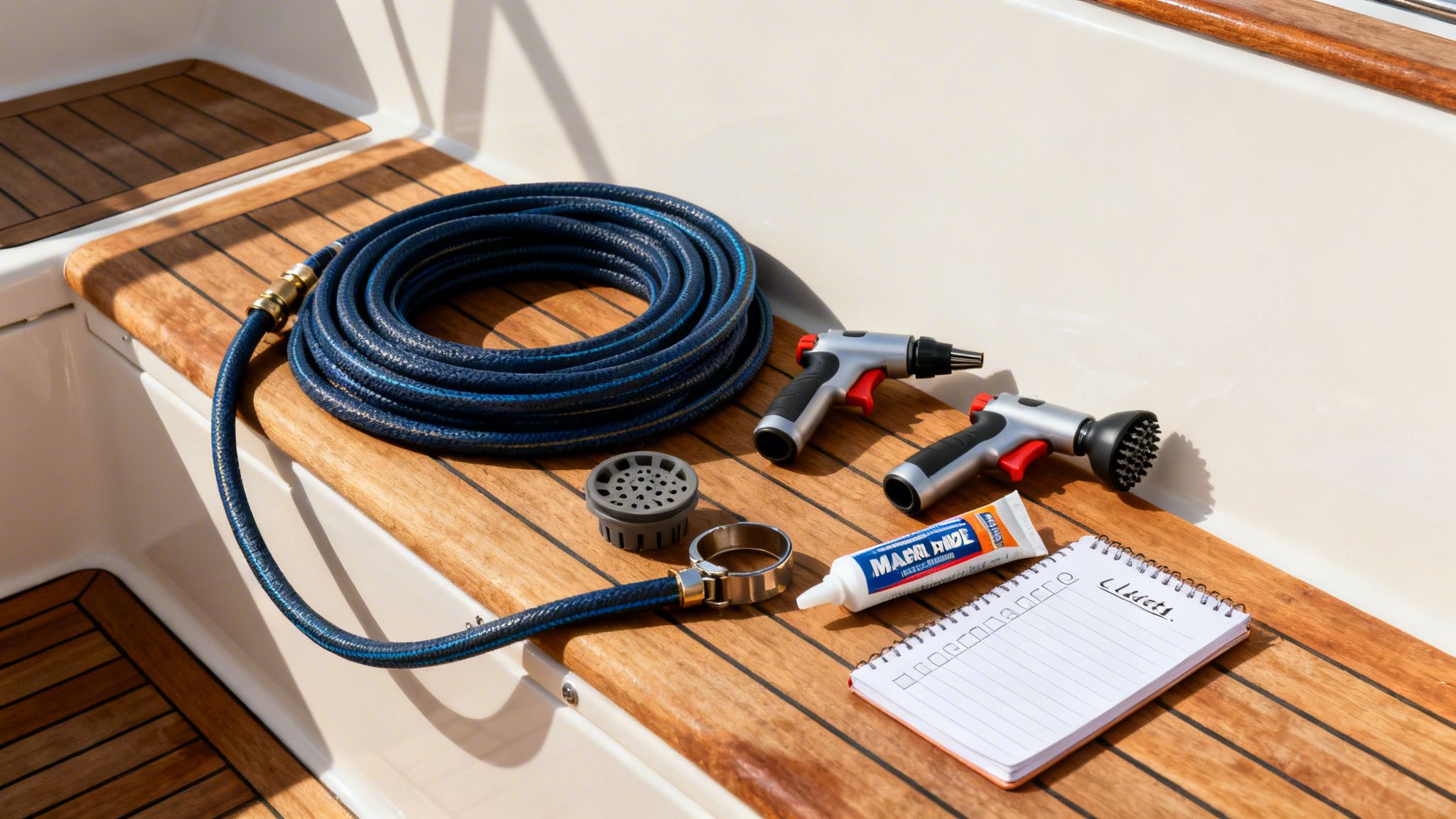
A powerful washdown pump is the heart of your cleaning system, but it can’t do the job alone. You need the right accessories to turn that raw power into focused, efficient cleaning. It's like having a high-performance engine but using cheap fuel and never changing the oil—you're just not getting what you paid for.
Simple, routine maintenance is just as crucial. It's what ensures your pump delivers peak performance season after season. The good news is, it's not complicated stuff. A few minutes of prevention saves hours of headaches down the road.
Choosing the Right Hose and Nozzle
The hose and nozzle are where the rubber meets the road—or in this case, where the water meets the grime. They directly impact how well you can clean and how easy the whole process is.
When it comes to hoses, you’re basically choosing between easy storage and rugged durability. Coiled hoses are fantastic for keeping your deck clear and tidy because they retract on their own. On the other hand, heavy-duty rubber hoses offer superior resistance to kinks, UV rays, and abrasion, making them the workhorse choice for tough, frequent use. You can dive deeper into your options with our guide to boat washdown hoses.
The real game-changer, though, is the nozzle. A quality adjustable nozzle lets you switch from a wide, gentle fan for rinsing the whole cockpit to a concentrated jet stream for blasting away stubborn bird droppings. This versatility means you can tackle any cleaning task without swapping out equipment.
A great nozzle doesn't just change the spray pattern; it focuses the water's energy, effectively amplifying the cleaning power of your wash down pump. It's the single most impactful accessory upgrade you can make.
The broader pumps market, which includes the washdown pump models we use on our boats, is seeing some serious growth. It was valued at USD 61.32 billion and is expected to hit USD 79.01 billion by 2029. For us boat owners, that means access to more advanced and efficient pumps, making it even more important to pair them with accessories that can keep up.
Your Simple Maintenance Checklist
Consistent maintenance is the key to a long life for your pump. A few simple habits can prevent most common failures and keep your system running like new. This isn't complex mechanical work; it's a quick checklist you can run through in minutes.
- Clean the Strainer: This is your number one job. The inline sea strainer is your pump's first line of defense against seaweed, sand, and other junk. Check and clean it regularly—more often if you boat in weedy or silty water.
- Inspect All Connections: Take a look at the electrical terminals for any signs of corrosion and give the hose clamps a wiggle to make sure they're tight. Saltwater is relentless, and a loose connection or corroded wire can shut your whole system down.
- Test for Leaks: Briefly run the pump and check all the plumbing connections for drips. A tiny air leak on the intake side is a classic culprit for a pump that's lost its mojo.
Winterizing Your Wash Down Pump
If you live anywhere that sees freezing temperatures, winterizing your washdown pump is absolutely non-negotiable. Water trapped inside can freeze, expand, and crack the pump housing, leaving you with a costly replacement project come springtime.
Thankfully, the process is straightforward:
- First things first, close the raw water seacock that feeds the pump.
- Disconnect the inlet and outlet hoses to let the lines drain completely.
- Fill the pump's sea strainer with a non-toxic RV antifreeze.
- Reconnect everything and turn the pump on just long enough for that pink antifreeze to run through the system and out the nozzle. This pushes all the water out and protects the internal parts from freezing.
Troubleshooting Common Wash Down Pump Problems
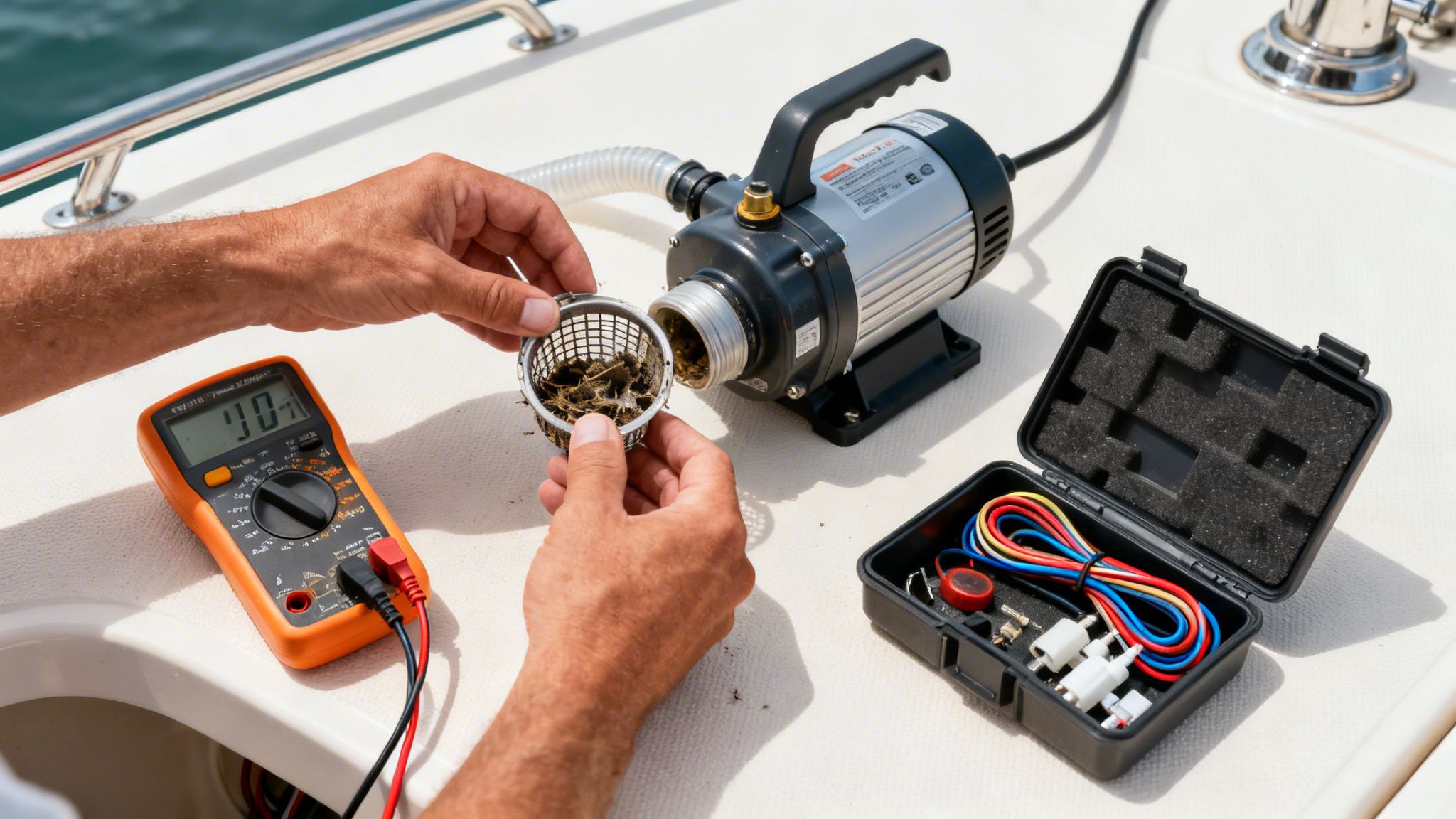
Even the most dependable washdown pump can hit a snag. It's always frustrating when you're ready to hose down the deck and get nothing but silence, but don't rush to call a marine mechanic just yet. More often than not, the fix is something you can handle yourself in just a few minutes.
Most pump headaches fall into a few familiar buckets: no power, no water pressure, or the pump is acting erratically. Figure out which symptom you're dealing with, and you’re already halfway to a solution. You don't need a full toolbox for this—just a little patience and a step-by-step approach.
Pump Will Not Turn On
If you flip the switch and the pump is dead silent, you’ve almost certainly got an electrical issue. Before you start pulling wires apart, always check the simplest things first. It's amazing how often it's an easy fix.
- Check the Fuse or Breaker: This is the #1 culprit. A blown fuse or a tripped breaker will cut power instantly. Just make sure you replace any fuse with another of the exact same amperage.
- Inspect Electrical Connections: Saltwater and vibration are tough on connections. Check for loose or corroded wires at the pump itself, the switch on your console, and the battery terminals. A wobbly ground wire is a classic troublemaker.
- Test the Switch: Switches can and do fail. If the power source and connections are solid, the switch itself might be the problem. A quick test with a multimeter can tell you if it's working correctly.
Pump Runs But No Water Comes Out
Hearing the motor whirring away but seeing no water spray is a clear sign of a water supply problem. Your pump is working, but it’s starved for water and just sucking air.
The number one cause for a pump running dry is a clogged inline strainer. This little filter is your pump's bodyguard, catching gunk before it causes damage. It needs to be cleaned regularly to keep water flowing freely.
Another common reason is an air leak on the intake side. A loose hose clamp or even a tiny crack in the intake hose can let the pump suck in air instead of water, making it impossible to prime and build pressure.
Low Pressure or Rapid Cycling
Is your pump sputtering, kicking on and off every second, or just giving you a weak dribble? That's a classic pressure problem. It’s usually caused by a blockage or a leak on the outlet side of the pump—after the water has already gone through.
- Check the Nozzle: A bit of sand or debris can easily clog up the spray nozzle. This creates back-pressure that makes the pump's pressure switch go haywire, causing it to cycle on and off rapidly.
- Look for Kinks: A kinked hose acts just like a clogged nozzle, choking off the water flow and confusing the pressure switch. Straighten it out and see if that solves it.
- Inspect for Leaks: Any leak in the outlet hose or at its fittings will bleed off pressure. The pump will keep trying to reach its shut-off pressure but never can, so it just runs and runs or cycles constantly.
Every boater runs into these issues eventually, but with a little know-how, you can usually get your washdown system back in action without losing a day on the water.
This quick reference table should help you pinpoint the issue and find a fix fast. Think of it as your first line of defense before breaking out the serious tools or calling for backup.
Your Quick Troubleshooting Cheat Sheet
| Symptom | Potential Cause | How to Fix It |
|---|---|---|
| Pump makes no sound | No electrical power | Check and replace the fuse/breaker. Tighten all wire connections. Test the switch. |
| Pump hums but doesn't spray | Water supply issue | Clean the inline strainer. Check intake hose for air leaks or cracks. Ensure seacock is open. |
| Weak or sputtering spray | Blockage in the outlet | Clean the spray nozzle. Unkink the hose. Check for leaks in the outlet hose/fittings. |
| Pump cycles on and off rapidly | Pressure switch issue | This is usually caused by a nozzle clog or a hose kink. Clear the blockage. |
| Pump runs continuously | Outlet-side leak or bad pressure switch | Inspect the outlet hose and all fittings for leaks. If no leaks, the pressure switch may be faulty. |
Remember, a methodical approach is your best friend here. Start with the easiest potential fix and work your way up. Most of the time, you'll solve the problem in the first couple of steps and get right back to keeping your boat spotless.
Your Top Wash Down Pump Questions Answered
When you're outfitting your boat, a few questions always seem to pop up about wash down systems. Let's clear the air and tackle some of the most common ones I hear from fellow boaters.
Can I Use My Wash Down Pump for Other Tasks on the Boat?
It’s tempting to think one pump can do it all, but I’d strongly advise against using your wash down pump for a livewell or, especially, a bilge. Here’s why: a wash down pump is all about high pressure—perfect for blasting away fish guts and mud. A livewell needs a steady, high-volume flow of water to keep your bait alive, which is a completely different job.
More importantly, your bilge pump is a critical piece of safety equipment. It’s designed and rated specifically for emergency water removal. Never substitute a wash down pump for a dedicated bilge pump; it’s just not built for that life-saving role.
Should I Get a Saltwater or Freshwater Pump?
This really boils down to what you’ll be using it for most often. Each has its place on board.
- Saltwater (Raw Water) Pump: This is your workhorse. It pulls directly from the water you’re on, giving you a limitless supply for the big, messy jobs. Think rinsing the anchor chain, hosing down a muddy deck, or cleaning up after a successful fishing trip.
- Freshwater Pump: This system taps into your boat’s onboard freshwater tank. Since that supply is limited, you'll want to use it more strategically. It’s perfect for a final, spot-free rinse on windows, brightwork, and gelcoat to prevent those pesky salt stains from setting in.
Honestly, the ideal setup that many seasoned boaters (myself included) land on is having both. A powerful raw water pump handles the heavy-duty cleaning, and a smaller freshwater one gives you that perfect, polished finish.
Having both systems offers the ultimate flexibility. You can conserve your precious fresh water while still having endless cleaning power on tap right when you need it most.
How Do I Winterize My Wash Down Pump?
If you boat in a climate where it freezes, winterizing your wash down system is non-negotiable. One hard freeze can crack the pump housing or fittings, leading to a nasty surprise in the spring.
To prevent any damage, you need to get all the water out. Start by disconnecting the inlet and outlet hoses. Then, run the pump dry for just a few seconds to force out any water trapped inside. For total peace of mind, pour a bit of non-toxic marine antifreeze into the intake and run the pump until you see the pink stuff coming out of the nozzle. That’s how you know the entire system is protected.
For all your boating needs, from essential maintenance supplies to premium cleaning gear, Better Boat has you covered. Explore our complete collection of products designed to protect your investment and make boat care simple. Discover the Better Boat difference at https://www.betterboat.com.