


Boat Bilge Cleaning and Degreasing
At a glance
Clean a boat bilge by clearing loose debris, adding bilge cleaner and water according to the label, using boat motion to loosen grime, and collecting the dirty water for disposal under local rules.
- Remove loose debris before cleaning
- Let water and boat motion loosen grime
- Collect dirty bilge water for proper disposal
Quick answer: how to clean a boat bilge

Clean a boat bilge by removing loose debris first, adding a bilge-safe degreaser at the correct dilution, letting water and boat motion loosen oil and grime, then pumping the dirty water into an approved container or disposal area. Never discharge oily bilge water into a lake, marina, or storm drain.
Fast bilge-cleaning setup
| Step | What matters | Better Boat path |
|---|---|---|
| Pre-clean | Pull out leaves, zip ties, rags, and debris that could clog the pump. | Use gloves and a small trash bag before adding cleaner. |
| Degrease | Use a bilge-specific cleaner that emulsifies oil and grease. | Bilge Cleaner Concentrate |
| Agitate safely | Let water movement work, or scrub only the worst spots you can reach safely. | Avoid spraying electrical connections directly. |
| Dispose correctly | Pump out dirty water only where local rules allow. | Use a bucket or approved pump-out option when oil is present. |
Pro tip. Remove leaves, rags, zip ties, and other loose debris first so they do not clog the bilge pump.
Video Transcription
How's it going, everyone? It's Jeremy, talking about how to clean out your boat's bilge. I'm specifically going to be using the Better Boat Bilge Cleaner. I've worked with this company before. I've used their deck cleaner, their sea cleaner and conditioner, the mold and mildew cleaner, and the general purpose boat soap. But this cleaner specifically, it cleans out the bilge. It says it emulsifies and removes oil and grease from the bilge.
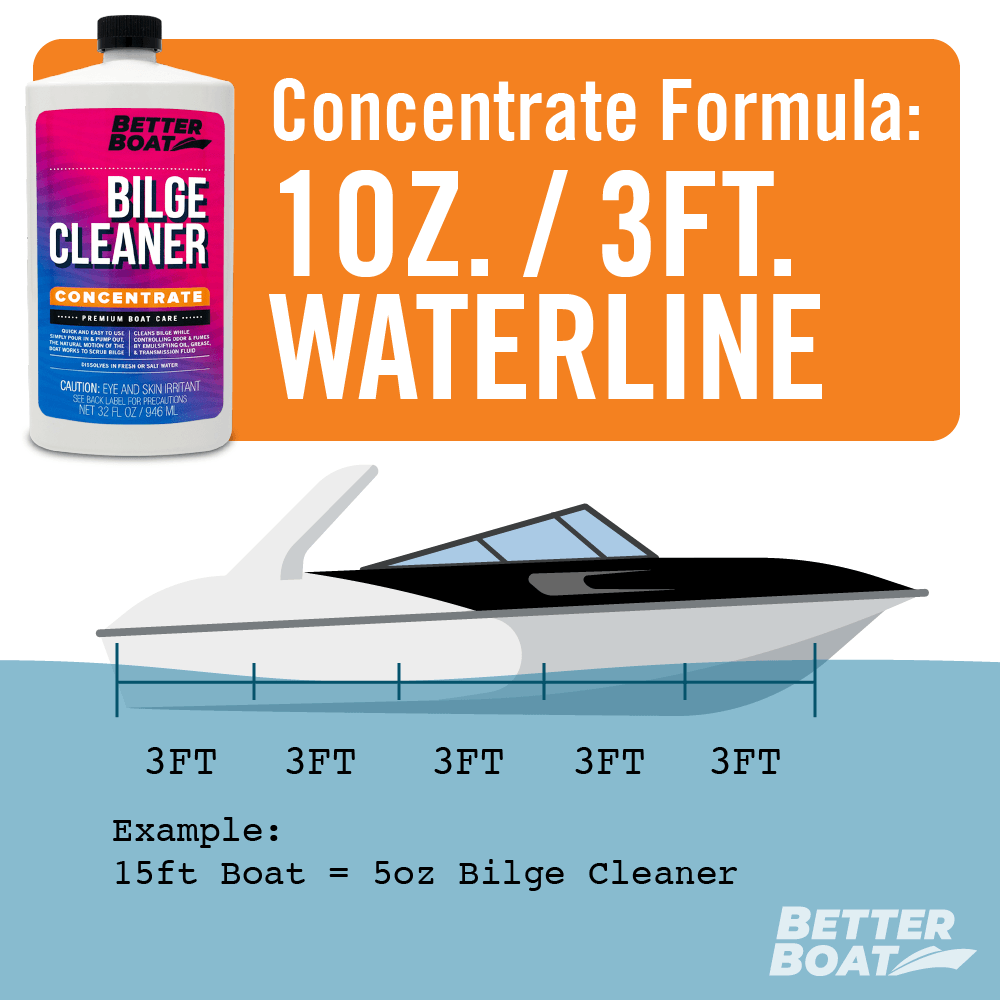
And how are you supposed to use it? You're supposed to add one cap full, or one ounce to every three feet of water line length in the bilge. So, this boats 23 feet, 22 feet, and then 23 and a half foot from the swim deck. So, roughly 22 feet. So, if you do 22 divided by 3, well, I have one cap full like so seven cap fulls. After adding the seven or so cap fulls to the bilge, you're supposed to fill it with water, completely full, and then you run the boat in the water for about an hour, or so.
The natural motion of the boat running through the water is supposed to remove all the grease. And then when you get to a safe area, you can pump it out. Unfortunately, the lake we go to you're really not... You have to drain your bilge before and after you exit the lake. So, we can't really use this product while we're in the water, because I don't want to have a source of water while in the lake.
I'm going to put in a spray bottle, like a garden sprayer kind of thing.
And I'm going to spray down the bilge, fill it with water, maybe out a little bit if I want to. And I'm going to go drive around for a bit, and then I'm going to drain out all of the bilge water through the bilge pump. So, that's what I'm going to be doing. I'm going to give you guys a quick look at the bilge beforehand. The boat we're using is a 2005 Sea Ray Sundeck, and we did a lot of engine work to this boat. And so there's a lot of oil, and I'm trapped to breathe down there. I cleaned out like all the big leaf chunks, I believe for the most part, so I just don't want those get clogged in the bilge pump. That's what I'm going to be doing. I'm going to show you guys the bilge right now.
This kind of shows you what our bilge looks like. Here's some batteries and our charger, and everything. It's pretty gross up in over here, and everything.
And then down here is the section next to the engine. Then over there. The engine's not super clean really. And then if you look back over here, you can see that it's pretty dirty all throughout like over there. See all that junk. So, I'm going to do is I'm going to take my sprayer, and I'm going to spray everywhere in here. And I'm going to fill some water. I'm going to go drive the boat around, and see how this stuff works. I got my sprayer wand over here. I'm just going to go ahead. And this stuff's really foamy inside the container I have here. So, I'm going to go in and start spraying. Spray everything down.
Now my bilge is all sprayed down, so I'm just going to go ahead and add some water to this. And then if it looks like it needs anymore soap, I'm just going to dump a little more in, a couple of cap fulls. If you're on a lake, just make sure none of this gets into the lakes.

You don't want cleaner or oily water entering any waterways. It says in the instructions to make sure you pump it out into an approved container or disposal area. So, that's why I'm doing this on land. I'm going to collect the dirty bilge water and follow the product label and local disposal rules, rather than pump it onto grass, a street, into a drain, or into a lake. So, I'm just going to go ahead and fill this up with water.
Now that I've got the back area, the bilge area filled up with water here. I don't really want to put too much more water in, because obviously with the engines in here. If you had an outboard, you could probably put more in. So, now I brushed off a tiny bit of areas that were super, super dirty, like over here a little bit, I brushed off. And then back in here, because I don't think too much waters is going to get in here. So, now we're going to go ahead and hook up the boat, and drive around for a little bit.

Pro tip. Add only as much water as the bilge setup safely allows. Keep batteries and electrical connections dry.
And then I'm going to pump it out with the bilge pump, because it says it's a bilge cleaner too. And then I will spray out the rest, and I'll show you guys the results.
Now we've driven around a bit, and you can see the bilge water down there. So, I'm just going to go ahead and turn on the bilge pump, and pump out all those nasty water.
This is kind of shows you what the bilge looks like after. So, down there we have... You can still see there's some debris, but look how much whiter the actual bilge looks. It looks a lot better. And then back over here, it looks better too. Back over there, it also looks a ton better. The visible bilge surfaces looked much whiter after cleaning.
For this boat, the cleaner loosened oil and grime from the bilge. It's pretty much just like an engine degreaser, or something along those lines. And it's nice that it says you can use it, and you don't have to really scrub.

The bilge looked cleaner even without scrubbing every surface. I did a little bit of scrubbing, our bilge hasn't been cleaned in, God knows, how long.
Check the label directions and confirm the cleaner fits your bilge setup. And if you want to check the description, there'll be links to the Better Boat website, and Amazon links to the products. And all the other products I used in my other videos.
And I really appreciate you guys watching as always and take care. And have a great day.
Pro tip. Brush the dirtiest areas that water may not reach. Boat motion can help the cleaner loosen oil and grime elsewhere.
Product used in this bilge-cleaning video

Better Boat pick
Bilge Cleaner Concentrate
Clean the bilge without crawling into every nasty corner with a scrub brush.
View productQuick quiz
Tap a question to see the answer.
What should you remove before adding bilge cleaner?
Remove leaves, rags, zip ties, and other loose debris that could clog the bilge pump.
How does boat motion help with bilge cleaning?
The moving water helps loosen oil and grime from the bilge surfaces. Bilge Cleaner Concentrate
Where should dirty bilge water go?
Collect it in an approved container or use an approved disposal area according to the product label and local rules.
Keep reading


