


8 Essential Boat Trailer Maintenance Tips for 2025
Your boat trailer is the unsung hero of every successful day on the water, yet it's often the most neglected piece of equipment. Proper care isn't just about avoiding a breakdown on the side of the highway; it's about protecting your boat, ensuring your safety, and maximizing your time on the water.
From the corrosive effects of saltwater to the relentless wear and tear of the road, your trailer faces a constant barrage of challenges that can lead to premature failure if ignored.
This guide provides a comprehensive roundup of essential boat trailer maintenance tips, moving beyond the obvious to give you actionable, in-depth strategies. We'll break down the what, why, and how for each critical component.
You'll gain practical knowledge for everything from routine tire pressure checks and bearing repacking to advanced brake system upkeep and rust prevention. We will also cover the structural integrity of the trailer itself, addressing materials like metal and composite components.
For extensive damage to certain trailer parts, such as fenders or guide-ons, understanding specialized repair techniques is crucial. For repairs involving common trailer materials like fiberglass, consider consulting a guide on how to repair fibreglass to ensure a durable and professional finish.
By implementing these practices, you'll create a bulletproof maintenance schedule that not only extends the life of your trailer but also ensures that every launch and retrieval is as smooth and stress-free as possible. Let's dive into the details that will keep your adventures rolling safely all season long.
1. Mastering Your Tires: The Foundation of a Safe Haul
More than just rubber and air, your trailer's tires are the single most critical point of contact with the road. Their condition is non-negotiable for a safe journey to and from the water.
Neglecting them is one of the fastest routes to a trip-ending, and potentially dangerous, roadside emergency. Many catastrophic boating-related accidents begin not on the water, but with a trailer tire blowout caused by simple, preventable neglect.
The Critical Role of Tire Pressure
Proper tire pressure is the cornerstone of trailer tire health and a key part of any effective boat trailer maintenance routine. The dynamics of under-inflation and over-inflation create distinct, equally hazardous scenarios.
- Under-inflation: This is the primary culprit behind most trailer tire blowouts. Low pressure causes the tire’s sidewalls to flex excessively, which rapidly builds up internal heat. This heat breaks down the rubber and internal structure, leading to catastrophic failure, often at highway speeds.
- Over-inflation: While less likely to cause a blowout, over-inflated tires are also dangerous. They reduce the amount of rubber touching the road (the "contact patch"), which compromises traction, especially in wet conditions. It also creates a rough, bumpy ride and causes the center of the tread to wear out prematurely.
Pro Tip: Always check tire pressure when the tires are cold, meaning before you've driven on them for more than a mile. Driving heats the air inside, which can increase the pressure reading by 3-5 PSI, giving you an inaccurate measurement.
Pre-Trip Tire Inspection Checklist
Before you hitch up for every single trip, perform this quick but vital inspection. It only takes a few minutes and can save you hours of headache.
- Check PSI: Use a quality digital tire pressure gauge to check each tire, including the spare. Inflate them to the specific PSI recommended by the trailer manufacturer, which is found on the trailer’s VIN plate or sticker, not the maximum pressure stamped on the tire’s sidewall.
- Visual Inspection: Look closely at the sidewalls for any signs of cracking or crazing, which indicates dry rot.
- Tread & Wear: Examine the tread for uneven wear patterns. Wear on both outer edges suggests under-inflation, while center wear points to over-inflation. Scalloped or cupped wear can signal suspension or balance issues that need professional attention.
- Look for Damage: Scan for any embedded objects like nails, screws, or sharp rocks that could cause a slow leak or future failure.
By making this a non-negotiable part of your pre-launch routine, you address the most common and dangerous form of trailer failure before it happens. For a more detailed guide, you can find a comprehensive breakdown in our boat trailer maintenance checklist.
2. Bearing Inspection and Repacking: The Heart of Your Axle
If tires are the foundation, then your wheel bearings are the heart of your trailer's axle system. These small, precisely engineered components bear the entire weight of your boat and trailer, allowing the wheels to spin freely and smoothly. Neglecting them is a direct path to a seized hub, which can cause a wheel to lock up or even separate from the axle entirely, leading to a catastrophic and dangerous failure on the road.
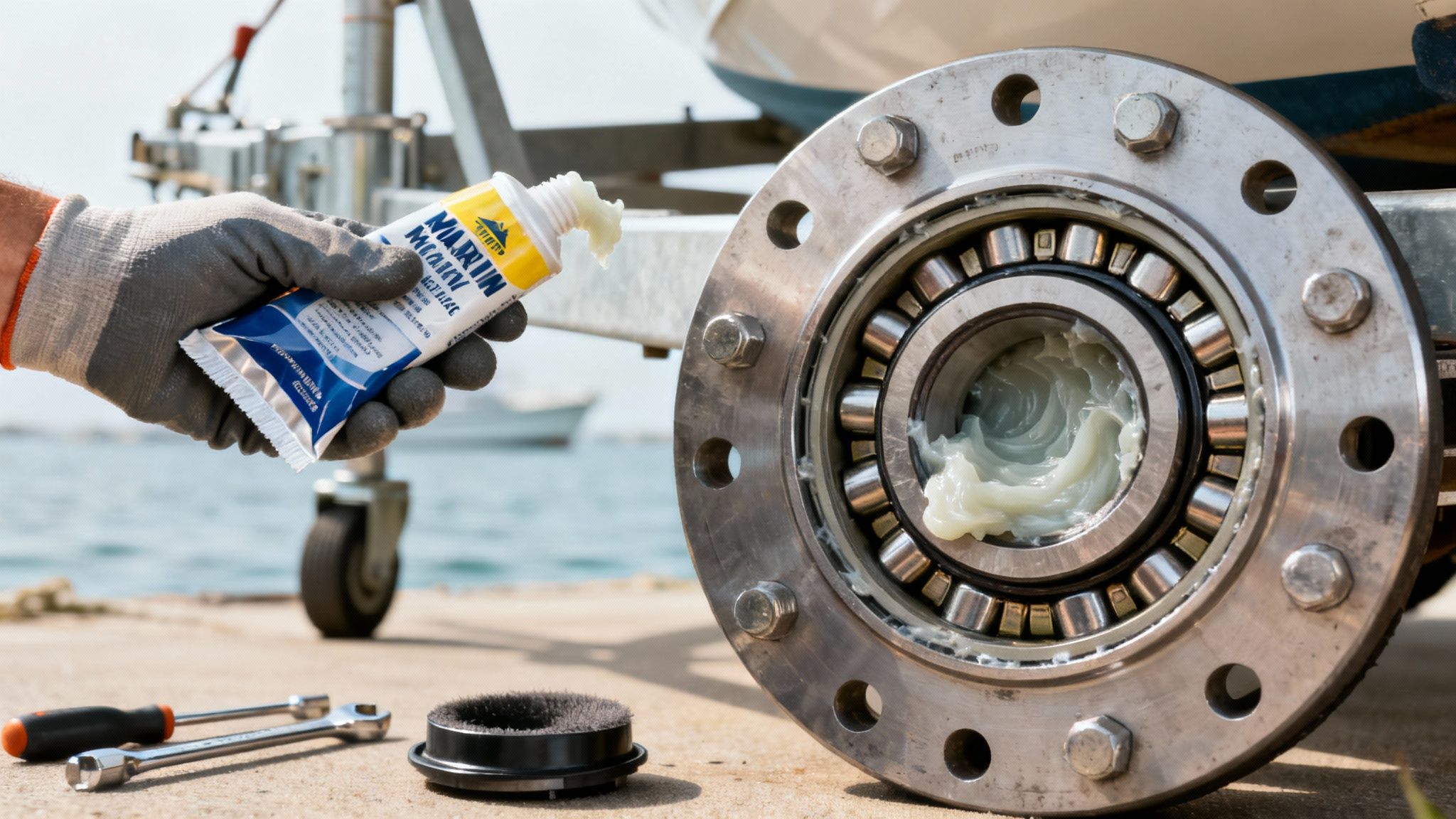
The Critical Role of Marine-Grade Grease
Proper lubrication is the lifeblood of your wheel bearings. The constant cycle of being submerged in water (often corrosive saltwater) and then heating up on the highway creates a uniquely harsh environment. Water intrusion is the primary enemy.
Keeping water out starts with fitting the hubs with grease caps that hold lubrication in place through every launch and retrieval.

Keep bearings protected
Boat Trailer Grease Caps
Grease caps seal out water and hold lubrication in place, which is exactly what bearings need to survive repeated submersion and highway heat cycles. Replacing worn or cracked caps is one of the simplest steps in any bearing maintenance routine.
- Water Intrusion: When a hot hub is submerged during boat launching, the rapid cooling creates a vacuum that can suck water past the seals. This water contaminates the grease, causing rust and corrosion that rapidly destroys the bearing surfaces.
- Grease Breakdown: Standard automotive grease is not designed to resist water washout. Contaminated grease loses its lubricating properties, leading to friction, intense heat buildup, and eventual bearing failure. Using a high-quality, water-insoluble marine-grade grease with a grease gun is absolutely essential for boat trailers.
Pro Tip: After a trip, place the back of your hand on each wheel hub. If a hub is noticeably hotter than the others or too hot to touch comfortably, it's a strong indicator of a failing bearing or inadequate lubrication that needs immediate attention.

Annual Bearing Maintenance Checklist
This service should be performed annually or every 12,000 miles, whichever comes first. For trailers used frequently in saltwater, inspecting and adding grease should be a more regular part of your boat trailer maintenance tips routine, with a full repack every six months.
- Lift and Spin: Safely jack up one side of the trailer. Grab the tire at the top and bottom and try to wiggle it. Any significant play or wobble indicates a worn bearing that needs replacement.
- Listen Carefully: Spin the tire by hand. It should rotate smoothly and quietly. Any grinding, rumbling, or clicking noises are clear signs of internal bearing damage.
- Inspect Seals: Look at the inner side of the hub for any signs of grease leaking out. A compromised grease seal is a guaranteed entry point for water and must be replaced.
- Repack or Replace: If everything checks out, repack the bearings with fresh marine grease. If you're uncomfortable with this process, it's a common and relatively inexpensive service at any trailer shop.
Taking the time for this crucial maintenance prevents the most severe types of trailer failures. For a step-by-step tutorial, you can see exactly how to replace boat trailer bearings.
3. Rust Prevention and Paint Maintenance
Your boat trailer is constantly under assault from the elements. Moisture, salt spray, and harsh UV radiation create the perfect storm for rust and corrosion. A proactive approach to rust prevention isn't just about aesthetics; it's about preserving the structural integrity of the frame that supports your prized vessel.
Neglecting the finish can lead to deep, penetrating rust that weakens critical weld points and can ultimately cause catastrophic frame failure on the road.
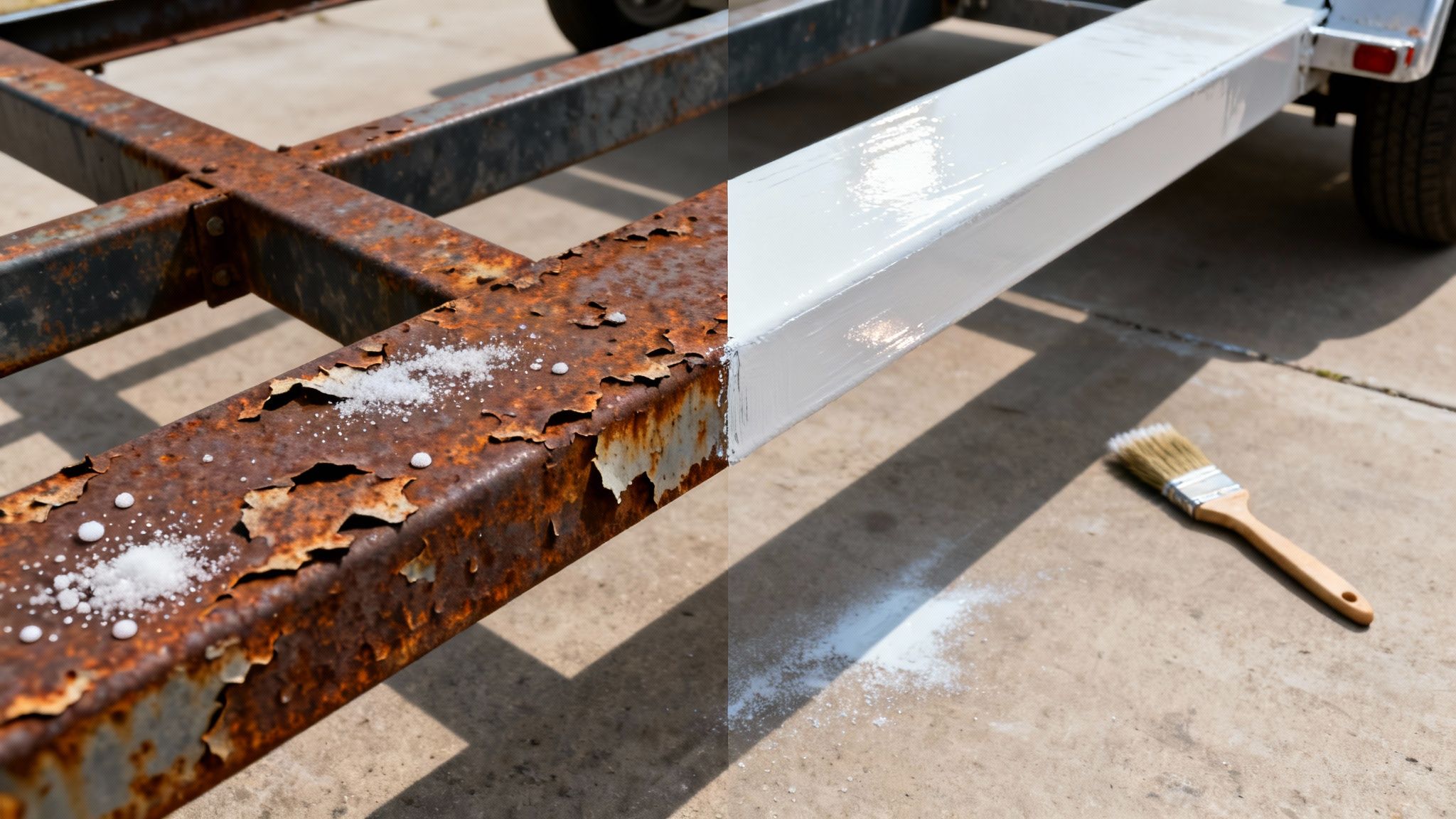
The Battle Against Corrosion
The fight against rust is won through consistent, simple actions that protect your trailer’s metal components from their greatest enemy: oxidation. This process is accelerated dramatically by saltwater, turning a small paint chip into a major structural concern in a surprisingly short time.
- Freshwater Rinses: Salt is hydroscopic, meaning it attracts and holds water, which is why a thorough freshwater rinse after every single use in a saltwater environment is non-negotiable. This simple step is the most effective defense you have.
- Protective Coatings: A layer of paint or galvanization is your trailer’s primary shield. When this barrier is breached by scratches or chips, the underlying steel is exposed and corrosion begins immediately. Maintaining this protective layer is the core of effective rust prevention.
Pro Tip: Pay special attention to areas where water can pool, such as inside frame rails, cross-members, and around fender hardware. These are the first places rust will take hold. Use a hose with good pressure to flush these areas thoroughly after each use.
Routine Rust-Proofing Checklist
Incorporate these tasks into your regular boat trailer maintenance schedule to significantly extend the life and safety of your trailer. This is a critical set of boat trailer maintenance tips that every owner should master.
Grabbing a trailer maintenance kit before the season starts keeps the grease gun, caps, and chocks on hand so that checklist below takes minutes instead of a hardware store run.
Tools for the job
Trailer Kit
A dedicated trailer maintenance kit gives you the cleaning and protective products needed to wash, treat, and coat the frame as this checklist requires. For trailers with significant existing corrosion, the revamp kit addresses heavier buildup and recoating in a single package.


- Wash & Dry: Give your trailer a full wash with a quality boat soap at least monthly (or after every trip for saltwater boaters). Most importantly, allow it to dry completely before storing it.
- Inspect for Damage: While washing, carefully inspect the entire frame, axle, and springs for any bubbling paint, scratches, or visible rust spots. Catching these early is key.
- Touch-Up Immediately: Address any paint chips or deep scratches right away with a wire brush, a rust-inhibiting primer, and a matching top coat of marine-grade paint.
- Wax On, Rust Off: Apply a coat of high-quality marine wax every 3-4 months. This creates a hydrophobic barrier that repels water and provides an extra layer of UV protection for the paint.
A well-maintained trailer can provide decades of reliable service, while one left to the elements may become unsafe in just a few seasons. For those facing more significant corrosion, our guide provides a step-by-step process for repainting a boat trailer to restore its protection and appearance.
4. Brake System Inspection and Maintenance
Your trailer’s brakes are your first line of defense against dangerous situations on the road. They are not just a convenience but a critical safety system designed to prevent loss of control and catastrophic jackknifing, especially during sudden stops or on steep descents. Neglecting them can lead to brake failure, which, according to NHTSA data, is a contributing factor in a significant percentage of all trailer-related accidents.
Understanding Your Trailer's Brake System
Most boat trailers use one of two main brake types: surge brakes or electric brakes. Understanding which system you have is the first step in performing effective boat trailer maintenance.
- Surge Brakes (Hydraulic): These are self-contained systems activated by the momentum of the trailer pushing against the tow vehicle. When you slow down, a master cylinder in the trailer tongue is compressed, sending hydraulic fluid through the lines to apply the brakes. They are simple but require diligent fluid checks and line inspections.
- Electric Brakes: These systems are controlled by an electronic brake controller in the cab of your tow vehicle. When you press the brake pedal, the controller sends an electrical signal to activate electromagnets in the trailer's brake drums, providing more precise and adjustable braking power.
Pro Tip: Before towing, always test your brakes in a safe, open area like an empty parking lot. For electric brakes, manually activate them with the controller to ensure they engage properly. For surge brakes, a few slow, firm stops should confirm they are functioning as expected.
Pre-Season Brake Inspection Checklist
Make this comprehensive check a mandatory part of your spring commissioning process, before your first trip of the season.
- Check Hydraulic Fluid: For surge brakes, inspect the master cylinder reservoir. The brake fluid should be clear and topped off to the "full" line. If it’s dark, milky, or low, it's a sign of contamination (likely water) or a leak and must be flushed and replaced.
- Inspect Brake Lines: Carefully trace all brake lines from the master cylinder to the wheels. Look for any signs of cracking, rust, corrosion, or kinks that could impede fluid flow or cause a leak. Pay special attention to connections and fittings.
- Examine Pads & Rotors/Drums: Visually inspect your brake pads for wear. Just like a car, they need to be replaced when they get too thin. Check rotors or drums for excessive rust, scoring, or warping that could reduce braking effectiveness.
- Test Electrical Connections: For electric brakes, ensure the wiring harness connection is clean, secure, and free of corrosion. A poor connection can lead to intermittent or total brake failure.
A fully functional brake system provides peace of mind and control when you need it most. For a deeper dive into troubleshooting and specific procedures, explore our complete guide on boat trailer brakes.
5. Hull and Frame Structure Inspection
The frame is the backbone of your trailer, the skeleton that bears the entire weight of your prized vessel. It endures immense stress from road vibrations, dynamic weight shifts, and the constant pulling forces of towing.
A compromised frame doesn't just fail; it can lead to catastrophic accidents, resulting in the loss of your boat, severe damage to your tow vehicle, and significant risk of injury on the road.
The Dangers of Structural Fatigue
Your trailer's frame, whether aluminum or galvanized steel, is subject to metal fatigue over time. Every bump, pothole, and sharp turn contributes to this wear. Critical areas like welds, cross-members, and the tongue assembly are particularly vulnerable.
A small, unnoticed crack can propagate under load, leading to a sudden and complete structural failure, often at highway speeds. This is why a thorough frame inspection is a non-negotiable part of any comprehensive boat trailer maintenance plan.
- Cracks & Bending: Hairline cracks, especially near welds or joints, are the first warning signs of impending failure. Bending or bowing in the main frame rails indicates the trailer has been overloaded or has suffered a significant impact.
- Corrosion: For steel trailers, rust is the enemy. It weakens the metal from the inside out. For aluminum trailers, corrosion appears as a white, powdery substance and can be just as destructive, particularly around stainless steel hardware where galvanic corrosion occurs.
Pro Tip: When washing your boat and trailer after a trip, especially after use in saltwater, make a point to thoroughly rinse the frame's underside and inside the C-channels. Trapped salt and moisture will dramatically accelerate corrosion and shorten the life of your trailer.
Annual Frame Inspection Checklist
Set aside time at least once a year, or immediately after any incident like hitting a major pothole or curb, to perform this detailed inspection.
- Clean the Frame: A clean frame is essential for a proper inspection. Dirt and grime can easily hide serious issues like cracks and corrosion.
- Weld Examination: Carefully inspect every weld joint on the trailer. Look for any signs of cracking, separation from the main beams, or heavy rust concentrated along the weld line.
- Check for Bending & Cracks: Sight down the main frame rails from both the front and back to check for any bowing, sagging, or twisting. Pay special attention to the areas around the axle mounts and the tongue.
- Tongue and Coupler Inspection: Examine the tongue assembly where it connects to the main frame. Check the coupler mechanism for smooth operation and look for any cracks or excessive wear around the hitch pin or latch.
- Address Corrosion: Identify any rust spots on a steel frame. Use a wire brush to remove loose rust and treat the area with a quality rust converter and a top coat of galvanized spray paint to prevent it from spreading. Additionally, be vigilant for any brake fluid leaks, as they can cause severe brake fluid paint damage to your trailer, necessitating prompt action.
- Fastener Check: Verify that all bolts and U-bolts connecting the axles, bunks, and winch stand are tight and free of excessive corrosion.
If you discover any significant cracks or bending, do not use the trailer. Consult a professional welder or trailer repair specialist immediately. A proactive approach to frame integrity ensures your boat's foundation is as solid on land as its hull is on the water.
6. Light and Electrical System Maintenance
Your trailer's lights are your primary communication tool on the road, signaling your intentions to other drivers. A functional electrical system is not just a legal requirement; it's a critical safety feature.
When exposed to constant vibration, road grime, and repeated dunkings in water, these systems are highly susceptible to corrosion and damage. A non-working brake light or turn signal can turn a simple lane change into a dangerous, multi-vehicle accident.
The Critical Role of Electrical Connections
The integrity of your entire lighting system depends on clean, solid electrical connections. The constant exposure to moisture, especially in saltwater environments, makes corrosion the number one enemy.
Even a small amount of rust or mineral buildup on a connector plug or ground wire can interrupt the flow of electricity, causing lights to flicker, dim, or fail completely. This makes regular checks and preventative care a key part of your boat trailer maintenance routine.
- Corrosion: This is the most common point of failure. It creates resistance in the circuit, preventing lights from receiving adequate power. Saltwater is particularly aggressive and accelerates this process dramatically.
- Grounding Issues: A poor ground connection is often mistaken for a faulty light. The ground wire provides a return path for the electrical current; if it's not securely attached to a clean spot on the trailer frame, the entire system can fail.
Pro Tip: Before launching your boat, always unplug the trailer lights from your tow vehicle. Submerging hot incandescent bulbs can cause them to burst from thermal shock, and even with waterproof LED lights, it's a good practice to prevent any potential for short circuits.
Pre-Trip Electrical System Checklist
Integrate this quick electrical check into your pre-trip hook-up process. It’s a simple way to ensure you're visible and safe on the road.
- Test All Functions: With the trailer hitched and plugged into your tow vehicle, have a helper stand behind the trailer. Test the running lights, brake lights, and both left and right turn signals to confirm they all illuminate brightly.
- Inspect Wiring: Visually trace the wiring from the plug back to the lights. Look for any signs of cracked or chafed insulation, loose wires hanging down, or areas that might be pinched by the frame.
- Check Connectors: Unplug the connector and inspect the metal pins for any green or white powdery corrosion. Clean them with a small wire brush or electrical contact cleaner if needed.
- Protect Connections: Apply a thin layer of marine-grade dielectric grease to the connector pins before plugging them back in. This creates a waterproof barrier that prevents moisture and corrosion from forming, significantly extending the life of your connections.
7. Winch and Strapping System Maintenance
The trailer winch and strapping system is the critical link holding your boat securely to its trailer. It’s not just a convenience for loading; it’s a primary safety system responsible for thousands of pounds of force during transport.
A failed winch strap or rusty bow roller can lead to your boat shifting, or in a worst-case scenario, coming completely off the trailer on the highway, a catastrophic and entirely preventable event.
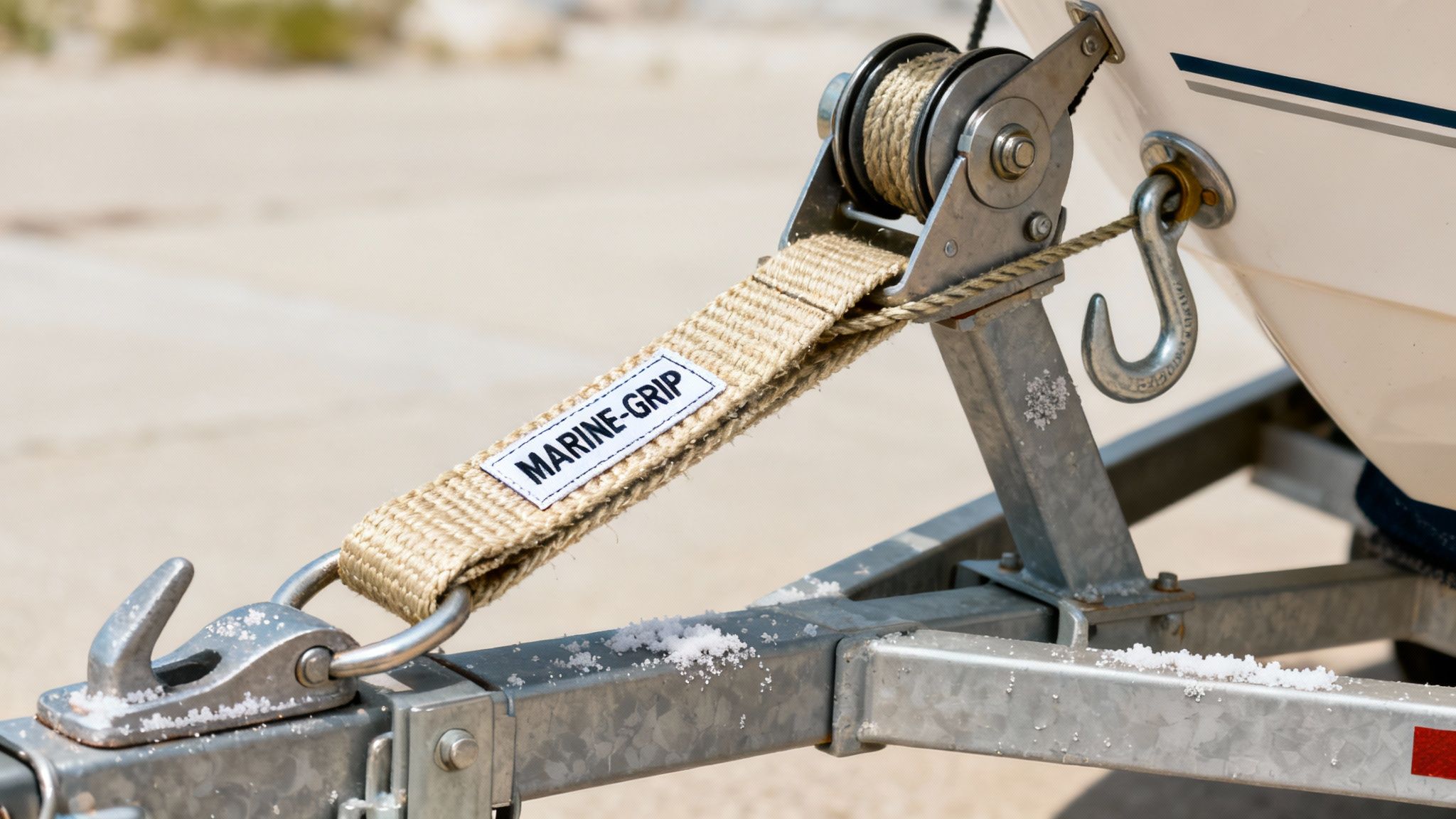
The Role of Winch and Straps in Safe Transport
Your winch, strap, and tie-downs work in unison to lock your boat to the trailer frame. The winch pulls the boat into position against the bow stop, while tie-down straps at the stern prevent it from bouncing or shifting sideways. Proper tension and component integrity are essential for this system to function correctly.
- Winch Failure: The internal gears can strip from strain, or the handle can break. A rusty or seized winch makes launching and retrieving difficult and unsafe, forcing you to use dangerous manual methods.
- Strap/Cable Failure: This is the most common point of failure. UV radiation, salt, and constant friction cause straps to fray and lose strength. A snapped winch strap under load can cause serious injury or allow the boat to slide backward off the trailer.
Pro Tip: Never rely solely on the winch strap to hold your boat during transport. Always use a separate bow safety chain or strap as a backup, and secure the stern with at least two high-quality tie-down straps. This creates redundancy that protects you if one component fails.
Pre-Trip Securing System Checklist
Make checking your winch and straps a core part of your boat trailer maintenance tips routine before every trip. It's a quick inspection that confirms your vessel is ready for the road.
For the stern, a pair of solid trailer tie-down straps does the job with less fuss than rope or chain.
Replace before you haul
Trailer
If the inspection turns up fraying, mold, or worn webbing, swapping in fresh tie-down straps or a new winch strap replacement is the direct fix this checklist calls for. Having sound straps on hand means a failed inspection does not cancel the trip.


- Inspect the Strap/Cable: Unwind the winch strap completely and look for any signs of fraying, cuts, or mold/mildew. If you have a steel cable, check for broken strands or kinks. A frayed strap has lost significant strength and should be replaced immediately.
- Check the Winch Mechanism: Operate the winch handle to ensure it cranks smoothly in both directions and the locking pawl engages securely with a distinct "click." If it feels gritty or hard to turn, the gears need cleaning and lubrication.
- Examine Hardware: Check the hook for corrosion or distortion. Ensure the safety clasp on the hook functions properly. Verify that the bolt securing the strap or cable to the winch drum is tight and not corroded.
- Confirm Tie-Downs: Inspect your rear tie-down straps for wear and tear, and check the ratcheting mechanisms for smooth operation. Ensure they are properly tensioned, pulling the boat down and slightly forward to keep it snug against the bow stop.
8. Axle and Suspension System Maintenance
Often overlooked, the axle and suspension system is the hardworking backbone of your trailer. This system supports the entire weight of your boat and absorbs the constant shock and vibration from the road, directly impacting towing stability, ride quality, and overall safety.
Components like leaf springs, shock absorbers, and mounting hardware are under immense stress and are highly susceptible to wear and corrosion, making their maintenance a crucial part of your routine.
The Critical Role of Your Suspension
A healthy suspension system ensures your trailer tracks true and smoothly behind your vehicle. It keeps your tires firmly planted on the road, which is essential for proper braking and handling.
When components begin to fail, it creates a domino effect that compromises safety and can lead to expensive damage. Sagging leaf springs, for instance, can reduce ground clearance and cause the trailer frame to bottom out on bumps, while failed shock absorbers can contribute significantly to dangerous trailer sway.
- Leaf Springs: These are the primary load-bearing components. They flex to absorb bumps, but over time can crack, sag, or break, compromising the trailer's ability to carry its load safely.
- Shocks & Bushings: Shock absorbers dampen the bouncing motion from the springs, preventing excessive sway. Worn bushings and leaky shocks reduce this damping effect, leading to an unstable, bouncy ride that accelerates wear on tires and other components.
Pro Tip: After a long trip, place your hand near (but not on) each hub. If one is significantly hotter than the others, it could be an early warning sign of a failing bearing, an issue directly tied to the axle assembly. Address it immediately.
Pre-Season Suspension Inspection Checklist
Integrate this check into your annual or pre-season boat trailer maintenance tips routine to catch problems before they escalate on the road.
- Inspect Leaf Springs: Visually examine each leaf spring for cracks, especially around the mounting points. Look for any signs of sagging or broken leaves, which indicates they need immediate replacement.
- Check Hardware: Get underneath the trailer and check all U-bolts, nuts, and mounting brackets. Ensure they are tight and free of excessive rust. Corrosion can weaken these critical fasteners over time.
- Examine Shocks: If your trailer has shock absorbers, look for any signs of fluid leakage on the shock body. Push down on the trailer frame over the axle; if it bounces excessively more than once, the shocks are likely worn out.
- Listen for Noise: When towing, pay attention to any unusual clunking, squeaking, or groaning sounds coming from the trailer, as these often point to worn-out bushings or other loose suspension parts.
By giving your axle and suspension the attention they deserve, you ensure the entire trailer structure remains stable and secure, protecting your boat and preventing dangerous handling issues on the highway.
8-Point Boat Trailer Maintenance Comparison
| Maintenance Item | Implementation Complexity 🔄 | Resource Requirements ⚡ | Expected Outcomes ⭐📊 | Ideal Use Cases 💡 | Key Advantages 📊 |
|---|---|---|---|---|---|
| Regular Tire Pressure Inspection and Maintenance | Low 🔄, monthly checks, simple procedure | Minimal ⚡, pressure gauge, portable compressor | ⭐ Improved fuel efficiency, even tire wear, fewer blowouts | Pre-trip checks; routine owners; all climates | Prevents blowouts; extends tire life; low cost |
| Bearing Inspection and Repacking | Medium-High 🔄, wheel removal, grease packing | Moderate ⚡, jack, tools, marine-grade grease; possible pro service | ⭐ Reduced seizure risk; longer bearing life; early damage detection | Saltwater trailers; high-mileage or commercial use | Prevents catastrophic wheel failure; cost-effective prevention |
| Rust Prevention and Paint Maintenance | Low-Medium 🔄, recurring washing, touch-ups, coatings | Low ⚡, water, wax, touch-up paint, rust converter; occasional pro detailing | ⭐ Slows corrosion; preserves structural integrity and resale value | Saltwater exposure; long-term storage; resale prep | Protects frame integrity; cheaper than frame replacement |
| Brake System Inspection and Maintenance | High 🔄, hydraulic/electric systems; technical adjustments | High ⚡, specialized tools, brake fluid, parts; professional service often needed | ⭐ Ensures controlled stopping; prevents jackknifing; legal compliance | Trailers >1,500 lbs; frequent towing; commercial ops | Critical safety system; reduces accident and liability risk |
| Hull and Frame Structure Inspection | Medium-High 🔄, visual and structural checks; weld inspection | Moderate ⚡, inspection tools, possible professional welding | ⭐ Early detection of cracks/bends; prevents catastrophic failure | Older trailers; post-accident checks; heavy-load towing | Preserves load-bearing integrity; extends trailer life |
| Light and Electrical System Maintenance | Low-Medium 🔄, routine testing; wiring repairs as needed | Low ⚡, testers, dielectric grease, sealed LEDs, waterproof connectors | ⭐ Reliable signaling; fewer citations; improved visibility | All trailers, especially saltwater and night towing | Simple fixes; inexpensive; enhances safety and compliance |
| Winch and Strapping System Maintenance | Low 🔄, visual checks, strap replacement, basic lubrication | Low ⚡, replacement straps, lubricant, occasional winch parts | ⭐ Secure boat transport; prevents shifting or loss | All trailers; critical for heavy boats and long hauls | Prevents boat loss; inexpensive consumables; easy to maintain |
| Axle and Suspension System Maintenance | High 🔄, alignment, shock and spring checks; technical repairs | High ⚡, specialized tools, replacement components, pro service recommended | ⭐ Improved handling; reduced tire/brake wear; safer towing | Rough roads, heavy loads, frequent long trips | Enhances stability; reduces stress on other components |
Your Roadmap to a Reliable Trailer and Worry-Free Boating
Navigating the world of boat ownership involves more than just mastering the waves; it requires mastering the journey to and from the water. Your boat trailer is not merely a transport device but a crucial piece of equipment that safeguards your vessel and ensures your adventures begin and end without a hitch.
By now, it’s clear that a proactive, consistent approach to trailer care is the single most effective strategy for avoiding the stress, danger, and expense of a roadside breakdown. Treating your trailer with the same diligence you give your boat is the secret to a seamless boating lifestyle.
The eight core areas we’ve covered, from tires and bearings to lights and brakes, form a comprehensive system where each component relies on the others. A failed wheel bearing can lead to a damaged axle; a corroded wire can cause a complete lighting failure; a frayed winch strap can result in catastrophic damage during loading.
Integrating these checks into a simple, repeatable routine transforms maintenance from a dreaded chore into a powerful habit. A five-minute pre-launch inspection and a more detailed seasonal service are small investments of time that yield massive returns in safety and peace of mind.
Key Takeaways for Long-Term Reliability
Let's distill these extensive boat trailer maintenance tips into a core philosophy: Inspect, Protect, and Prevent.
- Inspect Regularly: Make the pre-trip checklist a non-negotiable ritual. A quick walk-around to check tire pressure, test lights with a partner, and confirm the winch and straps are secure takes minutes but can prevent hours of frustration. This simple habit is your first line of defense.
- Protect from the Elements: Corrosion is the silent enemy of every boat trailer, especially those used in saltwater environments. A thorough freshwater rinse after every use is critical. To go a step further, use a quality boat soap to neutralize salt and grime, and apply a good wax or ceramic coat to the frame to create a durable barrier against rust.
- Preventive Maintenance is Paramount: Don't wait for something to break. Stick to a schedule for the big jobs. Repacking or replacing wheel bearings annually, flushing brake lines, and performing a detailed inspection of the frame and suspension are the proactive steps that distinguish a reliable trailer from a liability.
By internalizing this mindset, you shift from reacting to problems to preventing them entirely. This approach not only protects your financial investment in your boat and trailer but also protects your valuable time on the water. Every moment spent troubleshooting a faulty light or changing a tire on the side of the highway is a moment you're not enjoying the open water.
Ultimately, mastering these boat trailer maintenance tips is about taking control. It’s about ensuring that your focus remains on the thrill of the launch and the joy of a day spent boating, not on the anxiety of whether you’ll make it to the ramp or get home safely.
Your trailer is the unsung hero of every successful boating trip, and by giving it the attention it deserves, you are setting the stage for countless worry-free adventures to come.
Ready to equip your trailer for ultimate reliability? Better Boat offers a complete range of premium marine-grade products, from our powerful cleaning supplies to our durable tie-down straps and hardware, designed to help you implement these maintenance tips with confidence. Visit Better Boat to find everything you need to protect your investment and keep your journey smooth.


