


How to Clean Boat Canvas: A Practical Guide to Pro Results
Figuring out how to clean your boat's canvas is pretty simple on the surface: a little gentle scrubbing with mild soap, a good rinse, and letting it air dry. Stick to this, and you’ll keep grime from building up and really extend the life of your bimini top or cover. It's about protecting your investment from the tough marine world, not just keeping it pretty.
Your Essential Guide to Boat Canvas Care
Keeping your boat’s canvas in prime condition is one of those non-negotiable maintenance jobs. It’s what shields your vessel from the constant assault of sun, salt, and rain. A clean bimini top, dodger, or boat cover doesn't just look sharp; it actively prevents expensive damage to your boat’s interior and upholstery.
Let that essential chore slide, and you're inviting trouble. Dirt, salt crystals, and mildew will work their way deep into the fabric's weave. Before you know it, you're looking at faded colors, weak spots, and a cover that doesn't repel water anymore.
Think of regular cleaning as your canvas's lifeline. You wouldn't let saltwater sit on your hull, right? Your canvas deserves the same respect. A quick wash gets rid of corrosive salt and the organic bits that mold and mildew love to feed on.
Trust me, this preventative approach is a whole lot easier than trying to bring a stained, neglected cover back from the dead. For a full rundown on keeping your whole boat in shape, check out our comprehensive guide on boat cleaning and detailing.
Understanding Canvas Materials
Before you grab a brush, you need to know what you're dealing with. Most modern boat canvas is either a solution-dyed acrylic or a vinyl-coated polyester, and they don't always like the same treatment.
For a deeper dive, it's worth understanding different woven fabrics, because the specific material will dictate the best way to clean it without causing damage.
So many boat owners make the mistake of reaching for a harsh household cleaner. Things like ammonia or strong detergents will absolutely strip away the factory-applied waterproof and UV-protective coatings. Suddenly, your canvas is vulnerable to leaks and sun damage. Always, always stick with gentle, marine-specific products.
The Right Cleaning Approach
For tough mildew, many sources suggest a mix of one cup of bleach and 1/4 cup of mild soap in a gallon of fresh water. Just apply the solution, give it a gentle scrub with a soft-bristle brush, and let it sit for about 10 to 15 minutes before rinsing it off completely.
However, for a safer, more targeted solution, we recommend our Better Boat Mildew Stain Remover, which is formulated specifically to lift mildew stains without the harshness of bleach.
But here's the most critical part: you have to let the canvas get 100% bone-dry before you even think about storing it. Any hint of moisture is an open invitation for mildew to come right back.
This guide will walk you through the entire process, from getting set up to the final waterproofing step, to make sure your canvas stays strong and looks great for years to come.
Gathering the Right Cleaning Supplies
Trying to clean your boat canvas with the wrong gear is a recipe for frustration. You might get the job done eventually, but you won’t be happy with the results. Setting yourself up with the right supplies from the get-go turns a dreaded chore into a satisfying project.
Let's start with the most important tool in your arsenal: the soft-bristle brush. A lot of folks make the mistake of grabbing a stiff deck brush, thinking more scrubbing power is better. That’s a huge misstep. Stiff bristles will absolutely wreck your canvas, tearing up the fabric, fraying the stitching, and stripping away the protective coatings that keep it waterproof.
A soft brush, like the ones in our Better Boat Brush Set, is gentle enough not to cause damage but tough enough to work loose all that caked-on grime, salt, and mildew from the canvas weave.
Choosing Your Cleaning Solution
The cleaner you use is just as critical as your brush. You need something that can cut through serious marine muck, we’re talking bird droppings, mildew, and dock grime, without harsh chemicals that can degrade the fabric or harm the water.
For a quick, routine wipedown after a day on the water, a simple DIY mix of mild, non-detergent soap and fresh water can do the trick. But when it comes to deep seasonal cleaning or tackling stubborn stains, you really need a specialized cleaner to get consistent, powerful results.
One of the biggest mistakes we see is people reaching for bleach or ammonia-based household cleaners. They might look like they're working at first, but they're secretly stripping away the factory-applied water repellency and UV protection, leaving your expensive canvas totally exposed to the elements.
The Rest of Your Cleaning Kit
Before you start scrubbing, it pays to have a full kit ready to go. You don’t want to be scrambling for a bucket or a spray bottle with a half-soapy canvas drying in the sun. If you're building your kit from the ground up, our guide to creating the ultimate boat cleaning kit is a great place to start.
Here's a quick rundown of what you’ll need to assemble for a smooth and effective canvas cleaning session.
Essential Cleaning Supplies Checklist
Having a dedicated kit for your canvas cleaning makes the job faster and ensures you get it right every time. Here’s a checklist comparing our go-to products with some common alternatives you might have on hand.
| Item Category | Recommended Product | Alternative/DIY Option |
|---|---|---|
| Brush | Better Boat Brush Set (soft bristles) | Soft-bristled utility or car wash brush |
| Cleaner | Canvas Cleaner | Mild, non-detergent soap (e.g., dish soap) and water |
| Buckets | 2x Standard 5-gallon buckets | Any two clean, separate containers |
| Hose Nozzle | Multi-setting spray nozzle | A hose with gentle, steady water flow |
| Spot Treatment | Better Boat Mildew Stain Remover | Standard spray bottle with DIY solution |
| Detailing Cloths | Soft microfiber towels | Old cotton t-shirts (lint-free) |
Getting these items together beforehand will make the entire process far more efficient.
Here's why these specific items are so important:
- Two Buckets: It seems simple, but it's key. One is for your cleaning solution, and the other is for clean rinse water. This stops you from just smearing dirty, soapy water back onto the canvas you’re trying to clean.
- Hose with a Quality Nozzle: You need good control over the water pressure. A nozzle that provides a gentle but wide spray is perfect for rinsing without blasting the fabric. High-pressure jets can be just as bad as a stiff brush.
- Spray Bottles: These are perfect for hitting stubborn spots with a concentrated dose of cleaner or for applying a mildew treatment to the underside of a bimini.
- Soft Microfiber Cloths: Never use paper towels on your canvas or especially on clear vinyl windows like Isinglass. They can be surprisingly abrasive and leave a trail of lint. Soft cloths are the only way to go.
With your kit assembled, you're ready to tackle the job like a pro and keep your canvas protecting your boat for many more seasons.
Your Action Plan for Cleaning Boat Canvas
Alright, you've got your supplies lined up and the canvas is waiting. Now it's time to get down to business. This is where a bit of patience and the right technique will take a grimy, sad-looking cover and make it look almost new again. The goal isn't just a surface clean; we're doing this the right way to protect the fabric, its coatings, and all that important stitching.
The biggest secret to a great result? Preparation. If you just jump in and start scrubbing, you're setting yourself up for a splotchy finish. Even worse, the cleaner can dry too fast and leave a nasty residue. A few minutes of prep work now will make the whole job go smoother and look a hundred times better.
Setting the Stage for Success
First things first: if you can, get that canvas off the boat. Taking down a bimini top or pulling off a cover and laying it out on a clean tarp or driveway is a game-changer. It gives you way better access, lets you apply cleaner evenly, and ensures you can rinse it from every single angle.
Of course, sometimes taking it off just isn't in the cards. If you have to clean it in place, try to pick a calm, overcast day or at least find a shady spot. Direct sun is your enemy here. It'll make your cleaning solution evaporate before it can do its job, leaving you with stubborn soap spots and forcing you to rewash everything.
I see it at the marina all the time, someone trying to clean their canvas in the blazing midday sun. They end up chasing streaks and spots all afternoon. A cool surface and a little shade make all the difference between a pro-level job and a frustrating mess.
The Initial Rinse
Before a drop of soap touches that fabric, give the entire canvas a good, thorough rinse with fresh water from a hose. Use a gentle, wide spray setting. Never use a high-pressure jet, that's a great way to damage the fibers and seams. You're just trying to knock off all the loose stuff: dust, pollen, salt crystals, and any of those dried bird droppings you brushed off earlier.
This step is more important than it seems. It keeps you from grinding all those abrasive little particles into the fabric's weave when you start scrubbing. Get them out of the way first, and your cleaner can go straight to work on the deep-down dirt and stains.
As you can see, it really boils down to three simple things: a gentle brush, an effective cleaner, and plenty of fresh water.
Applying Your Cleaner and Scrubbing Correctly
Now for the main event. Mix up your cleaning solution exactly as the directions say. If you're using a canvas cleaner or boat soap, a couple of ounces in a bucket of water is perfect for a general wash. Got some really tough, set-in stains? You can hit those directly with a spray bottle.
Slop the solution on generously, but work in manageable sections, maybe a three-by-three-foot area at a time. This keeps the soap from drying out before you can get to it. Now, let it sit for several minutes. This is crucial! Give the cleaner time to soak in and really loosen the dirt's grip on the fabric.
Once it's had a chance to work its magic, grab your soft-bristle brush. Scrub the area using gentle, overlapping circular motions. You're trying to lift the dirt out of the fabric, not grind it in. Let the bristles and the cleaner do the heavy lifting; you don't need a ton of muscle. Give a little extra attention to seams and stained areas, but always keep the pressure gentle.
The Final, and Most Important, Rinse
After scrubbing a section, rinse it completely before you even think about moving to the next one. This is, without a doubt, the most critical part of the whole process. You have to rinse, and then rinse again, until every last bubble and trace of soap is gone.
Why is this such a big deal? Any soap you leave behind will turn into a sticky magnet for fresh dirt, meaning your canvas will get filthy again in record time. It can also break down the fabric's water-repellent finish over the long haul.
Just keep this rhythm going, apply, soak, scrub, and rinse, section by section until the whole cover is done. Make sure to overlap your sections a bit to avoid leaving any tell-tale lines.
When you're finished, give the entire canvas one last, massive rinse to be absolutely positive all the cleaner is gone. Now your canvas should be grime-free and ready for the final, essential steps: drying and waterproofing.

How to Remove Tough Stains from Marine Canvas
A general wash is great for keeping up with day-to-day grime, but let's be honest, the marine environment throws some nasty stuff at your canvas. Sooner or later, you'll be dealing with stains from mildew, bird droppings, salt, and rust. These aren't just ugly; they can cause real, permanent damage to the fabric if you let them slide.
But don't panic. Even the gnarliest-looking stains can usually be handled with the right products and a little know-how. The trick is to stop scrubbing harder and start working smarter by treating each type of stain with a specific game plan.
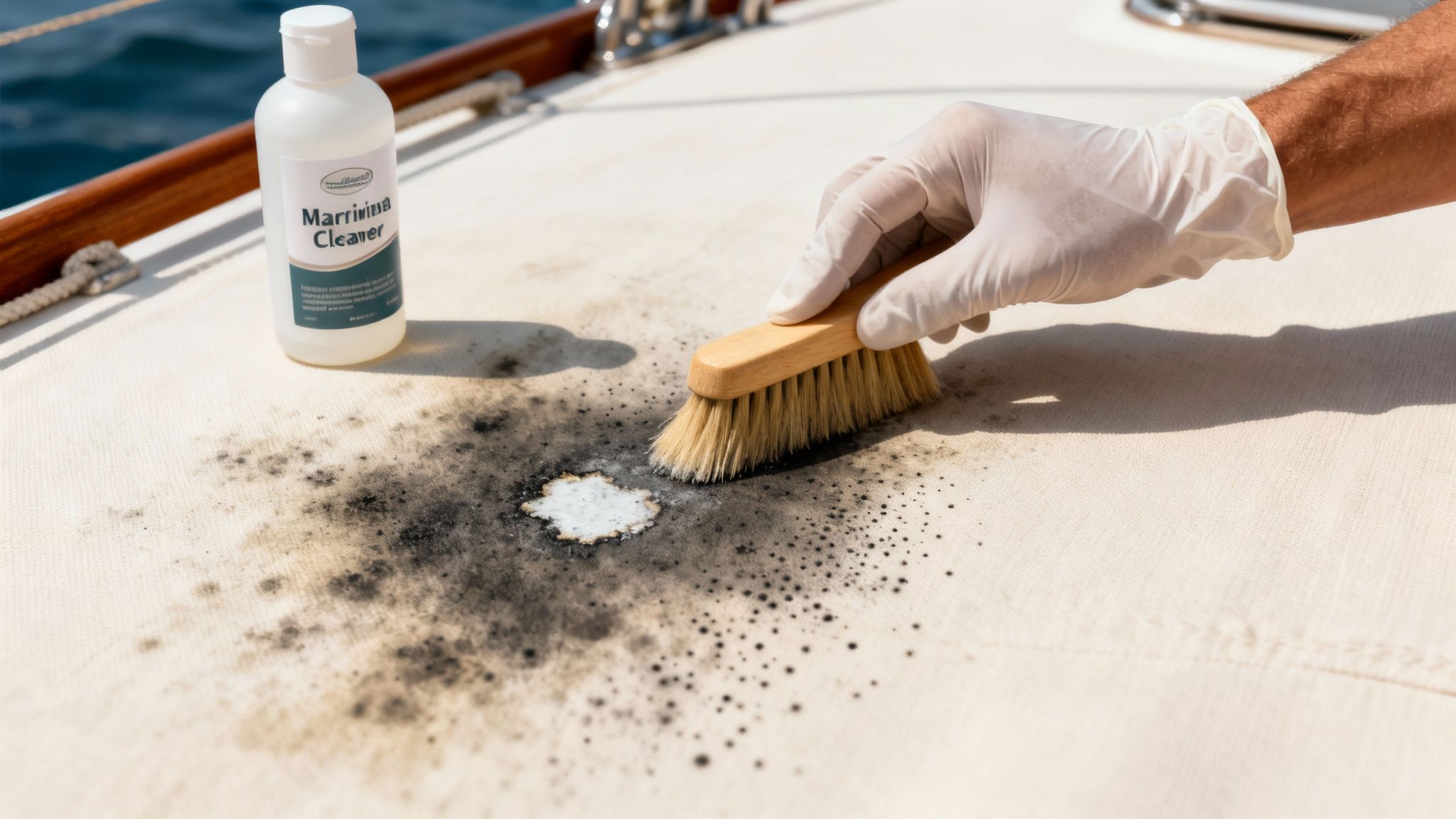
Conquering Mildew and Mold
Mildew is public enemy number one for boat canvas. Those black, gray, or green spots are a living fungus that literally eats away at your fabric and stitching. You have to get rid of it.
For a minor case, a 50/50 mix of white vinegar and water can do the trick. Just spray it on, let it sit for about an hour (out of direct sun), give it a gentle scrub with a soft brush, and rinse it completely. This is a great preventative trick for the underside of biminis.
When you're facing a serious outbreak with deep-set spores, you need to bring in the big guns. Our Better Boat Mildew Stain Remover is made for this exact fight. It gets deep into the canvas to lift mildew stains from deep in the material without the harshness of straight bleach.
Spray it, let it work for a few minutes, give it a light scrub, and rinse it clean. If you're ever tempted to use something like bleach, it's worth understanding the effectiveness of bleach against black mold and the potential downsides first.
Modern solution-dyed acrylics like Sunbrella have been a game-changer because the fabric itself resists mildew. But mildew can still grow on surface dirt and grime, so regular cleaning is still key. For more tips on picking the right cleaner, check out our guide to choosing a boat stain remover.
Dealing with Bird Droppings
It's a fact of life at the marina: birds are going to use your boat for target practice. Their droppings are super acidic and can stain and weaken canvas fibers if you don't deal with them.
Here's the secret, and it sounds wrong, but trust me: let them dry completely. If you try to wipe them when they're fresh, you'll just smear the mess deeper into the weave and make it ten times worse.
Once the dropping is hard and crusty, use a plastic scraper or a stiff brush to flick off the solids. Most of it should pop right off. Then, hit the leftover spot with canvas cleaner, let it soak for a minute, and gently work it with a soft cloth before rinsing.
Eliminating Salt and Rust Stains
Salt might seem harmless, but it’s a silent killer for canvas. When saltwater evaporates, it leaves behind tiny, abrasive salt crystals. Every time your canvas flaps in the wind, those crystals act like sandpaper, slowly grinding away at the fibers. The best defense is a simple freshwater rinse after every trip.
If you've got a heavy salt buildup, you'll need a full wash with canvas cleaner or boat soap to dissolve and lift all those crystals out.
Rust stains, usually from snaps or railings, are a different beast entirely. For these, a dedicated product like our Better Boat Boat Rust Stain Remover is your most effective bet. It's specifically designed to break down rust stains on marine surfaces without damaging the fabric.
Pro Tip: Never, ever use chlorine bleach on a rust stain. It will cause a chemical reaction that sets the stain forever. You’ll never get it out.
For rust, a mild acid is what you need. A simple paste of lemon juice and salt often works wonders.
- Apply the paste right on the rust stain.
- Let it sit in the sun for an hour or so; the UV rays help the process along.
- Rinse the area completely with fresh water.
For really stubborn rust, you might need a commercial rust remover made for fabric. Just be sure to test it on a hidden spot first to make sure it doesn't discolor your canvas. Taking care of these tough stains one by one will not only make your boat look a whole lot better but will add years to the life of your canvas.
Drying, Waterproofing, and Storing Your Canvas Correctly
Once you’ve rinsed off the last of the soap, you might be tempted to call it a day. But hold on, the job isn't quite done.
Skipping the final steps of drying and reproofing is like running a marathon and quitting a hundred yards from the finish line. All that cleaning effort can go right down the drain if you don't finish strong.
Air It Out Completely
Properly drying your canvas is the single most important thing you can do to stop mildew from making an immediate, unwelcome comeback. Even a little bit of leftover moisture, especially when the canvas is folded up, creates a perfect breeding ground for mold spores.
Always, always let your canvas air dry completely. If you cleaned it on the boat, just leave it up on its frame. If you took it off and laid it out, make sure to flip it over so both sides are bone-dry to the touch. This isn't a process you can rush; plan on waiting several hours, or even a full day if you're in a humid climate.
Restore Your Canvas's Protective Shield
That vigorous cleaning, while necessary, has a downside: it can strip away the factory-applied water-repellent and UV-protective coatings. Without this barrier, your canvas becomes a sponge, soaking up rain and getting blasted by the sun. This quickly leads to fading and breaks down the fabric itself. That's why re-waterproofing is non-negotiable after every deep clean.
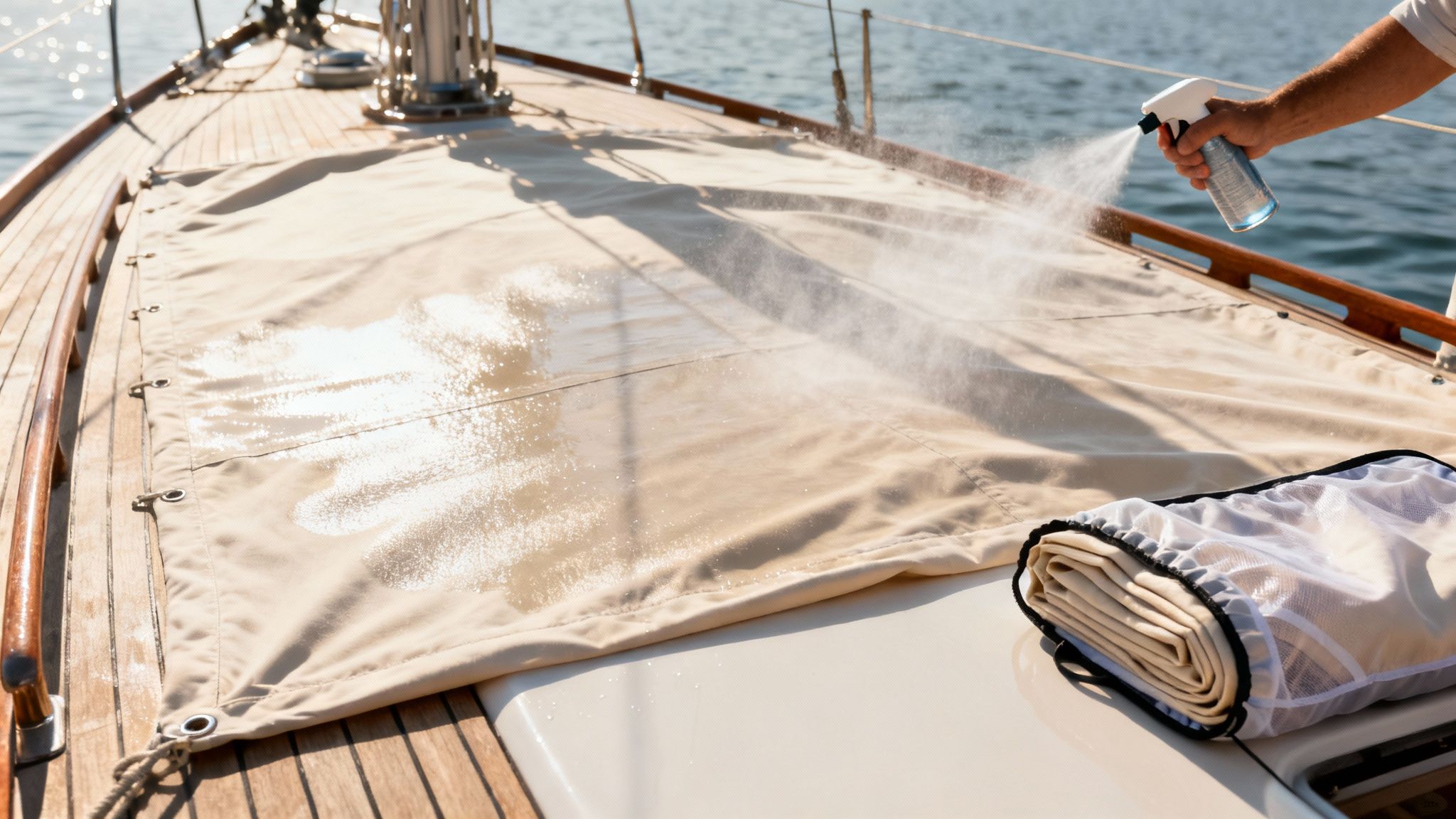
A common mistake I see all the time is assuming that because the canvas looks clean, it's fully protected. But an untreated cover will get waterlogged fast, leading to leaks and bringing that dreaded mildew right back.
Putting that protection back is surprisingly simple. A good waterproofing treatment creates a molecular shield that beads up water and blocks those harsh UV rays. This not only keeps you dry but also makes future cleanings way easier since dirt has a much harder time sticking to the treated fibers.
Applying a Waterproofing Treatment
For a reliable, no-fuss solution, we swear by our Better Boat Fabric Protectant and Waterproofing spray. It’s formulated specifically to restore water repellency to marine fabrics without messing with the color or breathability.
Here’s how to get a flawless application:
- Start Clean and Dry: This is critical. Make sure the canvas is completely free of dirt and 100% dry before you even think about spraying.
- Find Some Space: Pick a calm day with low wind. Work outside or in a well-ventilated area, and try to stay out of direct sunlight.
- Spray Evenly: Hold the can about 6-8 inches from the canvas and apply a light, even coat with a sweeping motion. Overlap your passes just a bit to ensure you don’t miss any spots. You're going for a consistent mist, not a soaking.
- Let It Cure: Give the first coat about 15-20 minutes to dry, then hit it with a second light coat. The canvas needs to cure completely before it gets wet, which can take up to 24 hours. Be patient.
Smart Storage for a Longer Lifespan
How you store your canvas during the off-season can make or break it. Just stuffing it into a tight bag is a recipe for disaster.
Instead, lay the canvas out flat and fold it loosely. Think soft rolls, not sharp, hard creases. Those sharp folds create permanent weak spots in the fabric and can crack any clear vinyl windows. If you can, tuck a clean old towel or sheet between the folds to help with air circulation and provide some cushion.
Stash the loosely folded canvas in a clean, dry, and well-ventilated spot, a garage loft or a dry basement is perfect. Never, ever store it in a damp boat locker or a sealed plastic bin. That traps moisture and basically sends an open invitation for mildew to move back in, undoing all your hard work.
Common Questions About Cleaning Boat Canvas
Even with the best guide, there are always a few lingering questions. When you're dealing with something as crucial as your boat's canvas, it pays to clear up any doubts before you grab a brush.
Let's run through some of the most common questions we hear from boaters. Think of this as a quick-reference guide to help you tackle your canvas care with total confidence.
Can I Use a Pressure Washer on My Boat Canvas?
Let me make this easy: that's a hard no. I know it seems like a tempting shortcut to blast away a season's worth of grime, but a pressure washer is just way too aggressive for any marine canvas.
That high-pressure stream will do more harm than good. It can shred the delicate threads in the seams, fray the fabric itself, and completely strip away the waterproof and UV-protective coatings that keep your canvas effective.
Always stick to a standard garden hose with a spray nozzle. A gentle rinse is all you need.
How Often Should I Clean My Boat Canvas?
Consistency is everything when it comes to making your canvas last. As a general rule of thumb, plan on giving your canvas a proper cleaning at least once a season, so, every three to six months.
Of course, your local conditions matter. If you boat in an area with a lot of bird activity, pollution, or pollen, you'll probably need to clean it more often. For more great insights from fellow boaters, check out the forums at Canvas USA for tips on maintaining marine products.
The best strategy is to be proactive. Getting into the habit of giving your canvas a quick freshwater rinse after each trip works wonders. It stops salt and dirt from ever getting a foothold and dramatically cuts down on the need for deep cleaning.
Beyond just cleaning, make sure you're applying a quality waterproofing treatment twice a year. Once before the season kicks off and again before you put the boat away for storage is the perfect schedule.
What Is the Best Way to Clean Sunbrella Fabric?
Sunbrella is a fantastic material, known for being tough and durable. But even the best fabric needs the right care, and thankfully, it’s designed to be pretty easy to clean.
For routine cleaning, just follow these simple steps:
- First, brush off any loose dirt, leaves, or other debris.
- Spray it down with a product like canvas cleaner or a mix of mild, non-detergent soap and lukewarm water.
- Gently work the solution in with a soft-bristle brush.
- Rinse it thoroughly until every last bit of soap residue is gone.
- Let the fabric air dry completely before folding or storing it.
For stubborn stuff like mildew, while Sunbrella's manufacturer gives the green light for a diluted bleach solution, a safer alternative is our Better Boat Mildew Stain Remover. This will tackle the mildew without the risks associated with bleach. Simply spray it on, let it soak for about 15 minutes, then give it a light scrub and rinse it completely.
Are There Cleaners I Should Absolutely Avoid?
Yes, a hundred percent. Never, ever use harsh detergents, ammonia-based cleaners (like Windex), or any abrasive chemicals on your marine canvas. These products are the fastest way to strip your fabric of its protective coatings, leaving it wide open to UV damage and water leaks.
Your safest bet is always a pH-neutral cleaner that’s specifically made for marine fabrics. When in doubt, you can't go wrong with boat soap or canvas cleaner for a routine wash. Your canvas is a big investment, and using the right products is the key to protecting it.
From everyday grime to stubborn mildew, Better Boat has a solution for every challenge your boat’s canvas will face. As a family-owned company, we design and test every product ourselves to make sure you get professional results without the hassle.
Check out our complete lineup of canvas cleaners, waterproofing treatments, and soft brushes at https://www.betterboat.com and keep your boat looking sharp season after season.


