


The Ultimate Guide to Vinyl Cleaner for Boat Seats
The best vinyl cleaner for boat seats is always going to be a specialized, pH-balanced formula made specifically for the marine world. Grabbing a generic household cleaner might seem like a quick fix, but it can cause permanent cracking and fading down the road.
Using a real marine-grade product means you can tackle tough stains like mildew, sunscreen, and grime without stripping away the vinyl's protective topcoat.
Why Generic Cleaners Wreck Your Marine Vinyl
Ever been tempted to grab a household spray cleaner for a quick wipe-down of your boat seats? It’s a common thought, but trust me, it's one of the fastest ways to shorten the lifespan of your boat's interior.
Marine vinyl isn't just fabric. It's an engineered material designed to withstand a uniquely brutal environment that your kitchen counter will never have to face.
Think about what your boat seats endure every season. They're constantly baked by intense UV rays, splashed with salt or lake water, and slathered with sunscreen and oils. This combination is a perfect storm for material breakdown. Generic, all-purpose cleaners often contain harsh chemicals, alcohol, or abrasive agents that are just too aggressive for marine vinyl.
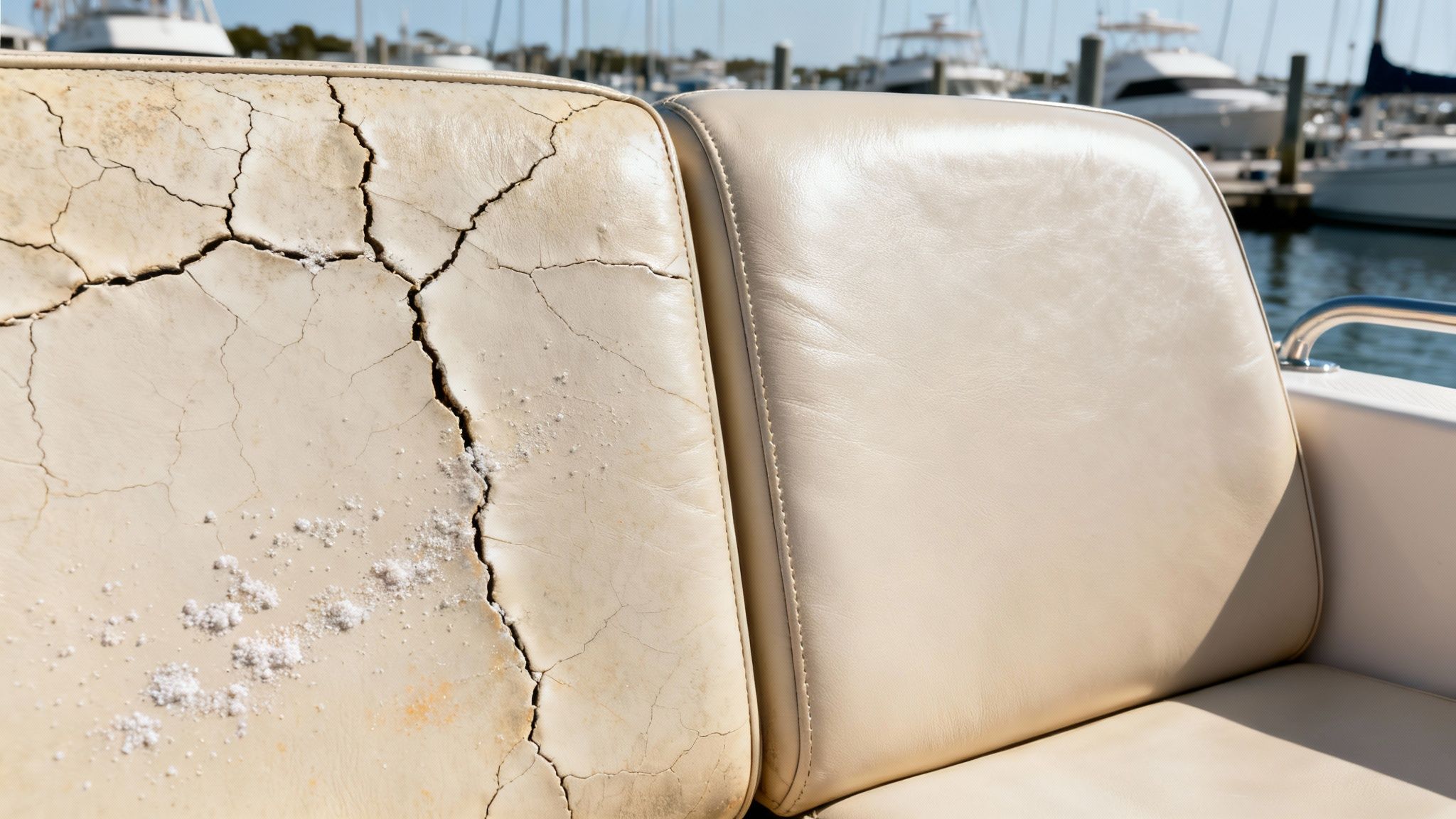
The Unique Challenges of Marine Vinyl Care
Using the wrong product can strip away the plasticizers that keep vinyl soft and flexible. This leads directly to drying, brittleness, and eventually, ugly cracks. That kind of damage isn't just cosmetic, it ruins the integrity of the seat and can lead to expensive reupholstering jobs.
This is why a dedicated vinyl cleaner for boat seats is non-negotiable if you want to protect your investment. The growing demand for these specialized products reflects a broader trend among boat owners who get it. In fact, the global marine vinyl market was valued at USD 340.8 million in 2023 and is projected to keep expanding, which just shows how many boaters are focusing on proper upkeep.
Choosing the right cleaner isn't just about getting rid of a stain; it's about preserving the material for the long haul. A specialized formula cleans effectively while maintaining the vinyl's essential properties.
To put it in perspective, let's look at what your boat seats are up against compared to something you'd clean inside your house.
Marine Vinyl vs. Household Surfaces: A Cleaning Comparison
This table quickly illustrates why a specialized marine cleaner is so essential.
| Factor | Boat Seat Vinyl | Household Surfaces (e.g., countertops, floors) |
|---|---|---|
| UV Exposure | Constant, direct, and intense | Minimal to none |
| Moisture | High humidity, salt/freshwater spray | Occasional spills, controlled humidity |
| Chemical Exposure | Sunscreen, insect repellent, salt | Mild food stains, dust, dirt |
| Temperature Fluctuation | Extreme highs and lows | Stable, climate-controlled |
| Material Goal | Maintain flexibility and UV resistance | Hardness and stain resistance |
As you can see, there's just no comparison. The demands placed on marine vinyl require a product designed to clean and protect it from its harsh environment.
The Better Boat Advantage
A purpose-built solution like our Better Boat Vinyl Cleaner is engineered with these specific challenges in mind. It's formulated to be tough on grime but gentle on the material itself.
It safely lifts dirt, sunscreen residue, and light mildew without the damaging effects of household chemicals. When you're trying to figure out how to choose the best cleaning products for your boat, it's critical to select items made for the marine world. Our cleaner ensures your seats stay supple, vibrant, and ready for another season on the water, preventing the premature aging that generic products accelerate.
A Practical Method for Cleaning Your Boat Seats
Forget about complicated routines and harsh chemicals that can do more harm than good. Getting your vinyl boat seats looking brand new is actually a pretty straightforward process when you have the right game plan and the right tools.
A simple, effective method doesn't just clean the surface grime, it protects your vinyl for the long haul. The real key is to work methodically and always use a product designed for the unique challenges of a marine environment.
And let's be clear, this is about more than just looks. Regular, proper cleaning is preventative maintenance. It stops the buildup of sunscreen, skin oils, and general grime that can permanently stain or even degrade your vinyl over time. Let's walk through the steps to get that flawless, non-sticky finish every single time.
Initial Preparation and Debris Removal
Before you even think about spraying on a vinyl cleaner for boat seats, you've got to prep the surface. Grab a soft-bristle brush or a dry microfiber towel and give everything a gentle sweep. You're just trying to get rid of any loose debris, sand, dust, leaves, and the inevitable cracker crumbs that have piled up since your last trip out.
This quick sweep is more important than it sounds. If you skip it, you’re just grinding those tiny, abrasive particles into the vinyl as you scrub. That's a recipe for creating micro-scratches and scuffs. Taking just 60 seconds for this prep work makes sure your cleaning efforts are actually helping, not hurting.

Applying the Cleaner for Best Results
Once the loose stuff is gone, it's time for the cleaner. One of the most common mistakes I see is people drenching the entire seating area at once. This almost always backfires because the cleaner dries out in some spots before you can get to them, leaving behind a sticky residue or ugly streaks.
Core product for this step
Boat Interior Vinyl Cleaner
Boat Interior Vinyl Cleaner is formulated to lift sunscreen, salt residue, and grime from marine vinyl without stripping the plasticizers that keep seats soft. Apply in small sections so it does not dry before you can wipe it away.
Pro Tip: Work in small, manageable sections. Tackle one seat cushion or one backrest at a time. This keeps the cleaner wet and active, letting it do its job of penetrating and lifting grime without drying out too soon.
Spray a light, even coat of Better Boat Vinyl Cleaner directly onto the section you’re working on. You don't need to saturate it; a consistent mist is perfect. With a clean, damp microfiber towel, wipe the cleaner across the vinyl using a gentle, circular motion. This technique really helps lift the dirt out of the vinyl's texture.
For those stubborn, textured areas or spots with ground-in dirt, a soft-bristle brush is your best friend. After spraying the cleaner, just gently agitate the area with the brush. The soft bristles are great for getting into the grain of the vinyl without being abrasive enough to cause any damage. For a more detailed walkthrough, you can find a ton of extra tips in our complete guide on how to clean boat seats.
The Final Wipe-Down and Drying Process
After you've worked the cleaner into the vinyl, this final step is what separates an amateur job from a professional-looking finish. Use a separate, clean, and completely dry microfiber towel to wipe away all the cleaner and the loosened grime. This is crucial for removing any residue, which prevents that tacky feeling and ensures the surface is truly clean.
Make sure you pay extra attention to the seams and crevices where moisture loves to hide. Lingering dampness is the number one cause of mildew growth, so a thorough drying job is your best defense. If you're dealing with exceptionally tough stains or just doing research for your cleaning arsenal, you might find information on products like specific cleaning sprays useful.
Once you’ve wiped down the section, just let it air dry completely before you think about applying any protectants or putting the boat cover on. This simple, methodical approach will leave your seats looking refreshed, feeling clean, and ready for your next adventure on the water.
How to Defeat Stubborn Stains on Marine Vinyl
So, you've got a consistent cleaning routine, but some stains are just plain stubborn. This is where we shift gears from routine maintenance to a more targeted attack. I'm talking about those nasty black mildew spots that pop up out of nowhere, greasy smudges from a quick engine check, or that ink stain from a pen that fell out of your pocket.
These kinds of messes need more than just elbow grease.
Scrubbing harder isn't the answer. The real secret is using the right tool for the job, a product specifically designed for that type of stain. A good general vinyl cleaner for boat seats handles the daily grime, but for the tough stuff, you need a specialized formula that can break down the stain without wrecking your vinyl.
Targeting Mold and Mildew Stains
Mold and mildew are the absolute worst enemies for any boat owner. Those little black and green specks love the humid marine environment and can spread like wildfire, working their way deep into the vinyl's pores. Once you spot them, it's time to call in the heavy artillery: a dedicated mildew stain remover.

Heavy-duty mildew treatment
Boat Seat & Vinyl Restoration Kit
The Boat Seat and Vinyl Restoration Kit pairs a mildew stain remover with a cleaner and protectant, giving you everything needed to tackle deep-set black spots and then restore the surface in one complete set.
Our Better Boat Mildew Stain Remover was made for exactly this fight. A lot of people reach for household bleach, but that’s a huge mistake, it can dry out your vinyl and even eat away at the stitching. Our formula goes straight for the mildew spores, lifting the stain without damaging the material.
Just spray it on the affected area, let it sit for a few minutes so it can do its thing, then give it a gentle scrub with a soft brush before wiping it all clean. For really set-in spots, you might need a second round. The key here is patience, not brute force.
Remember, mildew is more than just an ugly spot; it's a living organism. Effectively removing it helps prevent it from returning and spreading to other parts of your boat's interior.
Not sure when to escalate from a simple wipe-down to a more serious cleaning? This flowchart breaks it down beautifully.
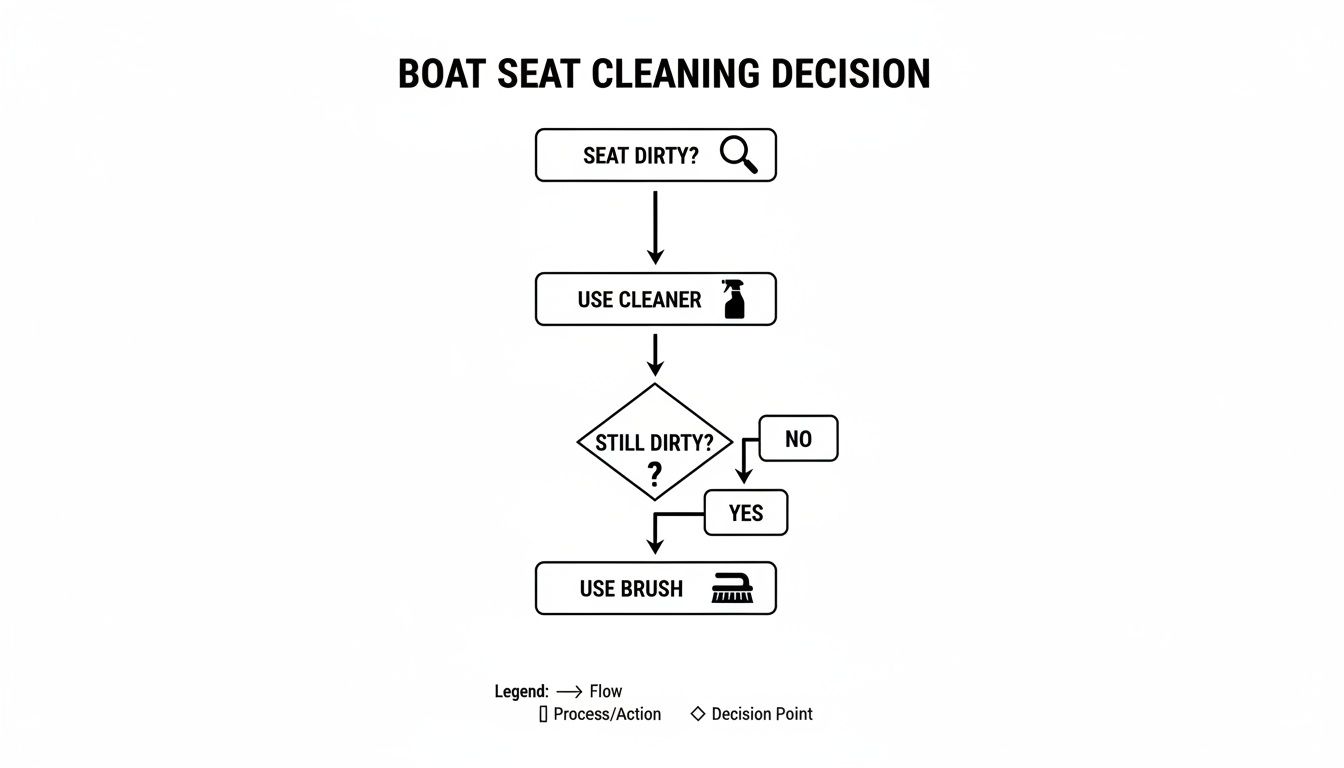
As you can see, the smart approach is to step up your cleaning method, from a basic cleaner to a more focused tool like a brush, to tackle that persistent grime effectively.
Conquering Other Common Boat Seat Stains
Mildew might be public enemy number one, but your seats are a magnet for all sorts of other messes. Let's break down how to handle a few common culprits.
Here’s a quick-reference guide to help you grab the right product and get to work without having to guess.
Targeted Stain Removal Cheat Sheet
| Stain Type | Recommended Product | Cleaning Method Summary |
|---|---|---|
| Mold & Mildew | Mildew Stain Remover | Spray directly, let sit for a few minutes, gently scrub with a soft brush, and wipe clean. Repeat if needed. |
| Sunscreen & Grease | Vinyl Cleaner | Spray on, allow it to sit for a moment to break down the oils, then wipe away firmly with a clean microfiber towel. |
| Ink & Dye Transfer | Vinyl Cleaner | Blot immediately (don't rub!). Apply cleaner and use a soft brush, working from the outside-in to avoid spreading. |
| Food & Drink Spills | Vinyl Cleaner | Act fast. Clean the spill with your cleaner and a damp cloth as soon as possible to prevent sugars and dyes from setting. |
This table should help you handle most of the common stains you'll encounter on the water. Having the right approach makes all the difference.
Knowing how to tackle different messes is a huge part of boat ownership. To learn more about specific removal techniques, take a look at our guide on using a powerful boat stain remover on all kinds of surfaces. And if you’re dealing with a serious mildew issue, this guide on getting rid of mold from upholstery is a great resource.
With the right products in your cleaning kit, you’ll be ready to handle just about any stain that comes your way.
Protecting Your Vinyl for Long-Term Durability
Cleaning your boat seats gets the visible grime off, but the job isn't quite done. The most important step for the long-term health of your vinyl is protection.
Think of it like putting on sunscreen after you shower; one action cleans you up, but the other prevents future damage. Without a protective layer, your freshly cleaned vinyl is completely exposed to its number one enemy: the sun.
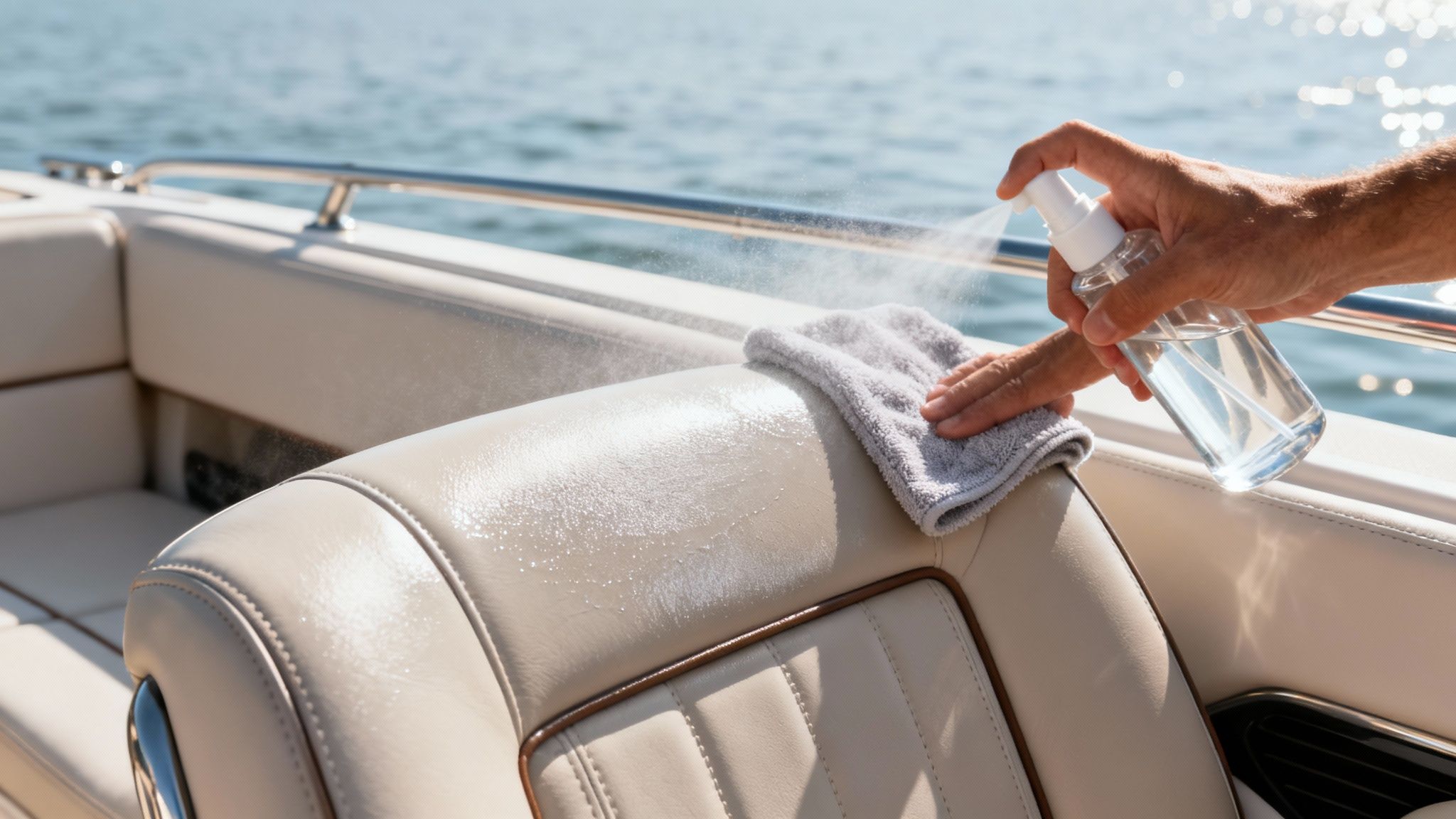
Harsh UV rays are constantly working to break down the plasticizers in your marine vinyl. These are the compounds that keep the material soft and flexible. Over time, all that sun exposure dries them out, leading to brittleness, fading, and eventually, those ugly cracks that are a nightmare to fix. A high-quality protectant creates an invisible shield that absorbs or reflects these damaging rays before they can do harm.
The Application Process for Maximum Protection
Applying a protectant is honestly one of the easiest and most impactful parts of your entire maintenance routine. Once your seats are completely clean and dry, you're ready to go. Using a dedicated product like our Better Boat Vinyl Protectant ensures you’re adding a functional UV barrier, not just a temporary shine.

Lock in UV protection
Boat Interior Vinyl Protectant
Boat Interior Vinyl Protectant lays down a UV barrier over clean seats, slowing the drying and cracking that sun exposure causes between cleanings. Apply after every thorough wash for lasting defense.
The process is straightforward and takes just a few minutes.
- Spray a Light Mist: Apply a thin, even coat of the protectant directly onto a small section of the vinyl. You don't need to soak the seat; a little really does go a long way.
- Spread Evenly: Grab a clean, dry microfiber towel and gently wipe the product across the entire surface. This ensures you get complete coverage without leaving any streaks.
- Buff to a Finish: With a separate dry part of your towel, lightly buff the area. This step removes any excess product and leaves you with a non-greasy, matte finish that isn't slippery to the touch.
This simple application does more than just block UV rays. It also creates a barrier that helps repel future stains from things like dirt and spills, making your next cleaning session even easier.
Establishing a Realistic Protection Schedule
Consistency is everything. A single application at the start of the season just isn't enough to fight off relentless sun exposure all summer long. For the best defense, you need a regular schedule.
A good rule of thumb is to reapply your vinyl protectant every 3-4 weeks during peak boating season.
If your boat is stored uncovered in direct sunlight or you're in a particularly intense climate like Florida or Arizona, you might want to bump that up to every two weeks. This small, proactive step is a game-changer for preserving your boat's interior and maintaining its value. By investing a few minutes each month, you can prevent thousands of dollars in reupholstery costs down the road.
For more insights on safeguarding your seats, check out our detailed guide on the best marine vinyl protectant.
Creating a Simple Boat Seat Maintenance Routine
When it comes to keeping your boat seats looking sharp, consistency is everything. Forget about blocking out a whole Saturday for a massive, frustrating scrub-down. The real secret is building a simple maintenance routine that stops grime from getting a foothold in the first place.
This proactive approach is what separates vinyl that lasts from vinyl that cracks and fades. Think of it less as a chore and more as a quick, satisfying habit that keeps your boat ready for the water at a moment's notice.
The Five-Minute Wipe-Down After Every Trip
Here’s the single most effective habit you can build: a quick wipe-down after every single outing. Seriously. Before you even think about putting the cover on, grab a damp microfiber towel and spend five minutes wiping down all the vinyl surfaces.
This tiny bit of effort lifts away fresh culprits like sunscreen, salt spray, and minor spills before they have a chance to bake in. It’s the same logic as rinsing a dish right after dinner instead of letting food get cemented on. You’re just hitting the reset button.
Your Monthly Deep Clean
At least once a month, especially during peak season, it’s time to give your seats a little more love. This is where you’ll break out a dedicated vinyl cleaner for boat seats to deal with the stubborn, layered-on grime that a simple water wipe can't touch.
Set aside maybe an hour to go over each seat with our Better Boat Vinyl Cleaner. A soft brush is perfect for getting into textured areas. Follow up with a dry towel to lift any remaining residue. This regular deep clean is your best defense against the gradual discoloration that makes seats look old and tired.
A consistent monthly cleaning schedule does more than just keep your seats looking pristine, it actively extends their lifespan by neutralizing damaging oils and chemicals before they can cause permanent harm.
Don’t Forget Seasonal Prep and Storage
A smart maintenance routine lines up with the seasons. Before boating season officially kicks off, give your seats a comprehensive cleaning and then lock in that protection with a fresh coat of a quality UV protectant. This preps them for the beating they're about to take from the summer sun.
And when it’s time to put the boat away for the winter, one last deep clean is non-negotiable. Storing your boat with dirty seats is like sending a written invitation to mold and mildew.
This final cleaning ensures you'll be greeted by a fresh, ready-to-go interior next spring. With the global market for specialized cleaners like these projected to approach USD 750 million by 2025, it's clear that boaters are investing in proper care. You can read more about these industry trends here.
Got Questions About Cleaning Vinyl Seats?
Even after you've got a good routine down, questions still come up. We hear a lot of the same ones from fellow boaters, so let's tackle them head-on. Getting these details right can make a huge difference in how long your boat's interior lasts.
Probably the biggest question we get is about taking shortcuts with common household products. It's tempting, for sure, but it's a shortcut that can end up costing you a lot more down the road.
Can I Use Household Products Like Bleach or Magic Erasers?
Please don't. We really advise against it. Bleach might be a great disinfectant under your sink, but it's way too aggressive for marine vinyl. It'll eat away at the protective topcoat, leading to dried-out, brittle, and cracked seats before you know it.
And those Magic Erasers? They're basically a super-fine abrasive sponge. Using one on your vinyl seats is like taking sandpaper to them, it can permanently scuff up the finish and leave dull patches that you can't fix.
You're always better off sticking with a pH-balanced cleaner made specifically for marine vinyl. A quality vinyl cleaner for boat seats is engineered to cut through grime without stripping the essential plasticizers that keep your upholstery soft and pliable.
How Often Should I Clean and Protect My Seats?
Being consistent is the name of the game here. For the best results, give your seats a good, thorough cleaning with a dedicated vinyl cleaner at least once a month while you're in the boating season. If your boat gets a ton of use or lives in a harsh saltwater spot, you'll probably want to bump that up to every couple of weeks.
Protection is just as critical as cleaning. Getting a UV protectant spray on there every 3-4 weeks is a must. Think of it as sunscreen for your seats, it creates a barrier against sun damage and helps stop new stains from locking in, which makes your next cleanup a whole lot easier.
What Tools Do I Need for the Job?
The right gear makes the job easier and, more importantly, prevents you from accidentally causing damage. Your go-to kit should be pretty simple:
- Soft-Bristle Brushes: Perfect for getting into the texture of the vinyl and lifting out that stubborn, ground-in dirt without scratching anything.
- Clean Microfiber Towels: You'll need these for applying the cleaner and, crucially, for wiping every last drop of moisture off the seats when you're done.
Whatever you do, stay away from stiff-bristled brushes or abrasive pads. They'll leave scratches and scuffs on your vinyl surface, and that's a bell you can't un-ring. You’ll notice our cleaning kits usually bundle these tools right in to make it easy.
For a complete care system designed to tackle dirt and protect against UV damage, trust Better Boat products to keep your seats looking their best. Explore our full line of boat care solutions and build the perfect maintenance kit for your vessel.


